Posted on — Leave a comment

US-Standard Smart Wall Switches: A B2B Selection Guide to the DS-121 / DS-122 / DS-123 Range

Selling Smart switches into North America is not a specification problem, it is a catalogue problem. A US-standard wall box takes a 118 mm plate, the market expects a rocker or a Touch panel depending on the room, and a single-family home may need one-gang, three-gang and a 3-way stairwell circuit in the same order. Distributors who carry one model run out of answers at the second room; distributors who carry a structured range can quote the whole house.

This guide maps the US-standard 118 mm range model by model, explains which control surface belongs in which room, and sets out how to build the range into something a contractor or an Amazon listing can Actually sell.
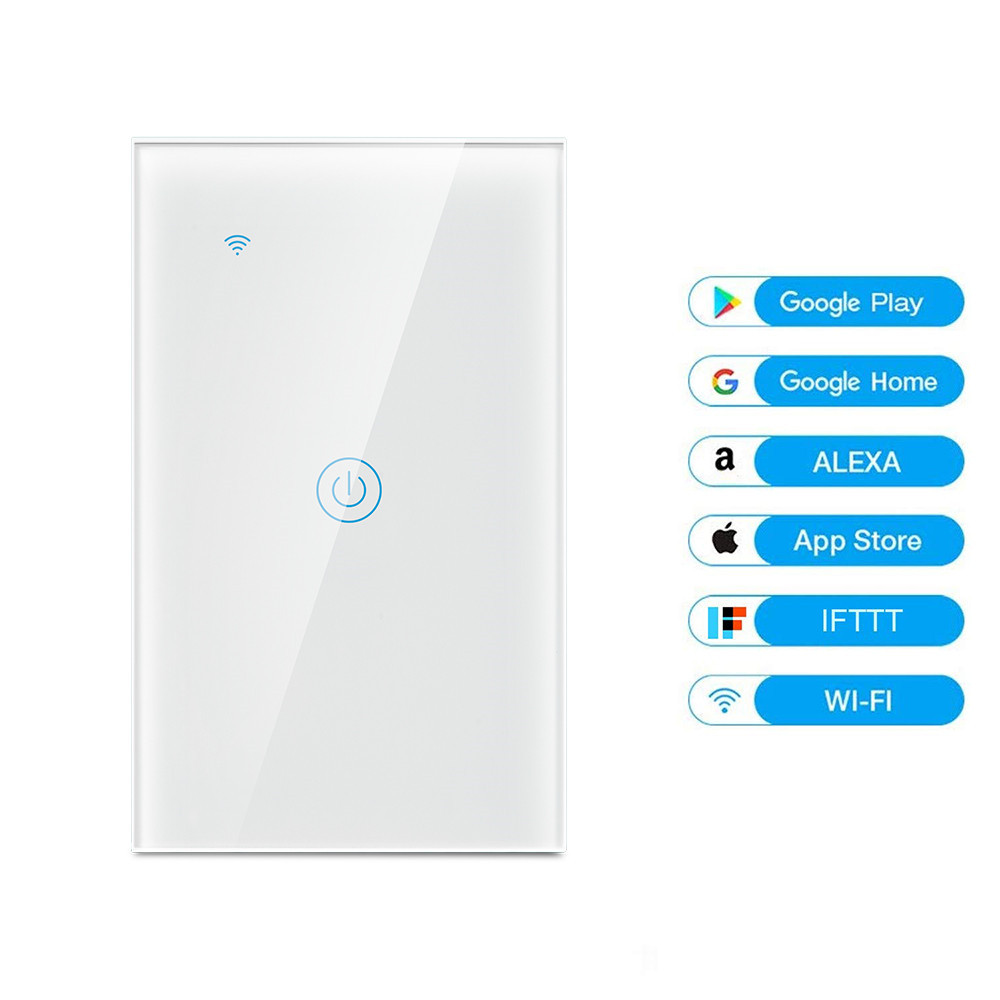
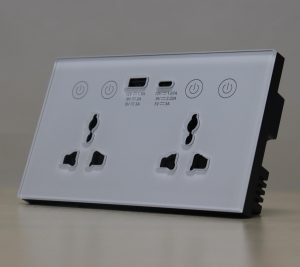
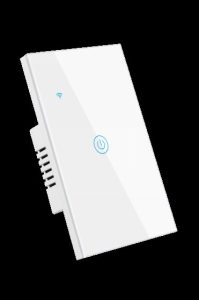
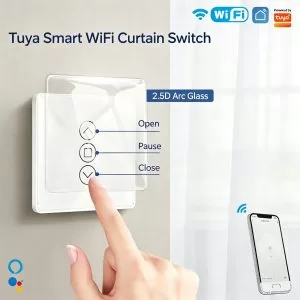
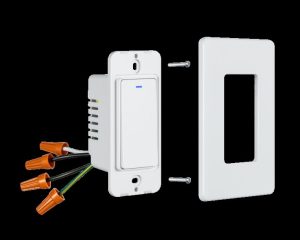
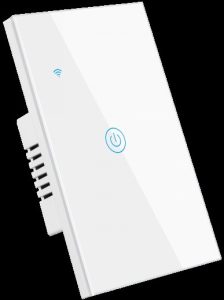
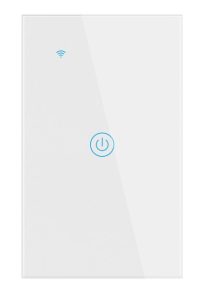
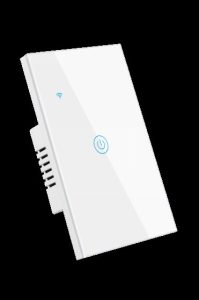
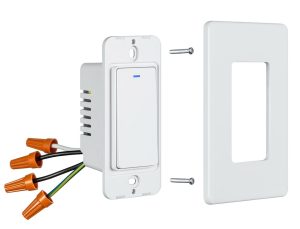
DS-121 US-standard touch wall switch, front view

The range in one table

Family Control surface Configuration Typical placement
DS-121 series Tempered Glass touch panel Single gang, with dedicated 4-gang variant artwork Living rooms, master bedrooms, hotel guest rooms
DS-122 series Mechanical push-button (rocker feel) Single gang Hallways, utility rooms, rental units, retrofit projects
DS-123-1 series Glass touch panel, variant 1 Single gang Bedside, study, bathrooms
DS-123-2 series Glass touch panel, variant 2 Single gang Kitchens, open-plan areas, feature walls
DS-122-S / DS-122-T Push-button, multi-gang 2-gang and 3-gang Wi-Fi panels Whole-house lighting banks, contractor packages
DS-123-1S / 1T, DS-123-2S / 2T Glass touch, multi-gang 2-gang and 3-gang Wi-Fi panels Premium residential, hospitality suites
DS-122-3WAY / DS-123-3WAY Push-button and glass touch 3-way (two-point) switching pairs Stairwells, corridors, rooms with two entrances
DS-128 (LS01) Glass touch panel Single gang, separate artwork set Projects requiring a distinct design line

Electrical ratings, gang counts and certification markings must be taken from the datasheet of the specific model you order. This guide covers the commercial structure of the range; it deliberately does not restate ratings that vary by variant — ask for the specification sheet of the exact SKU before publishing a listing.
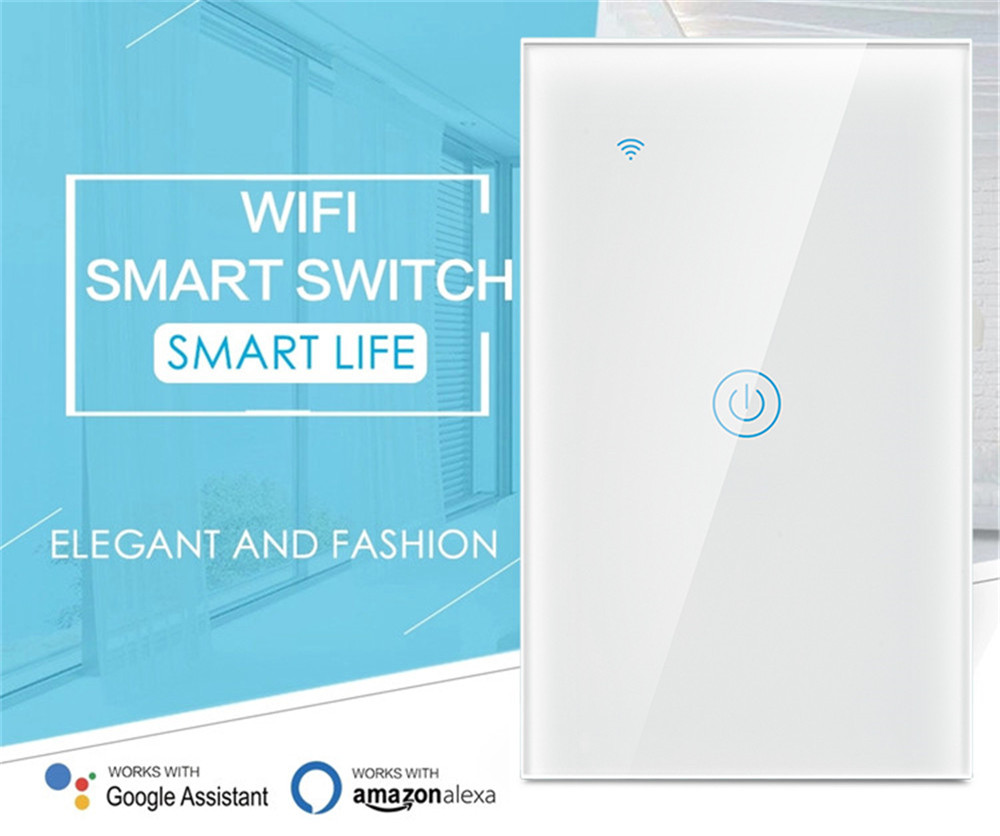
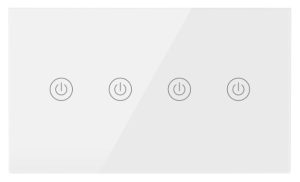
DS-121 touch control detail view

First decision: touch or push-button?

The case for glass touch (DS-121, DS-123-1, DS-123-2)

Touch panels win the visual argument. A flush glass front sits level with the wall, cleans with a single wipe, and photographs well — which matters more than most distributors admit, because the hero image is what converts on a marketplace listing. In hospitality and premium residential, the touch panel is also the expected format: it reads as an upgrade in a way that a tactile rocker does not.

The case for push-button (DS-122 series)

Push-button panels win the operational argument. There is tactile feedback, the state is readable in the dark by feel alone, and the mechanism survives being pressed by someone wearing gloves, carrying boxes, or operating a switch for the first time in a rental property. In utility rooms, garages and short-let units, that robustness is worth more than the aesthetics.

For a distributor building a first US-standard range, the honest recommendation is to lead with one touch family and one push-button family rather than stocking four near-identical touch variants. Let the buyer Choose the interface first, then the configuration.
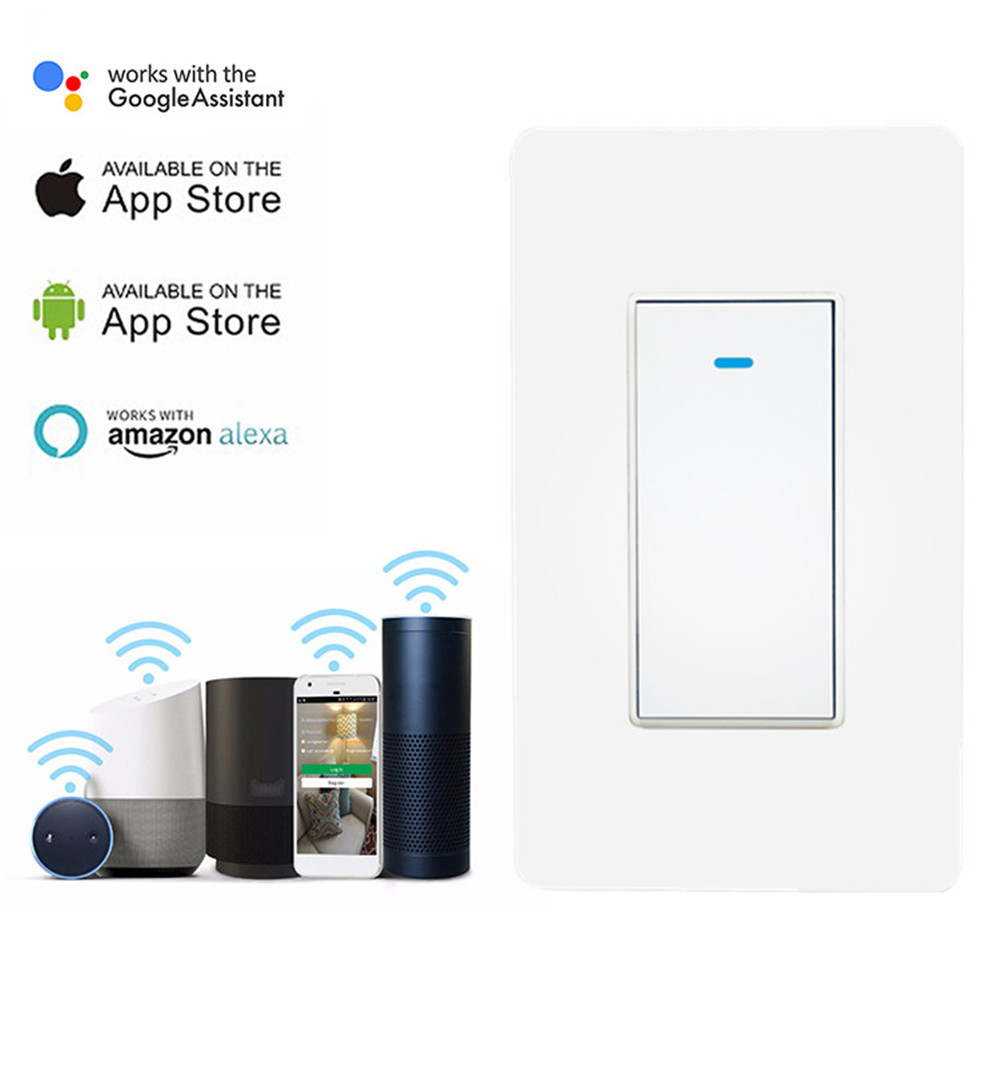
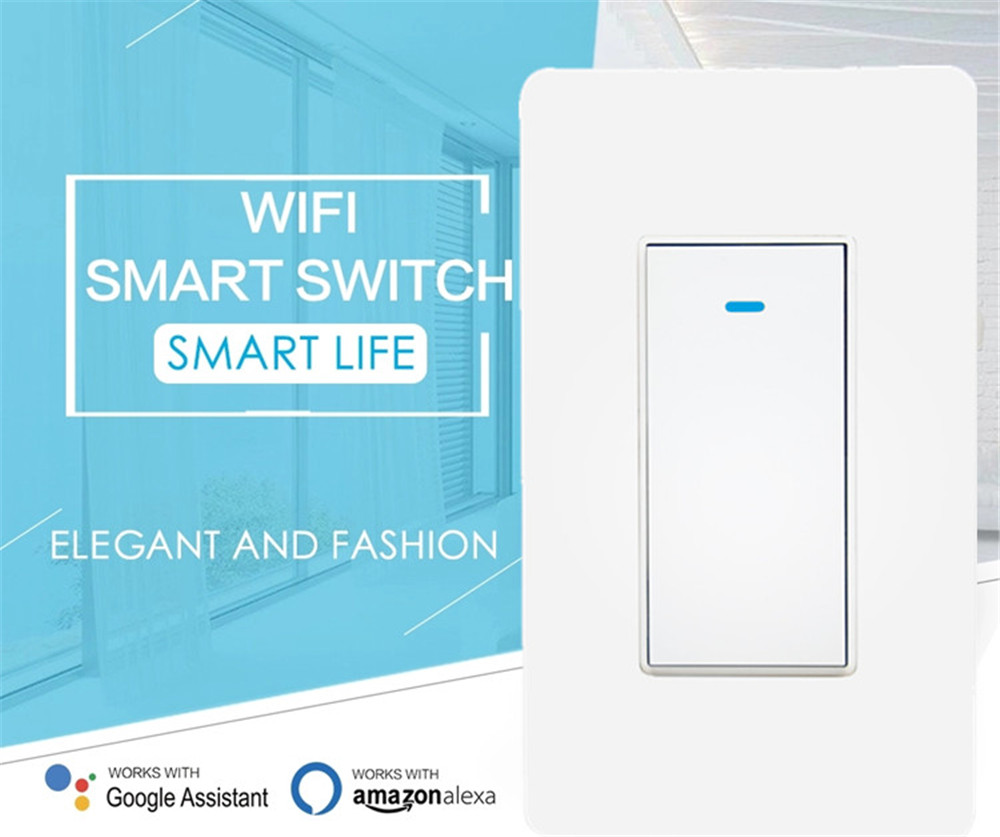
DS-122 US-standard push-button wall switch, front view
DS-122 push-button detail view

Second decision: how many gangs

US residential lighting is gang-heavy. A kitchen may want four circuits on one plate; a hallway wants two. The range covers this with dedicated multi-gang models rather than by asking the customer to buy several single panels:

  • 2-gang (-S) and 3-gang (-T) versions exist in both the push-button family (DS-122-S / DS-122-T) and the glass touch family (DS-123-1S / 1T and DS-123-2S / 2T).
  • Each multi-gang panel is a single Wi-Fi device controlling several circuits, which is what the customer actually wants: one tile in the app per plate, not three.
  • Generic multi-gang main-image artwork is also supplied, so you can build a single listing that covers the 2-gang and 3-gang options with a variant selector instead of maintaining separate listings.

There is a commercial point buried here. Multi-gang panels raise average order value without raising shipping volume per unit, because the carton is one box, not three. If you are optimising a container for value density, that is the lever.
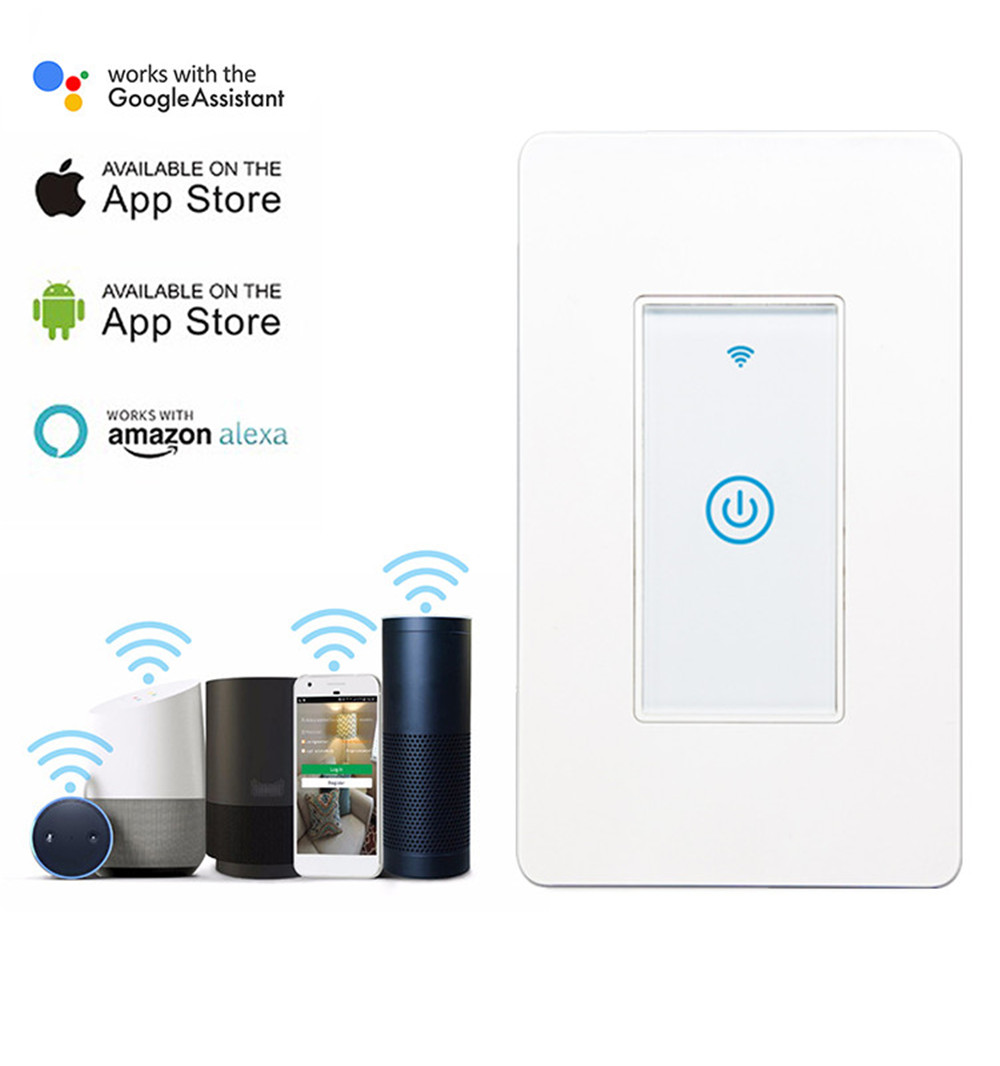
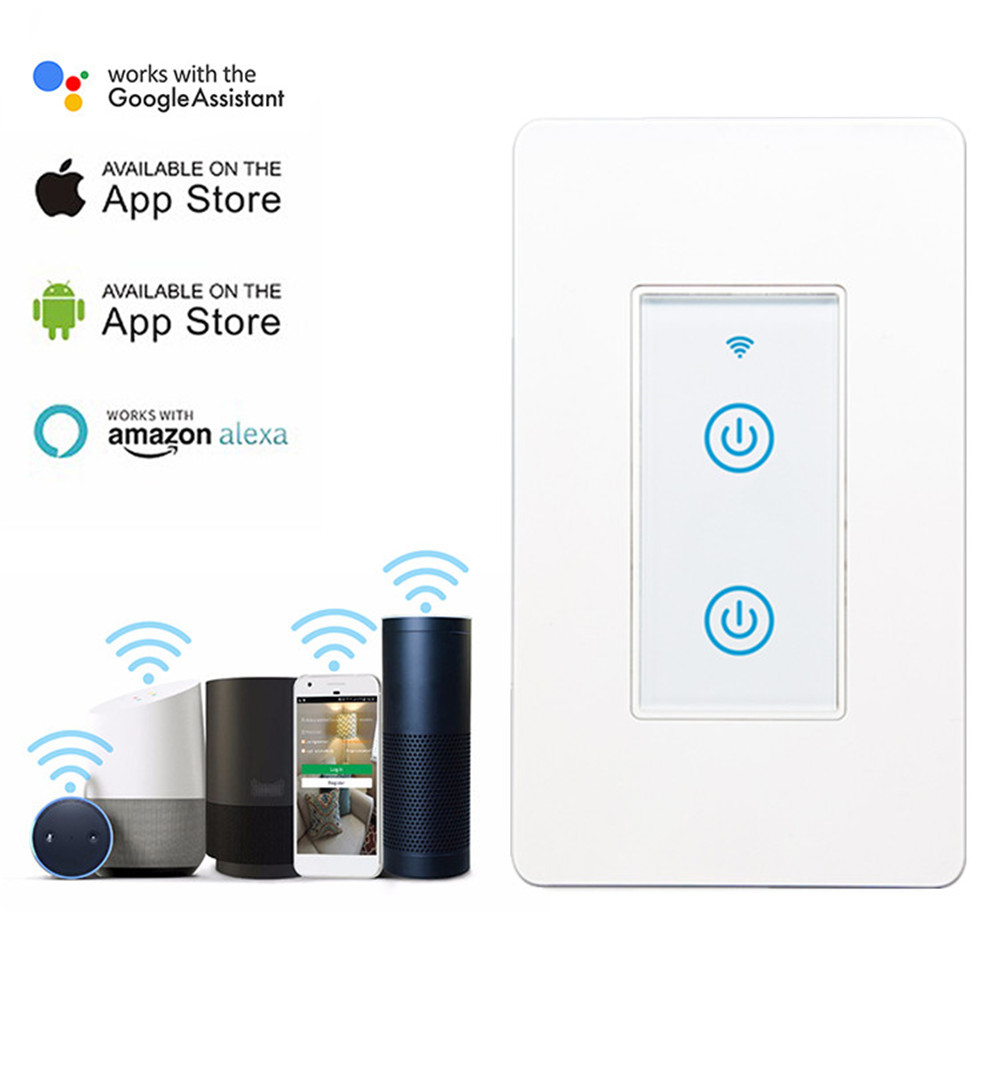
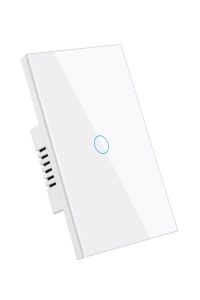
DS-123-1 US-standard touch wall switch
DS-123-2 US-standard touch wall switch

Third decision: 3-way circuits

A 3-way circuit — one light controlled from two positions, such as the bottom and top of a staircase — is where most Smart switch ranges quietly fail. The customer buys a single Smart switch, discovers that the second switch position no longer works, and returns the product.

The range includes dedicated 3-way models in both interfaces: DS-122-3WAY for the push-button line and DS-123-3WAY for the glass touch line. Each is supplied with its own English main-image and detail-image set, which means the pairing configuration can be explained visually in the listing instead of in a support email.

Practical advice for your listing copy: state clearly and early that 3-way installation requires the matching 3-way model and describe how the two units are paired. The returns you avoid are worth more than the words cost.

Ecosystem and app expectations

The English marketing assets for these models document compatibility with the major voice platforms, including Amazon Alexa, Google Assistant and IFTTT, along with app-based remote control. For a US buyer, that combination is table stakes: Alexa and Google for the mass market, IFTTT for the enthusiast segment that reviews products loudly.

Because these panels are Wi-Fi based, they do not need a proprietary hub. That is a genuine selling point in North America, where the buyer has usually already been burned by a hub that was discontinued. Put it in the bullet list.
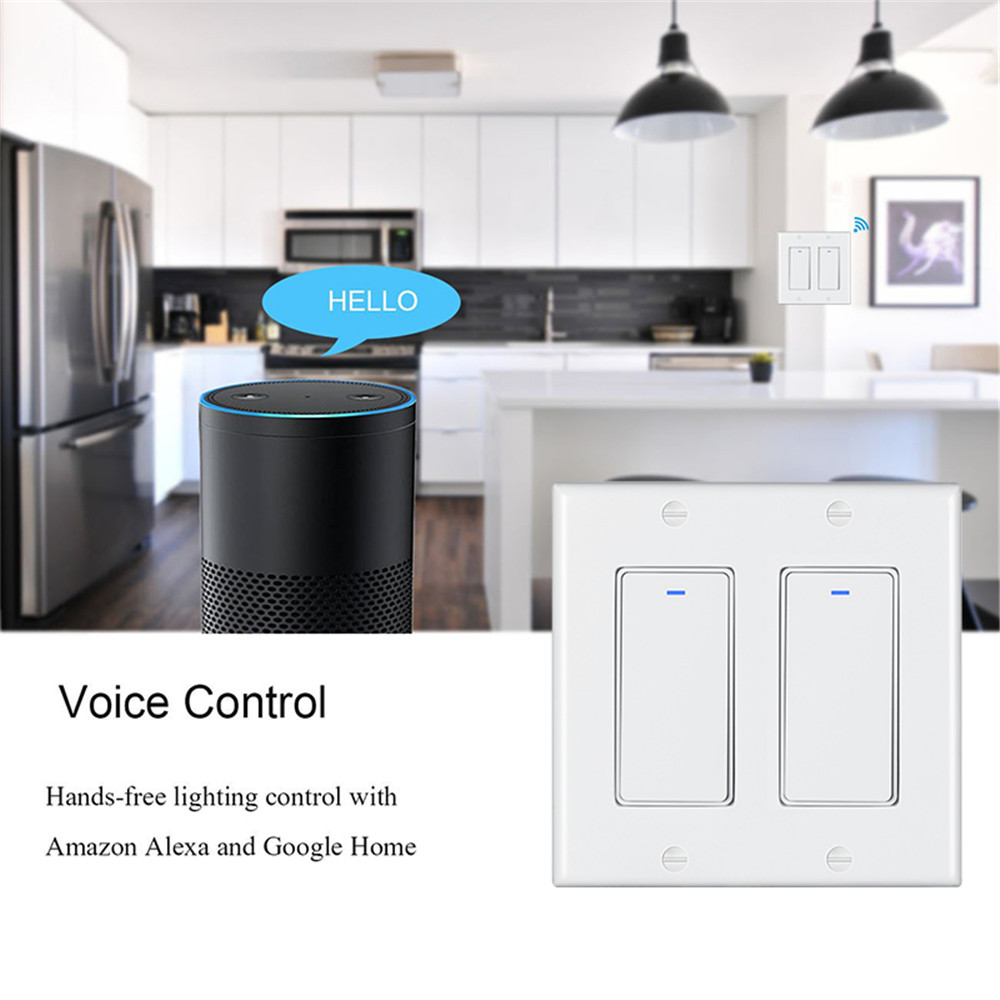
DS-122-S multi-gang US-standard wall switch

What ships with the product

Every model in the range is supported by a complete English asset set, prepared for marketplace and independent-store upload:

Asset type What it is used for
English main images Marketplace hero and gallery images, several per model
English detail images A+ style long-form description blocks, feature callouts, wiring diagrams
Front-view renders Category thumbnails and comparison charts
Multi-gang generic artwork One listing covering 2-gang and 3-gang variants
3-way dedicated artwork Explaining two-point pairing without support tickets

This matters more than it sounds. A distributor’s real cost is not the unit price, it is the six hours of design work needed to build a listing for each new SKU. Arriving with English copy already laid out on the image compresses that to an afternoon.
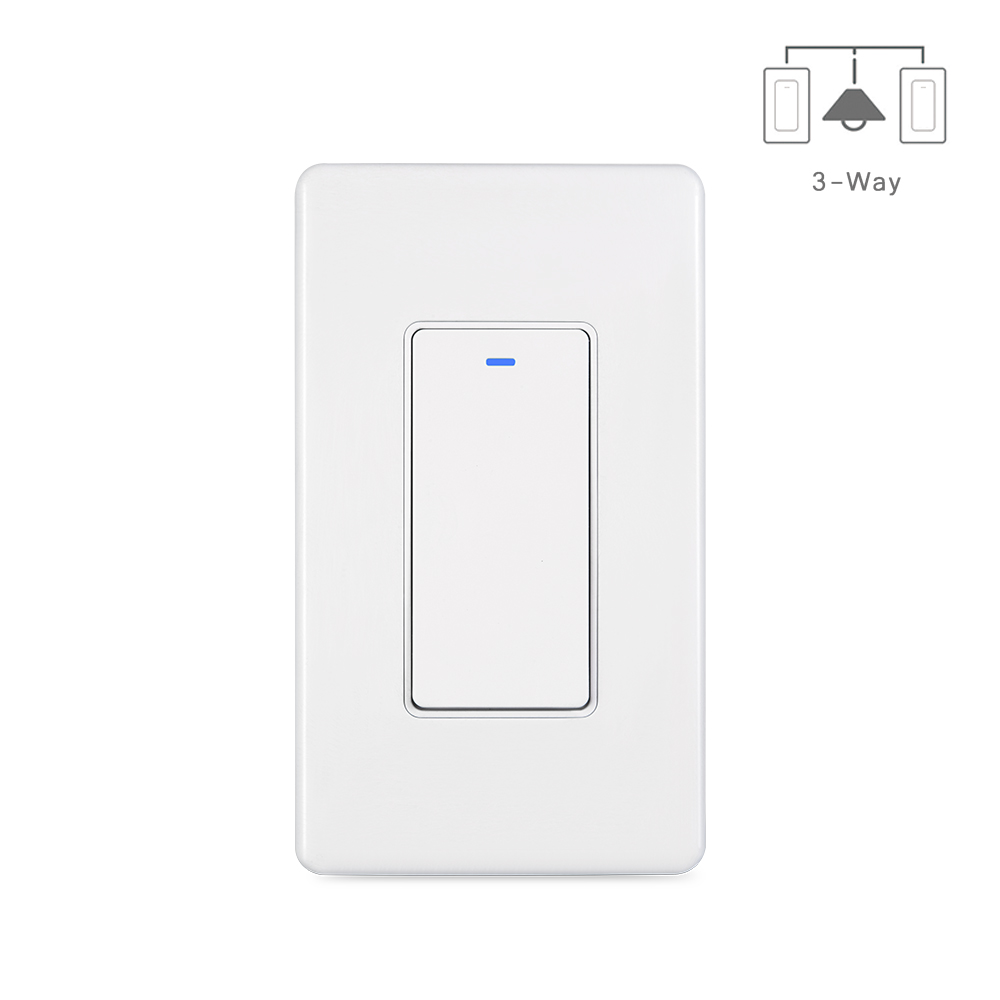
3-way pairing push-button wall switch

OEM and ODM options

  • Panel and finish — plate colour and glass finish can be aligned to your own design language across the whole family, so the one-gang, multi-gang and 3-way models look like one product line rather than three.
  • Branding — logo printing on the panel, custom legend text, and retail-ready packaging with your artwork and barcodes.
  • App identity — the Wi-Fi platform can be delivered under your own app with your onboarding screens, so the product is yours rather than a white-label of someone else’s.
  • Range assembly — order a curated mix (for example: touch single-gang, push-button single-gang, 2-gang, 3-gang, 3-way pair) as one container instead of five separate purchases.
  • Documentation pack — English specification sheets and image assets supplied in upload-ready format for Amazon, Alibaba and your own store.

Building the range for your market

Channel Recommended opening mix Why
Amazon US / retail marketplace Touch single-gang + push-button single-gang + 3-way pair Covers the three searches that actually convert: Smart switch, smart light switch 3-way, and the value alternative
Electrical distributors and contractors Push-button single-gang + 2-gang + 3-gang Contractors buy configurations, not hero images
Hospitality and multi-family projects Touch single-gang + touch 2-gang + 3-way touch Consistent visual language across hundreds of rooms
Own-brand independent store Full touch family under your own app identity Positioning and margin control

Frequently asked questions

Do these panels work in a standard US wall box?

The range is built on the 118 mm US plate standard, so the plate matches the box opening. Confirm plate depth against your specific box before ordering, since multi-gang panels sit deeper than a mechanical switch.

Can I mix touch and push-button panels in one installation?

Yes, and this is common: touch in guest-facing rooms, push-button in service areas. Both are managed from the same app, so the user experience stays consistent even though the interfaces differ.

Do multi-gang panels require multiple neutral wires?

Wiring depends on the specific model. Request the wiring diagram for the exact SKU before the electrician begins; do not generalise from a single-gang installation.

Are the image assets in English?

Yes. Each model in this guide is supported by English main images, English detail images and front-view renders, which is why we can describe the range at this level of detail without translating anything for you.

Request the range sheet

Send us the configurations you want to open with — interface, gang count, 3-way requirement, plate colour — and we will return a range quotation with the matching English asset set for each model, plus a sample plan.

Ask for the US-standard smart switch range quotation and the English listing asset pack.

This guide describes the commercial structure of the US-standard range. Ratings, gang configurations and certification details vary by model and must be confirmed on the datasheet of the exact SKU before publication or installation.

Related Articles

You Might Also Like

Posted on — Leave a comment

5,000 W Metered or 3,500 W Double-Pole? Choosing a Smart Wall Switch for Electric Water Heaters

An electric water heater is the heaviest load on a residential circuit, and it is the load most often left running by mistake. That combination — high current plus human forgetfulness — is why the water heater Switch has become one of the fastest-moving categories in Smart home hardware. It is also why distributors get it wrong: a switch rated for a light circuit will not survive a 3 kW heating element, and a switch with the right rating but the wrong protection logic is a warranty claim waiting to happen.

This article compares the two architectures available in our high-power range so that you can place the correct product on the correct circuit instead of over-specifying everywhere or, worse, under-specifying where it matters.

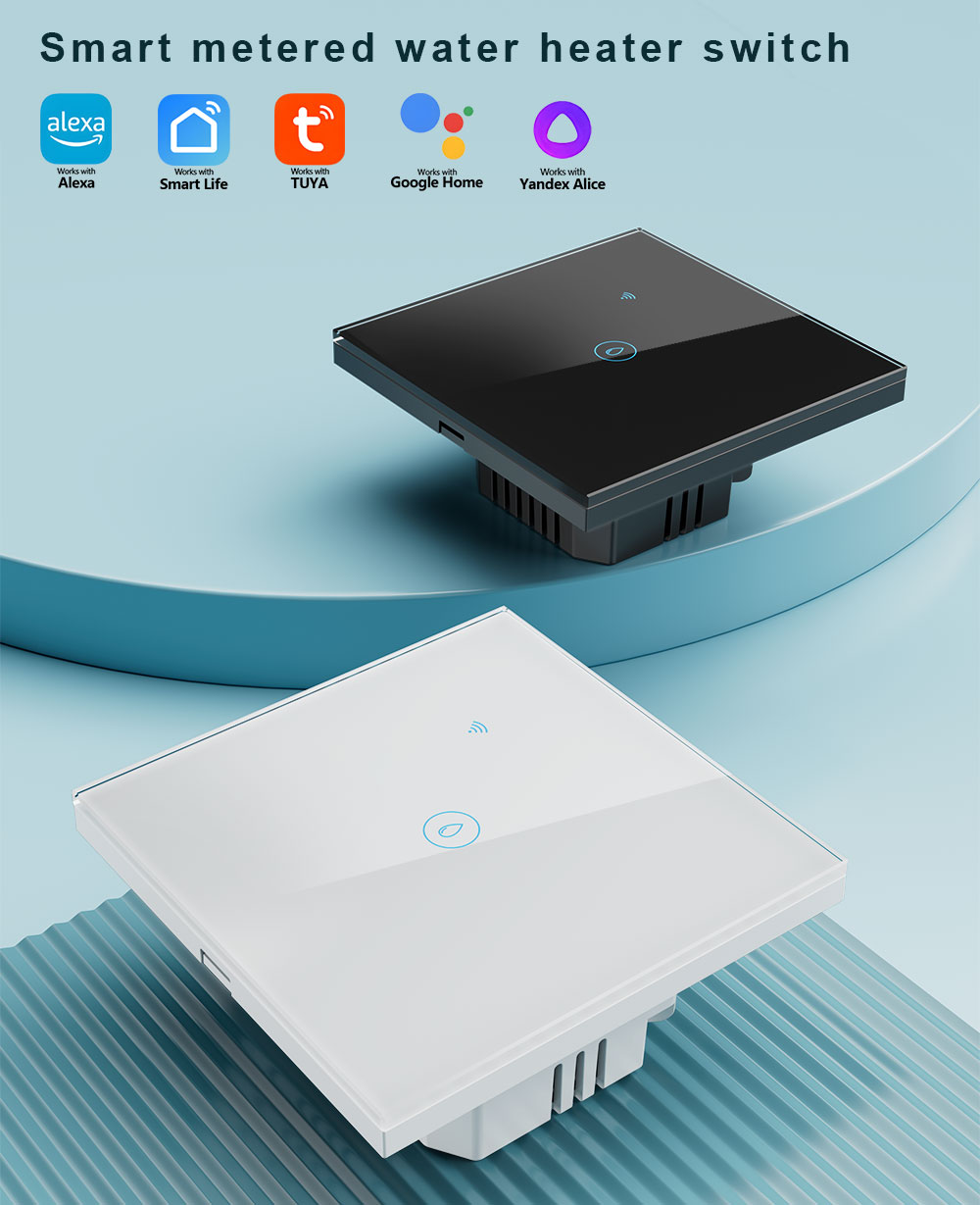
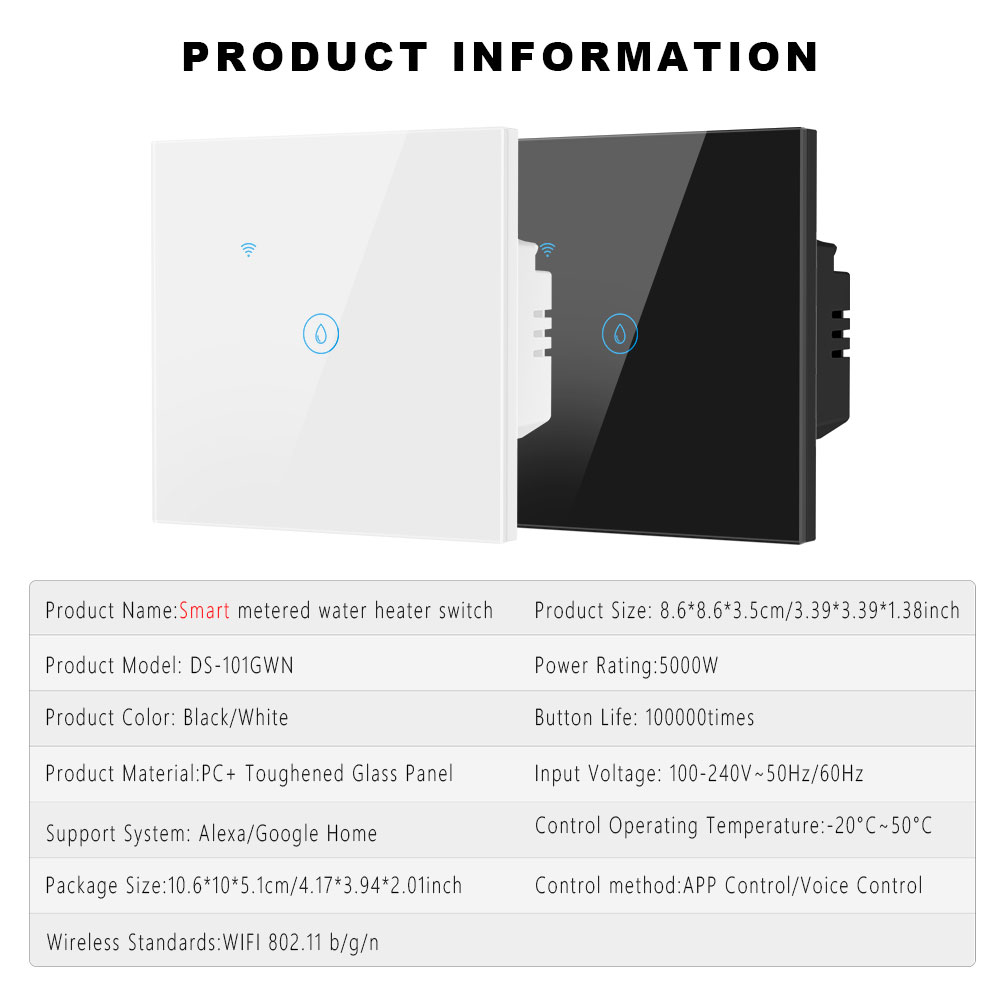
5,000 W metered smart water heater switch DS-101GWN front panel
DS-101GWN – the 5,000 W metered panel for electric water heaters

The two architectures at a glance

Attribute Metered series Double-pole cut-off series
Models DS-101GWN (EU 86 mm)
DS-121GWN (US 118 mm)
DS-107NWN (EU 86 mm)
DS-127NWN (US 118 mm)
Maximum load 5,000 W per gang 3,500 W per gang (16 A)
Panel dimensions EU 86 × 86 × 35 mm
US 118 × 72 × 39 mm
EU 86 × 86 × 35 mm
US 118 × 72 × 35 mm
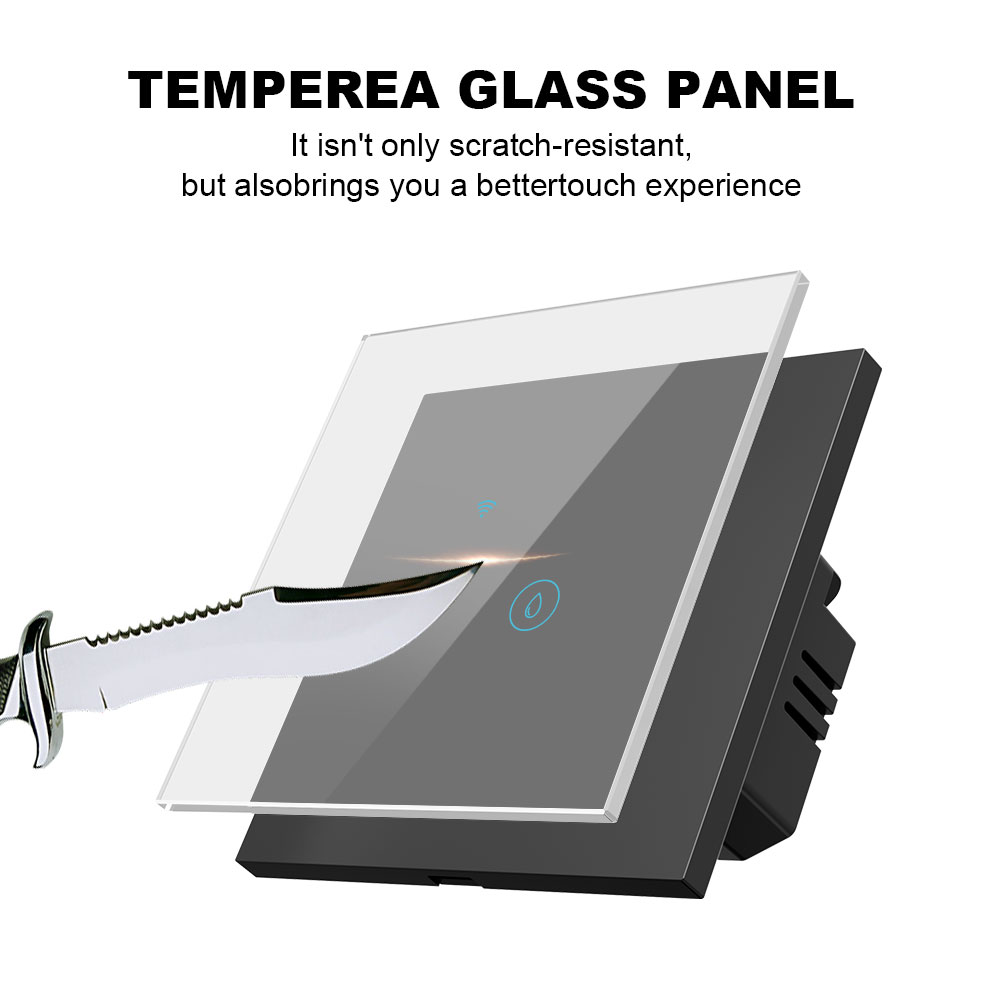
Front material PC + tempered Glass PC + 2.5D tempered glass (AG soft-touch finish)
Input voltage AC 100–240 V AC 100–240 V
Input frequency 50/60 Hz 50/60 Hz
Wireless 2.4 GHz Wi-Fi (Wi-Fi + BLE module) 2.4 GHz Wi-Fi (Wi-Fi + BLE module)
Colours White / Black / Gold / Grey White / Black
Operating temperature -20 °C to 45 °C -20 °C to 45 °C
Operating humidity < 80 % RH < 80 % RH
Wiring Live + neutral, no capacitor required Live + neutral, double-pole interruption
Signature feature Energy statistics with over-current / over-voltage protection Bipolar (live + neutral) cut-off with over-power protection
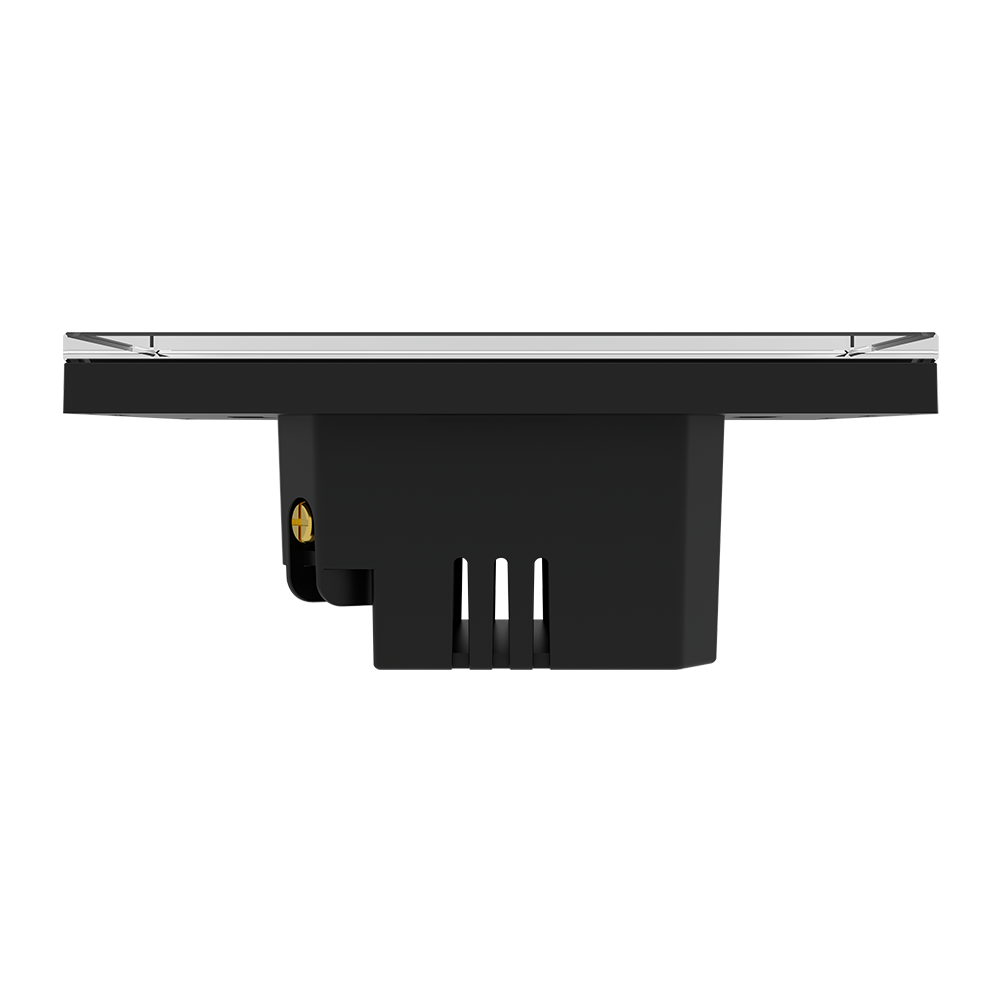
smart water heater switch DS-101GWN front and side view
Same electronics, two plate standards: EU 86 mm and US 118 mm

Series 1: 5,000 W with energy metering (DS-101GWN / DS-121GWN)

Who this is for

Any market where electricity cost is a visible line item for the end user: markets with time-of-use tariffs, markets where rental landlords pass electricity through, and markets where buyers simply want proof that the gadget they installed is saving money. The metered series turns the water heater switch into a billing and behaviour tool, not just a remote relay.

5,000 W smart water heater switch specification and dimensions
Panel geometry: 86 x 86 x 35 mm for EU, 118 x 72 x 39 mm for US

What it measures and what it protects

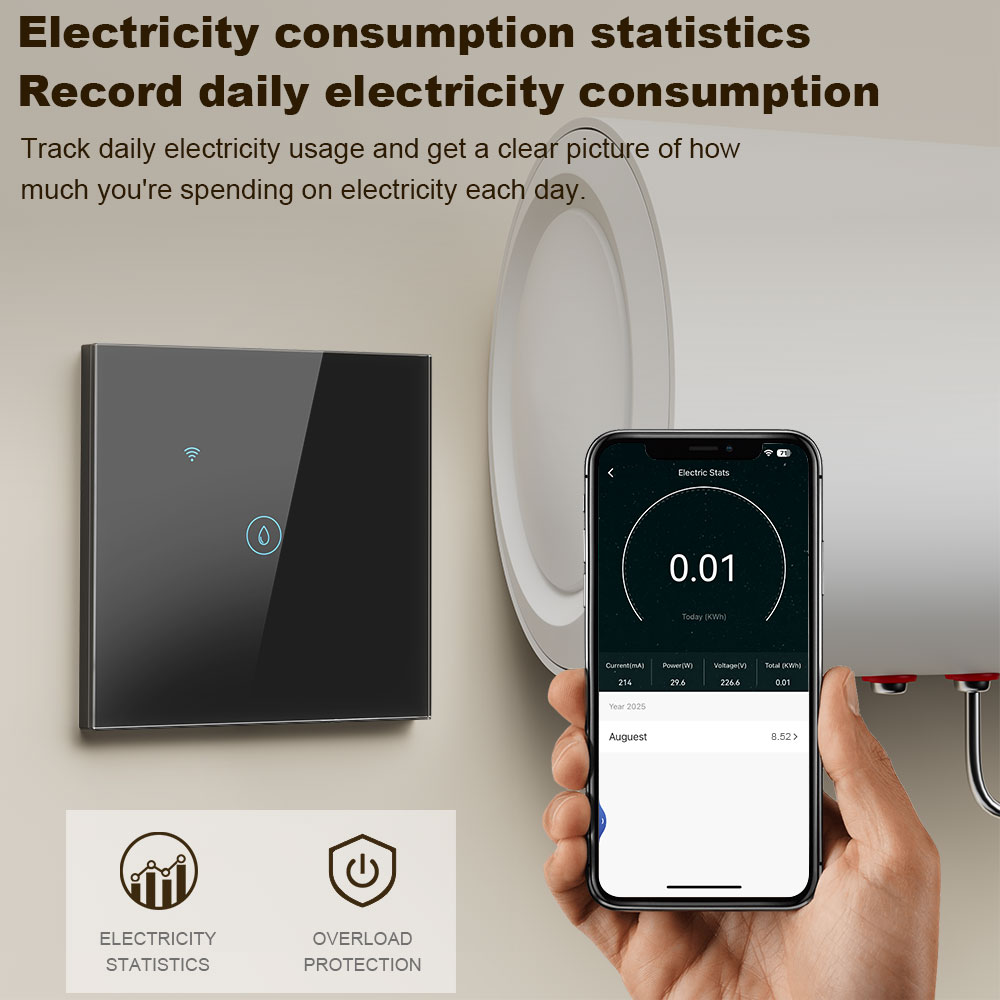
The metered board reports voltage, current, power and cumulative energy consumption through the app, so the end user can see what the heater Actually draws rather than what the nameplate claims. Protection is configurable: over-current and over-voltage thresholds can be set, and the panel cuts the load automatically once the measured value passes the threshold.

metered water heater switch app energy statistics and protection settings
Voltage, current, power and cumulative energy are reported in the app

Switching logic

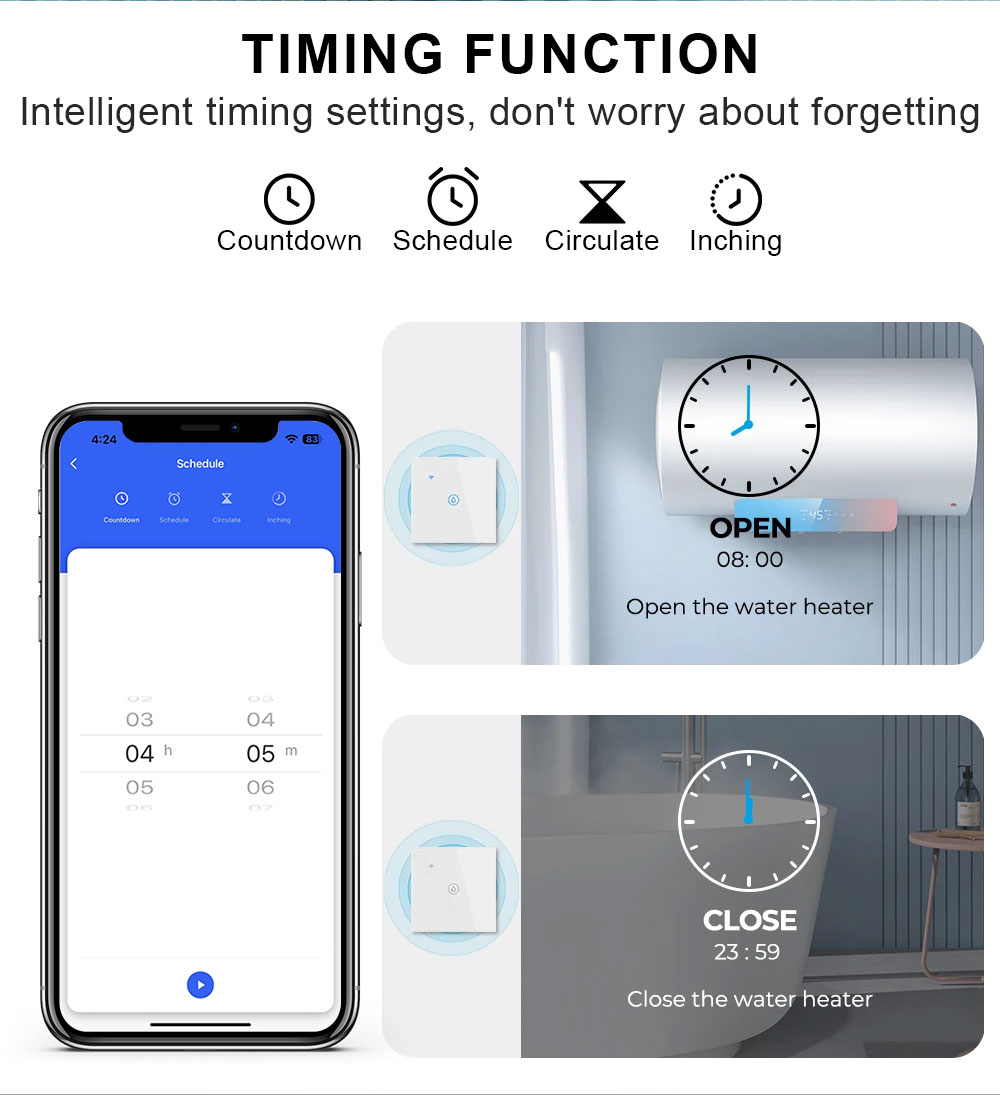
Four scheduling modes cover real usage patterns rather than only the demos: a single timer, a countdown, a repeating cycle timer, and a momentary (jog) mode. The cycle timer is the practical one for water heaters — it lets the user define heating windows across the day instead of leaving the element on standby for twenty hours.

Installation notes that prevent callbacks

This is a live-and-neutral board. It does not require an external capacitor, which removes the single most common failure mode of no-neutral Smart switches installed on heating circuits. The bottom housing is laser-marked with the model, input range, power rating, wireless type and country of origin, so a compliance inspector can read the rating without dismantling the unit.

Because the metered version is available in both 86 mm and 118 mm plates, the same electronics can serve an EU specification and a US specification from one purchase order — a useful simplification for distributors who ship to both markets.

double-pole smart water heater switch DS-107NWN and DS-127NWN
The double-pole range: bipolar isolation plus AG soft-touch glass

Series 2: 3,500 W with true double-pole cut-off (DS-107NWN / DS-127NWN)

Why double-pole matters on a heating circuit

A conventional Smart switch breaks the live conductor. On a water heater, that leaves the neutral connected, and a fault inside the element can still present a hazard when a technician opens the housing. The double-pole board drives live and neutral simultaneously — both are made on start and both are broken on stop. For markets where the installation code or the insurer asks for bipolar isolation on fixed heating appliances, this is the product that passes the conversation.

Ten functions, including the ones installers ask for

# Function How it works
1 Remote control Switch the panel on or off from the phone whenever panel and phone are online
2 Backlight Toggled from the app or by long-pressing the 30m key; red when lit, blue when a timing step is active
3 Child lock Toggled from the app or by long-pressing the 60m key
4 Manual switching Single press on the panel cycles the load on and off
5 Local timer One-touch 30 / 60 / 90 / 120 minute countdowns from the panel itself
6 App timer Scheduled switching with weekday repeat
7 Energy statistics Voltage, current, power and cumulative energy shown in the app
8 OTA upgrade Panel firmware updated over the air
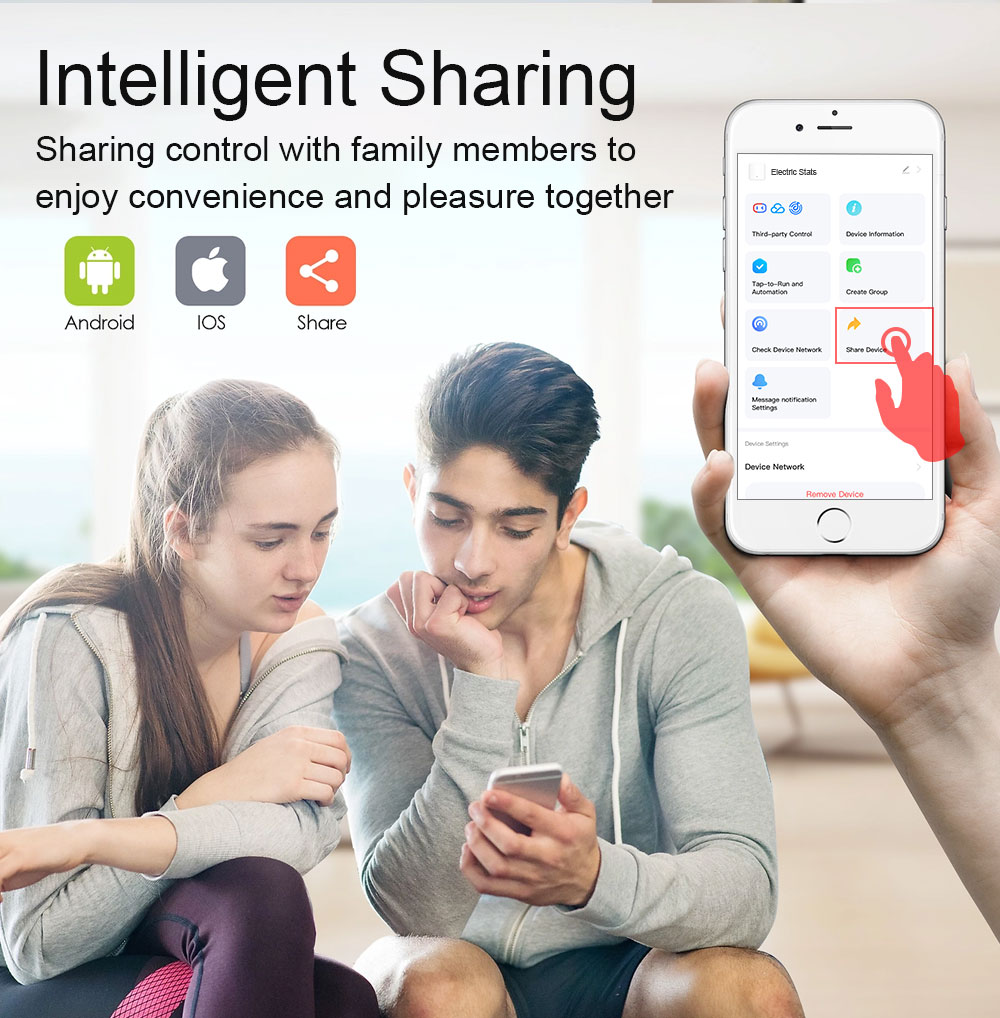
9 Device sharing Multiple household members or staff on one device
10 Voice configuration Works with eleven smart speaker ecosystems

The local timer row is the one worth highlighting in your listing copy. A guest or a family member can start a 60-minute heating cycle with one press, without a phone, without an account and without Wi-Fi. In rental properties this single feature removes most of the support calls that app-dependent products generate.

water heater switch wiring with live and neutral double-pole cut-off
Live and neutral are made and broken together on every start and stop

Four features that separate it from commodity switches

  • AG soft-touch glass. A 2.5D tempered glass front with a jade-like, non-glossy surface. It does not yellow, it wipes clean, and it still looks like a premium fitting after years in a humid bathroom.
  • True double-pole switching. Live and neutral are made and broken together on both start and stop, giving bipolar isolation rather than a single-pole break.
  • Over-power protection. A power ceiling can be set per scene; if the measured load exceeds it — 1,000 W, for example — the panel cuts the circuit automatically.
  • Always-on mode. Long-press the 120M key for five seconds to hold the switch permanently closed, which is what you want when the appliance has its own thermostat and the panel is only there for isolation and monitoring.

Voice ecosystem coverage

Amazon Alexa, Google Assistant, Tmall Genie, JD, Tencent Cloud Xiaowei, Baidu, Xiaomi, Tencent Cloud, Tuya, Yandex Alice and SmartThings. For a distributor, that list is a checklist: the same hardware can be sold into a North American Alexa household, a Korean or Japanese Google household, and a Russian Yandex household without a second SKU.

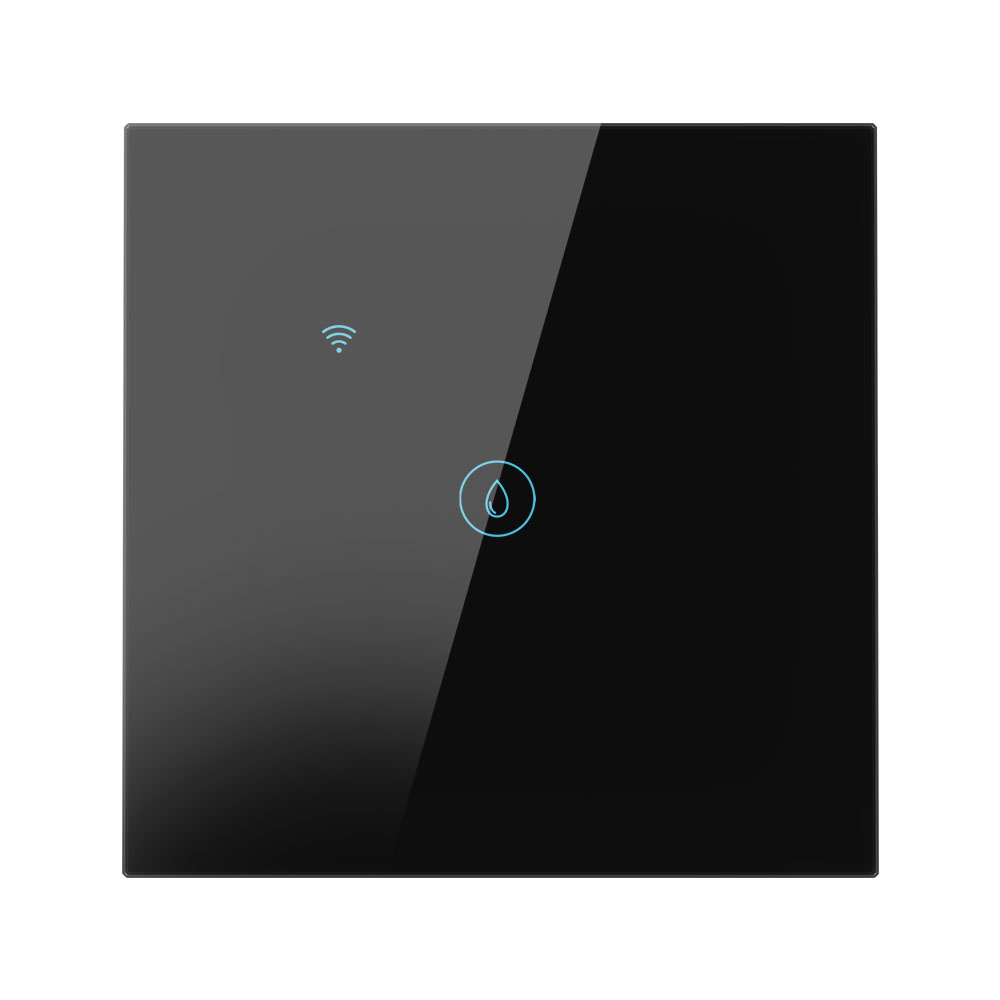
5,000 W metered water heater switch white background product photo
White-plate version – the Standard finish for project and retail cartons

How to choose: a decision table

Project requirement Recommended series Reason
Heater rated above 3,500 W Metered 5,000 W series Headroom on the relay and on the metering shunt
Code or insurer requires bipolar isolation Double-pole series Live and neutral broken together
Landlord or operator bills electricity separately Metered series Cumulative energy per device
Guest-facing short-let with no app tolerance Double-pole series One-touch 30/60/90/120 min local timers
Humid bathroom, premium finish required Double-pole series AG soft-touch glass front
Mixed EU and US container Either series Both ship in 86 mm and 118 mm plates
Appliance has its own thermostat and must stay energised Double-pole series Always-on mode via 5-second long press

OEM and ODM for water heater programmes

  • Housing marking — bottom-housing laser marking carries your model designation, input range and power rating, which is often the difference between clearing customs smoothly and explaining yourself.
  • App identity — the Wi-Fi + BLE module can be provisioned under your own app, with your onboarding flow and your brand in the pairing screens.
  • Colour and finish — four colours on the metered series, two on the double-pole series, with plate geometry matched to the destination market.
  • Documentation — specification sheets, wiring diagrams, marking artwork and listing images prepared for your marketplace upload.
  • Mixed-container ordering — metered and double-pole boards can be combined in one shipment so your catalogue covers both the monitoring-led and the safety-led selling story.
Frequently asked questions

Can the metered series be installed without a neutral wire?

No. The metered board is a live-and-neutral Design; a neutral conductor is required. The good news is that no external capacitor is needed, so there is no extra component to fail behind the wall.

Is the 5,000 W rating per gang or per panel?

Per gang, and these are single-gang panels. Do not parallel two heaters onto one switch to stay under the number.

Will the panel work if the Wi-Fi drops?

Yes. Manual switching, the local 30/60/90/120 minute timers and always-on mode all run on the panel itself. App control and energy reporting resume when connectivity returns.

Do both series support the same voice assistants?

The double-pole series is documented as supporting eleven ecosystems including Alexa, Google Assistant, Tuya, Yandex Alice and SmartThings. Confirm the list for your specific configuration on the datasheet before you publish it in a listing.

smart water heater switch cutout image for marketplace listings
Cut-out asset supplied for your own marketplace and catalogue listings

Next step

Tell us the heater rating, the market standard (86 mm or 118 mm), whether your channel needs energy metering or bipolar isolation, and your annual volume. We will map your requirement onto the correct series and send a quotation with samples.

Request the water heater switch specification pack and a sample plan for your market.

All technical values in this article are taken from the manufacturer’s specification sheets for DS-101GWN / DS-121GWN and DS-107NWN / DS-127NWN. Final wiring requirements must be confirmed against local electrical codes and the datasheet of the exact model ordered.

Related Articles

You Might Also Like
Posted on — Leave a comment

Touch-Free by Design: The 400 W Wave-Sensor Wi-Fi Wall Switch for Hotels, Clinics and High-Traffic Projects

Every wall Switch in a commercial building gets touched hundreds of times a day. In hotel bathrooms, clinic corridors, factory canteens and public washrooms, that single square of Glass is where fingerprints, soap residue and cross-contact accumulate fastest. Buyers who source Switches for these environments are no longer only asking about price per unit — they are asking whether the Switch can be operated without being touched at all.

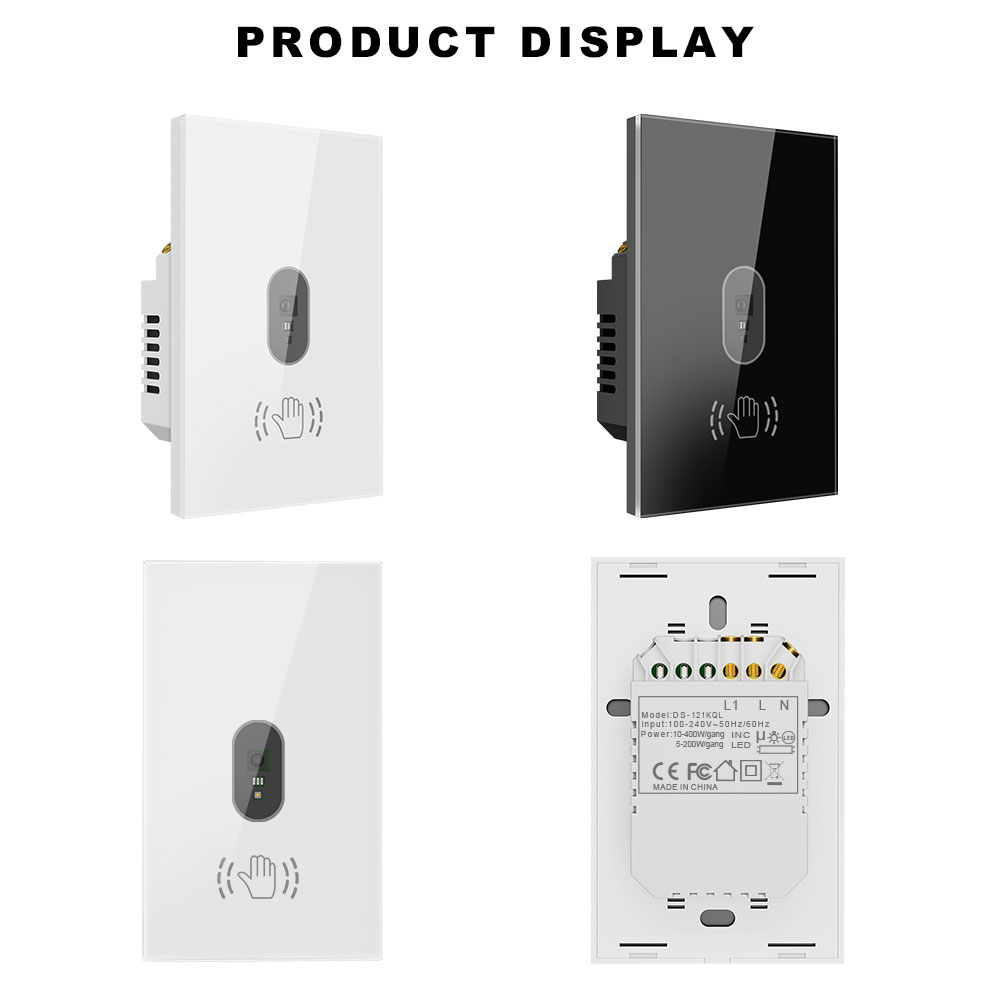
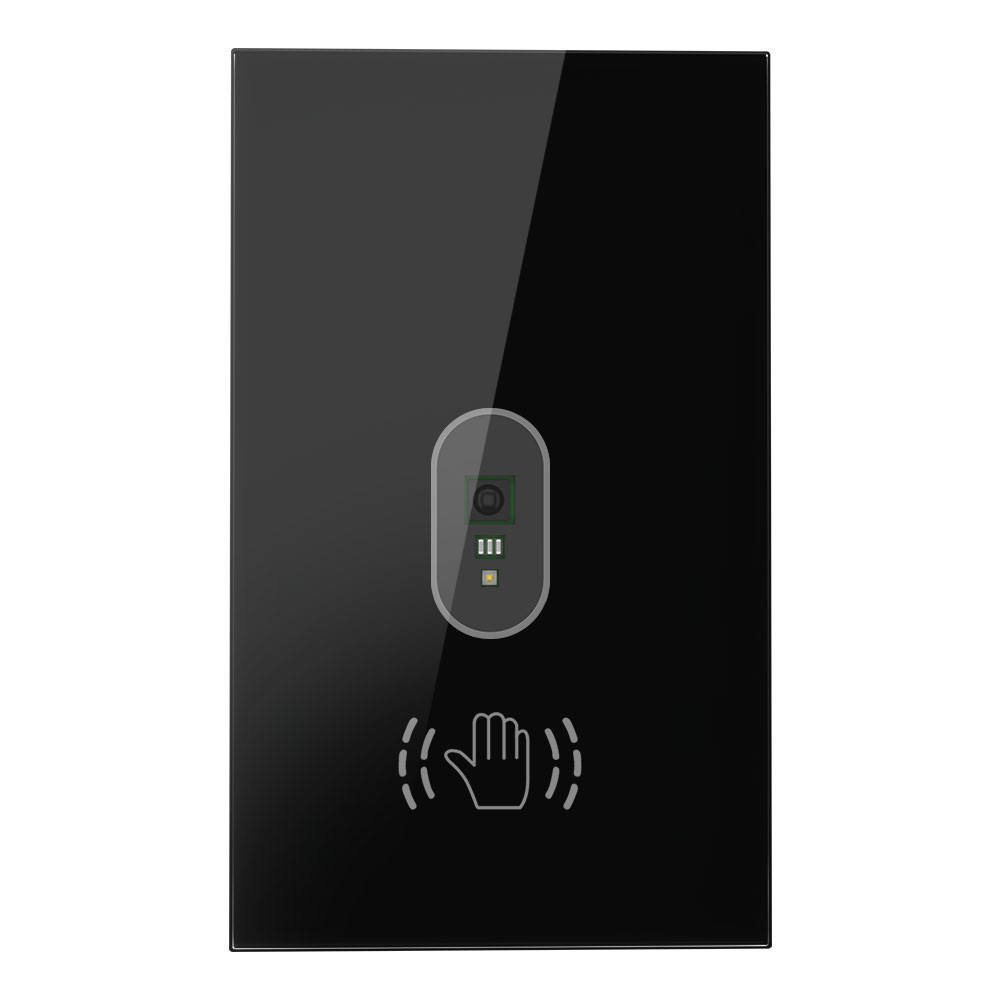
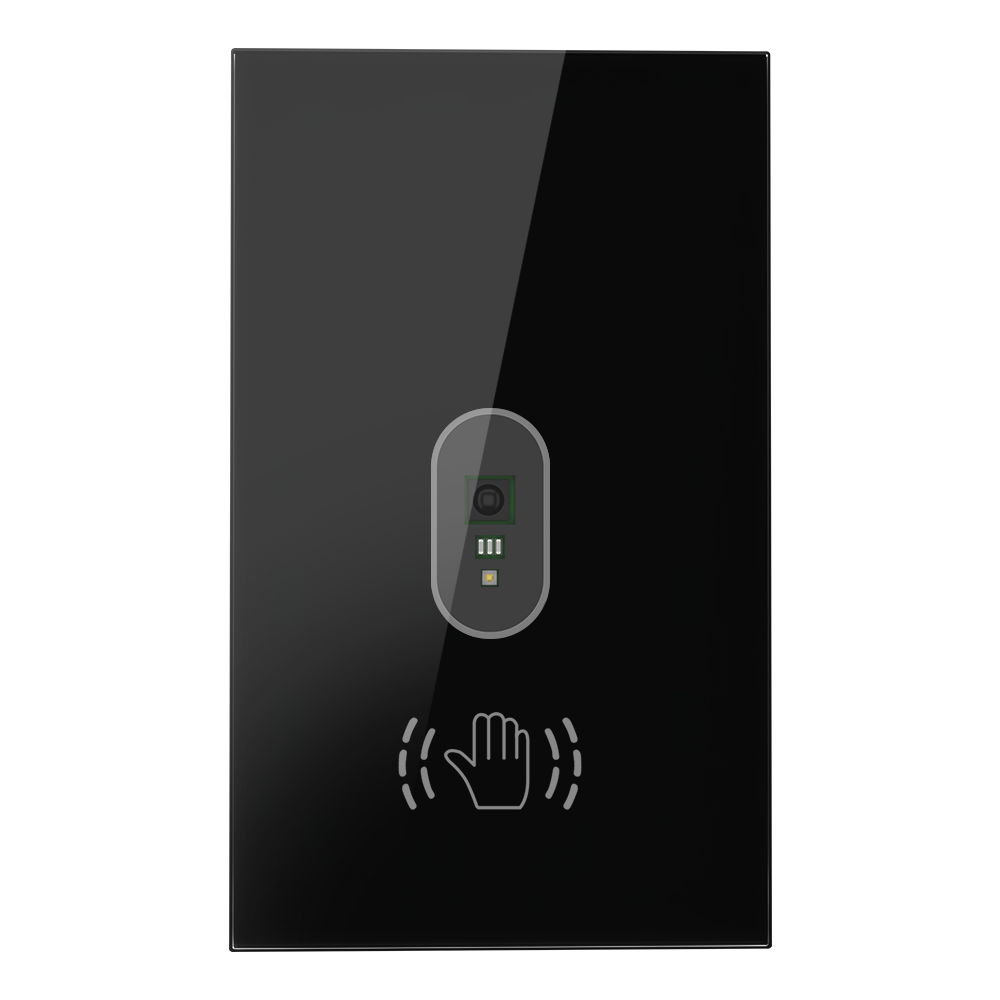
121KWL wave-sensor WiFi wall switch front panel black and white
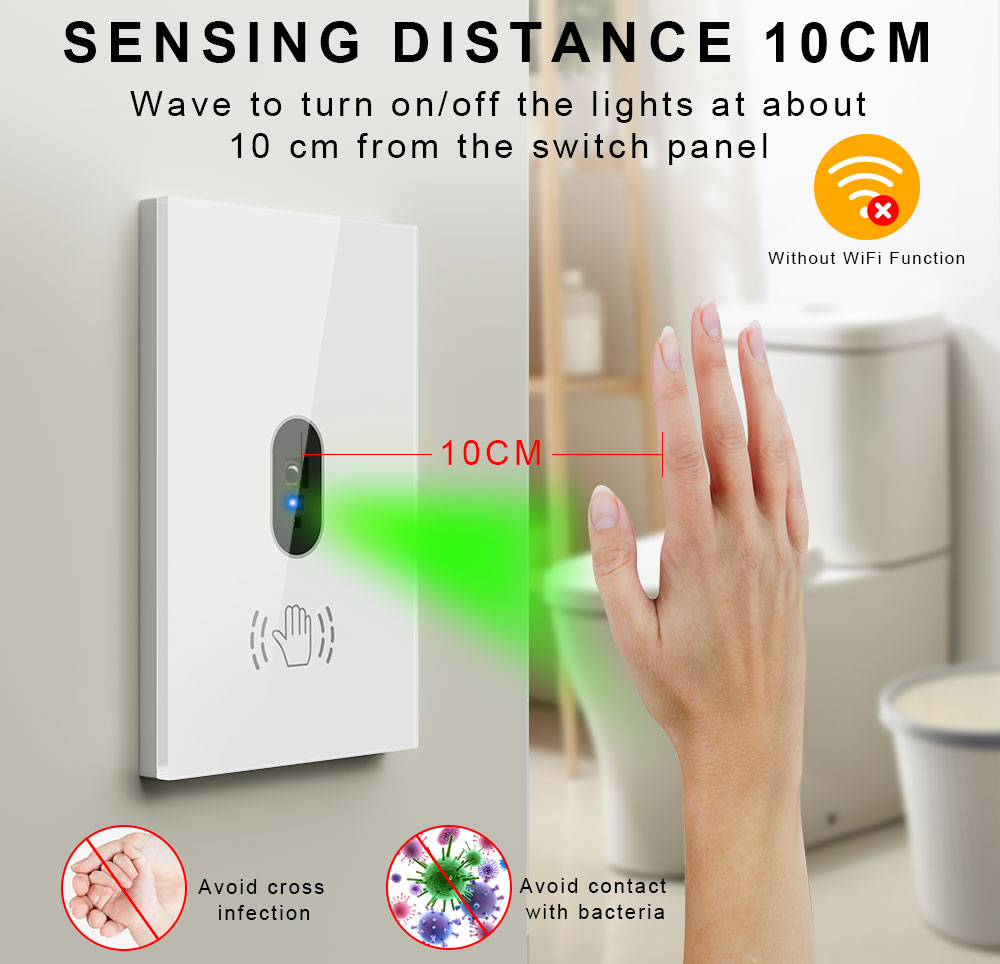
121KWL wave-sensor Wi-Fi wall switch – a single hand gesture within 10 cm toggles the load

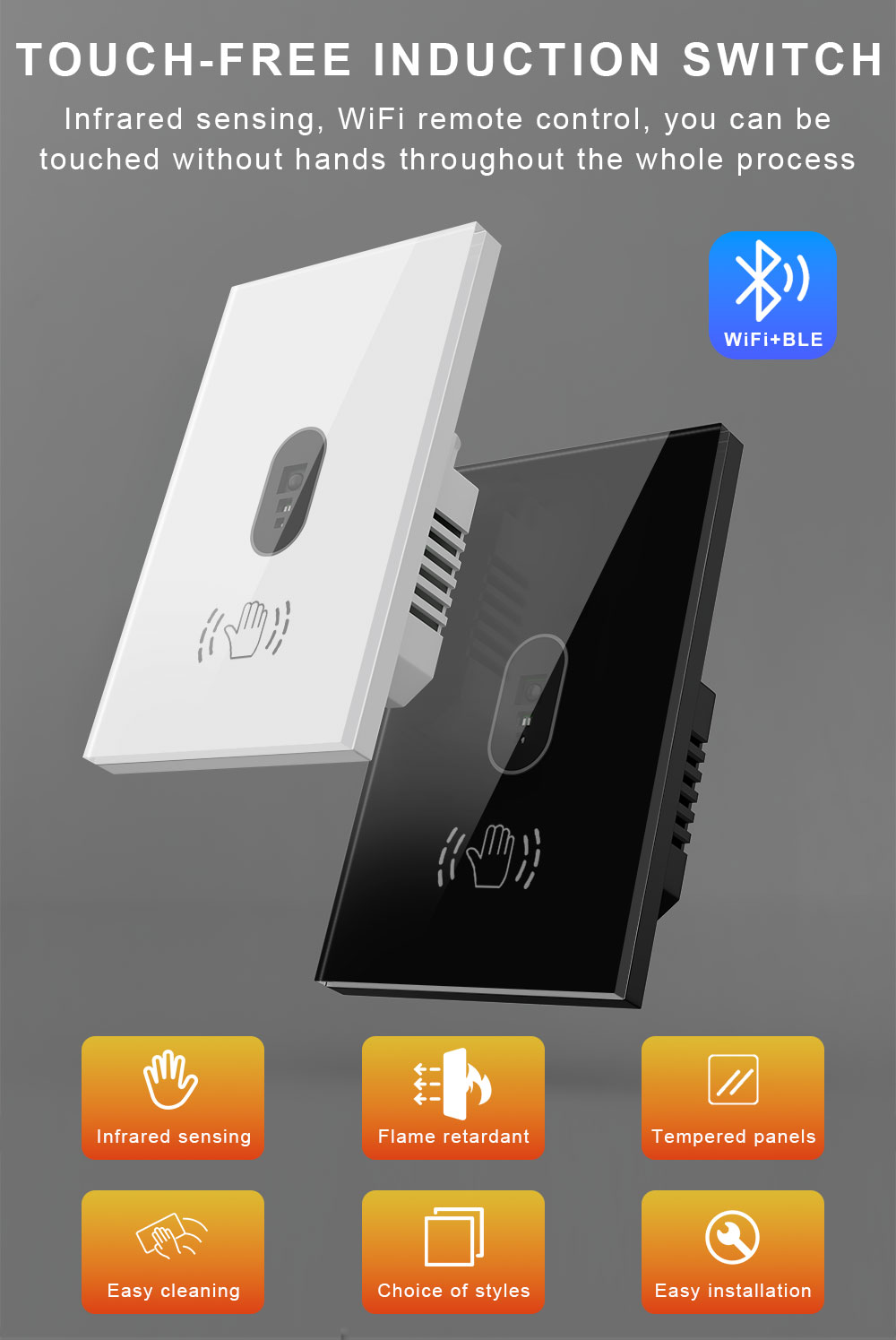
The wave-sensor Wi-Fi wall switch answers that question with a hand gesture. Move your palm within 10 cm of the panel and the load toggles; there is nothing to press, nothing to wipe down, and nothing for a guest to figure out at 2 a.m. ZigBee vs ZigBee 3.0: What Actually Changed

What is a wave-sensor wall switch?

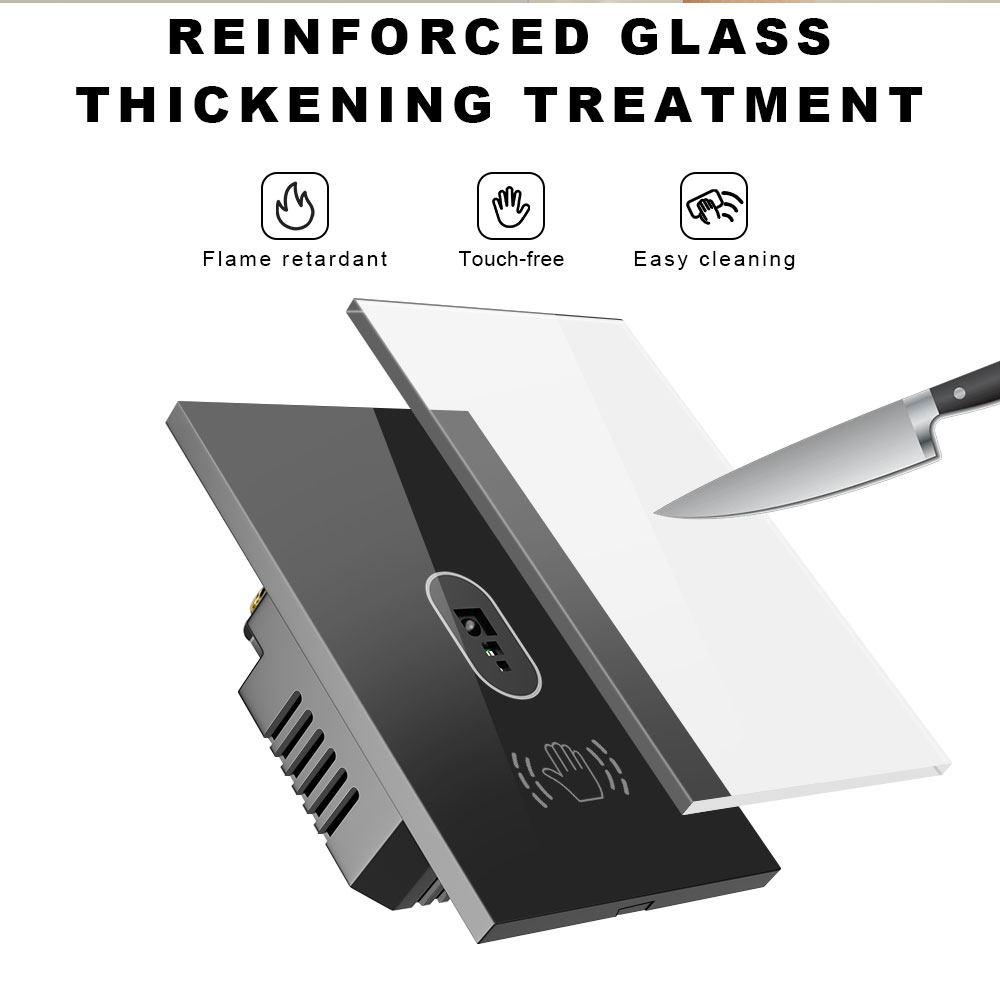
A wave-sensor switch is a Standard wall switch that carries an infrared gesture sensor behind its glass front. Instead of a mechanical rocker or a capacitive Touch pad, the trigger is proximity motion: the panel detects a hand entering its sensing field and cycles the relay between on and off. The physical panel stays sealed, so the surface never collects the greasy fingerprint film that capacitive touch panels develop in kitchens and hotel bathrooms.

Two variants are available in this platform, and the difference matters when you build a price ladder for your market:

  • Wave + Wi-Fi version — gesture control plus full app control: remote on/off, app timers with weekday repeat, OTA firmware upgrades, device sharing, and SmartConfig pairing on both Android and iOS.
  • Wave-only version — gesture control and nothing else. No app, no cloud, no pairing. Ideal for corridors, storage rooms and public washrooms where a network connection adds cost without adding value.
wave sensor wifi wall switch app control and gesture sensing
Wave-only and wave + Wi-Fi versions share one platform; the gesture relay replaces the mechanical rocker

Technical specifications

The figures below are taken directly from the product specification sheet. EU and US versions share the same electrical platform; only the wall-plate geometry differs.

Parameter EU version (86 mm) US version (118 mm)
Model series 101KWL (Wi-Fi) / 101KQL (wave-only) 121KWL (Wi-Fi) / 121KQL (wave-only)
Panel dimensions 86 × 86 × 35 mm 118 × 72 × 35 mm
Output channels 1 gang 1 gang
Input voltage AC 100–240 V AC 100–240 V
Input frequency 50/60 Hz 50/60 Hz
Maximum load 400 W 400 W
Wireless frequency 2.4 GHz Wi-Fi 2.4 GHz Wi-Fi
Operating temperature -20 °C to 45 °C -20 °C to 45 °C
Operating humidity < 80 % RH < 80 % RH
Colours White / Black White / Black
Gesture range ≤ 10 cm ≤ 10 cm

Model-to-market mapping should be confirmed on quotation; the EU and US plates are not interchangeable, and the 400 W rating refers to resistive lighting loads such as LED panels, downlights and filament lamps rather than motor or heating loads.

wave sensor switch 400W 86mm and 118mm dimensions
EU 86 mm and US 118 mm plate geometry, 35 mm depth behind the wall plate

How the gesture sensing actually behaves

One gesture, one state change

The sensor uses a cycling logic rather than a toggle-on-motion rule. Each detected wave flips the current state — on becomes off, off becomes on — so the panel behaves exactly like the rocker it replaces. There is no ambiguity about whether the light was already on, and there is no need to hold the hand in place.

Ten centimetres is the sweet spot

A 10 cm sensing envelope is deliberately short. It is long enough that a person walking past with wet hands can trigger the switch with an open palm, and short enough that nobody in the corridor outside a bathroom door switches the light on by accident. For installers, this also means the sensor does not need a cut-out or a separate aperture — it sits behind the same glass as the legend.

wave sensor switch gesture sensing range 10cm
The 10 cm sensing envelope: long enough for a wet hand, short enough to avoid corridor false triggers

Touch still works

The panel remains a functional wall switch. Guests who instinctively press it are not punished with a dead plate; the relay responds either way. In hotels this quietly removes the single most common guest complaint about unfamiliar in-room technology.

The app layer (Wi-Fi version only)

When the Wi-Fi module is fitted, the gesture switch becomes part of the property’s connected layer:

  • Remote control — switch any load on or off from the phone, provided both the panel and the phone are online.
  • Timers with weekday repeat — schedule a load per day of the week, which is what makes the product usable for signage lighting, display windows and bathroom exhaust fans on a fixed routine.
  • OTA firmware updates — new functions can be pushed to panels already on the wall, so a fleet installed this quarter does not become obsolete next quarter.
  • Device sharing — hand access to family members, staff or facility managers without handing over the account.
  • SmartConfig pairing — network credentials are pushed from the phone, supported on both Android and iOS, so no per-panel commissioning laptop is required.
wave sensor wifi switch app remote control timers
App layer: remote switching, weekday timers, OTA updates and device sharing

Where this switch earns its place

Hotel bathrooms and guest rooms

A wet hand never has to find a switch plate. Combined with the timer function, the bathroom exhaust Fan can run on a fixed daily schedule regardless of whether the room is occupied.

touchless wall switch for hotel bathrooms clinics washrooms
Touchless operation in hotel bathrooms, clinics and public washrooms reduces contact points

Clinics, dental surgeries and care facilities

Touchless operation reduces contact points on high-frequency surfaces. The sealed glass front is also easier to disinfect than a rocker with a gap around its paddle.

Commercial washrooms and factory corridors

Public washrooms are the classic case for the wave-only version: gesture control, no app, no network, no commissioning, and a load rating that suits LED battens and downlights.

Short-let apartments and serviced units

Remote control lets the operator cut lighting between guest stays, and device sharing allows cleaning staff to be given access without sharing owner credentials.

Kitchens and food preparation areas

Grease and flour are the enemies of capacitive touch. A gesture panel stays clean because it is never contacted.

OEM and ODM capability for brand owners

This switch is built as a platform rather than a single SKU, which is what makes it usable for distributors who need a differentiated product without a full development cycle:

  • Plate and colour customisation — white and black are standard; plate geometry follows the EU 86 mm and US 118 mm standards so the product drops into existing box systems.
  • Branding — logo and legend printing on the glass, plus customised packaging for retail or project cartons.
  • Firmware and app configuration — the connectivity can be delivered under your own app identity, with the product provisioning flow adapted to your onboarding screen.
  • Variant mix — order the Wi-Fi and wave-only boards under one purchase order so a single container covers both the connected and the budget tier of your catalogue.
  • Documentation package — product specification sheets, wiring diagrams and packaging artwork supplied for your own marketplace listings.

Because the sensing element, the relay and the wireless module are shared across the range, changes to colour or plate do not restart the certification and testing cycle — a practical advantage when you are trying to launch before a selling season.

Selection checklist before you order

Question If yes If no
Does the location need app or remote control? Specify the Wi-Fi version (101KWL / 121KWL) Specify the wave-only version (101KQL / 121KQL)
Is the wall box EU 86 mm or US 118 mm? Match the plate to the box before ordering Confirm box standard with the installer first
Is the connected load under 400 W resistive? Product is suitable as specified Move to a higher-rated switching solution
Will the panel sit in direct sunlight or near a heat source? Check the -20 to 45 °C range against the site Standard installation applies
Do you need a private-label app? Request the OEM app configuration package Standard app is sufficient
wave sensor wall switch white background product photo
White-plate version – standard finish for project and retail cartons
Frequently asked questions

Does the switch need a neutral wire?

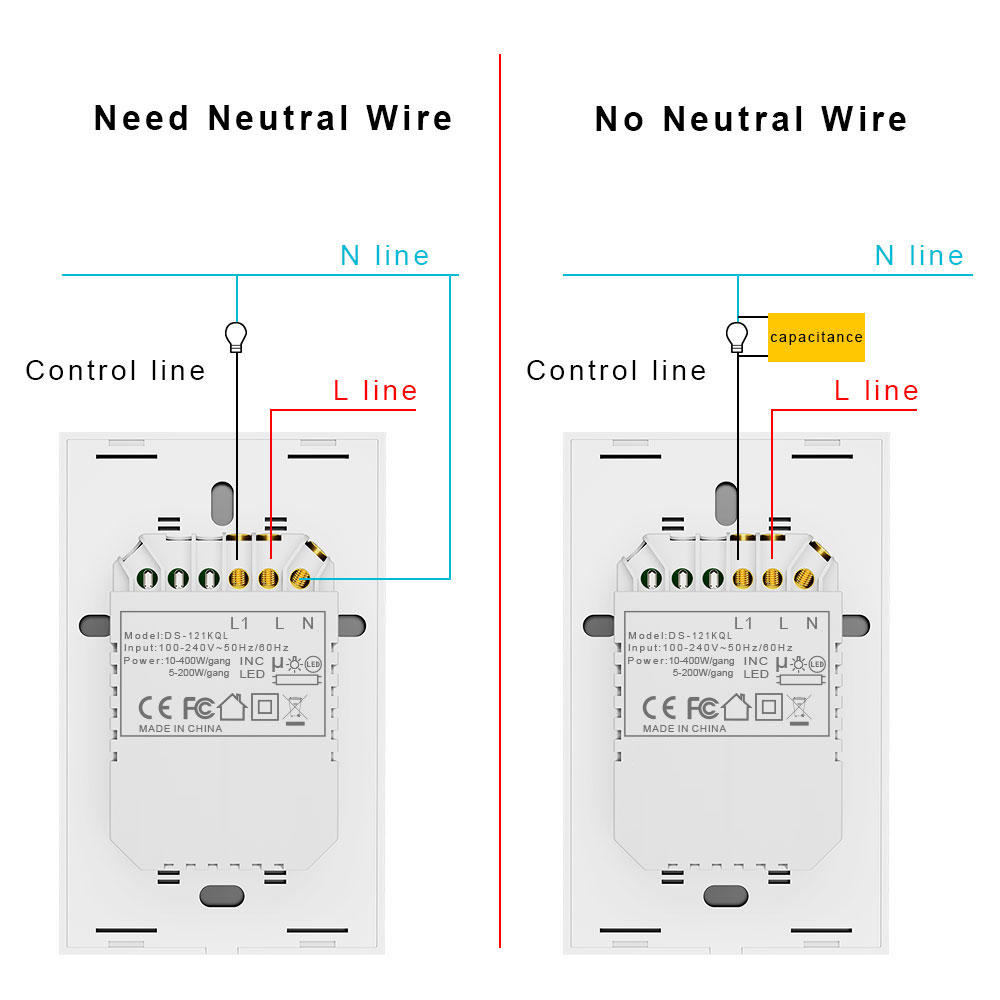
Wiring requirements depend on the specific board version. Confirm the wiring diagram for the exact model you are ordering before the electrician starts work; do not assume the wave-sensor board shares the wiring of a no-neutral touch switch.

Can the gesture sensor be disabled?

The sensor and the physical switch operate on the same relay. Where a project requires motion-free operation, specify the configuration with your sales contact at quotation stage.

How many panels can one app account manage?

Multiple panels can be added to a single account and grouped by room or by property. The practical limit depends on your Wi-Fi infrastructure rather than the panel itself.

Talk to us about your wave-sensor programme

If you are building a touchless switching line for hotels, healthcare or public washrooms, we can supply the EU and US variants under a single order, with your branding on the glass and packaging, plus the specification documents your marketplace listing needs.

Send us your target market, plate standard, annual volume and whether you need the Wi-Fi tier or the wave-only tier — we will come back with a quotation and a sample plan.

wave sensor WiFi wall switch cutout image for listings
Cut-out asset supplied for your own marketplace and catalogue listings

All technical figures in this article are taken from the manufacturer’s product specification sheet for the wave-sensor switch range. Confirm the exact configuration of your ordered model on the datasheet before installation.

Related Articles

You Might Also Like
Posted on — Leave a comment

Choosing a Smart Lock That Fits the Door You Already Have

Smart locks are not interchangeable. Unlike a Smart plug, a lock has to physically fit the door, and “almost fits” means a hole in the wrong place. Measure first, and the choice narrows from dozens of models to two or three.

Measure four things before shopping

  • Door thickness — tape measure across the edge of the door. Most locks cover a range (commonly 35–55 mm or 40–120 mm); yours must fall inside it.
  • Lock body type — a European mortise, a Scandinavian oval cylinder, a US tubular latch, or a simple rim lock. Photograph the edge of the door: the metal plate visible there identifies it faster than any description.
  • Hole spacing — the distance between the cylinder hole and the handle spindle. This is the specification that decides whether an existing hole can be reused.
  • Handing and swing — which side the hinges are on and whether the door opens inward or outward, because some locks are handed.

Take photographs of the door edge, the face of the existing lock and the door from both sides. With those four numbers and three photos, a fit question is answered in one message instead of a return shipment.

Three lock types, and what each one replaces

Type Replaces Best for Intrusiveness
Full handle/lever lock with biometrics The whole lock Front doors, homes you own Permanent
Round knob lock An existing round knob Interior doors, rentals, offices Low, reversible
Video intercom lock The whole lock, adds a camera House entrances, gates Permanent

A biometric handle lock is the common answer for a front door. The 3D face recognition lock adds fingerprint, password and app entry, and the palm-vein version is the step up for a main entrance or an office Where you want fewer false rejections and a method that cannot be lifted from a photograph.

A round knob lock is the least disruptive option and the one to consider for an interior door, a home office, or a rental you must hand back unchanged: the Bluetooth knob lock keeps a keyed cylinder as backup and can be swapped back in minutes.

A video intercom lock combines both jobs at a house entrance — camera, intercom, face recognition and lock in one unit, as on the 3D face video intercom lock. If you are weighing this against a separate doorbell and camera, our apartment intercom retrofit guide covers the case where the building’s own system is the constraint.

Opening methods: what each is actually good for

Fingerprint is the everyday method, and the sensor type matters outdoors: capacitive sensors read a dry or cold finger poorly in Winter, so a lock intended for an exposed door should have a robust sensor or a second method. 3D face and palm vein are the hands-full answer, and the reason to spend more. Passwords are for guests, preferably with a disposable code. NFC cards or fobs suit a household with children or cleaners. App and remote unlocking is for letting someone in when you are not home.

Whatever you buy, keep a physical key. Battery failure, a dead module or a flat phone should not be able to lock you out of your own house, and every serious lock retains a keyed override for exactly that reason.

Connectivity, battery and cold

WiFi locks connect directly but consume more power; Bluetooth locks are frugal but need a Gateway for remote access and automations — the trade-off is the same one explained in our guide to smart home hubs. Expect six months to a year from a set of cells under normal use, less in cold weather, and make sure the lock has an emergency contacts or emergency USB terminal so a flat battery can be resolved from outside the door.

For an exposed door in a freezing climate, check the stated operating temperature. Electronics and batteries behave differently at minus ten, and this is the specification most often discovered in January.

What a smart lock does not solve

It does not make a weak door strong, and it does not replace a decent cylinder — a lock is one part of a door’s resistance, and the frame and hinges matter as much. It does not remove the need to manage access: codes should be rotated for guests, and old credentials deleted when a cleaner or a contractor stops coming. And it is not an alarm system; it tells you who opened the door, not that someone is inside. Treat it as convenience plus an access log, and keep physical security separate.
Frequently Asked Questions

Can I fit a smart lock in a rental?

Usually yes if you choose a reversible type such as a knob lock and keep the original hardware to refit. Anything requiring new holes in the door needs the landlord’s agreement.

What happens if the battery dies?

Use the emergency terminal with a power bank for a one-off entry, then replace the cells. Keep the physical key accessible outside the home — with a neighbour, not in the lock box on the door frame.

Is face recognition reliable outdoors?

Modern 3D systems handle backlight and low light far better than camera-based recognition. Sunglasses, heavy scarves and very young children are still the difficult cases, so keep a second method enrolled.

Do I need a hub?

Only for remote access and automations on Bluetooth models. If you unlock at the door and nothing else, you do not.

Related Articles

You Might Also Like
Posted on — Leave a comment

Do Solar Lights Work in Winter? What Changes When the Days Get Short

They work. They just work less. A solar light stores energy during the day and spends it at night, so when December cuts the charging day from nine hours to four, the lamp that ran until dawn in July dies at midnight. Nothing has broken — there is simply less in the tank.

That distinction matters, because most winter complaints are fixed with position and mode rather than a replacement.

What actually changes

Summer Winter (temperate)
Usable charging hours 8 to 10 3 to 5
Sun angle High, near overhead Low on the horizon
Shade Leaves screen the panel Bare trees help; buildings shade more
Battery Normal capacity Capacity drops below freezing
Result Dusk to dawn A few hours, or all night on motion mode

The last row is the one people notice. Set to a dim always-on mode, a light will run out in winter. Set to motion mode — dark until something moves, then bright briefly — the same light usually lasts the night, because motion mode spends far less energy. Changing modes is the most effective winter fix and it costs nothing. Choosing a Smart Lock That Fits the Door You Already Have

Three adjustments worth making in autumn

Tilt the panel toward the winter sun. The sun sits much lower in December, so a panel laid flat catches far less. Angling it steeper, facing the equator (south in the northern hemisphere), recovers a surprising amount. Most units mount on a bracket that allows it. Zigbee Gateway OEM: Complete Guide for Smart Home Distributors

Move it out of the new shade. Shadows lengthen as the sun drops, and a position that was sunny in September can sit behind a fence or a wall by November. Watch the spot for a day before deciding Where to drill.

Wipe the panel. Winter grime — traffic film, salt, dust — cuts charging noticeably, and a panel under a tree collects it faster. A cloth twice a season is the cheapest maintenance there is.

Not all solar lights struggle equally

Decorative lights — a lantern on a table or a path marker — have low expectations and generally do fine, because nobody needs them at full brightness for six hours. The ambient patio lantern belongs here.

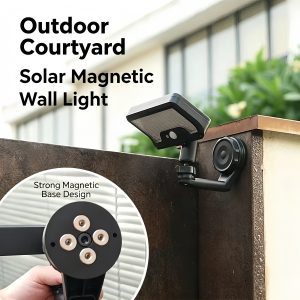
Security lights have the hardest job: bright, reliable, often all night. This is where motion mode and a larger panel matter, and it is why a dedicated 300-degree motion security light or the remote-controlled wall lamp is specified differently from a garden ornament. The magnetic-mount courtyard light is the useful middle case: it detaches for charging indoors when a run of dark weeks arrives.

Step and fence lights run for short periods and are usually fine, but their panels are small — the solar step light and fence wall light are worth checking on the shortest days of the year rather than assuming.

Where a light must be reliable regardless of weather, a mains-powered option such as the mains motion sensor wall light is the honest answer. Solar buys you freedom from wiring, not immunity from December.

Snow, frost and the battery

Snow on the panel stops charging entirely, so brush it off; a light under an eaves overhang avoids the problem. Cold itself is less damaging than people assume — the LEDs are unaffected — but lithium cells deliver less capacity below freezing and recover when they warm up, which is another reason winter nights are shorter than summer ones. Rechargeable cells also age: expect Two to three years before a light’s runtime noticeably shortens, at which point replacing the cell is usually cheaper than replacing the fitting.

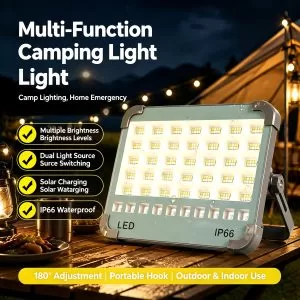
For outages rather than ambience, a rechargeable solar camping floodlight kept charged indoors does more good than a fitting that has spent the week under snow.

Buying for a cold or dark climate

If your winters are genuinely dark — northern Europe, Canada, the northern US states — buy on panel size and battery capacity rather than lumen count, because brightness is useless for three hours a night. Prefer a model with a selectable mode so you can Switch to motion sensing in October and back to a brighter setting in spring. Separate panels are worth having: a fitting whose panel can be aimed independently lets you put the light where you Need it and the panel where the sun reaches, which is often not the same place.

Frequently Asked Questions

Should I bring solar lights indoors for winter?

Usually no. Leaving them out is fine; the failure mode is a flat battery at midnight, not damage. Bring them in only for a long unoccupied period, and give them a charge before redeploying.

Do they charge on cloudy days?

Yes, at a reduced rate — typically a fraction of full sun. Several consecutive grey days are what drain them.

Why does my light come on but only stays lit an hour?

Almost always charging, not the lamp: shade, a dirty panel, or a flat-facing angle. Correct those before suspecting the battery.

Can I use one to light a driveway camera’s view?

Yes, and it helps — motion-activated light improves what a camera records at night. Just remember the camera has its own power question, which our CCTV versus IP camera guide covers separately.

Related Articles

You Might Also Like
Posted on — Leave a comment

4G Smart Watch with GPS: When a Standalone Watch Beats One Tethered to a Phone

Most smartwatches are accessories to a phone: they mirror notifications over Bluetooth and their GPS is the phone’s GPS. That is fine for an adult carrying a phone, and useless for a seven-year-old walking Home from school or an eighty-year-old who does not carry one. A 4G watch has its own SIM, its own data connection and its own positioning, which means it Works as a locating device whether or not a phone is anywhere near it.

That independence is the entire product. It is also what you pay for, in money and in battery.

What you are choosing between

Bluetooth watch 4G standalone watch
Needs a phone nearby Yes No
Positioning Uses the phone’s GPS GPS plus WiFi and cell-tower positioning
Calls Through the phone Independent number
SIM and plan None Required
Battery Several days typical Often one to two days
Best for Fitness and notifications Children, elderly relatives, lone workers

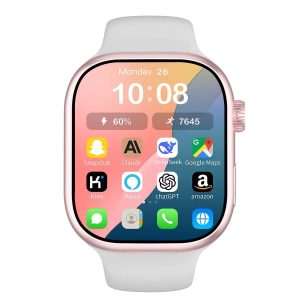
A model like the 4G LTE watch with a rotating camera sits in the second column: it places itself, makes and receives calls on its own number, and adds a camera for a quick look around — useful when the person wearing it is not going to describe where they are.

Who actually needs one

  • School-age children. A fixed number they can call, a location you can check, and no smartphone. This is the most common reason families buy one.
  • Elderly relatives living alone. Falls and confusion are the scenarios; the value is that the watch is on the wrist rather than on a table across the room.
  • People working alone outdoors — delivery, site visits, farming — where carrying a phone is impractical but being reachable is not optional.

If none of those describe the situation, a Bluetooth watch is the better buy. For health tracking rather than locating, a model such as the Tuya smart watch with heart-rate and blood-oxygen monitoring does that job without a data plan.

The ongoing cost, stated plainly

A 4G watch needs a SIM and a small data plan — usually a low-cost monthly tariff rather than anything expensive, since a watch moves very little data. Budget for it as a subscription, not a one-off. Check which LTE bands the watch supports against the carrier you intend to use before ordering; a watch that supports the wrong bands for your country is the single most common disappointment with these devices, and it is not fixable in software. Tuya vs Sonoff Smart Switch: Which Ecosystem Should You Build On?

Battery: the compromise you are accepting

A watch maintaining a cell connection, running GPS and staying reachable uses far more power than one that just mirrors a phone. Realistic expectation: charging daily or every other day. That is fine for a child who takes it off at home and bad for someone who forgets. Two practical mitigations: charge it as part of a fixed routine rather than a decision, and lower the location-reporting interval in the app — reporting every few minutes instead of continuously makes a visible difference to how long it lasts.

Accuracy, and what the map does not tell you

Positioning on these devices combines satellite, WiFi and cell-tower data, which is why accuracy varies: metres outdoors in the open, tens of metres indoors or between tall buildings. A dot that drifts by a street is normal, not a defect. Read location as “they are in this area”, and use the call function rather than the map when it Actually matters.

Privacy worth thinking about

Anyone buying a locating device for another person should say so plainly. For children that means explaining what the watch does and agreeing when it is on; many schools require watches to be in a silent mode during class, so check the rule before the first day. For elderly relatives, the conversation is about consent and dignity — the watch is worn voluntarily, and the person should know who can see the location. Store the account credentials properly and review who has access to the app periodically.

What to confirm before ordering

Four things, in this order. Bands — the watch’s LTE bands against your carrier, which decides whether it works at all. Size and strap — a watch that is uncomfortable does not get worn, and this is the most common reason these end up in a drawer; check the wrist size rather than the age on the box. Water resistance — children’s watches need to survive handwashing and rain, not swimming. Whether the app works in your language and region, since the location service is only as usable as the app that shows it.

Frequently Asked Questions

Does it work without a phone at all?

Yes. That is the point. Setup is usually done once from a parent’s phone, after which the watch works on its own.

Can I use my existing carrier’s SIM?

Often yes, if the watch supports the carrier’s LTE bands and the plan allows it. Confirm the bands first.

How accurate is the location?

Best outdoors with a clear sky; less so indoors, where it falls back on WiFi and cell towers. Expect an area rather than a pinpoint.

Is the camera necessary?

No, and it is the feature most likely to cause trouble at school. If locating and calling are the goals, a simpler watch is easier to Live with.

Related Articles

You Might Also Like
Posted on — Leave a comment

Do You Actually Need a Smart Home Hub? Zigbee, Matter and Bluetooth Gateways Explained

Every Smart bulb advertises “no hub required”, which has left a lot of people believing hubs are obsolete. They are not — they just moved. A hub was never about connecting bulbs; it was about connecting the devices that cannot reach your router on their own, and there are more of those now, not fewer.

The practical rule: if everything you own is WiFi, you do not need a hub today. The moment you add battery sensors, you do.

Why a battery sensor cannot just use WiFi

A door contact or a motion detector runs for a year on a coin cell. WiFi’s handshake and transmit power would drain that cell in weeks, and a sensor that needs charging is a sensor nobody uses. Zigbee and Thread exist to be cheap to transmit and cheap to sleep, which is why every serious sensor uses them — including our PIR motion sensor and the temperature and humidity sensor. Those devices need something in the house that speaks Zigbee and can reach your router, and that thing is the hub.

Three different things get sold as a “hub”

Type What it really does Worth it when
Zigbee gateway Runs a Zigbee mesh, keeps devices reachable, executes automations locally You own sensors, or more than a handful of switches
Matter / Thread hub Same job, newer standard, works across brands You are starting fresh and want to avoid lock-in
Bluetooth gateway Forwards Bluetooth devices to the cloud so you can control them remotely You have Bluetooth locks or sensors and want them visible when away

The Bluetooth one deserves a warning, because it is the most misunderstood. A Bluetooth gateway does not turn a Bluetooth lock into a Zigbee device and does not run automations on its own — it is a bridge so your phone’s absence does not mean losing the device. Useful, but not the same purchase as a Zigbee hub. If you want both in one box, a multi-mode gateway such as the MHUB-YR-W also carries an IR blaster, which replaces the pile of remote controls for an air conditioner or a TV at the same time.

Wired or wireless

A wired gateway — the TYGWZ-01, or the MHUB-MS — sits next to the router with an Ethernet cable. It is the most stable option and the one to choose if the hub lives in a cabinet with the network gear. A wireless one such as the TYGWZ-02 or the ZHUB-W only needs power, so you can place it centrally in the flat — which matters more, because Zigbee is a mesh and a hub in the middle of the home hears more devices directly. Pick wired for reliability in a fixed installation; pick wireless when you need to put it where the devices are.

If you are building for the next five years rather than the next five months, a Matter-capable model such as the MZHUB Matter gateway is the safer buy, because it can join either ecosystem later.

How many devices is too many

Zigbee meshes scale further than people expect — our Zigbee 3.0 gateway is specified for up to 130 wired or 30 to 40 wireless devices. The practical limits arrive before the numbers do: put a mains-powered Zigbee device every few rooms so the mesh has routes, and keep the hub away from the microwave and from large metal surfaces.

The reason to care about local execution is simple — automations that run on the hub rather than in the cloud keep working when your internet does not. “Motion in the hallway turns on the light at night” should not depend on a data centre.

When you genuinely do not need one

Three or four WiFi plugs, a couple of bulbs, and a Camera: skip it. You will add complexity for nothing, and every device still works. Add sensors, go past ten devices, or want lights that work during an outage, and the hub stops being optional. The same reasoning applies to the wider ecosystem choice — see our comparison of Zigbee and WiFi devices and, if you are choosing a platform, the Tuya versus Sonoff comparison. For a single panel that does control and hub duties at once, the 4-inch Tuya control panel replaces a wall of switches and a hub with one box.

Three situations, three answers

Two plugs and a bulb. No hub. Add nothing.

An Apartment with sensors on the doors, a motion sensor in the hall, and Smart switches. One Zigbee gateway, wireless if you need it central, wired if it lives by the router — the MHUB-W covers the case where you also have Bluetooth devices, and an IR remote paired with the gateway brings an older air conditioner into the same automations.

A house being wired from scratch. Matter-capable hub, wired, in the cabinet with the network gear — and choose devices that carry Matter or Zigbee rather than WiFi wherever there is a choice.

Frequently Asked Questions

Can two hubs coexist?

Yes — a Zigbee hub and a Bluetooth gateway on the same network are normal. What does not work is one device paired to two hubs; a Zigbee sensor belongs to whichever hub added it.

Do I need a hub for Matter devices?

You need a Thread border router, which most Matter hubs include and some speakers and routers now include too. Check whether you already own one before buying.

Will my devices work if the hub is unplugged?

Zigbee devices lose automations and remote control; anything running locally on a schedule stops. Battery sensors keep their own state but cannot report it.

Is a Bluetooth gateway enough for a smart lock?

For remote control and status, yes. For a lock to trigger other devices or run locally, it needs to be on a hub that executes automations.

Related Articles

You Might Also Like
Posted on — Leave a comment

Zigbee Gateway OEM: Complete Guide for Smart Home Distributors

A Zigbee gateway is the brain of any Smart Home ecosystem. If you’re building a Tuya Smart home product line, the gateway is the highest-value item to get right. This guide covers what to look for when sourcing. ## What Is a Zigbee Gateway? A Zigbee gateway connects your Tuya Zigbee devices (sensors, switches, bulbs, plugs) to the cloud and your phone. Without a gateway, Zigbee devices won’t work remotely. ### Why Zigbee over WiFi? – Lower power consumption (sensors last 1-2 years on battery) – Can connect 100+ devices on one gateway – More stable for mesh networks – No WiFi congestion ## Gateway Specs That Matter ### Device Capacity – Budget: 30-50 devices – Mid-range: 100-150 devices – Premium: 200+ devices – **For distributors, recommend the 100+ version** — customers always add more devices ### Protocol Support – Tuya Zigbee 3.0 (must have) – BLE gateway option (for beacons) – Zigbee + BLE combo gateways available ### Connection Type – WiFi gateway: easiest setup, no wiring – Ethernet gateway: more stable for professional installers – Poe gateway: for commercial projects ### App Integration – Tuya Smart / Smart Life app
– Alexa + Google Home voice control – Home Assistant integration (open gateway firmware available) ## Device Pairs That Sell Best | Gateway + Bundle | Target Customer | Price Point | |—|—|—| | Gateway + PIR sensor + door sensor | Home security DIY | $30-50 | | Gateway + 2x smart plugs | Energy saving | $25-40 | | Gateway + curtain motor + wall switch | Curtain automation | $50-80 | | Gateway + water leak sensor x2 | Flood prevention | $35-55 | ## OEM Opportunities 1. **Bundle packaging** — gateway + sensors as a starter kit 2. **Custom app branding** — Tuya white-label app from 500 units 3. **Logo on gateway unit** — from 100 pcs 4. **Multi-language quick start guide** — EN/ES/RU/AR ## Pricing | Product | MOQ | Unit Price | |—|—|—| | WiFi Zigbee gateway (100 devices) | 50 pcs | $8-15 | | Ethernet gateway | 50 pcs | $12-20 | | Zigbee + BLE combo | 100 pcs | $15-25 | | Custom logo | 100 pcs | +$0.5/pc | ## Common Mistakes 1. **Selling Zigbee devices without a gateway** — customers can’t use them! 2. **Not explaining the gateway requirement** — add it to product listings 3. **Wrong region frequency** — Zigbee is global 2.4GHz, no issue 4. **No reset button visible** — customers need a way to factory reset ## XingLiao Gateway Range We supply: – Tuya Zigbee 3.0 WiFi gateways – Ethernet gateways for professional use – Combo Zigbee + BLE gateways – Can bundle with sensors, plugs, switches – CE/FCC/RoHS certified Ask for gateway sample pricing — 3-day shipping worldwide.
Related Articles

You Might Also Like
Frequently Asked Questions

Is Zigbee Gateway Oem worth buying?

Based on the breakdown in this article, Zigbee Gateway Oem offers a solid mix of features and value. If your main goal matches the key benefits described above, it is a practical choice for everyday use.
How do I choose the right zigbee gateway oem for my needs?

Start with your core use case, then compare battery life, compatibility, and build quality as covered above. Choosing the right zigbee gateway oem comes down to matching specs with how you Actually use it.

Does zigbee gateway oem require a companion app?

Most devices of this type pair with a free companion app for setup and firmware updates. A few advanced features may sit behind a paid plan, so check the official specs page before buying.

Posted on — Leave a comment

Using a Smart Plug as a Heater Thermostat: What Works, and the Two Things to Check First

The cheapest way to make an electric heater Smart is not to replace it. It is to put something between it and the wall. A thermostat plug has its own temperature sensor and switches the outlet according to a target temperature and a schedule, which is exactly what the dial on the heater was supposed to do and usually does badly.

Two checks come first, and they decide whether the idea works at all in your house.

Check one: the load

Read the rating plate on the heater, then read the rating on the plug. A European 16 A thermostat socket handles roughly 3500 W; the US version is rated for a 15 A household circuit, so a 1500 W space heater is comfortable and a second One on the same circuit is not. If the heater’s plate says more than the plug’s rating, stop — this is the one specification where rounding up is not allowed.

Also check what the plug is plugged into. Never chain a heater through an extension lead or a multi-way strip; the combination of a continuous high load and a coiled cable is how these things go wrong. Wall outlet, directly.

Check two: what the heater does when power returns

This is the check people skip, and it is why some setups “do not work”. A thermostat plug controls the heater by cutting and restoring mains power. That only works if the heater comes back on by itself — a mechanical dial or a rocker Switch that stays in the on position will; a heater with an electronic soft-touch power button that wakes up in standby will not, and you will find a cold room and a standby light every morning.

Test it before you buy anything: switch the heater on, pull the plug, wait ten seconds, plug it back in. If it resumes heating, you are fine. If it sits in standby waiting for someone to press a button, you Need either a heater with a mechanical switch or a different approach.

What you actually gain

  • A real thermostat. The bimetal dials on portable heaters drift by several degrees. A plug reading the room temperature holds closer, and you set the target in the app instead of guessing where “3” is.
  • A schedule that matches your life. Warm the room for the hour before you get up and the hour before you get Home, off overnight. This is where the saving comes from — not from any magic inside the plug.
  • Hysteresis done properly. Good thermostat control switches off slightly above target and back on slightly below, instead of chattering around the set point. If your plug’s app has a temperature-difference or hysteresis setting, leave it at one to two degrees.
  • Energy figures you can look at. If you want to know what the heater costs per week, a socket with metering such as the 16 A socket with energy monitoring reports it directly. Our guide to energy monitoring on smart plugs covers how to read those numbers.

Place the sensor where it means something. A plug measuring temperature at floor level next to a heater will report a warm room while you sit cold two metres away; that is the most common reason people conclude the plug is inaccurate.

Thermostat plug versus a proper thermostat

A plug controls one heater at the socket. If you want to control a boiler or a whole heating circuit from the wall, that is a switch or a thermostat wired into the system, not a plug — the trade-offs are set out in our comparison of smart thermostats versus smart switches for heating. And if the room’s switch box is what you are replacing, check whether there is a neutral Wire before ordering, which our no-neutral guide covers.

For a permanent installation rather than a plug-in one, the US standard smart socket or a matching 86 × 86 socket from the same series as your switches keeps the wall looking like one unit. If you are building automations around it, the MPH-S1 socket gateway acts as both an outlet and a hub for the sensors feeding it, and a separate temperature and humidity sensor lets you measure the far side of the room instead of the floor.

Where it should not be used

Three situations where a thermostat plug is the wrong answer. Any heater with a motorised or electronic control panel that loses its settings on power loss — a plug cycling it will wipe the setting every time. Anything safety-related that must never be switched off remotely, such as a heater in a room where pipes could freeze. And loads near or above the plug’s rating, where the correct fix is a properly rated contactor and a thermostat, not a smarter plug.

Frequently Asked Questions

Will a thermostat plug actually cut my heating bill?

It cuts the hours the heater runs while nobody is there, which is usually the largest avoidable part of the bill. It does not make a heater more efficient — a 2000 W heater still draws 2000 W when it is on.

Can I use it with an oil-filled radiator?

Yes, and they suit it well: they have mechanical switches that survive power cuts, and their slow thermal response pairs well with a hysteresis setting.

What about an extension lead?

No. High continuous loads should go straight into a wall outlet. If you must, use a properly rated single-outlet lead, uncoiled, and never daisy-chained.

Does it still work if the WiFi drops?

The schedule stored on the device keeps running; app control and remote changes do not. Set the schedule to survive a router reboot rather than depending on an automation in the cloud.

Related Articles

You Might Also Like
Posted on — Leave a comment

Tuya vs Sonoff Smart Switch: Which Ecosystem Should You Build On?

The comparison gets phrased as a brand fight, but the Two are not the same kind of thing. Tuya is a platform: it licenses the chip, the firmware and the cloud to hundreds of manufacturers, which is why a switch from one brand and a socket from another still pair in the same app. Sonoff (from ITEAD) is a manufacturer that builds its own hardware, mostly modules and relays, and runs its own eWeLink app. Both work. They suit different installs.

This is written from the switch side, since that is where the decision has the longest consequences — switches are wired into walls and are the least fun thing to replace later.

Where they differ in practice

Tuya-based switches Sonoff
What it is Platform behind many brands One maker’s product line
App Smart Life / Tuya Smart (and many white-label apps) eWeLink
Strength Wall plates — glass touch boards, multi-gang, regional standards Relay modules, DIN-rail, DIY-friendly plug-in devices
Voice Alexa, Google, and most regional assistants Alexa, Google
Local control Depends on the device and hub Strong DIY story, LAN mode on some devices
Buying in bulk Built for OEM and project supply Retail-focused

Form factor: the deciding factor for switches

If the job is a wall plate — a glass touch board replacing the plate in the hall — Tuya-based hardware has far more choice, because every regional standard exists somewhere in the ecosystem: square 86 × 86 plates with fan and scene keys, the wide 147 × 86 touch series used across Europe, and the 118 × 72 US standard series for North American boxes. Multi-gang boards are the same story: the DS-1011ZC single-gang through to the DS-126 six-gang are all platform devices. CCTV Camera or IP Camera for Home: What the Difference Actually Buys You

If the job is a Module hidden in a ceiling rose, a DIN-rail relay in a consumer unit, or a one-off experiment on a bench, Sonoff’s catalogue is the natural place to look, and its DIY community is a genuine advantage — there is a forum answer for almost everything.

App and ecosystem lock-in

You cannot put a Sonoff device into Smart Life, or a Tuya device into eWeLink. That is the real lock-in, and it is why the decision should be made once rather than per device. Two apps on one house means two sets of automations, and scene logic that cannot cross between them — a motion sensor in one app cannot trigger a light in the other.

Both ecosystems talk to Alexa and Google, and both have moved toward Matter, which is the long-term answer to this problem. If you are starting fresh and want the option to change your mind, prefer devices that carry Matter or run on Zigbee behind a hub; the reasoning is set out in our WiFi versus Zigbee comparison.

Can you mix them?

Technically yes, with voice control as the glue: both respond to Alexa, so “turn off the downstairs lights” can span both. What you lose is cross-vendor automation and a single timeline of what happened. For two or three devices it does not matter. For a whole-house install it becomes annoying quickly.

A practical middle path used on a lot of project installs: Tuya-platform wall plates for anything visible in the wall, plus a Zigbee hub for sensors, with one app for day-to-day control. Our smart switch board guide covers the plate decision; the no-neutral guide covers what to do when the box turns out to have no neutral Wire.

If you are buying for a project

Here the platform model wins on logistics rather than features: wall plates in one series, matching sockets from the same series, spares that interchange, and OEM branding available. That is why our switch range is built on it — the matching 147 × 86 socket series exists so a board looks like one unit instead of a patchwork, and US push-button plates and the 30 A water heater switch all sit in the same app as the lighting boards.

Three questions that settle it

If you are still undecided, answer these and the choice usually makes itself. First: is this going in a wall or in a box? Wall plate means the platform ecosystem, in-wall module means either, DIN-rail means Sonoff’s catalogue is the natural place to look. Second: how many devices will there be in two years? Two or three, and it genuinely does not matter. Twenty, and you want one app, one series of plates and spares that interchange — which is the platform argument. Third: does someone else maintain it? If a landlord or a facilities company will service it later, pick whichever ecosystem is easiest to buy spares for in your country, because that is what they will be doing in five years.

Frequently Asked Questions

Can I add a Sonoff device to the Smart Life app?

No. The two clouds are separate. Voice assistants are the only practical bridge, and even then automations cannot cross between them.

Which is cheaper?

Sonoff is usually cheaper for modules and single plug-in devices. For wall plates in quantity, platform-based supply is typically lower per unit and available in more regional standards.

Do both work without internet?

Basic local control survives on many devices in both ecosystems, but app-based remote control and cloud automations do not. A Zigbee hub keeps local schedules running in either case.

I already have one ecosystem — should I switch?

Only if you are replacing most of the hardware anyway. For anything smaller, finish on what you have and prefer Matter-certified devices on the next purchase.

Related Articles

You Might Also Like