A “12 module” board is not twelve switches. It is a frame with twelve slots, and almost everything you put in it costs more than one slot: a two-way Switch takes one, a socket takes two, a fan regulator takes two, and a blank cover takes one for no reason other than that you have not decided yet. Boards arrive one slot short more often than they arrive too big, so plan it before you order.
If you have not settled the basics yet — plate standard, gang count, protocol — start with the smart switch board buying guide and come back to this one for the slot arithmetic.
What a module actually is
A module is one unit of width on the frame. The frame is sold by how Many units it holds — 4, 6, 8, 9, 12 — and each function you drop in occupies a fixed number of units. The same function can occupy different widths depending on the maker, which is why module counts do not translate one-to-one between brands. On our own boards:
| Function | Slots | Note |
|---|---|---|
| Onegang switch | 1 | The base unit everything else is measured against |
| Two-way / six-way switch plate | 2–3 | Wider on glass plates |
| Socket (EU / UK / US) | 2–3 | A socket is always wider than a switch |
| Fan regulator or dimmer | 2 | Needs depth in the box as well as width |
| Scene or curtain key | 1 | Cheap slot, high daily value |
| Blank cover | 1 | Buy two — you will change your mind |
A worked 12 module plan
Take a flat entrance wall, which is where twelve-slot boards usually go. A realistic fill:
- Two slots — entrance socket (always two, and always the first thing forgotten).
- One slot — hallway light.
- One slot — living room light.
- Two slots — fan regulator.
- Two slots — dimmer for the dining light.
- One slot — curtain key, Wired to the curtain switch at the window.
- One slot — “away” scene key that kills every light at once.
- Two blanks — because the next tenant will want a socket there.
That is twelve, and two of them are empty. Which is the point: a twelve-module board is rarely “twelve things you own today” — it is “ten things plus room”. Tuya Bluetooth vs ZigBee vs WiFi: How to Choose
Which boards this maps to
Our boards are sold by plate rather than by module count, so translate before ordering. The DS-129 is the nine-way touch plate and the closest match to a large grouped board; the DS-126 covers six ways where the wall is smaller; DS-104 is the four-way for a single room. On the wide European cut-out, the 147 × 86 touch series and matching socket series share a frame, which is the nearest thing to true module planning we sell. For US boxes the 118 × 72 series is the shape to plan against.
Depth is the failure nobody budgets for
Width gets all the attention; depth is what stops the install. A dimmer or a fan regulator sits deeper than a plain switch, and a Smart board sits deeper again because the electronics live behind the glass. Before ordering a twelve-module fill, open the box and measure. If the box is shallow, either drop the regulator to a separate plate or move that function to a module elsewhere — the same reason people put the water heater switch next to the appliance rather than on the main board.
Leave the board partly dumb
There is no prize for making all twelve positions Smart. Sockets almost never Need to be. Neither does the extractor fan in a bathroom somebody uses twice a day. Put the Smart positions where they change behaviour — entrance, bedroom, the “away” key — and leave the rest mechanical. It costs less, and the board stays usable if the network does not.
Ordering for a project rather than a room
One board is a purchase; forty are a specification. When the order is for a flat block or a hotel floor, three extra things decide whether the installation goes smoothly. First, standardise the plate — pick one series for the whole project so spares interchange between units two years later. Second, order blanks at roughly ten per cent of the slot count, because on-site changes always happen and a blank looks intentional while an empty hole does not. Third, agree the gang count per unit type in writing before production: the entrance board and the bedroom board are different part numbers, and confusing them is the most expensive mistake on this list.
Frequently Asked Questions
Is a 12 module board standard across brands?
No. Module width is a frame convention, not an international standard. Two brands both selling “12 module” may not interchange inserts, so buy frame and inserts from the same series.
Can I add modules later?
Only if you left blank slots. Inserts clip into the frame, so a blank cover can be swapped for a socket later — but the wiring for that socket has to be in the box already, which is the reason to plan ahead.
Do I need a bigger back box for a smart board?
Almost always deeper than a mechanical plate, yes. Measure before ordering; a shallow box is the single most common reason a Smart board goes back in its packet.
How many smart positions before I should switch to Zigbee?
Around three to four boards. Beyond that, a hub keeps the load off the router — the reasoning is set out in our WiFi versus Zigbee comparison.
Related Articles
- WiFi Smart Temperature and Humidity Switch Module: Complete Guide to Automated Climate Control for Home, Garden & Poultry
- Smart Switch Board: How to Pick One That Fits Your Wall, Your Wiring and Your Router
- Turn an Old AC or TV Into a Smart Device With an IR Remote Hub
- Smart Plug OEM Manufacturing: Complete Buying Guide for Brands
- Smart Switch OEM Manufacturer: Complete Sourcing Guide 2026
You Might Also Like
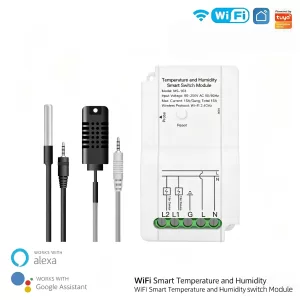 WiFi Smart Temperature Humidity Switch Module – Tuya 2-Gang 15… Price range: $9.96 through $35.59
 Matter Water Heater Switch 20 A, EU/UK Touch, Tuya + Matter | XingLiao$8.00
 HomeKit US Switch, Single-Live & Zero-Fire, No Neutral, 118 × 72 mm | XingLiao Price range: $10.78 through $12.42
 HomeKit US Touch Light Switch 1–4 Gang, 118 × 72 mm, Zero Fire | XingLiao Price range: $10.33 through $11.67
📌 This article is part of our Complete Smart Hub — more guides and buying tips inside.
