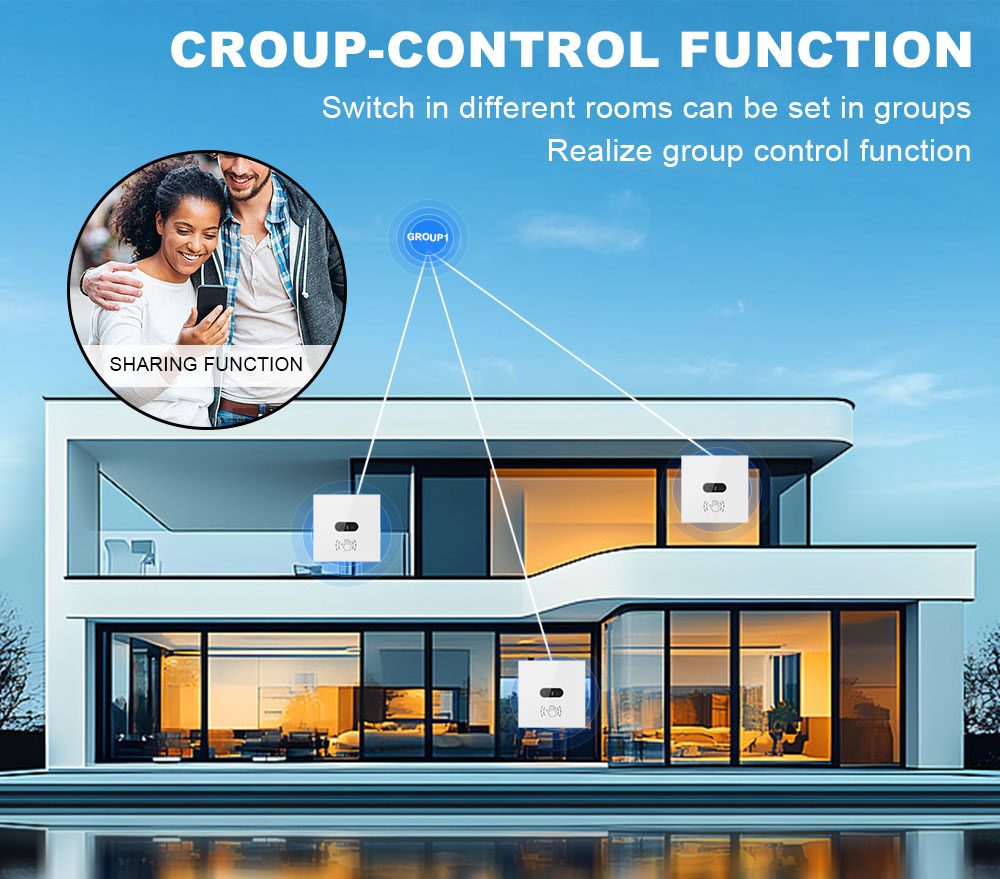
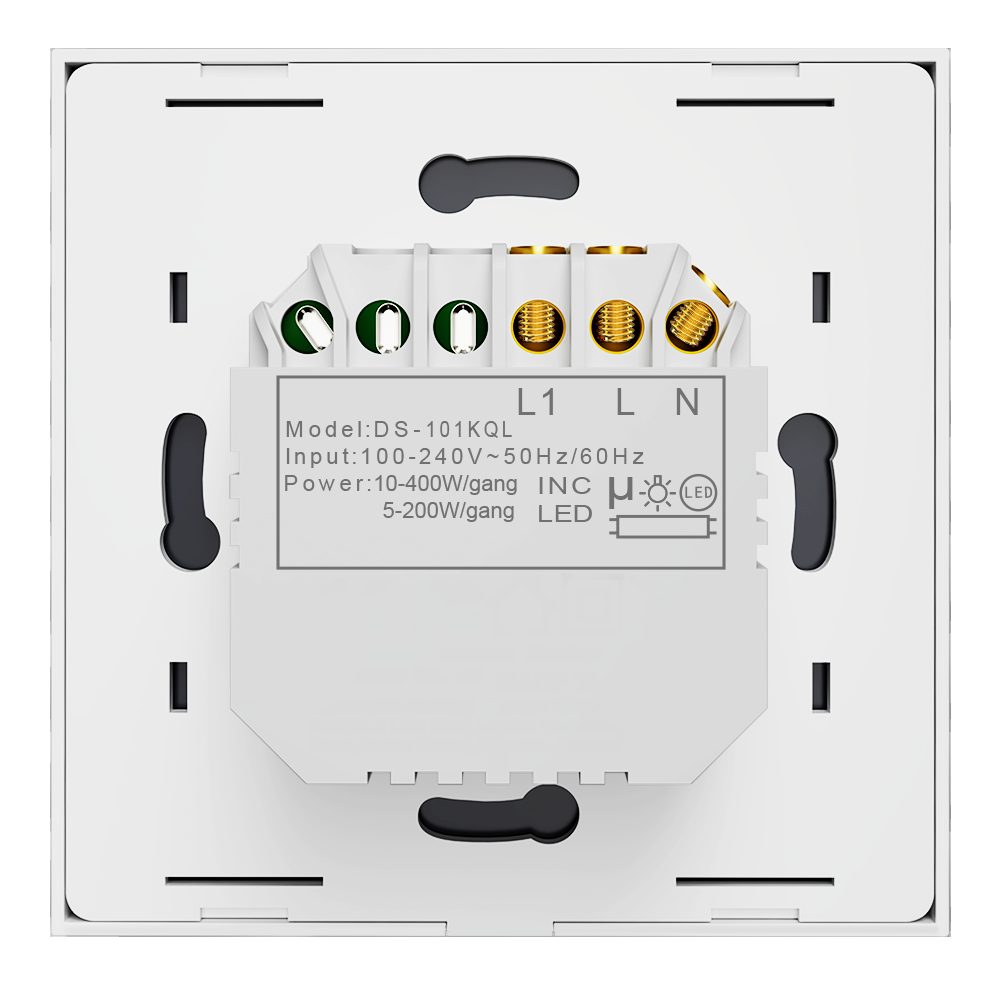
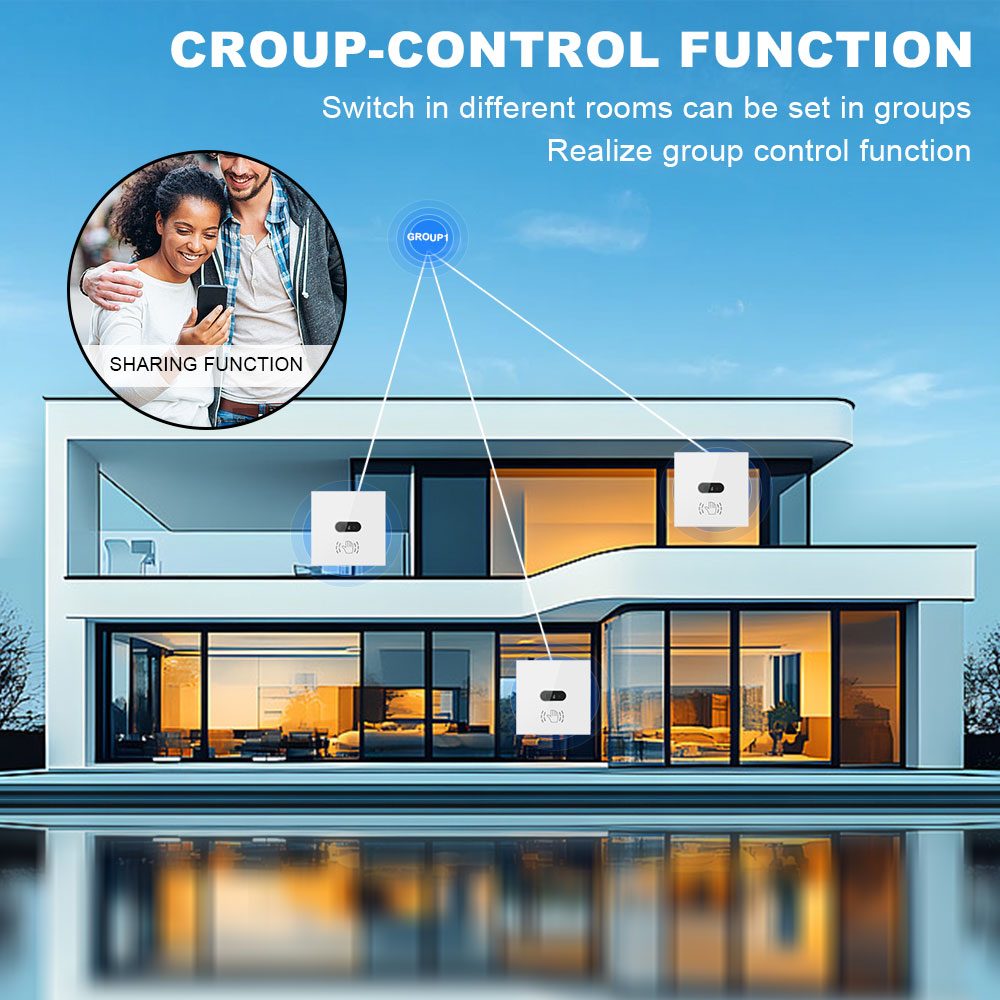
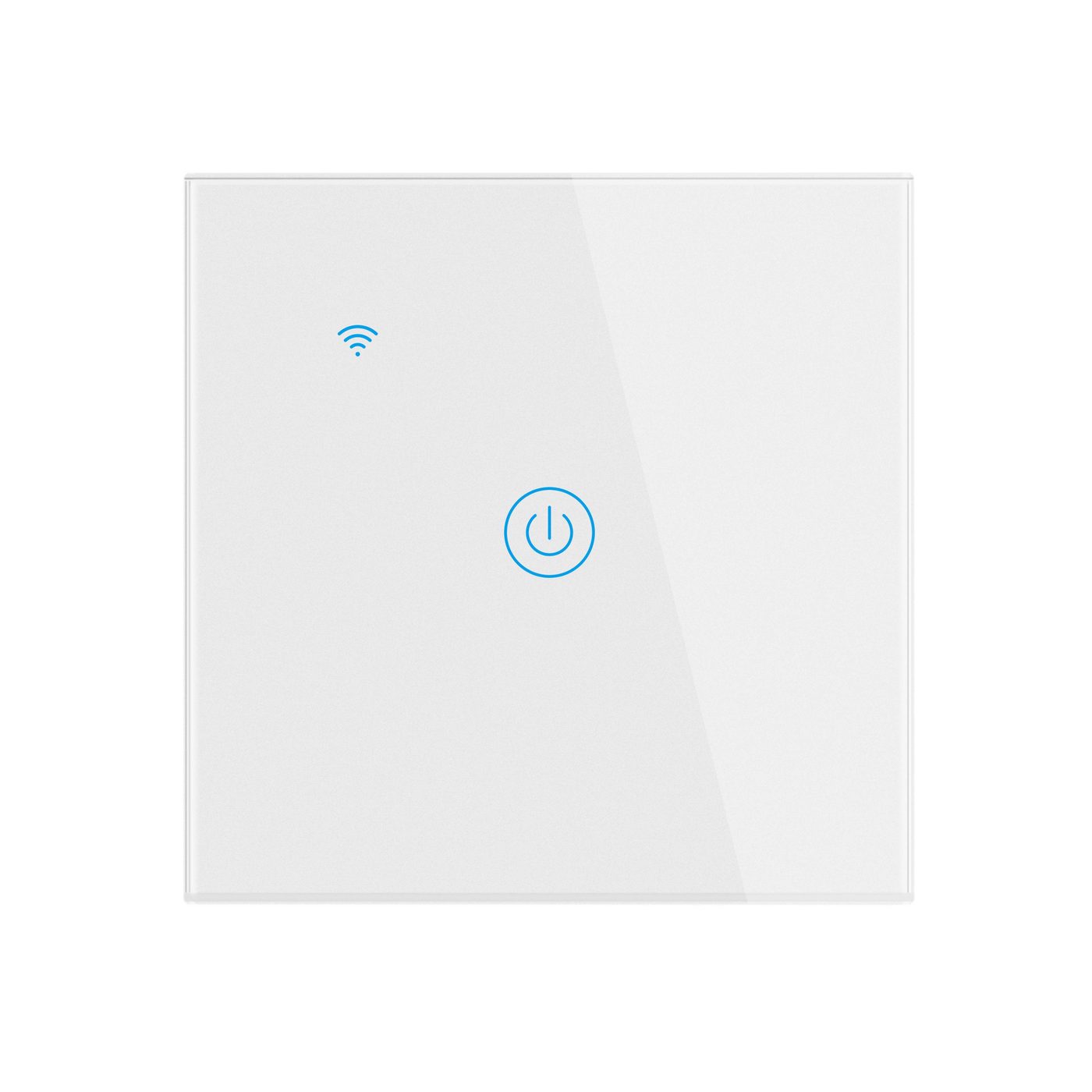
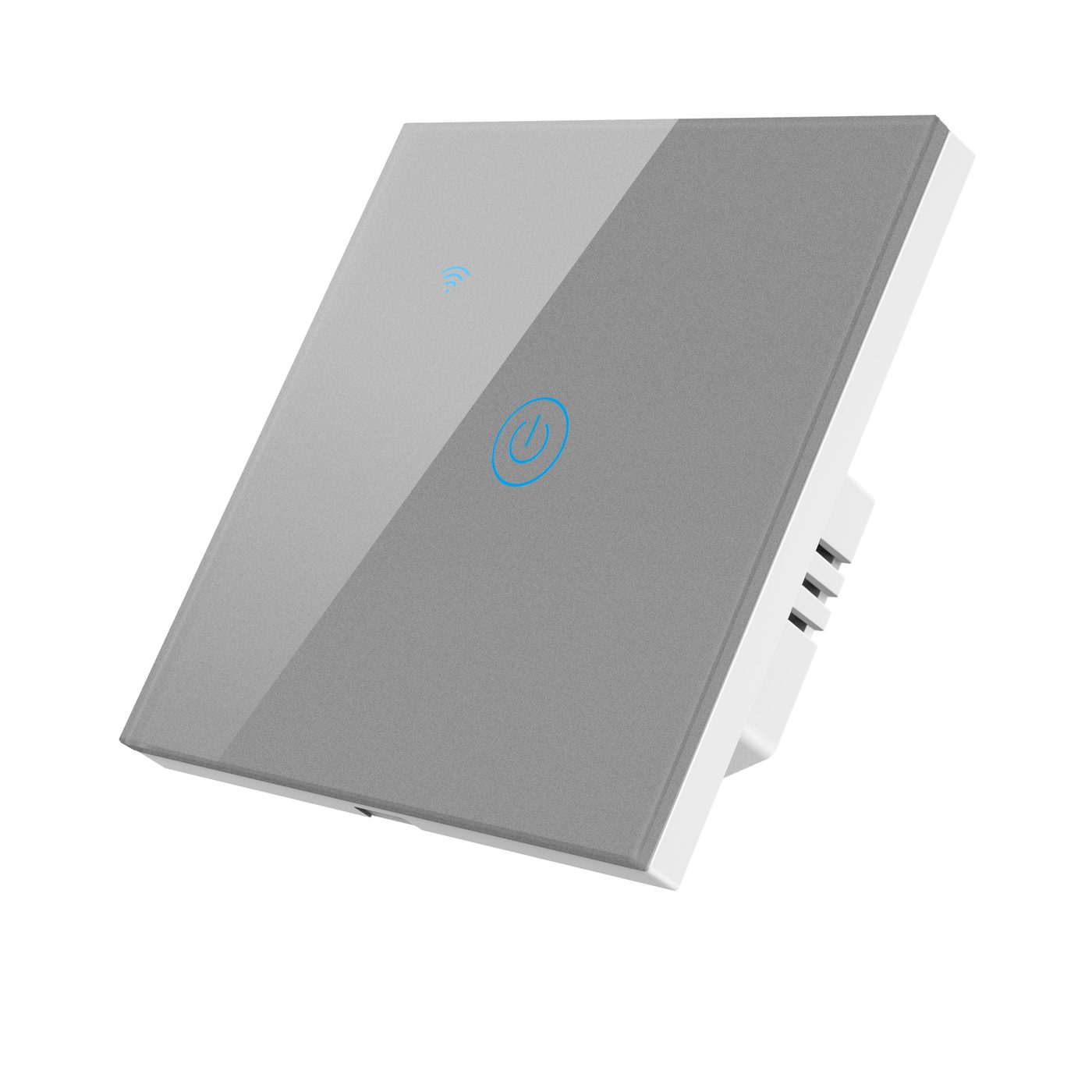
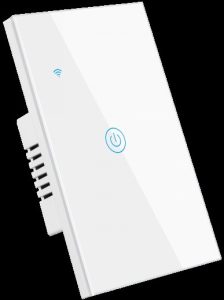
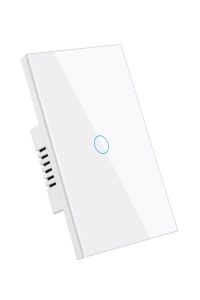
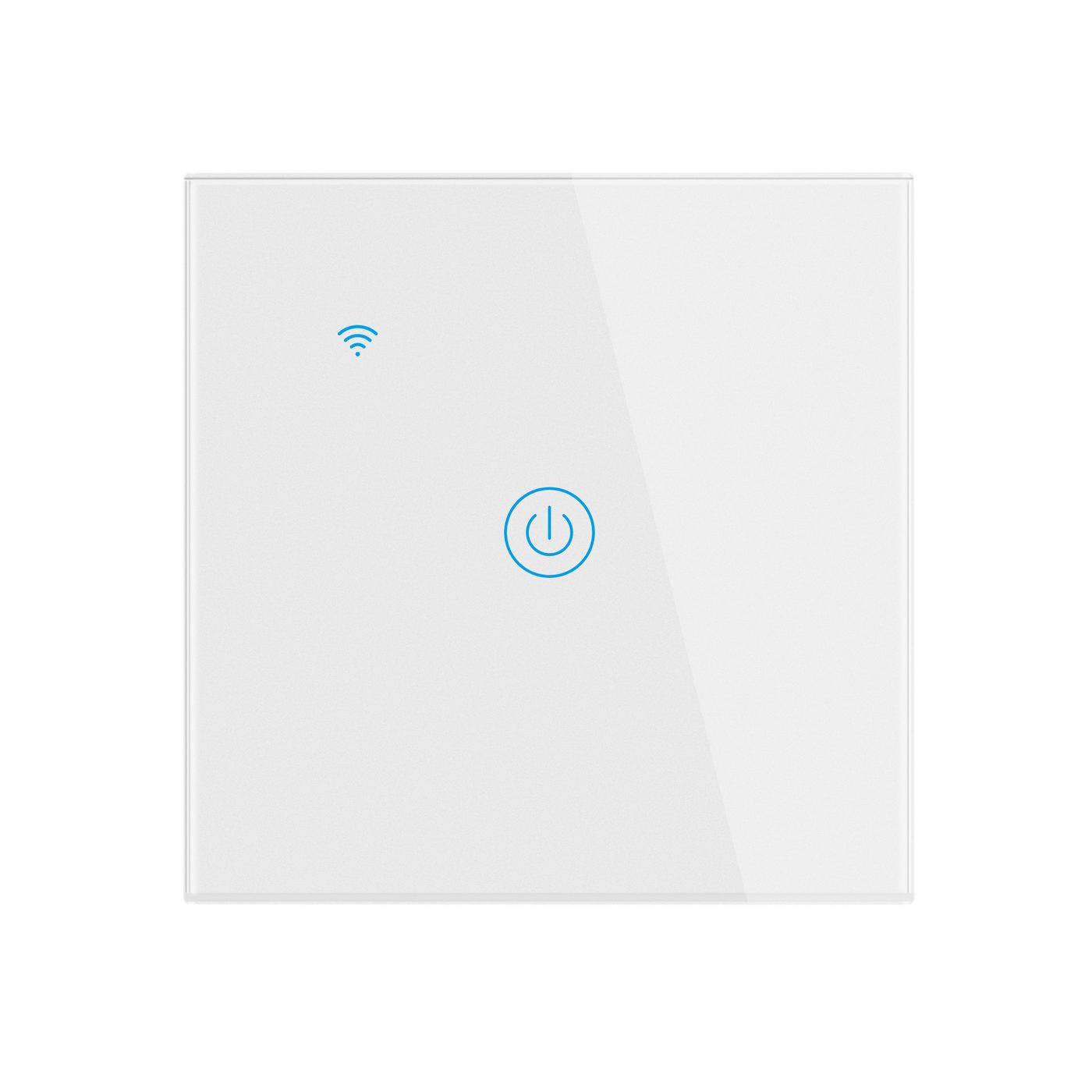
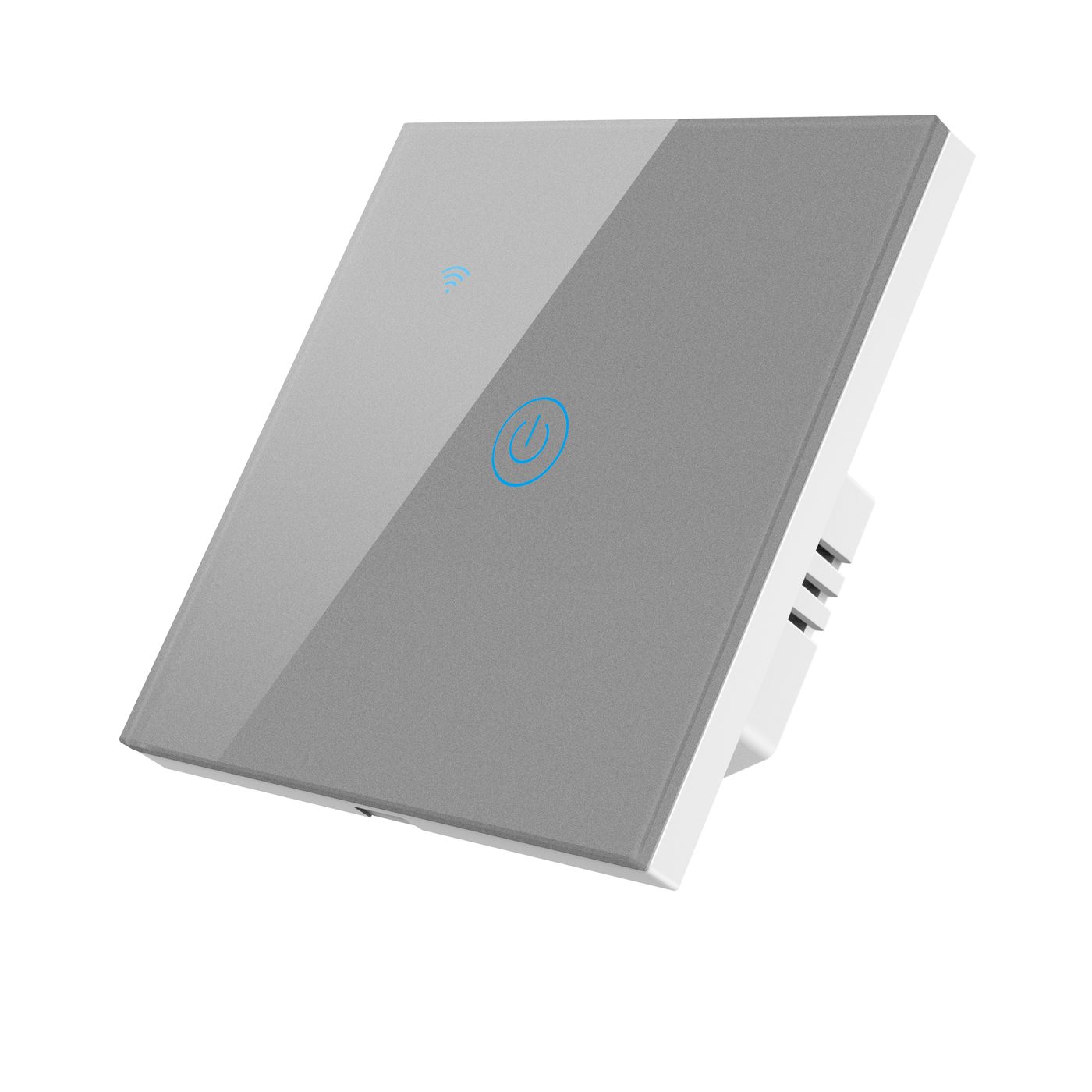
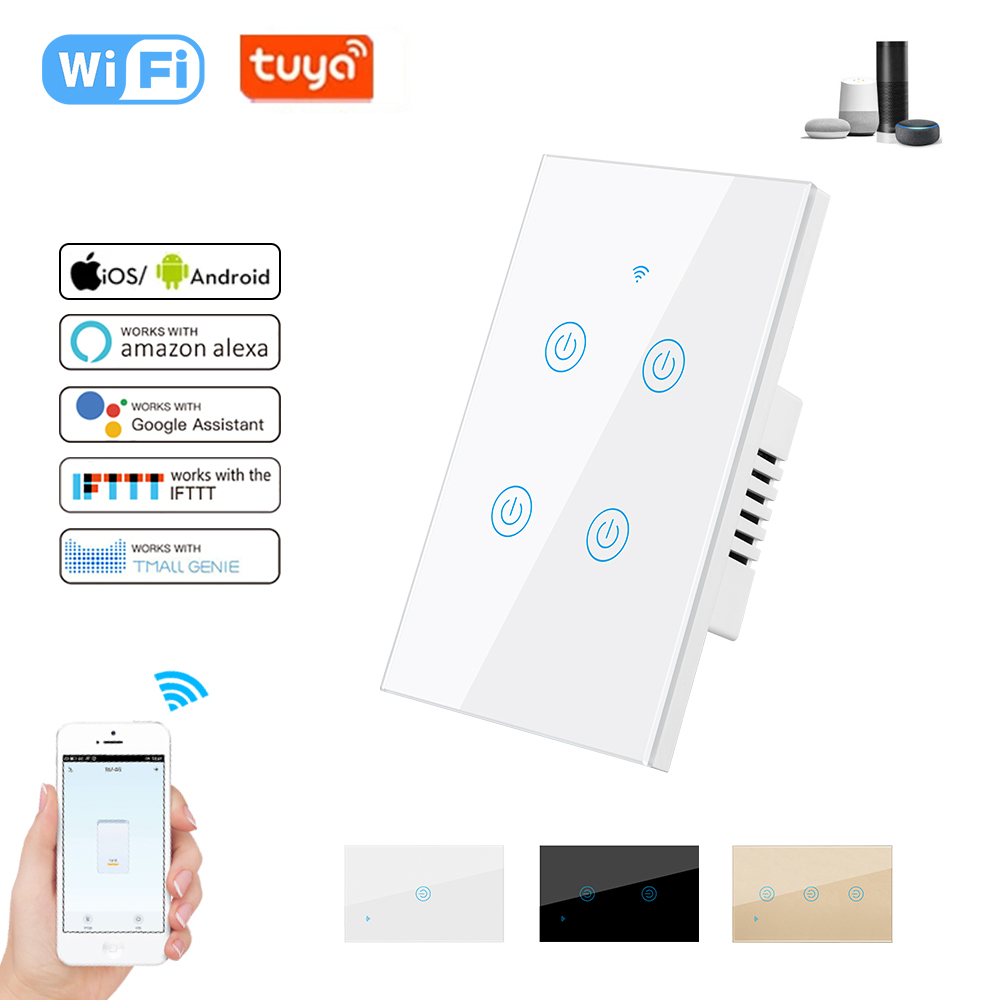
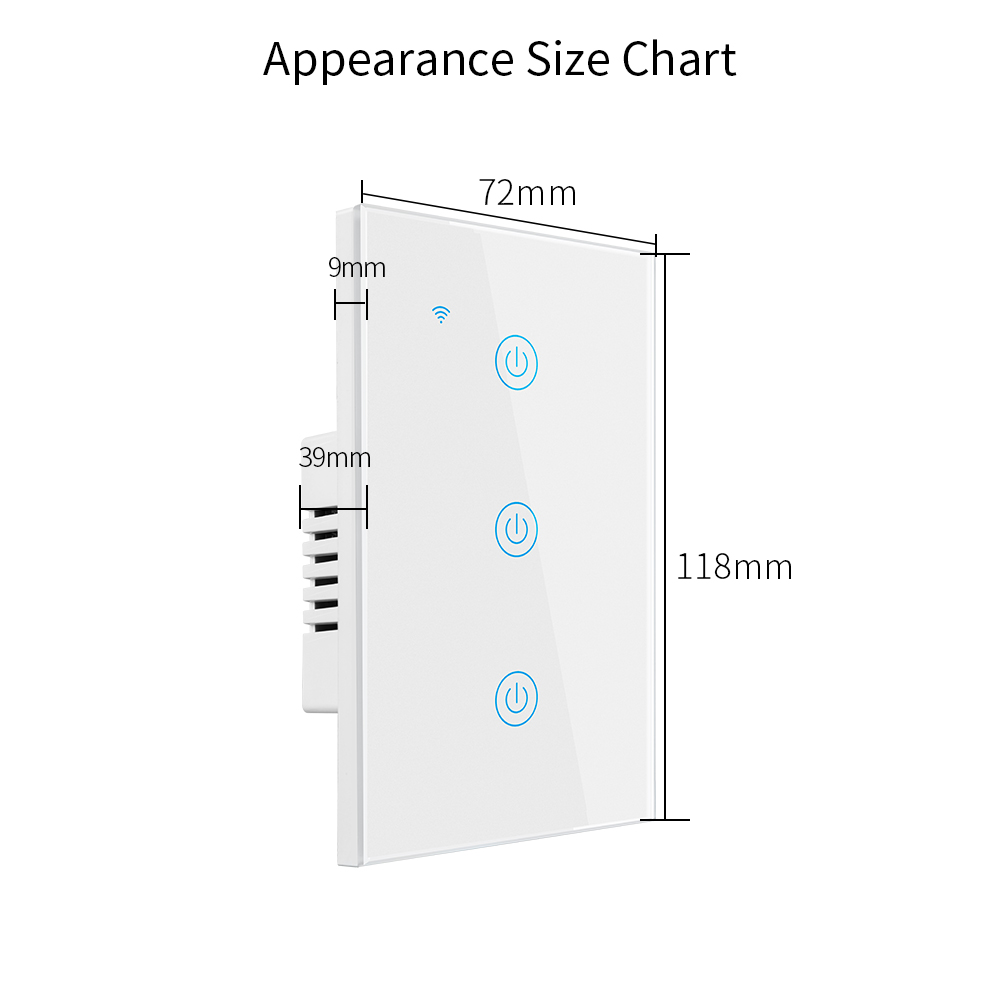
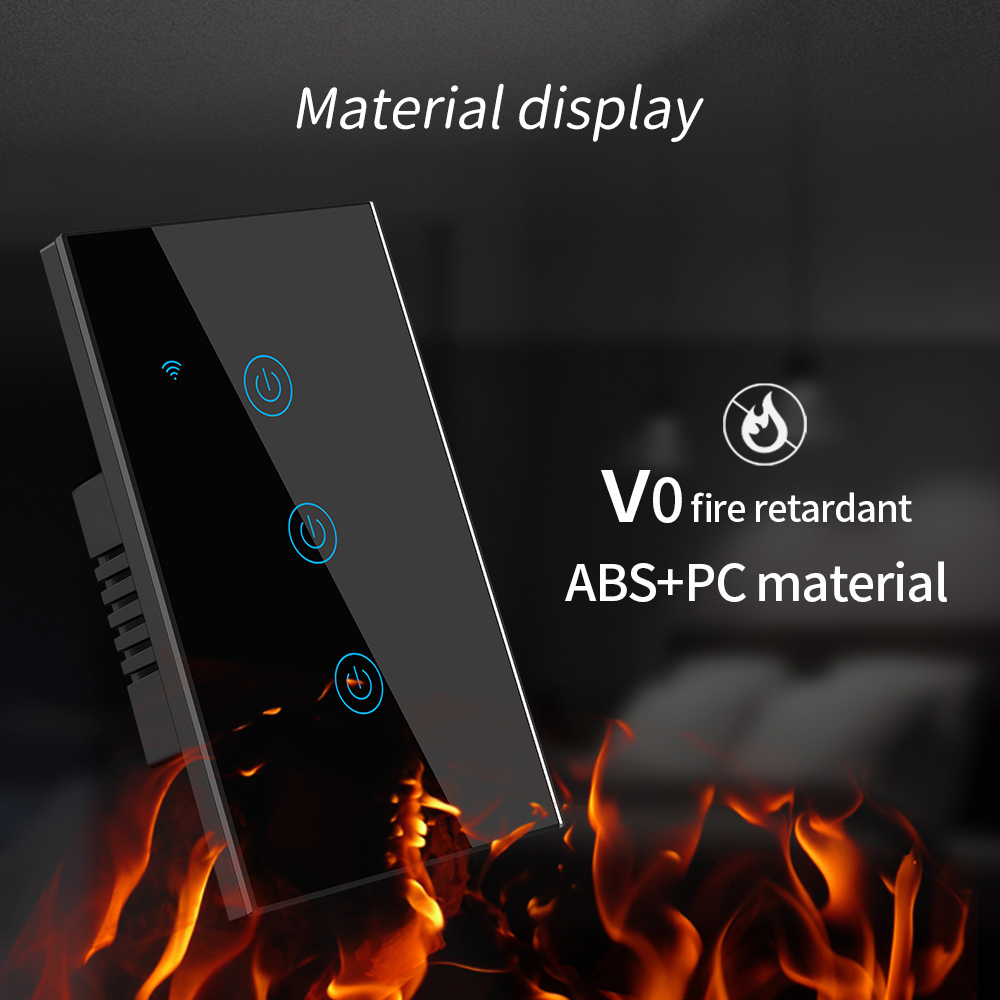
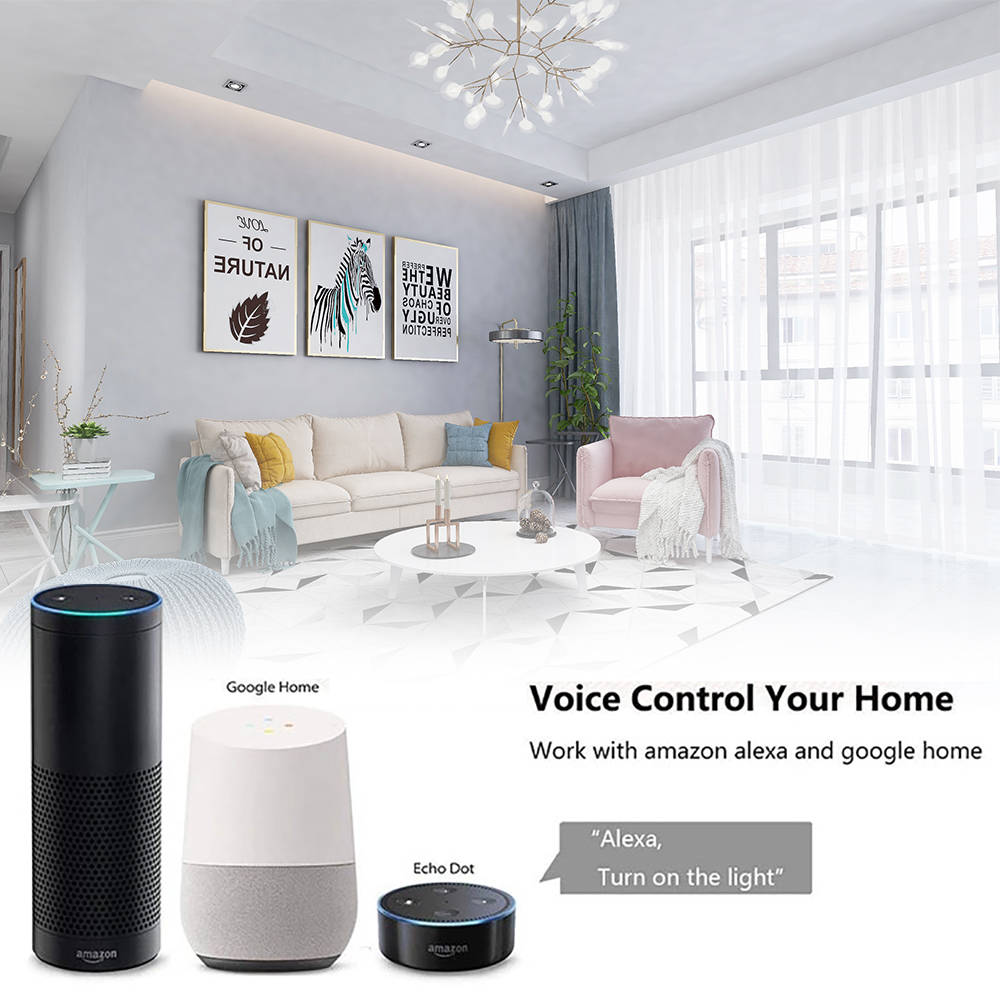
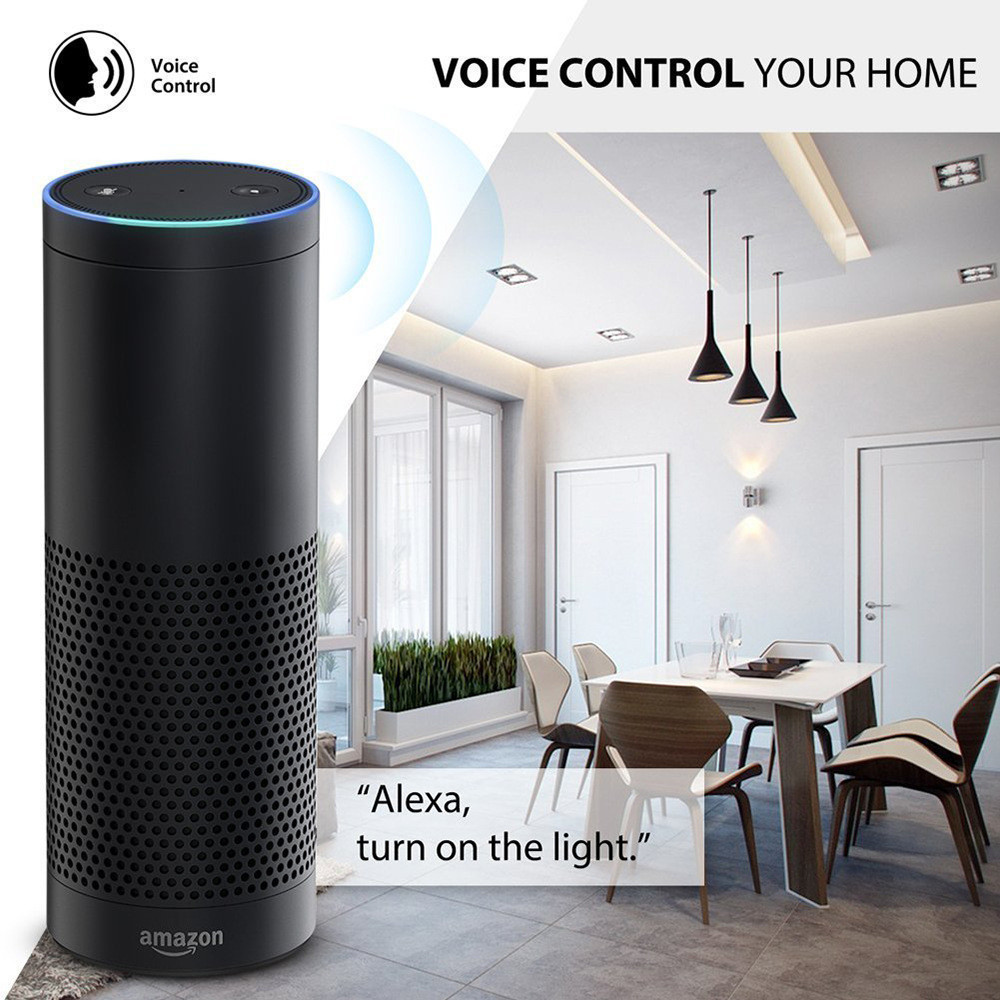
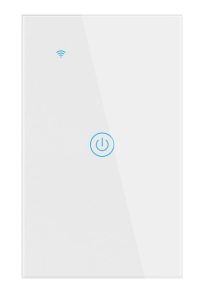
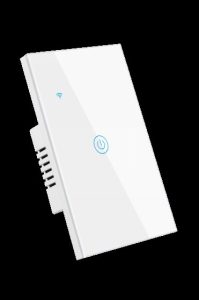
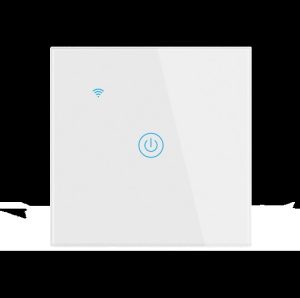
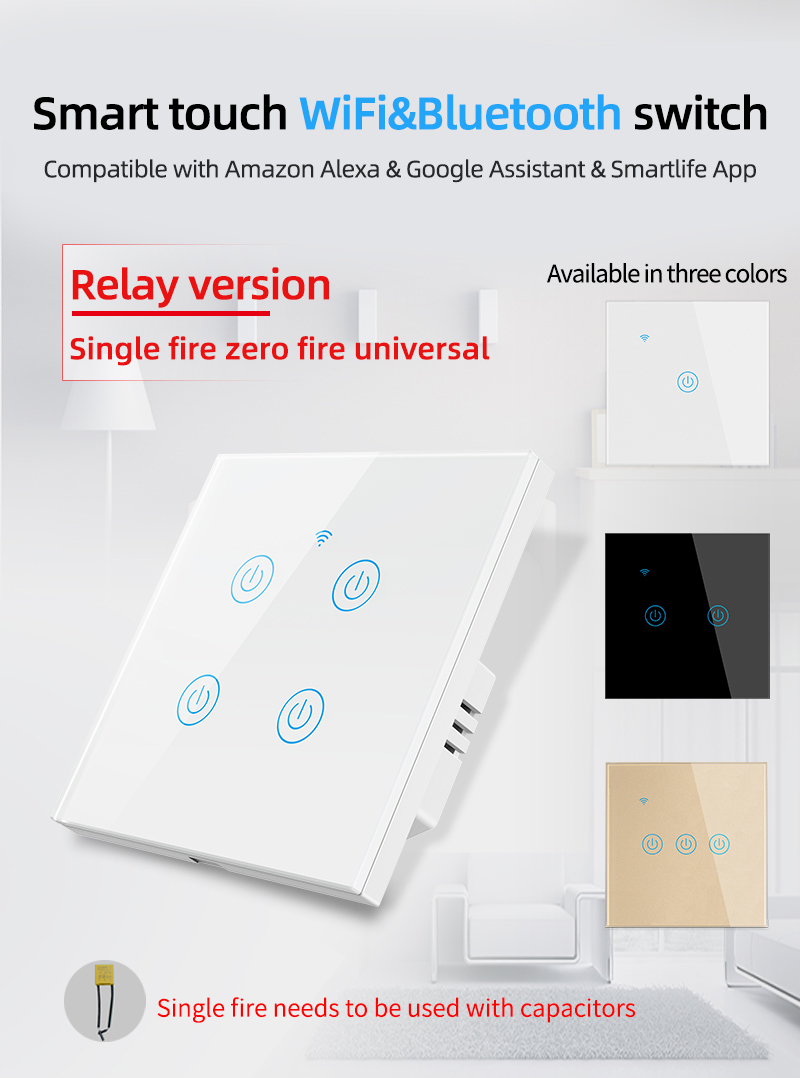
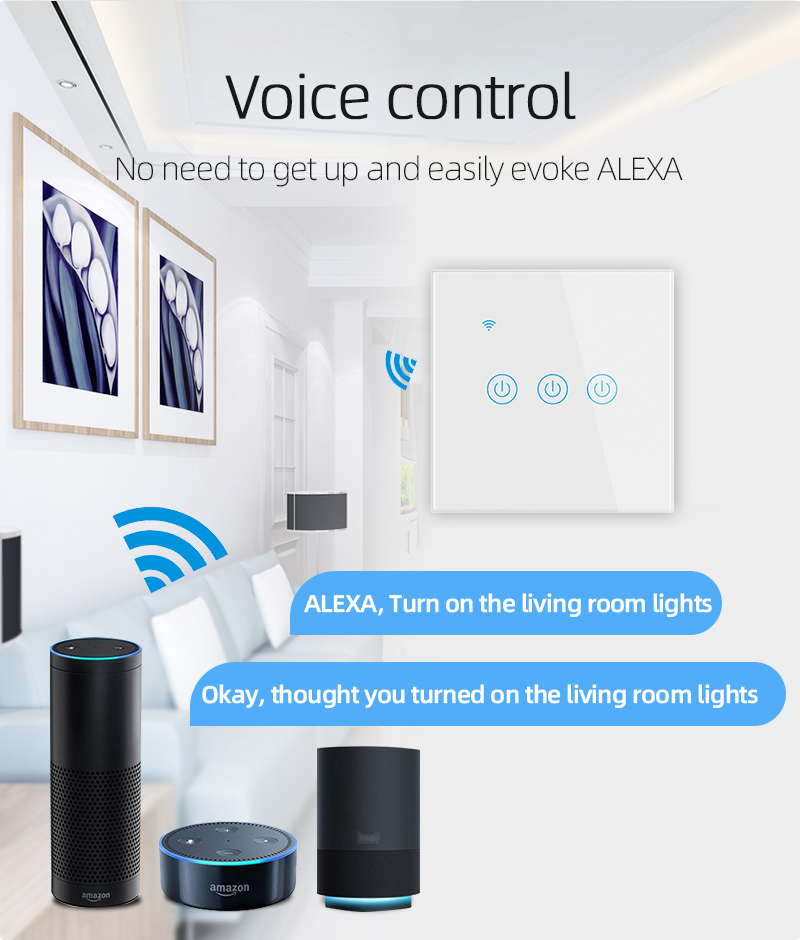
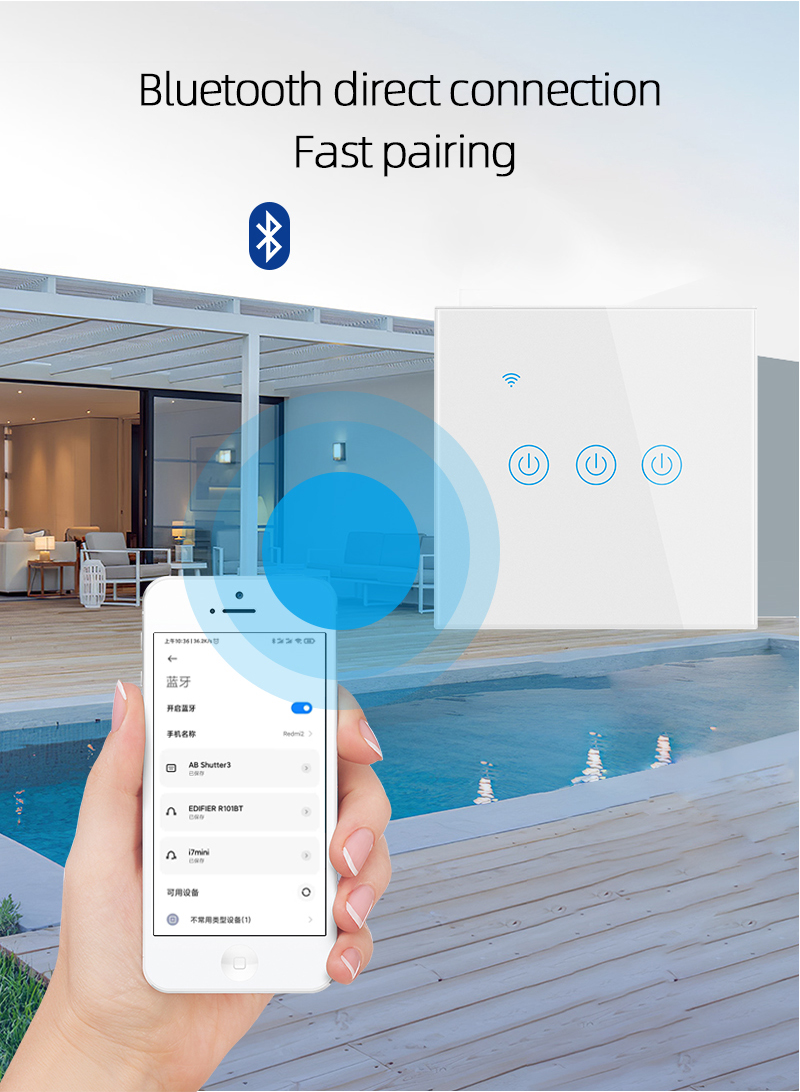
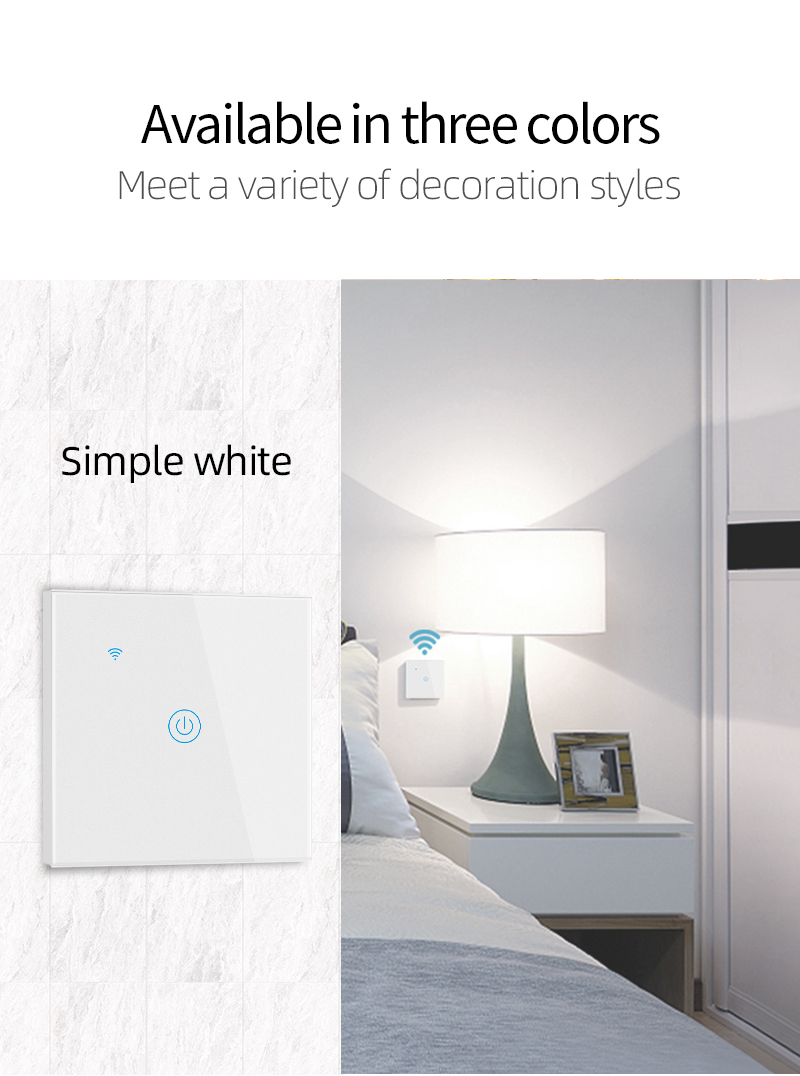
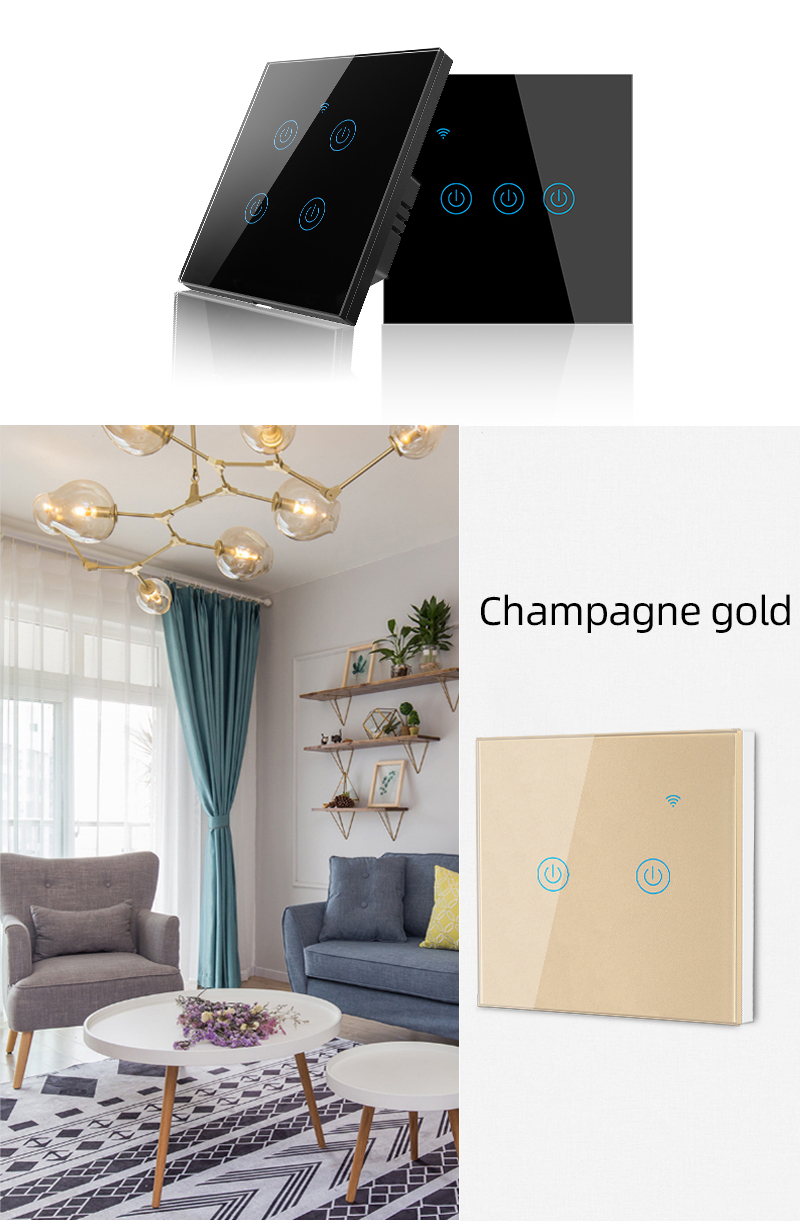
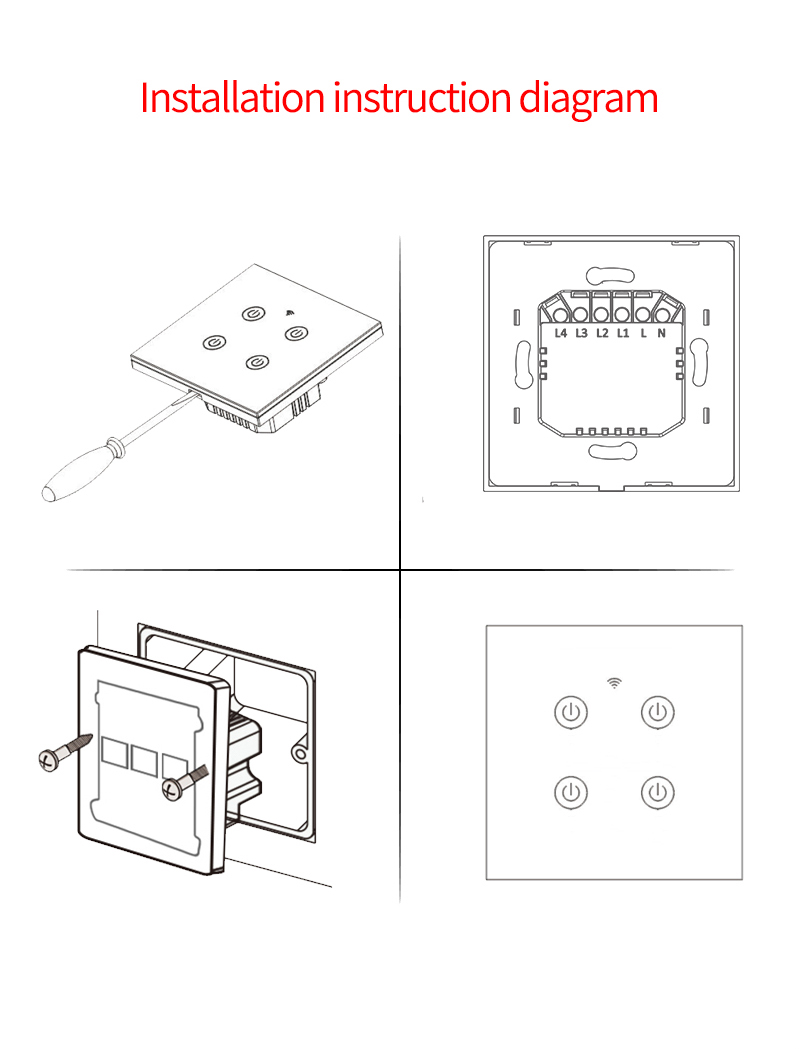
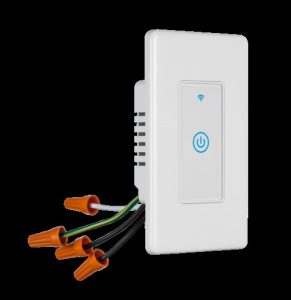
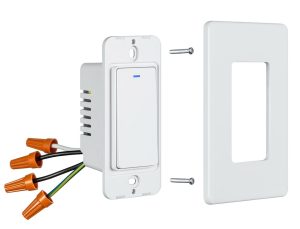
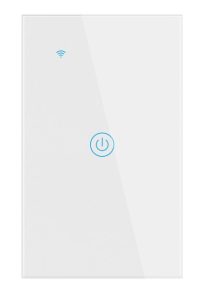
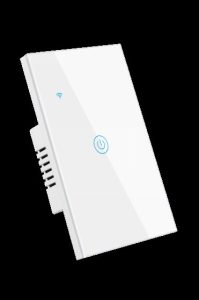
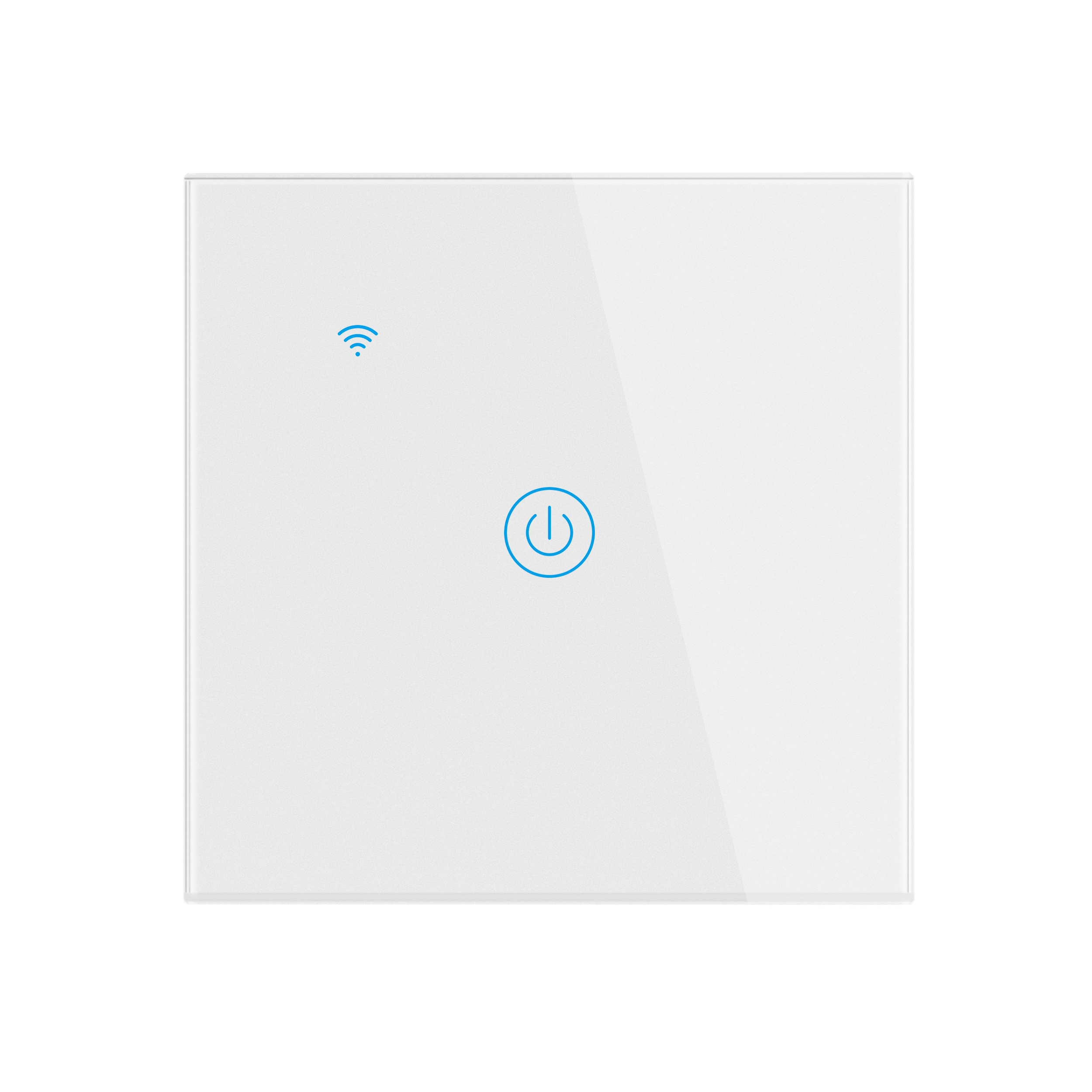
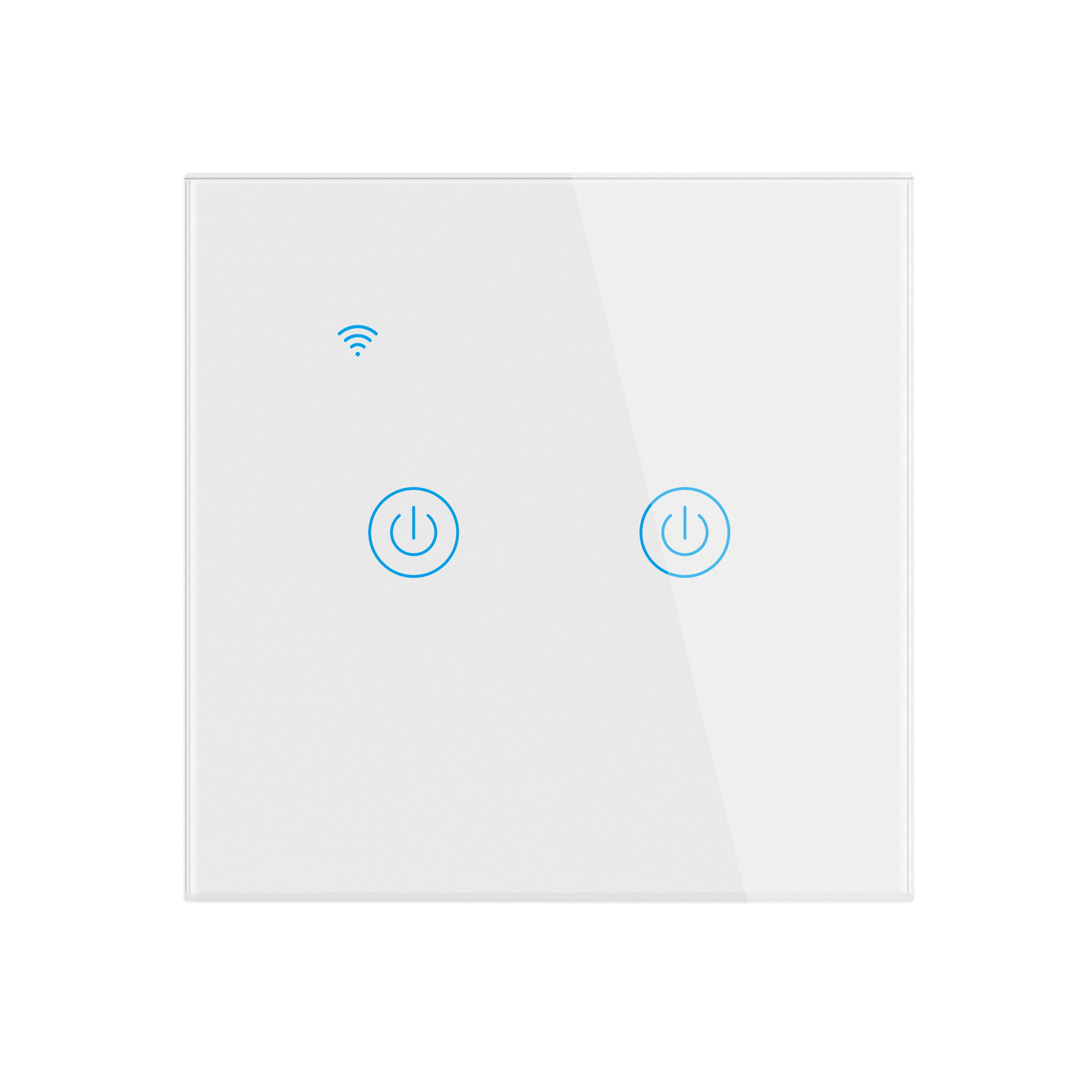
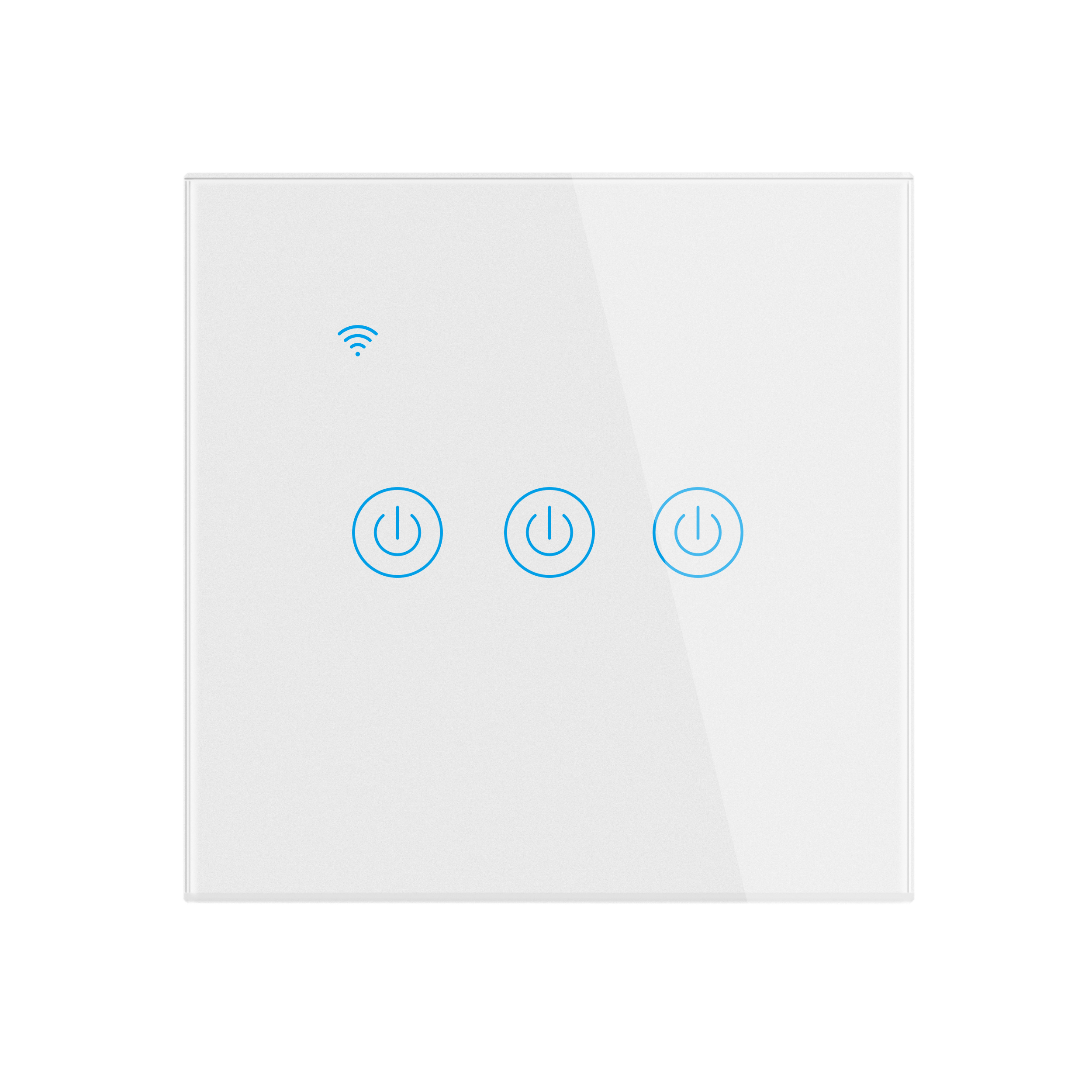
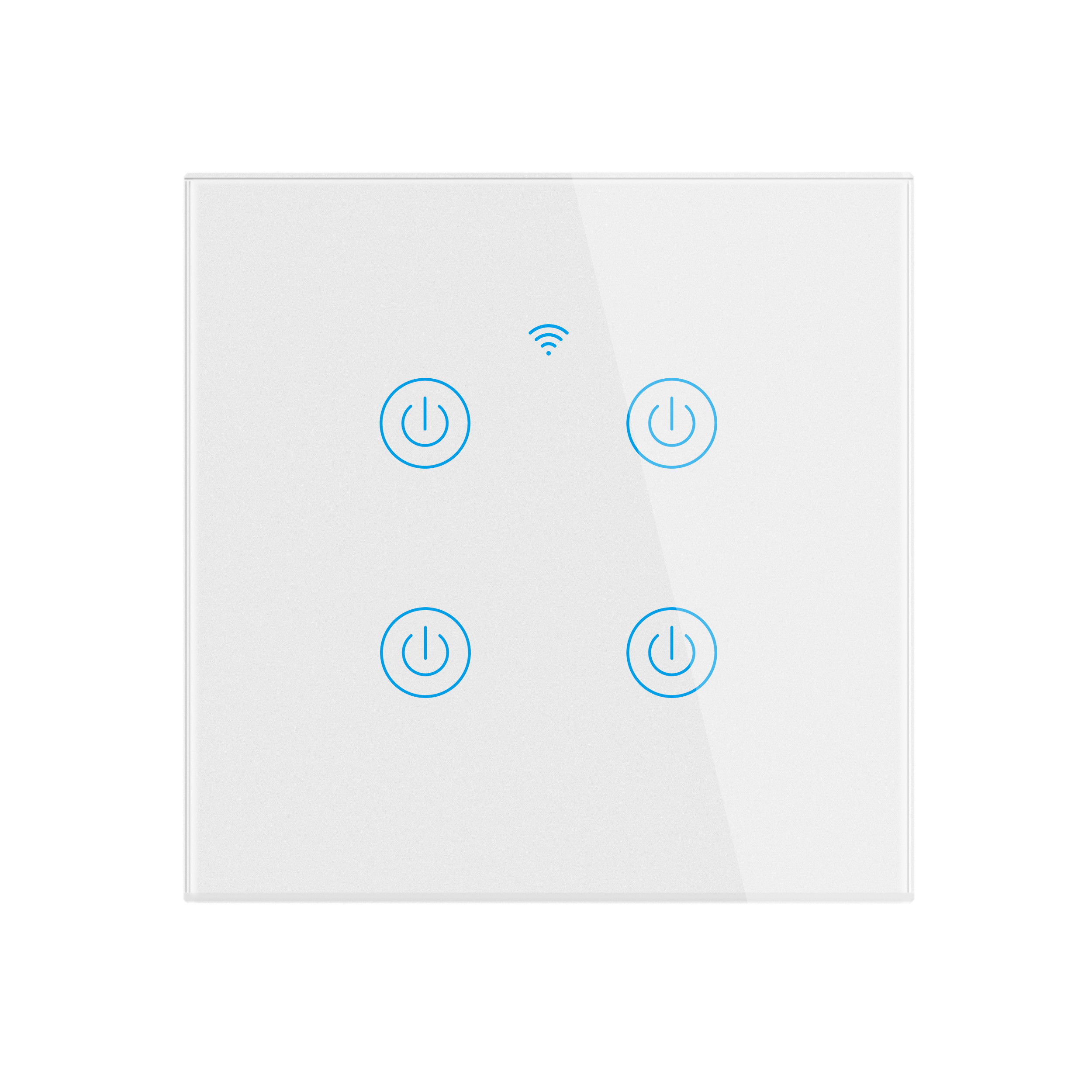
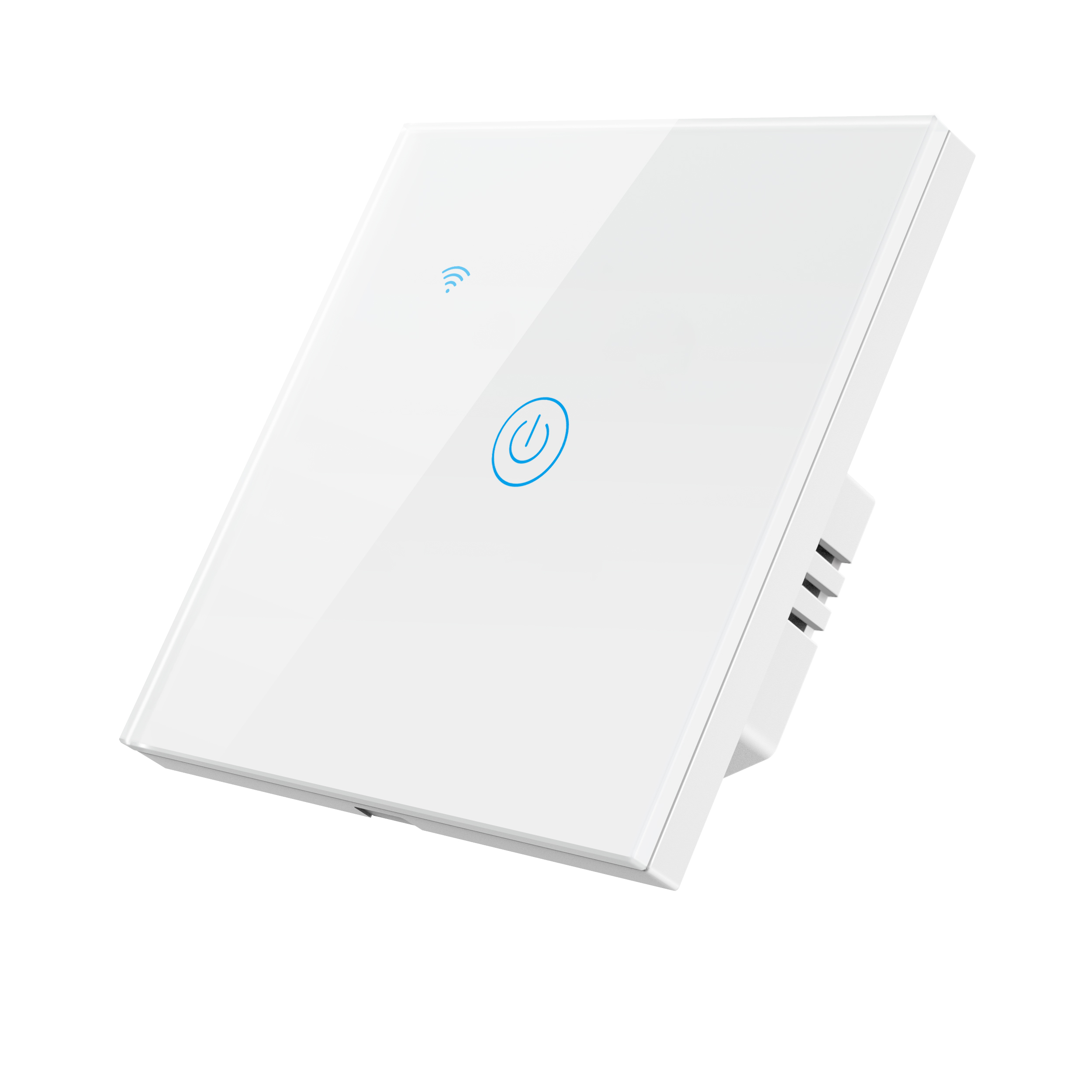
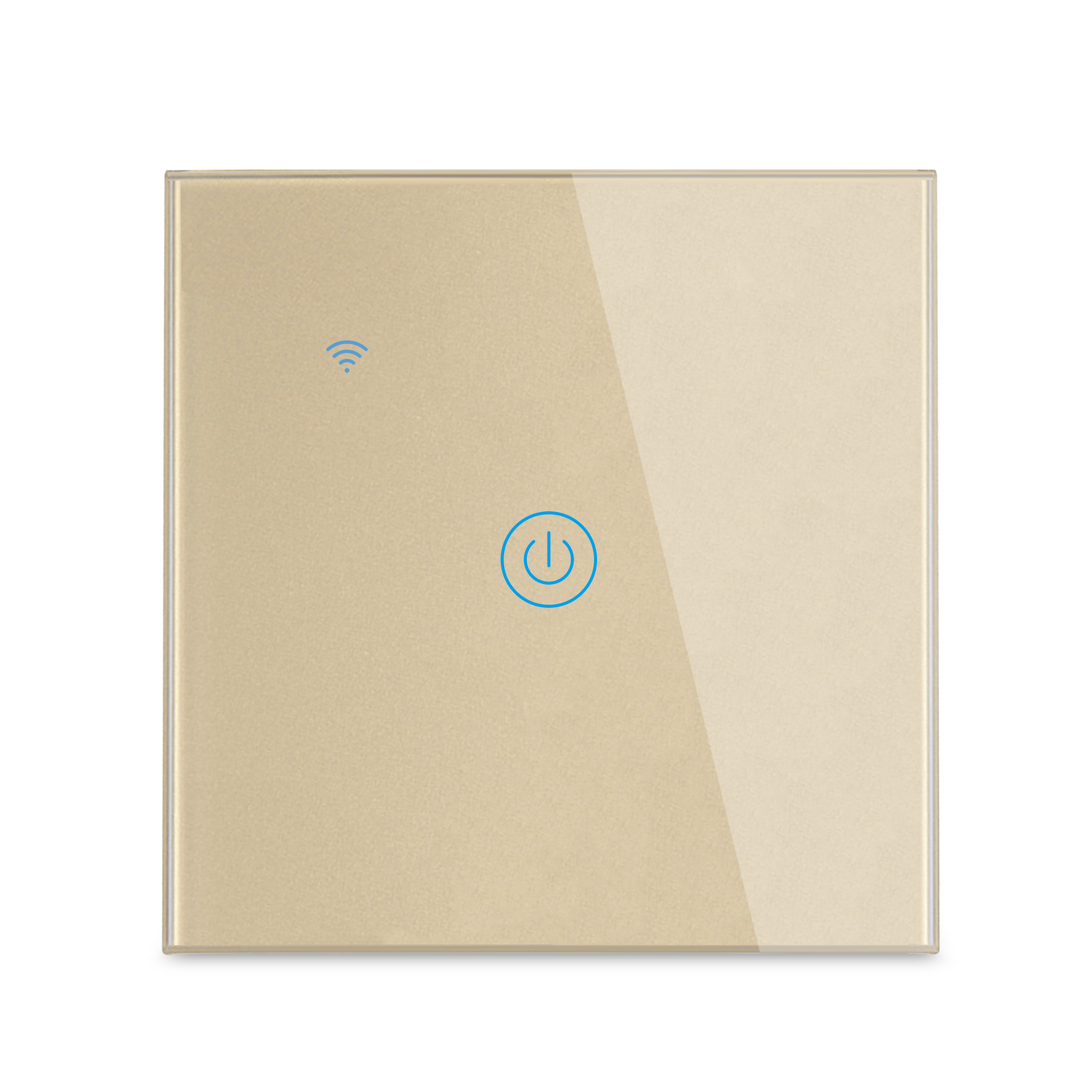
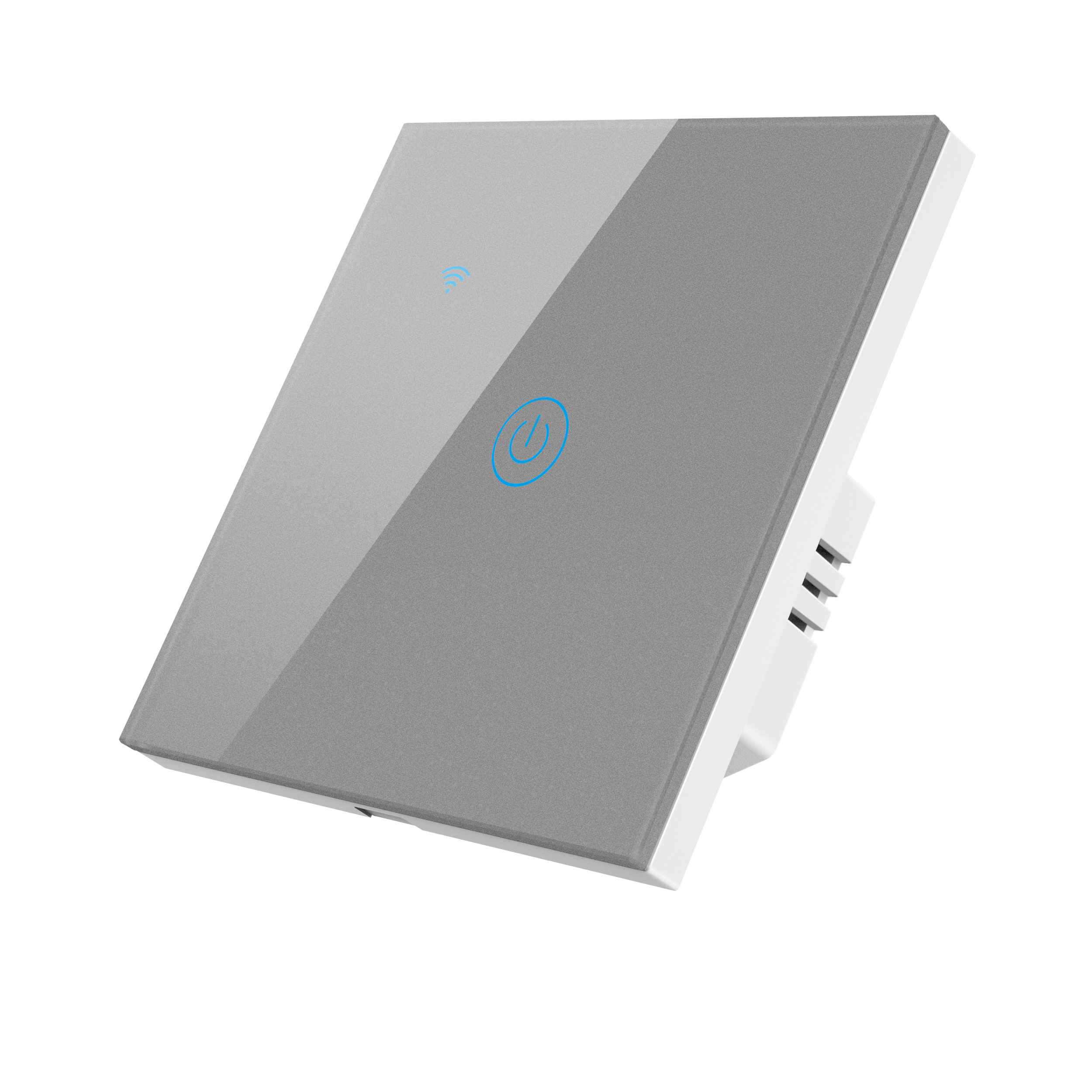
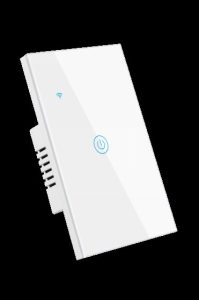
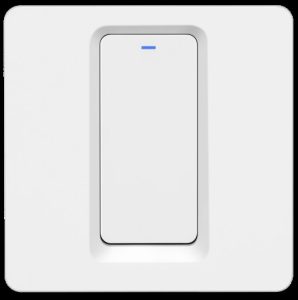
The DS-102DWN is a WiFiSmart wall Switch from the XingLiao switch line: WiFi Button Switch EU UK CN Zero-Fire. It is built for buyers who need a documented model number, a defined panel standard and a repeatable OEM file rather than a generic catalog photo. This page collects the factory specification, the Control functions and the product images in one place so you can shortlist the model before requesting a sample.
What the DS-102DWN does
Network: WiFi, with the Tuya / Smart Life app flow used across XingLiao switch programs.
Panel format: Button Switch EU UK CN Zero-Fire.
Voice control: works with Amazon Alexa and Google Home through the app integration, subject to region and firmware.
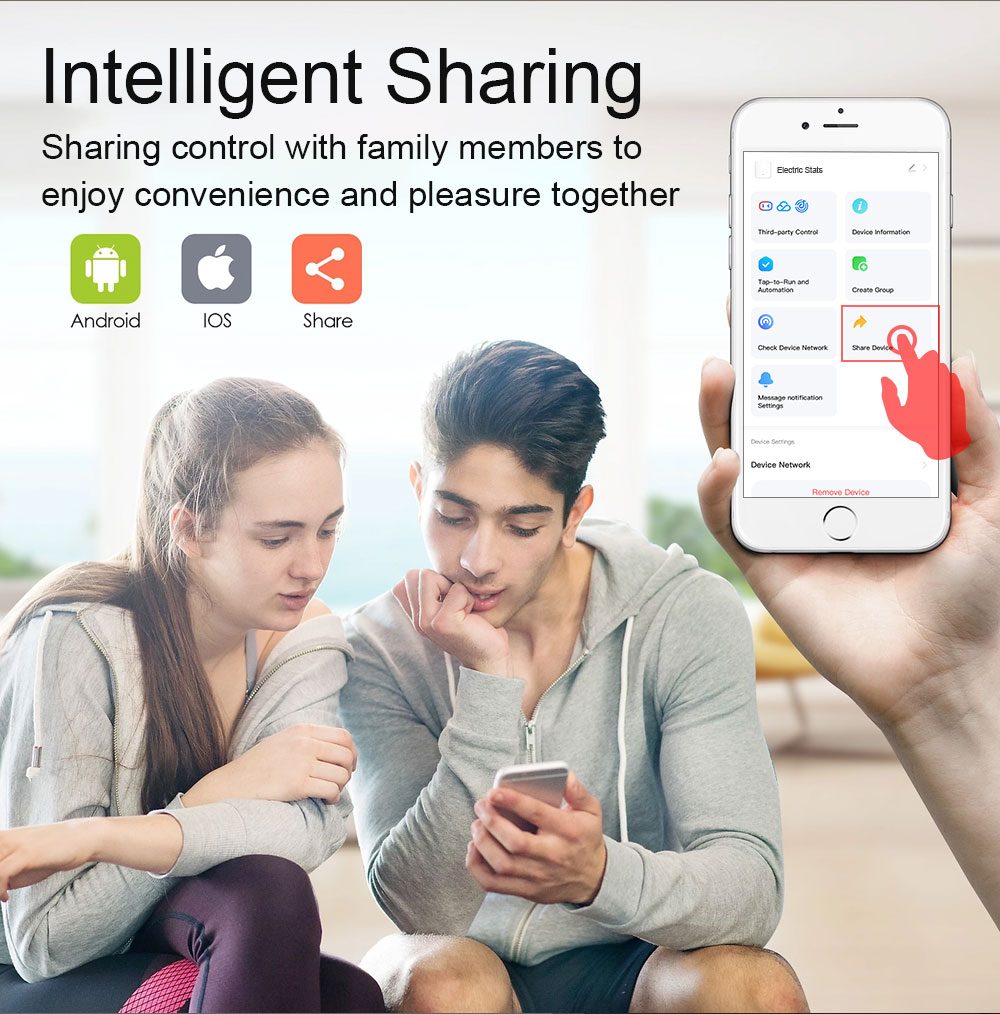
Control modes: app remote control, timer and countdown, status feedback, power-off memory, sharing control and manual operation.
Multi-control association is available for two-way and three-way installations where the wiring supports it.
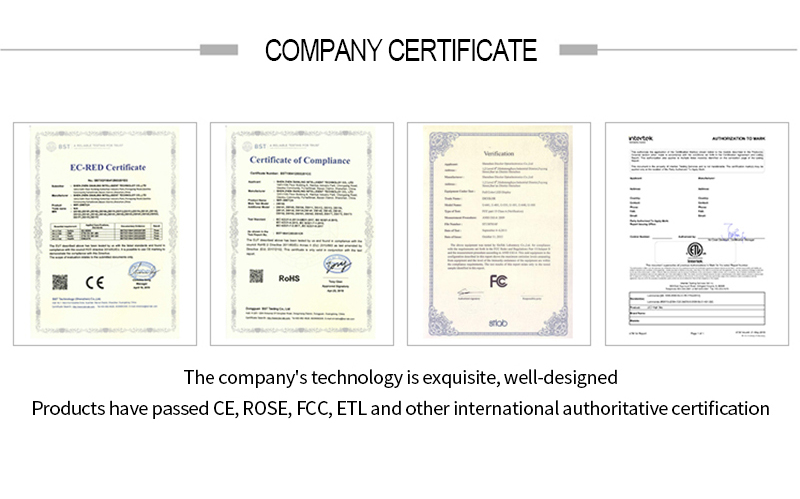
Certification listed for this family: CE, ROHS. Ask for the current certificate file before artwork approval.
Indicative quotation tiers from the factory sheet: 51-199 pcs – USD 8; 200-999 pcs – USD 7.5; 1000-3000 pcs – USD 6.7. Prices exclude tax and freight; confirm the live tier with the sales team.
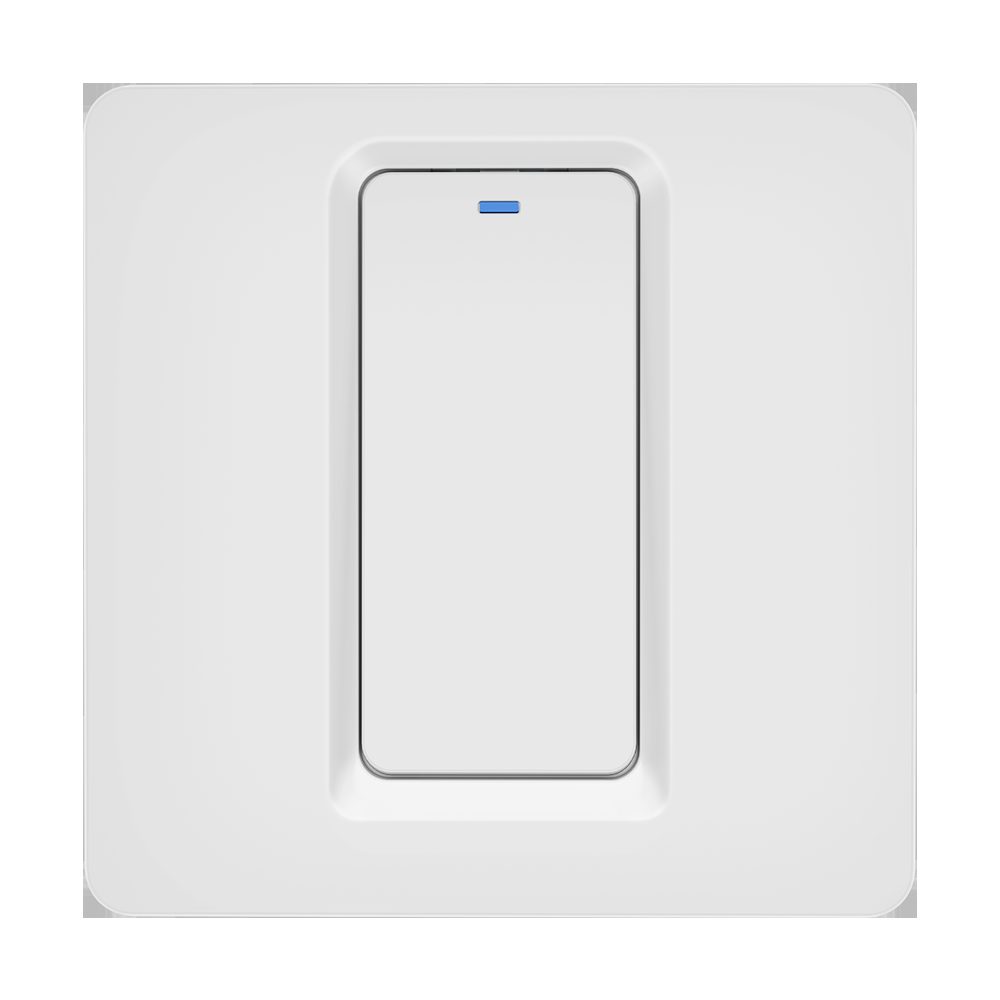
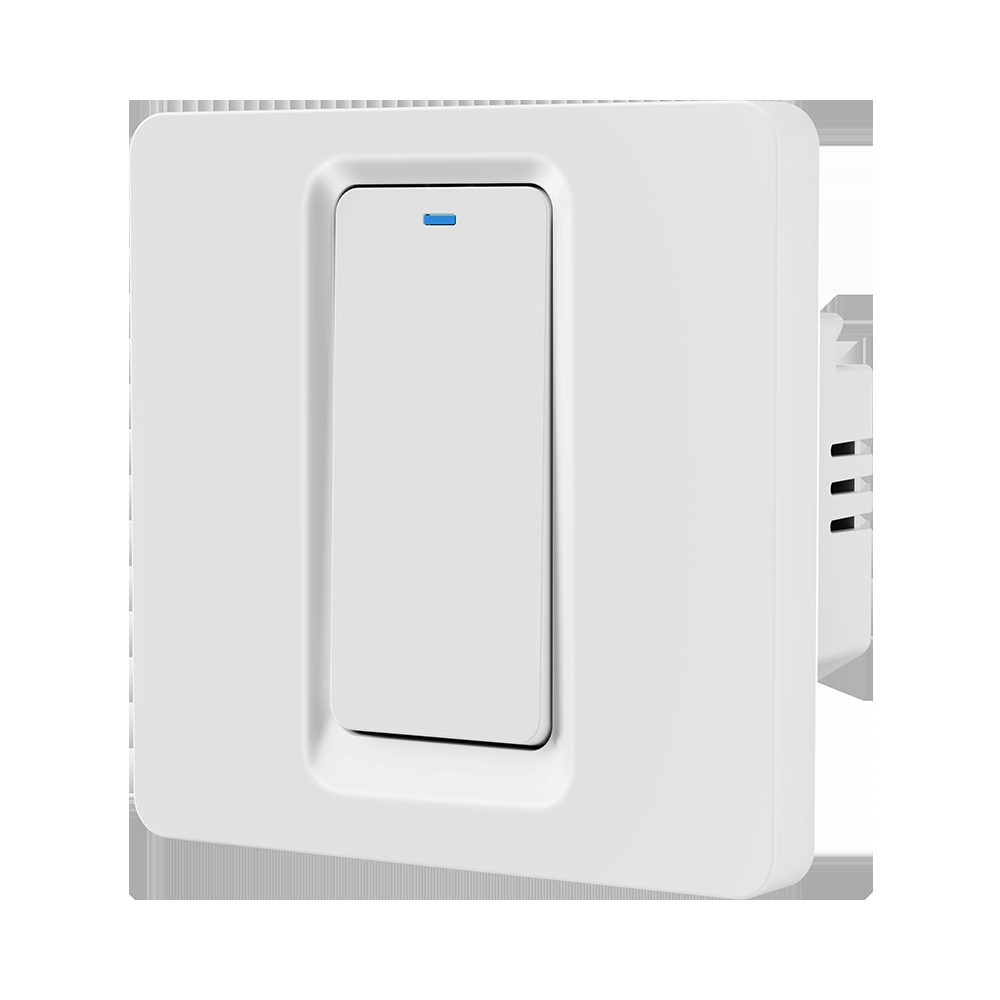
Product photos: DS-102DWN
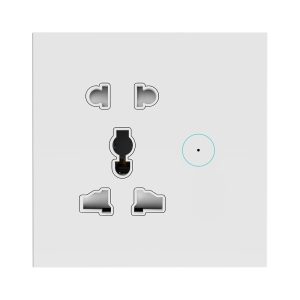
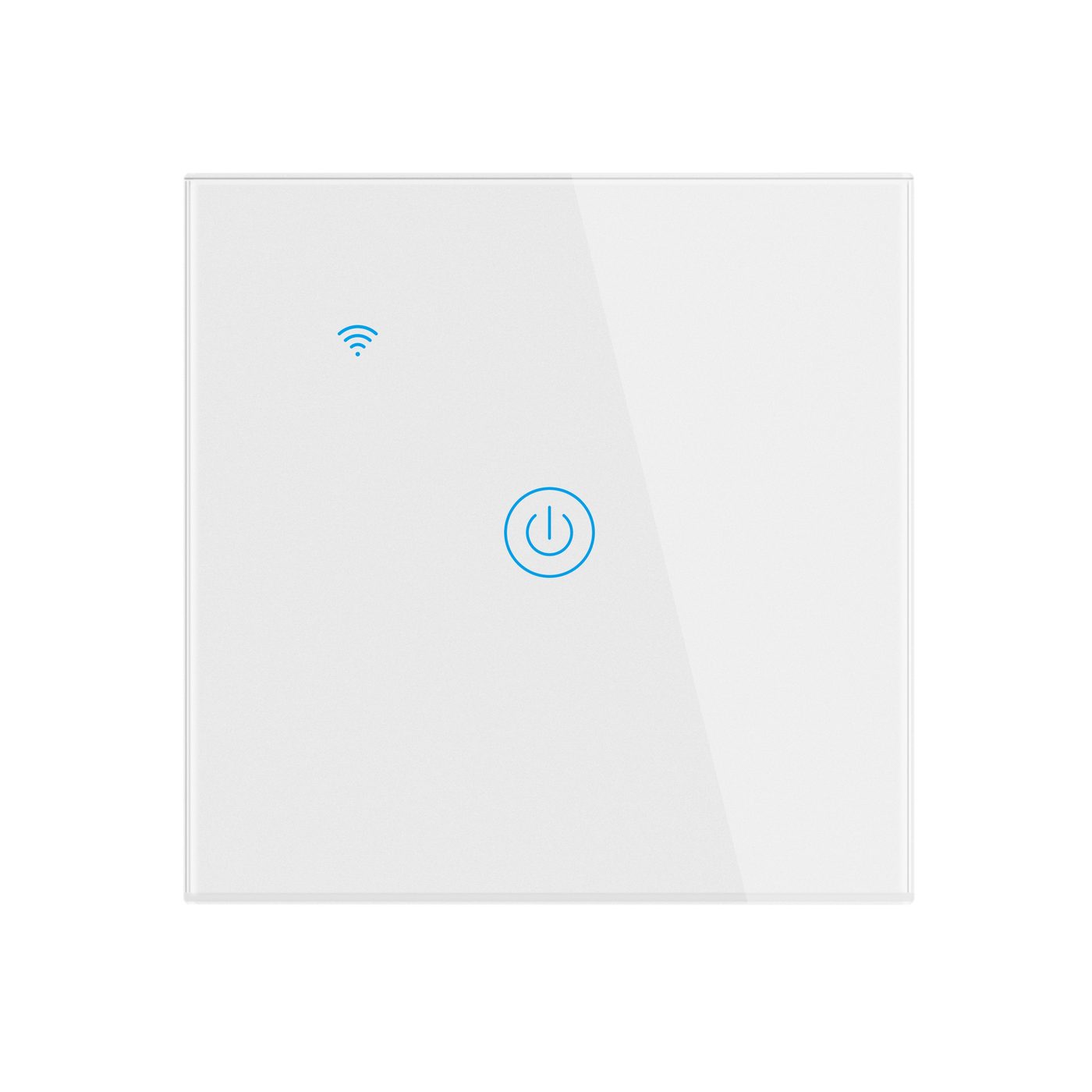
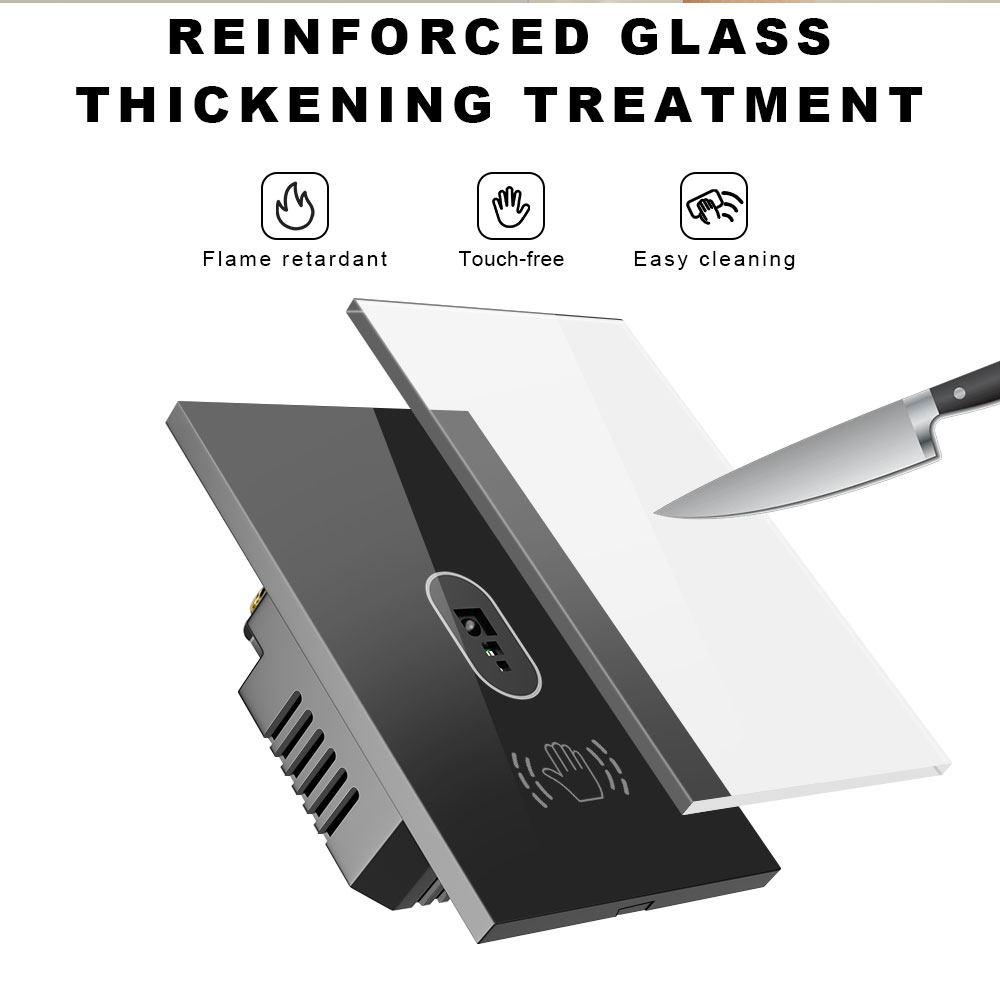
DS-102DWN: WiFi Button Switch EU UK CN Zero-Fire. Photo 1 of the factory image set.DS-102DWN: WiFi Button Switch EU UK CN Zero-Fire. Photo 2 of the factory image set.DS-102DWN: WiFi Button Switch EU UK CN Zero-Fire. Photo 3 of the factory image set.
OEM / ODM notes
For DS-102DWN, the usual customization points are faceplate color, frame finish, logo print or laser mark, packaging and app branding. State your market, panel standard, wiring type (single-wire or neutral) and annual quantity in the first inquiry so the factory can propose the correct base model. CE, FCC, RoHS, UKCA, CCC and PSE support is documented where applicable; do not assume a listing without asking for the file number.
Questions buyers ask about DS-102DWN
Is DS-102DWN a WiFi or ZigBee model?
The model designation in the title identifies the platform. DS-102DWN is the corresponding line in the factory quotation sheet; confirm the exact protocol and firmware before ordering.
Can the DS-102DWN be used with Google Home or Alexa?
Yes through the Tuya app integration, provided the app region and firmware support the integration. Ask for a short app screen recording with your sample.
What must be checked before ordering?
Door or wall box dimensions, panel standard, load type, wiring (neutral present or not), and the certification file for your market. Sendphotos of the installation site with your inquiry.
Based on the breakdown in this article, 102dwn Wifi Button offers a solid mix of features and value. If your main goal matches the key benefits described above, it is a practical choice for everyday use.
How do I choose the right 102dwn wifi button for my needs?
Start with your core use case, then compare battery life, compatibility, and build quality as covered above. Choosing the right 102dwn wifi button comes down to matching specs with how you actually use it.
Does 102dwn wifi button require a companion app?
Most devices of this type pair with a free companion app for setup and firmware updates. A few advanced features may sit behind a paid plan, so check the official specs page before buying.
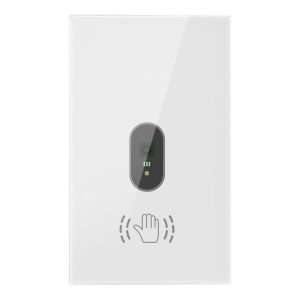
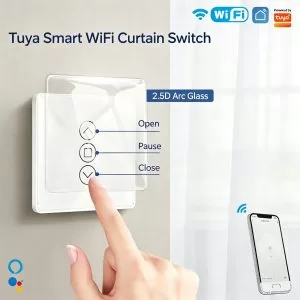
The DS-101KWL is a WiFiSmart wall Switch from the XingLiao switch line: WiFi Hand Wave Gesture Switch Relay EU UK CN. It is built for buyers who need a documented model number, a defined panel standard and a repeatable OEM file rather than a generic catalog photo. This page collects the factory specification, the Control functions and the product images in one place so you can shortlist the model before requesting a sample.
What the DS-101KWL does
Network: WiFi, with the Tuya / Smart Life app flow used across XingLiao switch programs.
Panel format: Hand Wave Gesture Switch Relay EU UK CN.
Voice control: works with Amazon Alexa and Google Home through the app integration, subject to region and firmware.
Control modes: app remote control, timer and countdown, status feedback, power-off memory, sharing control and manual operation.
Multi-control association is available for two-way and three-way installations where the wiring supports it.
Specification snapshot
**Input Voltage:** 100–240VAC, 50/60Hz **Network Mode:** WiFi **Peak Power:** 400W **Standard Colors:** White / Black **Product Dimensions:** 86 × 86 × 35 mm (Europe) **Package Dimensions:** 106 × 100 × 51 mm **Product Gross Weight:** 211g
Certification listed for this family: CE、ROHS. Ask for the current certificate file before artwork approval.
Indicative quotation tiers from the factory sheet: 51-199 pcs – USD 6.5; 200-999 pcs – USD 6; 1000-3000 pcs – USD 5.5. Prices exclude tax and freight; confirm the live tier with the sales team.
Product photos: DS-101KWL
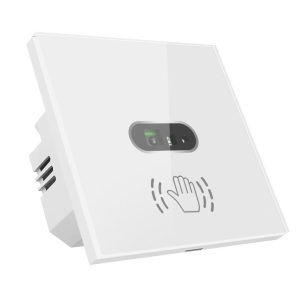
DS-101KWL: WiFi Hand Wave Gesture Switch Relay EU UK CN. Photo 1 of the factory image set.DS-101KWL: WiFi Hand Wave Gesture Switch Relay EU UK CN. Photo 2 of the factory image set.DS-101KWL: WiFi Hand Wave Gesture Switch Relay EU UK CN. Photo 3 of the factory image set.
OEM / ODM notes
For DS-101KWL, the usual customization points are faceplate color, frame finish, logo print or laser mark, packaging and app branding. State your market, panel standard, wiring type (single-wire or neutral) and annual quantity in the first inquiry so the factory can propose the correct base model. CE, FCC, RoHS, UKCA, CCC and PSE support is documented where applicable; do not assume a listing without asking for the file number.
Questions buyers ask about DS-101KWL
Is DS-101KWL a WiFi or ZigBee model?
The model designation in the title identifies the platform. DS-101KWL is the corresponding line in the factory quotation sheet; confirm the exact protocol and firmware before ordering. Why Cameras Miss Faces but Doorbells Don’t
Can the DS-101KWL be used with Google Home or Alexa?
Yes through the Tuya app integration, provided the app region and firmware support the integration. Ask for a short app screen recording with your sample.
What must be checked before ordering?
Door or wall box dimensions, panel standard, load type, wiring (neutral present or not), and the certification file for your market. Sendphotos of the installation site with your inquiry.
Based on the breakdown in this article, 101kwl Wifi Hand offers a solid mix of features and value. If your main goal matches the key benefits described above, it is a practical choice for everyday use.
How do I choose the right 101kwl wifi hand for my needs?
Start with your core use case, then compare battery life, compatibility, and build quality as covered above. Choosing the right 101kwl wifi hand comes down to matching specs with how you actually use it.
Does 101kwl wifi hand require a companion app?
Most devices of this type pair with a free companion app for setup and firmware updates. A few advanced features may sit behind a paid plan, so check the official specs page before buying.
📌 This article is part of our Complete Wifi Hub — more guides and buying tips inside.
The DS-111 is a ZigbeeSmart wall Switch from the XingLiao switch line: ZigBee Touch Switch EU UK CN Multi-Gang. It is built for buyers who need a documented model number, a defined panel standard and a repeatable OEM file rather than a generic catalog photo. This page collects the factory specification, the Control functions and the product images in one place so you can shortlist the model before requesting a sample.
What the DS-111 does
Network: ZigBee, with the Tuya / Smart Life app flow used across XingLiao switch programs.
Panel format: Touch Switch EU UK CN Multi-Gang.
Voice control: works with Amazon Alexa and Google Home through the app integration, subject to region and firmware.
Control modes: app remote control, timer and countdown, status feedback, power-off memory, sharing control and manual operation.
Multi-control association is available for two-way and three-way installations where the wiring supports it.
Certification listed for this family: CE/ROHS. Ask for the current certificate file before artwork approval.
Indicative quotation tiers from the factory sheet: 51-199 pcs – USD 6.8; 200-999 pcs – USD 6.5; 1000-3000 pcs – USD 6. Prices exclude tax and freight; confirm the live tier with the sales team.
Product photos: DS-111
DS-111: ZigBee Touch Switch EU UK CN Multi-Gang. Photo 1 of the factory image set.DS-111: ZigBee Touch Switch EU UK CN Multi-Gang. Photo 2 of the factory image set.DS-111: ZigBee Touch Switch EU UK CN Multi-Gang. Photo 3 of the factory image set.
OEM / ODM notes
For DS-111, the usual customization points are faceplate color, frame finish, logo print or laser mark, packaging and app branding. State your market, panel standard, wiring type (single-wire or neutral) and annual quantity in the first inquiry so the factory can propose the correct base model. CE, FCC, RoHS, UKCA, CCC and PSE support is documented where applicable; do not assume a listing without asking for the file number. Why Cameras Miss Faces but Doorbells Don’t
Questions buyers ask about DS-111
Is DS-111 a WiFi or ZigBee model?
The model designation in the title identifies the platform. DS-111-1 is the corresponding line in the factory quotation sheet; confirm the exact protocol and firmware before ordering.
Can the DS-111 be used with Google Home or Alexa?
Yes through the Tuya app integration, provided the app region and firmware support the integration. Ask for a short app screen recording with your sample.
What must be checked before ordering?
Door or wall box dimensions, panel standard, load type, wiring (neutral present or not), and the certification file for your market. Sendphotos of the installation site with your inquiry.
Based on the breakdown in this article, 111 Zigbee Touch offers a solid mix of features and value. If your main goal matches the key benefits described above, it is a practical choice for everyday use.
How do I choose the right 111 zigbee touch for my needs?
Start with your core use case, then compare battery life, compatibility, and build quality as covered above. Choosing the right 111 zigbee touch comes down to matching specs with how you actually use it.
Does 111 zigbee touch require a companion app?
Most devices of this type pair with a free companion app for setup and firmware updates. A few advanced features may sit behind a paid plan, so check the official specs page before buying.
📌 This article is part of our Complete Switch Hub — more guides and buying tips inside.
The DS-101BW is a WiFi+BluetoothSmart wall switch from the XingLiao switch line: TuyaWiFiTouch Switch EU UK CN 86mm Zero-Fire. It is built for buyers who need a documented model number, a defined panel standard and a repeatable OEM file rather than a generic catalog photo. This page collects the factory specification, the Control functions and the product images in one place so you can shortlist the model before requesting a sample.
What the DS-101BW does
Network: WiFi+Bluetooth, with the Tuya / Smart Life app flow used across XingLiao switch programs.
Panel format: WiFi Touch Switch EU UK CN 86mm Zero-Fire.
Voice control: works with Amazon Alexa and Google Home through the app integration, subject to region and firmware.
Control modes: app remote control, timer and countdown, status feedback, power-off memory, sharing control and manual operation.
Multi-control association is available for two-way and three-way installations where the wiring supports it.
Certification listed for this family: CE, ROHS. Ask for the current certificate file before artwork approval.
Indicative quotation tiers from the factory sheet: 51-199 pcs – USD 5.1; 200-999 pcs – USD 4.8; 1000-3000 pcs – USD 4.5. Prices exclude tax and freight; confirm the live tier with the sales team. Why Cameras Miss Faces but Doorbells Don’t
Product photos: DS-101BW
DS-101BW: Tuya WiFi Touch Switch EU UK CN 86mm Zero-Fire. Photo 1 of the factory image set.DS-101BW: Tuya WiFi Touch Switch EU UK CN 86mm Zero-Fire. Photo 2 of the factory image set.DS-101BW: Tuya WiFi Touch Switch EU UK CN 86mm Zero-Fire. Photo 3 of the factory image set.
OEM / ODM notes
For DS-101BW, the usual customization points are faceplate color, frame finish, logo print or laser mark, packaging and app branding. State your market, panel standard, wiring type (single-wire or neutral) and annual quantity in the first inquiry so the factory can propose the correct base model. CE, FCC, RoHS, UKCA, CCC and PSE support is documented where applicable; do not assume a listing without asking for the file number.
Questions buyers ask about DS-101BW
Is DS-101BW a WiFi or ZigBee model?
The model designation in the title identifies the platform. DS-101BW-1 is the corresponding line in the factory quotation sheet; confirm the exact protocol and firmware before ordering.
Can the DS-101BW be used with Google Home or Alexa?
Yes through the Tuya app integration, provided the app region and firmware support the integration. Ask for a short app screen recording with your sample.
What must be checked before ordering?
Door or wall box dimensions, panel standard, load type, wiring (neutral present or not), and the certification file for your market. Sendphotos of the installation site with your inquiry.
Based on the breakdown in this article, 101bw Tuya Wifi offers a solid mix of features and value. If your main goal matches the key benefits described above, it is a practical choice for everyday use.
How do I choose the right 101bw tuya wifi for my needs?
Start with your core use case, then compare battery life, compatibility, and build quality as covered above. Choosing the right 101bw tuya wifi comes down to matching specs with how you actually use it.
Does 101bw tuya wifi require a companion app?
Most devices of this type pair with a free companion app for setup and firmware updates. A few advanced features may sit behind a paid plan, so check the official specs page before buying.
📌 This article is part of our Complete Wifi Hub — more guides and buying tips inside.
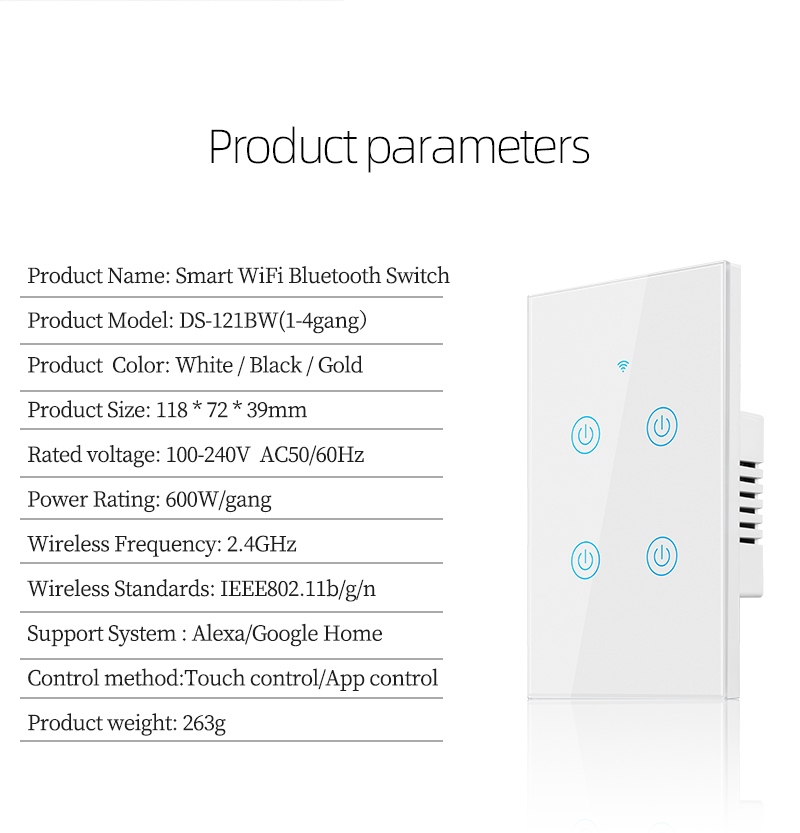
Vertical 118-type Wall plates are the workhorse of commercial lighting in North America and in a number of markets that adopt the same opening. The format exists because it gives you a tall, narrow canvas — enough real estate for four Switch keys plus an indicator, on an opening already cut into millions of walls.
The DS-121BW is a 118-type Touch switch with Wi-Fi and BLE, offered in 1- to 4-gang configurations, with a wide-range 100-240 V input and a 600 W per gang rating. This article is about the part of the decision that datasheets do not cover: how many zones you can sensibly put on one plate, and where a four-gang vertical unit beats four single switches.
Product overview
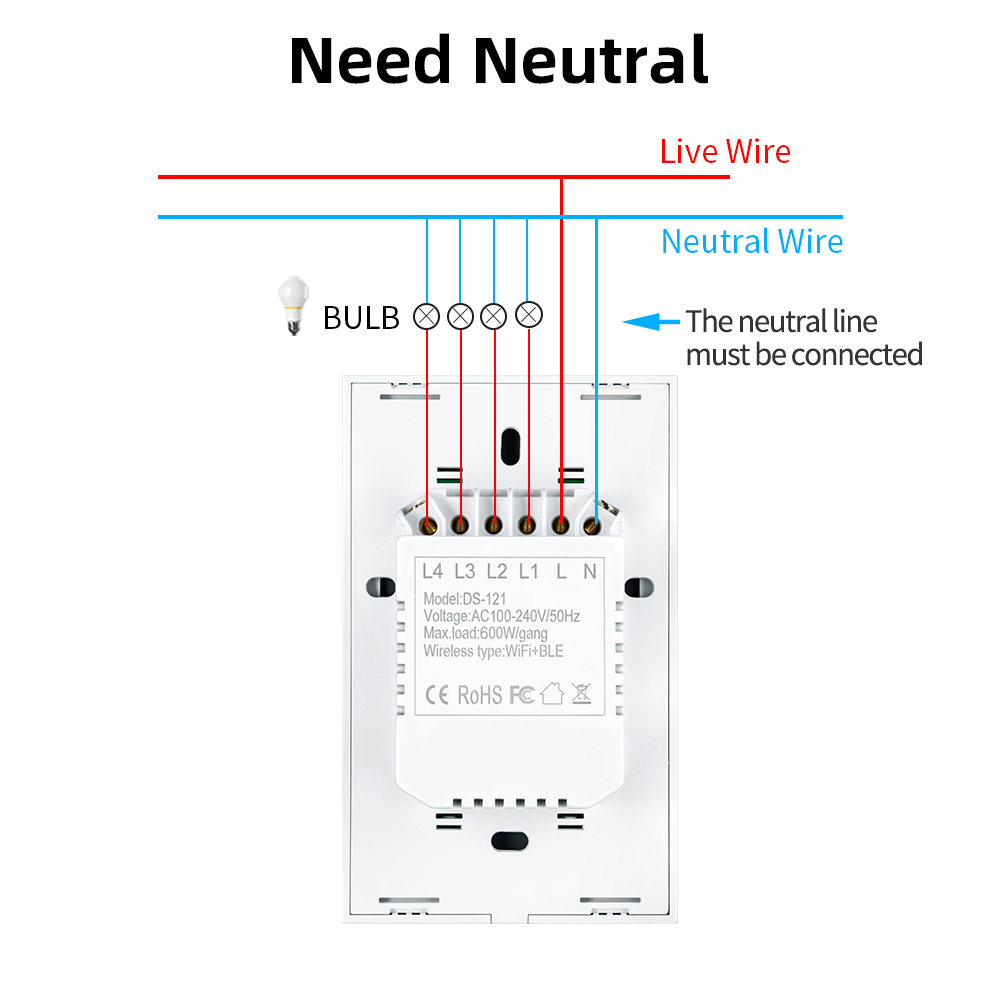
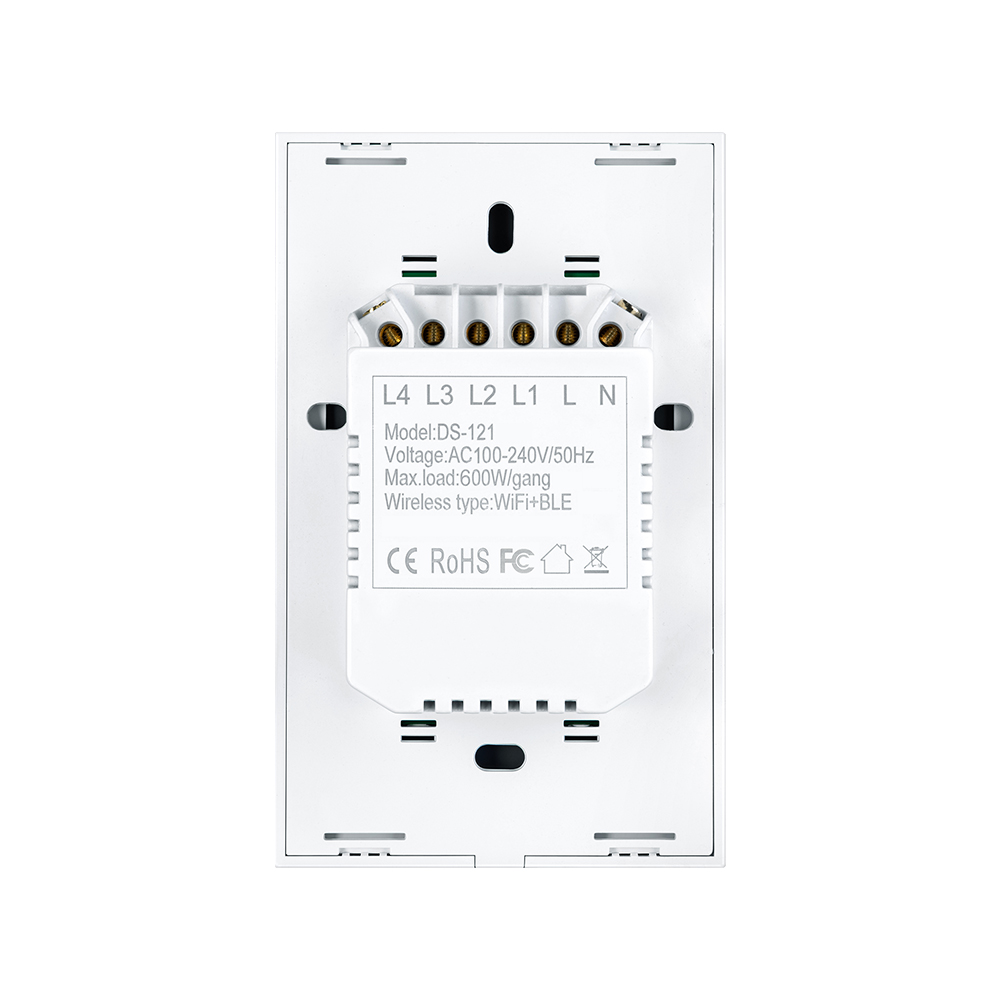
The faceplate measures 118 × 72 mm with a body depth of 39 mm. Four capacitive touch keys sit under a tempered Glass front, each switching an independent circuit. The rear terminal block carries L4, L3, L2, L1, L and N — four switched outputs plus a permanent live and a neutral, which is what makes a true four-circuit unit possible on a single plate rather than four separate devices sharing one feed.
DS-121BW — 118 × 72 mm vertical format, one to four gangs, glass touch front.
A four-gang 118-type unit replaces four single switches. That is not only a device-cost calculation — it is a labour and wall-space calculation, and on commercial fit-outs labour is usually the larger number.
One box, one cable pull, four zones
Four separate switches require four boxes and, in new work, four cable runs from the ceiling. A single four-gang plate concentrates the switching points at one location and pulls one multi-core cable to the ceiling junction. On a restaurant floor plate or a classroom block, that difference compounds across dozens of positions.
Scene logic becomes possible
Four circuits on one controller means the app can drive combinations rather than individual keys: all-on for cleaning, perimeter-only for security lighting, task-only for close-down. With four independent devices this has to be stitched together at the automation layer; here it is native.
Wall space on narrow piers
Retail and hospitality interiors frequently have narrow structural piers between glazing where a bank of horizontal switches will not fit. A vertical 118-type plate occupies the pier and keeps the design language clean.
Rear terminals: four switched outputs (L1–L4) plus permanent live and neutral.
Wide-range input and what it means in practice
The 100-240 V, 50/60 Hz input means the same part number can be stocked for North American 120 V circuits and for 220-240 V markets without a second SKU. For a distributor serving both, that halves the SKU count on the shelf and removes a common picking error in mixed orders. Confirm the destination market requirement during quotation — certification scope, not the electrical range, is usually what decides whether one part number can serve two regions.
Dimension drawing — 118 × 72 mm faceplate, 39 mm body depth.
Applications
Open-plan office zoning
Four lighting groups per plate — for example perimeter, task, circulation and meeting — maps onto how open floors are actually lit today. Scheduling in the app handles morning and evening transitions without touching the wiring.
Restaurants, cafés and bars
Front-of-house lighting changes several times a day. Scene control from one plate lets staff switch between service, close-down and cleaning modes on a single tap instead of hunting for four separate keys behind a banquette.
Four zones per plate — perimeter, task, circulation and meeting lighting.
Schools and training rooms
Classroom lighting is usually split between general, board and projector circuits. A four-gang plate puts all of them at the door, with the projector circuit available for a schedule override.
Residential multi-gang replacement
In apartments with tall 118-type plates at the entrance, a single four-gang unit replaces the original bank of rockers without altering the opening — the fastest possible upgrade path in occupied buildings.
Rear view — terminal block orientation to check against existing cable routing.
Load planning rules that prevent callbacks
600 W per gang is per output, not per plate. A four-gang unit fully loaded is 2,400 W of switching on a single 39 mm body. Distribute heavy circuits across gangs rather than stacking them.
Resistive loads are the easy case. Tungsten and halogen loads draw what their rating says. Motor loads, drivers and anything with high inrush need a contactor.
Keep a spare gang on the plan. Four gangs fill up fast once signage, exterior and feature lighting are added. Specify the four-gang version even when three are needed today.
Neutral is required. The BW platform is neutral-referenced. Confirm N at every drop during survey.
Commissioning and control
Pairing runs over BLE locally, then the device joins the site 2.4 GHz Wi-Fi. Alexa and Google Assistant integration comes after account linking, and multi-user sharing covers facilities and cleaning staff. On a phased fit-out, local BLE commissioning lets rooms be completed before network handover — which is normally the critical path on a commercial programme.
Voice and app control across the full gang range.
OEM / ODM for private label
The 118-type glass housing takes laser-etched logos and custom retail packaging without new tooling. For distributors launching a private label, the practical package is: branded glass front, custom box, multilingual manual, neutral pack for e-commerce, firmware configured to your app ecosystem. Private mould shapes are quoted separately and make sense only above a volume threshold — the standard housing is almost always the faster first order.
Glass faceplate and PC housing — the build detail buyers inspect at sample stage.
Datasheet confirmation
Before a tender response is submitted, request the gang-specific datasheet for the exact SKU you are quoting. Ratings, terminal count and depth are consistent across the range, but certification scope differs by market and must match the destination, not the platform.
Rating table as printed on the detail page: 100-240 V AC, 50/60 Hz, 600 W per gang.
Get a quote
Tell us the gang split you need per position, the number of switch points, the destination market and the certification set required. We will return SKU-level pricing, the datasheet for each gang count, and a sample. Orders that combine the 118-type range with the 86 mm EU range can be consolidated into one shipment.
Request DS-121BW quotation and sample → include your zone schedule (how many 2-, 3- and 4-gang positions) and we will quote against it directly.
Based on the breakdown in this article, 118 Type Smart Switch offers a solid mix of features and value. If your main goal matches the key benefits described above, it is a practical choice for everyday use.
How do I choose the right 118 type smart switch for my needs?
Start with your core use case, then compare battery life, compatibility, and build quality as covered above. Choosing the right 118 type smart switch comes down to matching specs with how you actually use it.
Does 118 type smart switch require a companion app?
Most devices of this type pair with a free companion app for setup and firmware updates. A few advanced features may sit behind a paid plan, so check the official specs page before buying.
📌 This article is part of our Complete Switch Hub — more guides and buying tips inside.
Ask any installer in Europe what stops a Smart switch retrofit and you will get the same answer: there is no neutral in the switch drop. In most of the continent’s older housing stock the switch box carries a switched live and nothing else — the neutral is looped at the ceiling rose or the junction box, not at the wall. A neutral-referenced smart switch simply cannot be fitted there without pulling new cable.
The DS-101JL is the answer to that specific objection: a 1- to 4-gang 86 mm Touch switch that can be wired either with a neutral or, using a bypass capacitor across the load, on a single live wire. This article explains the two wiring modes, the limits of the single-live-wire approach, and how to qualify a site before ordering.
Two wiring modes on one device
The rear terminal block is marked L4, L3, L2, L1, L, N. In neutral mode, L is the permanent live and N is connected to the neutral conductor. In single-live-wire mode, N is left unconnected and the device draws its standby current through the load, with a capacitor fitted across the lamp to provide a return path.
Wiring diagram — the same device supports a neutral connection or a single-live-wire feed.
The detail page states the two configurations explicitly: Need Neutral and No Need Neutral + capacitance. That is the honest way to present it. A single-live-wire smart switch is not a magic neutral substitute; it is a circuit that keeps a small standby current flowing through the lamp, and every consequence of that follows from the physics.
The bypass capacitor across the load provides the return path in single-live-wire mode.
The five things that decide whether single-live-wire will work
1. The load must be a lighting load, and it must be present
The standby current has to flow through something. A single-live-wire switch with no lamp connected — or with the lamp removed — has no return path and will not power up. This is not a fault; it is the design. If a circuit needs to be isolated at the switch for maintenance, that is an argument for the neutral mode.
2. Low-wattage LED lamps are the main failure mode
Below a certain load, the standby current is not enough to keep the electronics alive and the lamp may flicker or glow faintly when “off”. The bypass capacitor raises the available current, which is why it is supplied with the device rather than being an optional accessory. On a circuit with one 5 W LED lamp, test before rolling out to a hundred rooms.
3. Dimmable and driver-based lamps behave differently
Lamps with an electronic driver — most GU10 retrofits, integrated LED downlights — can interact badly with the leakage path, showing a faint glow at night. In practice the fix is either a different lamp, a second capacitor, or switching that circuit to neutral mode. Budget for a lamp substitution on problem circuits rather than assuming the switch is at fault.
4. Never use single-live-wire mode on a socket circuit
The device is a lighting controller. Socket outlets, appliances with a mains switch, and anything that draws standby power on its own should not be switched this way. Keep the scope to lighting and the failure rate stays low.
5. Four gangs on one live feed aggregate the leakage
A four-gang single-live-wire unit draws standby current through the sum of its loads. On a lighting group where one gang feeds a single small lamp and three feed nothing, behaviour becomes unpredictable. Where gang count is high and loads are small, specify neutral mode.
Rear terminal block — L4 / L3 / L2 / L1, permanent live L, neutral N (unused in single-live-wire mode).
Site survey: the four questions to ask before quoting
Is there a neutral at the switch drop? If yes, use neutral mode and stop worrying about lamp compatibility.
What is the lamp type and wattage per gang? Filament lamps are forgiving; low-wattage LED retrofits are not.
Is the switch box deep enough? 35 mm panel thickness, roughly 49 mm of rear depth including terminals — check against the box.
Who is the installer? Single-live-wire work involves mains voltage with the circuit live during testing. Specify a licensed electrician in the tender documents and put the wiring diagram in the manual.
Installation sequence — isolate the circuit, wire per diagram, fix the panel, restore power.
Where the single-live-wire capability pays for itself
Pre-1980s housing and heritage buildings
Where chasing walls is either expensive or prohibited, a switch that works on the existing two-wire drop converts an impossible upgrade into a same-day installation. This is the primary market for the JL variant.
Rental and social housing portfolios
Owners rarely permit new cabling. A device that fits the existing wiring and can be removed again at the end of a lease is the only version of the product a property manager will sign off.
Small hotels converting to app control
Room-by-room upgrade without closing floors. Where a room does have a neutral, use neutral mode; where it does not, the same SKU covers it. Keeping one part number across a mixed building simplifies spares.
Residential retrofit — no new cabling, no wall chasing.
Control, app and voice
The switch runs on the Smart Life / Tuya stack over 2.4 GHz Wi-Fi with BLE for pairing. Local BLE commissioning means a room can be paired before the building network is live — a practical advantage on phased fit-outs. Alexa and Google Assistant are supported once the account is linked, and device sharing lets facilities staff control rooms without holding the owner credentials.
Voice control and app scheduling across the gang range.
OEM / ODM
Private-label programmes run on the standard 86 mm glass housing without new tooling: laser-etched logo on the glass, custom retail box, multilingual manual, neutral packaging for marketplace sellers, and firmware-level brand configuration. Because the single-live-wire capability is a documented wiring option rather than a hardware variant, a distributor can carry one SKU and address both neutral and non-neutral sites — which is usually the difference between a viable stock holding and an unviable one.
Compliance and documentation to request
Ask for the CE and RoHS declarations, the ETL and FCC reports if you sell outside the EU, the wiring diagram in the destination language, and the capacitor specification. The last item is frequently missing from competitor packs and is exactly what an electrician needs when a lamp glows in the dark.
Certification set — CE, RoHS, FCC and ETL reports available with quotation.Finish and build detail — verify panel colour and terminal layout against the purchase order.
Before you order
Send us the site profile: how many drops have a neutral, the lamp type and wattage per circuit, gang count per room and the destination country. We will confirm whether the JL variant is the right part number for each circuit, supply the sample and capacitor, and quote on the gang mix you Actually need rather than a flat blend. Mixed orders combining the 86 mm EU range with the 118 mm US-format range ship in a single consolidated container.
Request DS-101JL pricing, the wiring diagram and a test sample → tell us the number of non-neutral drops in the project and we will advise on capacitor quantities in the same reply.
Is Smart Switch Without Neutral Wire worth buying?
Based on the breakdown in this article, Smart Switch Without Neutral Wire offers a solid mix of features and value. If your main goal matches the key benefits described above, it is a practical choice for everyday use.
How do I choose the right smart switch without neutral wire for my needs?
Start with your core use case, then compare battery life, compatibility, and build quality as covered above. Choosing the right smart switch without neutral wire comes down to matching specs with how you actually use it.
Does smart switch without neutral wire require a companion app?
Most devices of this type pair with a free companion app for setup and firmware updates. A few advanced features may sit behind a paid plan, so check the official specs page before buying.
📌 This article is part of our Complete Smart Hub — more guides and buying tips inside.
In Europe, the 86 × 86 mm round-corner box is not a niche format — it is the default back box in apartments, hotels and offices built or renovated over the last three decades. That single fact drives most of the sourcing decisions we see from EU distributors: any Smart switch that cannot drop into an existing 86 mm box without chasing walls has a very limited addressable market.
The DS-101BW is built around that constraint. It is a tempered-glass-front, 1- to 4-gang capacitive Touch switch with Wi-Fi and BLE on board, sized to the EU 86 mm format and slim enough to sit close to the wall. This article covers what it Actually is, what it is not, and how to spec it so that a container load does not become a returns problem.
What the DS-101BW actually is
The unit is a wall-mounted lighting controller, not a plug-in module. Power and load terminals sit on the rear, switching is done through capacitive touch keys under a glass faceplate, and the radio link is a 2.4 GHz Wi-Fi + BLE combination. BLE is what makes first-time commissioning tolerable — pairing happens locally over Bluetooth, then the device joins the customer’s 2.4 GHz network.
DS-101BW — EU 86 mm format, tempered glass faceplate, capacitive touch keys.
Panel and body dimensions
The faceplate is 86 × 86 mm with a 35 mm overall profile and roughly 49 mm of rear depth including the terminal block. That rear figure is the one that decides whether an install works: shallow European dry-lining boxes and older concrete boxes are frequently under 45 mm of usable depth once cables are folded back. Measure before quoting, or specify a deeper box for new-build.
Side profile: 35 mm body depth, rear section measured for shallow EU boxes.
Gang options and finish range
One to four gangs are available on the same 86 mm faceplate, so a project can standardise on one SKU family and cover single-pole bathroom lighting through to four-zone living areas. Finishes run white, black and champagne gold — the champagne variant matters more than it sounds, because hotel interior packages increasingly specify warm metallics and will reject a project on a pure-white-only range.
Finish options across the 86 mm family — white, black and champagne gold.
Note on ratings: the electrical figures above are the shared DS-101 platform values published in our DS-101 JL English datasheet and detail pages. Where a tender requires a stamped declaration per SKU, confirm the final rating on the datasheet issued with your quotation — do not copy the platform table into a tender response without that confirmation.
Why a glass front, and where it fails
Glass is chosen for two reasons that have nothing to do with aesthetics. First, it does not yellow or scuff the way lacquered plastics do after a few years of cleaning chemicals — relevant in hotels where rooms are wiped daily. Second, a sealed glass faceplate with no mechanical travel has no gap for dust or steam ingress at the key, which is why glass touch panels dominate bathroom and kitchen specifications.
What glass does not fix is the mounting surface. A glass panel is unforgiving of a box that is set 2 mm out of plane or a wall that is not flat: the panel will show a shadow line, and on a four-gang unit that line is 86 mm long. On retrofit projects, insist on a box alignment check during the site survey rather than discovering it at handover.
Four-gang variant — four independent zones on a single 86 mm faceplate.
Wiring layout and load planning
The rear terminal block is laid out as L4, L3, L2, L1, L, N. Each L terminal drives one lighting circuit; L is the permanent live feed and N is the neutral. Two practical points come up on almost every project:
Neutral is required. This is a neutral-referenced design — there is no single-live-wire workaround on the BW platform. If a site has switch drops with live only, that is a different product decision, and it should be resolved at survey stage, not on site.
600 W per gang is a switching limit, not a suggestion. Four gangs at 600 W is 2,400 W on one 86 mm faceplate. The heat has to go somewhere. For high-wattage circuits — water heaters, large resistive loads, big commercial lighting banks — use a contactor driven by the switch rather than the switch itself.
Rear terminals: L4 / L3 / L2 / L1 plus permanent live L and neutral N.
Where this SKU earns its place
Hotel and serviced apartment refurbishment
Room-by-room replacement is the classic use case. The existing 86 mm boxes stay, the wiring stays, and the only change is the device. Four-gang units cover entrance, bedside and desk lighting groups; scenes and schedules are pushed from the app rather than rewired. Because commissioning uses BLE locally, a technician can pair a room without the hotel Wi-Fi credentials being available yet — which in practice removes the single biggest scheduling conflict on a fit-out programme.
Guest-room lighting groups controlled from a single 86 mm glass panel.
Residential upgrade and rental stock
In rented flats the appeal is reversibility: a glass touch panel replaces the original rocker without touching the wiring, so a landlord can install it and, if required, put the original switch back at the end of a tenancy. The 1- and 2-gang versions are the volume movers here.
Clinics, offices and small retail
Where a facility wants scheduled lighting — reception lighting on at 07:30, signage off at 22:00 — timer and schedule functions in the app do the job without a building management system. The 4-gang unit maps cleanly onto a four-zone open-plan floor plate.
Commercial fit-out: scheduled zone control without a BMS.
Commissioning and app control
Devices are commissioned through the Smart Life / Tuya ecosystem. The sequence is the same one that has become standard across the category: hold the key to enter pairing mode, connect over BLE, enter the 2.4 GHz network credentials, assign the device to a room. Alexa and Google Assistant are supported once the account is linked. Multi-user sharing matters for the hotel scenario — housekeeping and maintenance need access without sharing the owner’s login.
OEM / ODM programme
For distributors and private-label brands, the 86 mm glass platform is available with customisation at the points that actually differentiate a product on a shelf:
Laser-etched logo on the glass faceplate
Custom colour box and multilingual manual (EN / DE / FR / ES available on request)
Neutral packaging for marketplace sellers, retail packaging for distribution
Firmware-level brand configuration within the app ecosystem
Tooling for private-mould variants is quoted separately and depends on volume; the standard 86 mm glass housing can be branded without new tooling, which is usually the fastest route to market for a first container.
Procurement checklist
Confirm neutral availability at every switch drop before committing to the BW platform.
Measure rear box depth — target 50 mm usable; flag anything below 45 mm.
Fix the gang mix per room type rather than ordering a flat blend of 1–4 gang.
Decide the finish split by project package; champagne gold is a project-driven SKU, not a stock item.
Confirm certification documentation required by the destination market (CE / RoHS for EU, FCC / ETL for North American tenders).
Request a sample unit and test it on the target network with the target app version before volume release.
Product detail — verify finish, gang marking and terminal layout against the PO.
Next step
If you are specifying 86 mm glass touch switches for an EU renovation, a hotel roll-out or a private-label launch, send us the room-type schedule, the gang mix, the finish split and your target certification set. We will come back with a quotation, the SKU-level datasheet for each gang count, and a sample lead time. Mixed containers with the 118 mm US-format range can be consolidated in a single shipment to reduce freight cost per unit.
Request a quotation, datasheet and sample for DS-101BW → include your project country, estimated annual volume and required certification, and we will respond with availability and pricing.
Based on the breakdown in this article, 86mm Glass Smart Wall Switch offers a solid mix of features and value. If your main goal matches the key benefits described above, it is a practical choice for everyday use.
How do I choose the right 86mm glass smart wall switch for my needs?
Start with your core use case, then compare battery life, compatibility, and build quality as covered above. Choosing the right 86mm glass smart wall switch comes down to matching specs with how you actually use it.
Does 86mm glass smart wall switch require a companion app?
Most devices of this type pair with a free companion app for setup and firmware updates. A few advanced features may sit behind a paid plan, so check the official specs page before buying.
📌 This article is part of our Complete Smart Hub — more guides and buying tips inside.
Every wall Switch in a commercial building gets touched hundreds of times a day. In hotel bathrooms, clinic corridors, factory canteens and public washrooms, that single square of Glass is where fingerprints, soap residue and cross-contact accumulate fastest. Buyers who source Switches for these environments are no longer only asking about price per unit — they are asking whether the Switch can be operated without being touched at all.
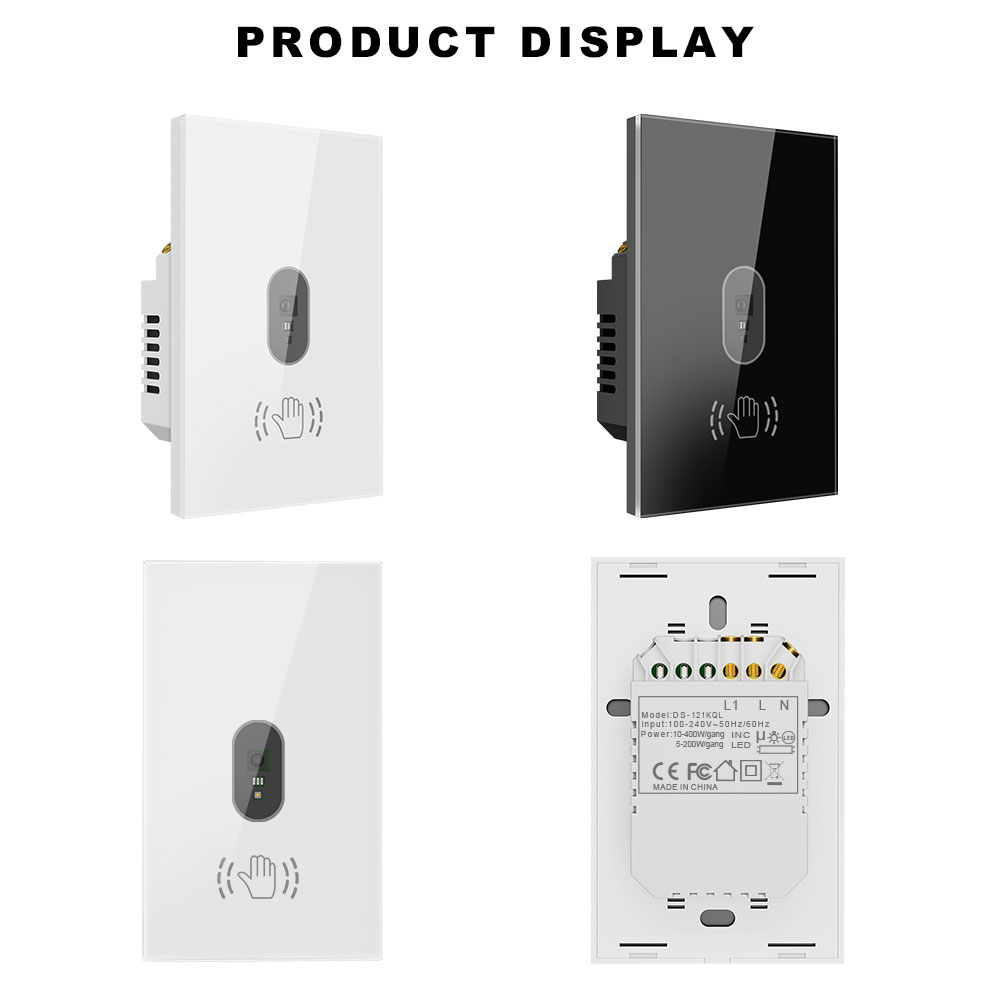
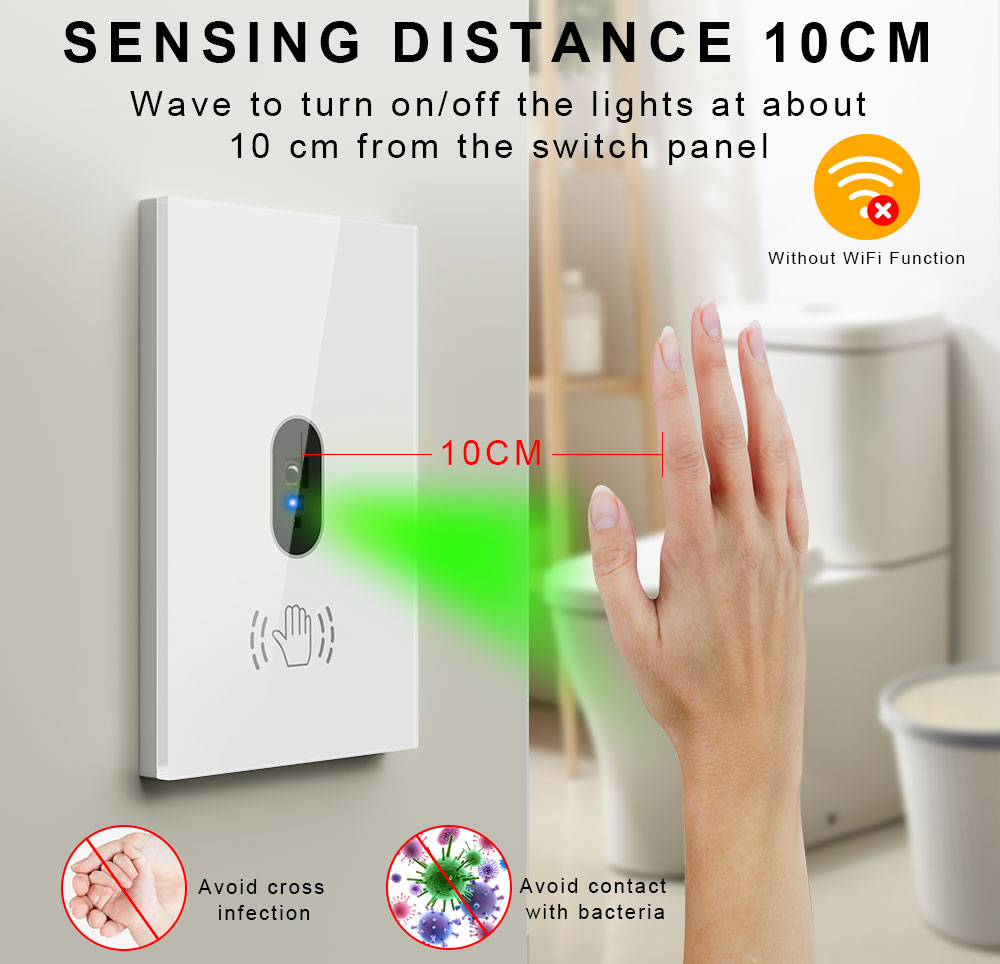
121KWL wave-sensor Wi-Fi wall switch – a single hand gesture within 10 cm toggles the load
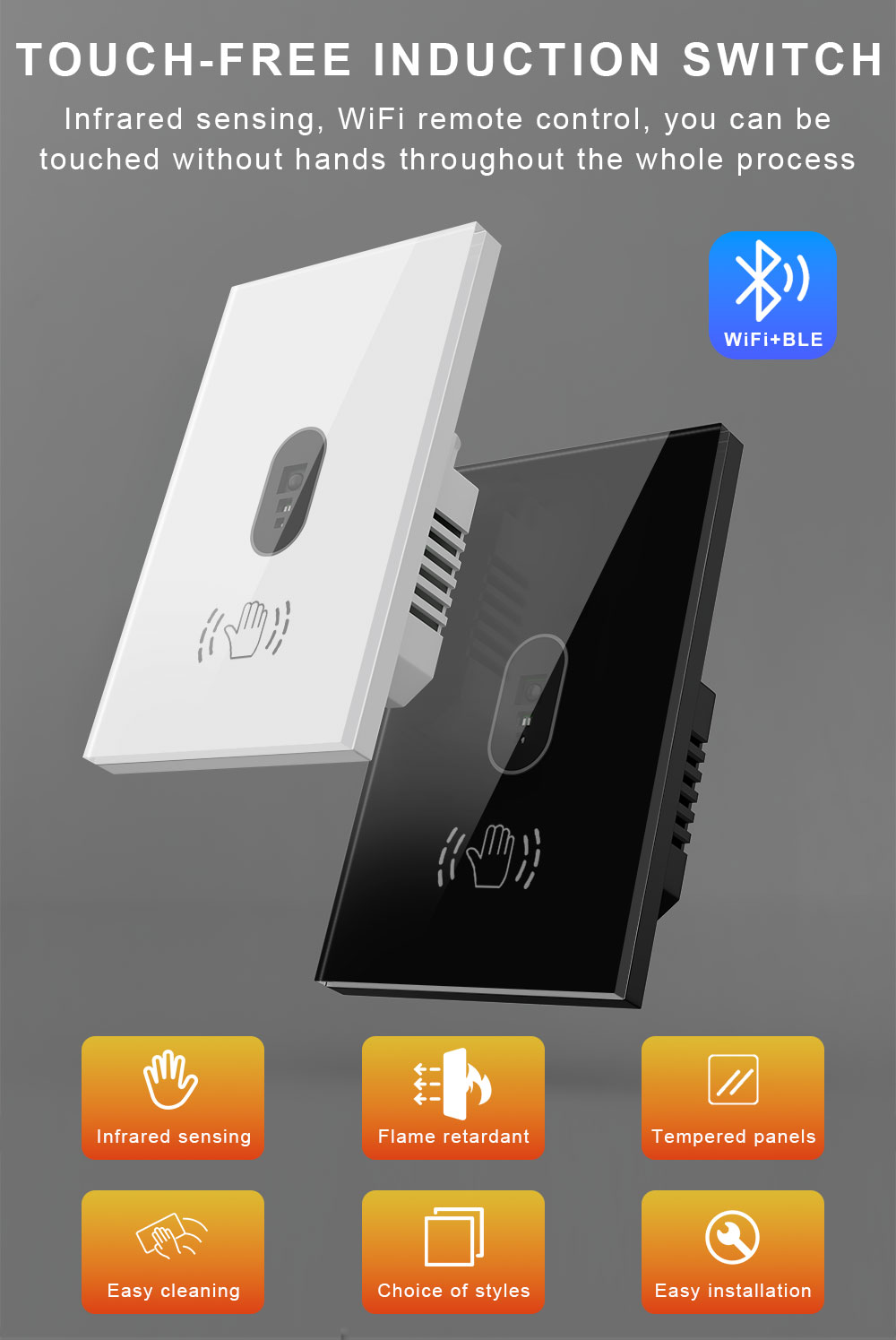
The wave-sensor Wi-Fi wall switch answers that question with a hand gesture. Move your palm within 10 cm of the panel and the load toggles; there is nothing to press, nothing to wipe down, and nothing for a guest to figure out at 2 a.m. ZigBee vs ZigBee 3.0: What Actually Changed
What is a wave-sensor wall switch?
A wave-sensor switch is a Standard wall switch that carries an infrared gesture sensor behind its glass front. Instead of a mechanical rocker or a capacitive Touch pad, the trigger is proximity motion: the panel detects a hand entering its sensing field and cycles the relay between on and off. The physical panel stays sealed, so the surface never collects the greasy fingerprint film that capacitive touch panels develop in kitchens and hotel bathrooms.
Two variants are available in this platform, and the difference matters when you build a price ladder for your market:
Wave + Wi-Fi version — gesture control plus full app control: remote on/off, app timers with weekday repeat, OTA firmware upgrades, device sharing, and SmartConfig pairing on both Android and iOS.
Wave-only version — gesture control and nothing else. No app, no cloud, no pairing. Ideal for corridors, storage rooms and public washrooms where a network connection adds cost without adding value.
Wave-only and wave + Wi-Fi versions share one platform; the gesture relay replaces the mechanical rocker
Technical specifications
The figures below are taken directly from the product specification sheet. EU and US versions share the same electrical platform; only the wall-plate geometry differs.
Model-to-market mapping should be confirmed on quotation; the EU and US plates are not interchangeable, and the 400 W rating refers to resistive lighting loads such as LED panels, downlights and filament lamps rather than motor or heating loads.
EU 86 mm and US 118 mm plate geometry, 35 mm depth behind the wall plate
How the gesture sensing actually behaves
One gesture, one state change
The sensor uses a cycling logic rather than a toggle-on-motion rule. Each detected wave flips the current state — on becomes off, off becomes on — so the panel behaves exactly like the rocker it replaces. There is no ambiguity about whether the light was already on, and there is no need to hold the hand in place.
Ten centimetres is the sweet spot
A 10 cm sensing envelope is deliberately short. It is long enough that a person walking past with wet hands can trigger the switch with an open palm, and short enough that nobody in the corridor outside a bathroom door switches the light on by accident. For installers, this also means the sensor does not need a cut-out or a separate aperture — it sits behind the same glass as the legend.
The 10 cm sensing envelope: long enough for a wet hand, short enough to avoid corridor false triggers
Touch still works
The panel remains a functional wall switch. Guests who instinctively press it are not punished with a dead plate; the relay responds either way. In hotels this quietly removes the single most common guest complaint about unfamiliar in-room technology.
The app layer (Wi-Fi version only)
When the Wi-Fi module is fitted, the gesture switch becomes part of the property’s connected layer:
Remote control — switch any load on or off from the phone, provided both the panel and the phone are online.
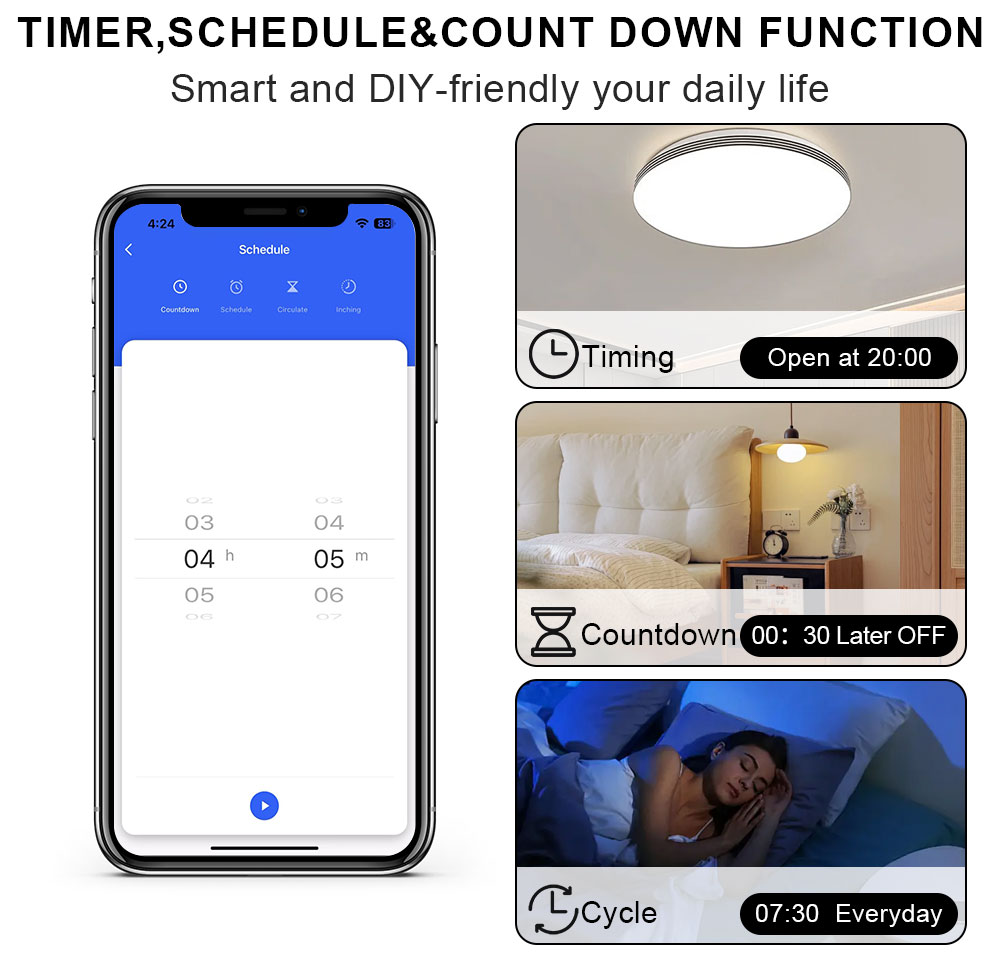
Timers with weekday repeat — schedule a load per day of the week, which is what makes the product usable for signage lighting, display windows and bathroom exhaust fans on a fixed routine.
OTA firmware updates — new functions can be pushed to panels already on the wall, so a fleet installed this quarter does not become obsolete next quarter.
Device sharing — hand access to family members, staff or facility managers without handing over the account.
SmartConfig pairing — network credentials are pushed from the phone, supported on both Android and iOS, so no per-panel commissioning laptop is required.
App layer: remote switching, weekday timers, OTA updates and device sharing
Where this switch earns its place
Hotel bathrooms and guest rooms
A wet hand never has to find a switch plate. Combined with the timer function, the bathroom exhaust Fan can run on a fixed daily schedule regardless of whether the room is occupied.
Touchless operation in hotel bathrooms, clinics and public washrooms reduces contact points
Clinics, dental surgeries and care facilities
Touchless operation reduces contact points on high-frequency surfaces. The sealed glass front is also easier to disinfect than a rocker with a gap around its paddle.
Commercial washrooms and factory corridors
Public washrooms are the classic case for the wave-only version: gesture control, no app, no network, no commissioning, and a load rating that suits LED battens and downlights.
Short-let apartments and serviced units
Remote control lets the operator cut lighting between guest stays, and device sharing allows cleaning staff to be given access without sharing owner credentials.
Kitchens and food preparation areas
Grease and flour are the enemies of capacitive touch. A gesture panel stays clean because it is never contacted.
OEM and ODM capability for brand owners
This switch is built as a platform rather than a single SKU, which is what makes it usable for distributors who need a differentiated product without a full development cycle:
Plate and colour customisation — white and black are standard; plate geometry follows the EU 86 mm and US 118 mm standards so the product drops into existing box systems.
Branding — logo and legend printing on the glass, plus customised packaging for retail or project cartons.
Firmware and app configuration — the connectivity can be delivered under your own app identity, with the product provisioning flow adapted to your onboarding screen.
Variant mix — order the Wi-Fi and wave-only boards under one purchase order so a single container covers both the connected and the budget tier of your catalogue.
Documentation package — product specification sheets, wiring diagrams and packaging artwork supplied for your own marketplace listings.
Because the sensing element, the relay and the wireless module are shared across the range, changes to colour or plate do not restart the certification and testing cycle — a practical advantage when you are trying to launch before a selling season.
Selection checklist before you order
Question
If yes
If no
Does the location need app or remote control?
Specify the Wi-Fi version (101KWL / 121KWL)
Specify the wave-only version (101KQL / 121KQL)
Is the wall box EU 86 mm or US 118 mm?
Match the plate to the box before ordering
Confirm box standard with the installer first
Is the connected load under 400 W resistive?
Product is suitable as specified
Move to a higher-rated switching solution
Will the panel sit in direct sunlight or near a heat source?
Check the -20 to 45 °C range against the site
Standard installation applies
Do you need a private-label app?
Request the OEM app configuration package
Standard app is sufficient
White-plate version – standard finish for project and retail cartons
Frequently asked questions
Does the switch need a neutral wire?
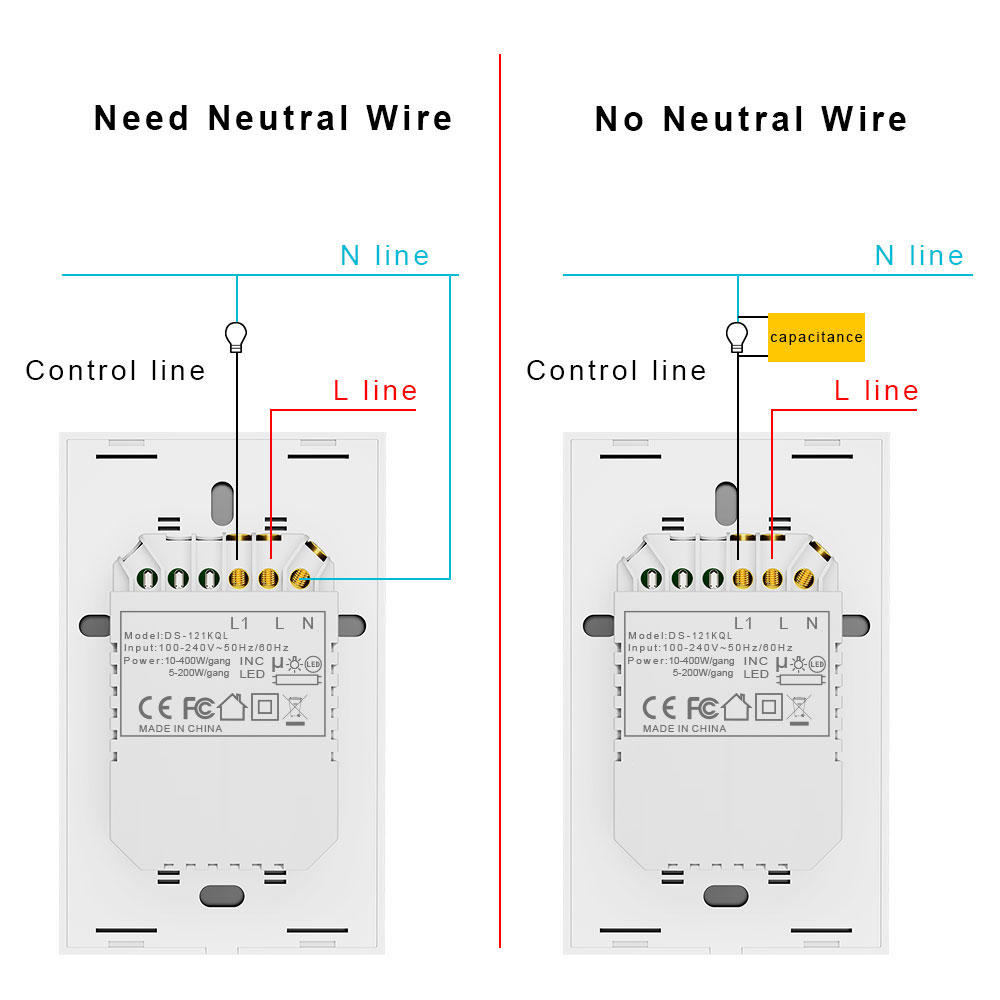
Wiring requirements depend on the specific board version. Confirm the wiring diagram for the exact model you are ordering before the electrician starts work; do not assume the wave-sensor board shares the wiring of a no-neutral touch switch.
Can the gesture sensor be disabled?
The sensor and the physical switch operate on the same relay. Where a project requires motion-free operation, specify the configuration with your sales contact at quotation stage.
How many panels can one app account manage?
Multiple panels can be added to a single account and grouped by room or by property. The practical limit depends on your Wi-Fi infrastructure rather than the panel itself.
Talk to us about your wave-sensor programme
If you are building a touchless switching line for hotels, healthcare or public washrooms, we can supply the EU and US variants under a single order, with your branding on the glass and packaging, plus the specification documents your marketplace listing needs.
Send us your target market, plate standard, annual volume and whether you need the Wi-Fi tier or the wave-only tier — we will come back with a quotation and a sample plan.
Cut-out asset supplied for your own marketplace and catalogue listings
All technical figures in this article are taken from the manufacturer’s product specification sheet for the wave-sensor switch range. Confirm the exact configuration of your ordered model on the datasheet before installation.
The comparison gets phrased as a brand fight, but the Two are not the same kind of thing. Tuya is a platform: it licenses the chip, the firmware and the cloud to hundreds of manufacturers, which is why a switch from one brand and a socket from another still pair in the same app. Sonoff (from ITEAD) is a manufacturer that builds its own hardware, mostly modules and relays, and runs its own eWeLink app. Both work. They suit different installs.
This is written from the switch side, since that is where the decision has the longest consequences — switches are wired into walls and are the least fun thing to replace later.
If the job is a Module hidden in a ceiling rose, a DIN-rail relay in a consumer unit, or a one-off experiment on a bench, Sonoff’s catalogue is the natural place to look, and its DIY community is a genuine advantage — there is a forum answer for almost everything.
App and ecosystem lock-in
You cannot put a Sonoff device into Smart Life, or a Tuya device into eWeLink. That is the real lock-in, and it is why the decision should be made once rather than per device. Two apps on one house means two sets of automations, and scene logic that cannot cross between them — a motion sensor in one app cannot trigger a light in the other.
Both ecosystems talk to Alexa and Google, and both have moved toward Matter, which is the long-term answer to this problem. If you are starting fresh and want the option to change your mind, prefer devices that carry Matter or run on Zigbee behind a hub; the reasoning is set out in our WiFi versus Zigbee comparison.
Can you mix them?
Technically yes, with voice control as the glue: both respond to Alexa, so “turn off the downstairs lights” can span both. What you lose is cross-vendor automation and a single timeline of what happened. For two or three devices it does not matter. For a whole-house install it becomes annoying quickly.
A practical middle path used on a lot of project installs: Tuya-platform wall plates for anything visible in the wall, plus a Zigbee hub for sensors, with one app for day-to-day control. Our smart switch board guide covers the plate decision; the no-neutral guide covers what to do when the box turns out to have no neutral Wire.
If you are buying for a project
Here the platform model wins on logistics rather than features: wall plates in one series, matching sockets from the same series, spares that interchange, and OEM branding available. That is why our switch range is built on it — the matching 147 × 86 socket series exists so a board looks like one unit instead of a patchwork, and US push-button plates and the 30 A water heater switch all sit in the same app as the lighting boards.
Three questions that settle it
If you are still undecided, answer these and the choice usually makes itself. First: is this going in a wall or in a box? Wall plate means the platform ecosystem, in-wall module means either, DIN-rail means Sonoff’s catalogue is the natural place to look. Second: how many devices will there be in two years? Two or three, and it genuinely does not matter. Twenty, and you want one app, one series of plates and spares that interchange — which is the platform argument. Third: does someone else maintain it? If a landlord or a facilities company will service it later, pick whichever ecosystem is easiest to buy spares for in your country, because that is what they will be doing in five years.
Frequently Asked Questions
Can I add a Sonoff device to the Smart Life app?
No. The two clouds are separate. Voice assistants are the only practical bridge, and even then automations cannot cross between them.
Which is cheaper?
Sonoff is usually cheaper for modules and single plug-in devices. For wall plates in quantity, platform-based supply is typically lower per unit and available in more regional standards.
Do both work without internet?
Basic local control survives on many devices in both ecosystems, but app-based remote control and cloud automations do not. A Zigbee hub keeps local schedules running in either case.
I already have one ecosystem — should I switch?
Only if you are replacing most of the hardware anyway. For anything smaller, finish on what you have and prefer Matter-certified devices on the next purchase.
The most common reason a Smart switch never gets installed is not the app, the protocol or the price. It is opening the box and finding two wires where the instructions show three. That third wire is the neutral, and a great deal of older housing does not have One at the switch.
This guide is about what to do at that moment: how to confirm what you are looking at, which options genuinely work, and which “no neutral” products are worth buying. For the wider choice of board, start from the smart switch board buying guide.
Why a switch wants a neutral at all
A mechanical switch is a piece of metal that joins two wires. It needs nothing else. A Smart switch is a small computer: it has to stay alive while the light is off, so that “Turn on the hallway light” from your phone still works at midnight. That standby current needs a complete circuit — live in, neutral back — regardless of whether the lamp is lit. With no neutral at the switch, the electronics have nowhere to return to.
How to check what is in your box
With the breaker off and the plate removed:
Two wires plus earth — live and switched live only. No neutral. This is the classic old-house switch.
Three wires plus earth — the third is very likely neutral, but colour codes pre-2004 are unreliable; confirm with a tester, not by eye.
A bundle of neutrals tucked at the back, capped — common in flats where the neutral loop lives in the ceiling rose instead of the switch box. An electrician can often extend this into the box.
If you are renting or cannot open the box, the safe assumption is no neutral, and the right product is one that does not Need it.
Option 1: a switch designed to run without one
Single-fire (no-neutral) switches pass a tiny current through the lamp to keep themselves alive. It works, with three caveats worth knowing before you buy: very low-wattage LED lamps may flicker or glow faintly when off, the minimum load matters, and some lamps simply do not cooperate. A bypass capacitor across the lamp usually fixes the glow. Where the lamp is the problem rather than the switch, automating at the appliance instead — a water heater switch or a Smart plug on the floor lamp — sidesteps the wiring entirely.
Option 2: have a neutral drawn to the box
This is the proper fix and it is often cheaper than people expect if the ceiling rose above already has a neutral loop. It is a job for an electrician, it means chasing the wall or fishing a cable through conduit, and it is the only option that leaves you able to fit any switch you like later. If you are already redecorating, do this — the marginal cost during a rewire is small.
Option 3: move the smart part somewhere else
The switch position is not the only place intelligence can live. A relay Module in the ceiling rose or behind the socket keeps the existing plate completely untouched, which is what you want with rented walls, listed finishes, or a landlord who notices things. The trade is that the physical switch still works mechanically, so a smart-off can be overridden by anyone in the room — fine for a hallway, annoying for a nursery.
What this means for the board you order
Neutral-free positions and neutral-required positions do not always mix on one plate, so check per board rather than per range. On the DS touch range, the DS-1011ZC and DS-1016 are the single-gang and two-gang plates usually chosen for retrofit work; larger boards such as DS-104 and DS-126 go in where the wiring is already modern. On a wide European cut-out the 147 × 86 series is the shape to specify. If the whole point is to avoid touching a switch at all, the wave gesture switch mounts in place of one and needs no contact.
The five-minute check before you buy
Run this before ordering anything, and the odds of a failed install drop sharply:
Open the box, count the conductors. Two plus earth means no neutral.
Note the lamp type and wattage. Low-wattage LEDs are what flicker on a single-fire switch.
Check the box depth.Smart plates are deeper than mechanical ones.
Decide whether the wall can be chased. If not, the answer is a module or a plug, not a new plate.
Ask whether the switch has to work with the router off. If yes, that is an argument for Zigbee with a hub rather than WiFi.
Frequently Asked Questions
Will a no-neutral switch damage my LED lamps?
It will not damage them, but some lamps glow faintly or flicker because of the standby current passing through them. A bypass capacitor supplied with most switches fixes it; if it does not, the lamp is the problem.
Can I just use a smart bulb instead?
Yes, and it is often the cheapest answer for one room — but the wall switch then has to stay on permanently, which visitors will turn off. A smart switch keeps the wall behaviour normal.
Is it legal to add a neutral myself?
Depending on where you live, adding a circuit is licensed work. Replacing a like-for-like switch on existing wiring generally is not; drawing a new conductor usually is. Check locally.
Do Zigbee switches avoid the problem?
No. The neutral requirement comes from how the switch powers itself, not from how it talks. A Zigbee switch with no neutral is still a no-neutral switch.
 Tuya WiFi High-Power Water Heater Switch 20A / 40A (Touch & Button) Price range: $7.90 through $8.50