Shelly, Tapo and Tuya are three different answers to the same problem, and they are not really competitors: Shelly sells relay modules that hide behind your existing switch, Tapo is a consumer retail brand of ready-made plug-and-play devices, and Tuya is the platform (not a brand) that thousands of manufacturers — including us — build on. Choosing between them comes down to whether you are retrofitting one switch, buying a few devices for a flat, or specifying a product line for a market.
This page is written for the last two cases, with the trade-offs stated plainly, including where a Tuya-based wall switch is the wrong answer.
The one-line difference
| Option | What it is | Installs where | Best for |
|---|---|---|---|
| Shelly | A relay module (Wi-Fi) wired into the back box | Behind an existing switch or in the consumer unit | Keeping the original switches; DIN-rail and panel installs; EU market |
| Tapo | Finished retail devices (plugs, bulbs, cameras) under TP-Link’s brand | Plug-in or direct replacement | Consumers who want one app and retail warranty support |
| Tuya | The platform and cloud behind many brands’ devices | Inside the product — switches, sockets, cameras, sensors | Buyers who need a wide catalogue, OEM branding, or a wall switch in a specific plate standard |
Shelly: the retrofit specialist
What it does well. A Shelly module sits behind your existing switch, so the wall plate, the decor and the switch feel stay exactly as they are. It has a dry-contact relay, it can be powered from the line or from a low-voltage supply, many models measure power, and it runs local scripts and MQTT Without any cloud account. For a landlord who cannot change the switches, an electrician doing a panel, or anyone who wants Home Assistant control, this is the cleanest solution on the market.
Where it is not the answer. It is a component, not a finish. You still need to buy a wall plate if the existing one is tired, it does not give you a touch panel, a glass face or a multi-gang plate, and the price per point is higher than a finished Wi-Fi switch once you add an electrician’s time. It also does not help if you want the switch itself to look like part of a matched range.
Tapo: the retail brand
What it does well. Tapo is TP-Link’s smart-home brand: plugs, bulbs, cameras and a few switches that work out of the box with one polished app, availability in high-street and online retail, and a warranty you can claim locally. For a consumer who wants two plugs and a Camera this weekend, it is a sensible, low-friction choice.
Where it is not the answer. The catalogue is centred on the US and EU consumer market, wall switches are a small part of it, and there is no OEM route — you cannot put your own brand on it, choose a plate standard for a specific country, or specify gang layouts and printing for a project. Prices are retail, not factory.
Tuya: the platform behind the product
What it does well. Tuya is the ecosystem, not a competitor product. A Tuya-based switch from any manufacturer works in the same app as a Tuya camera, sensor, plug or lock, which means one account covers the whole home. Because thousands of factories build on it, you get the widest possible choice of physical formats: 86 × 86 mm, 118 × 72 mm and 147 × 86 mm plates, 1 to 8 gangs, glass or plastic, neutral or no-neutral, Wi-Fi or Zigbee. For a distributor or a project buyer, this is the only one of the three that can be branded, certified for a specific market and produced at a defined MOQ.
Where it is not the answer. Quality varies by manufacturer — the platform does not guarantee the relay, the glass or the certification, the brand does. Cloud-dependent automations stop working without internet unless you choose Zigbee models with a hub. And because the app is Tuya’s, a brand that wants its own application has to move to a private app, which is a separate project.
Decision table
| Situation | Choose | Why |
|---|---|---|
| Keep the existing switches, add app control | Shelly module | No change to the wall; dry contact; local control |
| Two plugs and a camera, bought retail | Tapo | One app, local warranty, no installation |
| Replace switches in an EU / UK / US home | Tuya wall switch in the local plate standard | Correct plate size, gang count, glass finish |
| Hotel or apartment project, 100+ rooms | Tuya (OEM) with Zigbee hub | Custom icons, colour, packaging; local automations |
| Whole-home with sensors and scenes | Tuya Zigbee + gateway | Automations run locally, mesh coverage |
| DIY / Home Assistant / MQTT | Shelly | Local API, no cloud dependency |
| You need your own brand on the product | Tuya white-label or private app | OEM/ODM at defined MOQ |
What buyers get wrong
- Comparing prices across categories. A Shelly module, a Tapo plug and a Tuya wall switch are three different products. Compare like with like: per controlled point, installed.
- Forgetting the plate standard. A switch bought for one market will not fit another. 86 × 86 mm, 118 × 72 mm and 147 × 86 mm are not interchangeable.
- Assuming “Tuya” means one quality level. It means one app. Ask for the relay rating, tempering certificate on the glass, and the actual certification documents.
- Ignoring the neutral wire. Most wall switches need one; check the housing stock before specifying.
- Buying Wi-Fi for a whole building. Above roughly six controlled points per router, Zigbee with a hub is more stable and cheaper per point.
Frequently Asked Questions
Is Tuya a brand?
No. Tuya is a platform and cloud service. Devices from many different manufacturers run on it and all appear in the Tuya Smart or Smart Life app. Tapo is a brand (TP-Link); Shelly is a brand (Allterco).
Can Shelly and Tuya devices work together?
Not natively in one app — Shelly runs its own app and local API, Tuya devices run in Tuya/Smart Life. They can be bridged through Home Assistant or through voice assistants, but for a single-app home, pick one ecosystem.
Which is cheapest per switch point?
For a finished wall switch in volume, a Tuya-based switch from a factory is usually the lowest cost per point, because you are buying direct rather than paying retail margin. For a single retrofit where the existing switch stays, a module can be cheaper than replacing the plate — but only if you are doing the work yourself.
Which is most reliable without internet?
Shelly, because it is designed for local control. Among Tuya-based devices, Zigbee models with a hub keep automations running locally; Wi-Fi models keep the physical button working but lose app control.
Can I put my own brand on any of them?
Only on Tuya-based hardware bought through an OEM/ODM manufacturer. Shelly and Tapo are finished branded retail products with no OEM route.
What should a distributor ask a Tuya manufacturer?
Plate standard and gang mix for your market, neutral/no-neutral variants, relay rating and cycle life, tempering certificate for glass panels, certification documents for the destination country, whether the switch acts as a Zigbee repeater, app branding options, and MOQ — typically 500 pieces per colour for standard models.
Related products
- 147 × 86 mm Touch Switch Series — the UK / British Standard glass plate, 1–6 gang.
- 118 × 72 mm US Standard Smart Switch Series — decorator-size plate for North America.
- 86 × 86 mm Smart Socket & Switch Series — EU / CN format plates.
- Wi-Fi Smart Socket Module — the in-wall module approach when you want the socket replaced, not added to.
- Zigbee Smart Gateway — the hub that turns a set of switches into a locally automated system.
Related guides
- Smart switches for home — plate size, gang count and protocol.
- Sonoff vs Tuya smart switch
- Zigbee smart switch — hubs, mesh and local automations.
- Contact us for OEM, wholesale and project supply.
- Smart switch guide: types, wiring and how to choose
Related Articles
- Smart Door Lock: How to Choose the Right One
- Tuya Smart Plug: Setup, Energy Monitoring and Limits
- Zigbee Smart Switch: How It Works and When to Choose It
- Glass Switch Panel: What It Is and When It Pays Off
- Smart Switches for Home: Choosing Plate, Gang and Protocol
You Might Also Like
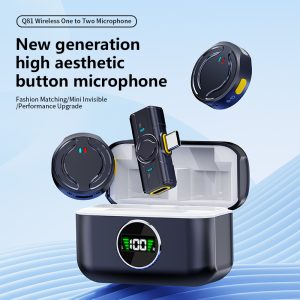 Q81 Button Shape Wireless Lavalier Microphone, 1 to 2 Magnetic Clip-on Mic with Digital Charging Case for Vlog Live Stream Interview Original price was: $19.96.$16.99Current price is: $16.99.
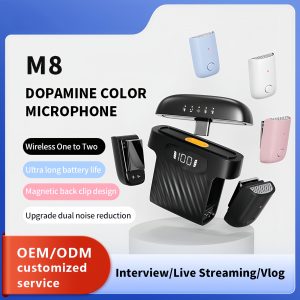 M8 Dopamine Color Wireless Lavalier Microphone, 1 to 2 Clip-on Lapel Mic with Charging Case, Dual Noise Reduction for Vlog Interview Live Stream Original price was: $19.96.$14.99Current price is: $14.99.
 3-Axis Smartphone Gimbal Stabilizer, Handheld Phone Video Stabilizer with Magnetic Fill Light, 8.0 Anti-Shake, Gesture Control & Detachable Remote Controller Original price was: $89.99.$73.99Current price is: $73.99.
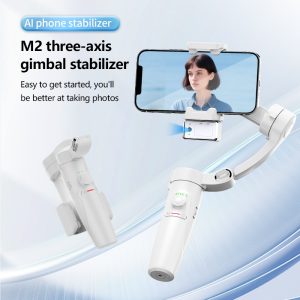 M2 AI 3-Axis Smartphone Gimbal Stabilizer, 280g Load Handheld Phone Stabilizer with Magnetic Tracking Fill Light & Mini Tripod Original price was: $74.96.$64.99Current price is: $64.99.
📌 This article is part of our Complete Smart Hub — more guides and buying tips inside.
