Posted on — Leave a comment

How Many Security Cameras Does a 3-Bedroom Home Need?

Most people either buy one camera and discover it covers nothing useful, or buy six and spend a weekend running cables. A three-bedroom house has a finite number of genuinely useful camera positions, and covering those well beats covering everything badly.

Here is the plan that fits most layouts, using models from our security camera range.

Start with entrances, not rooms

Burglary statistics aside, the practical reason for a camera is to answer “who came to the door” and “what happened at the boundary”. That means the priority order is:

  1. Front door — the single most useful position in any house.
  2. Back door or garden access — the second most common entry point and the one people forget.
  3. Driveway or parking — vehicles, deliveries and the approach to the house.
  4. Side passage or gate — if there is one, it is worth a camera more than any indoor room.

A realistic count: three to five cameras

Position Suggested type Notes
Front door Video doorbell or compact outdoor camera The only position almost every home should have
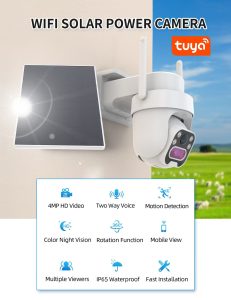
Back garden / patio door Outdoor PTZ or Solar model Covers the approach from the garden
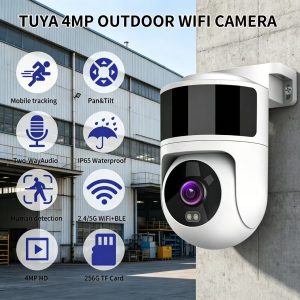
Driveway Dual-lens camera Overview plus detail on vehicles and plates
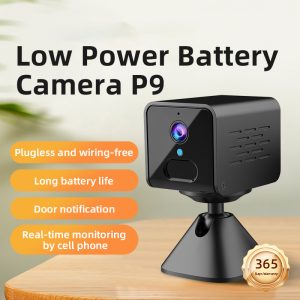
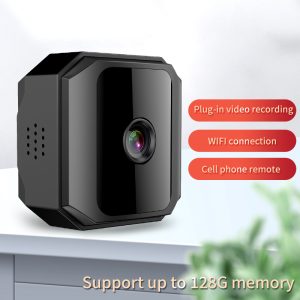
Hallway (optional) Plug-in mini camera Indoor coverage of the main entry corridor
Nursery (optional) Baby monitor Dedicated unit with its own screen, not a Security camera

Three cameras (front, back, driveway) covers the essentials. Five adds hallway and nursery. Beyond five in a three-bedroom house, you are usually duplicating views.

Where cameras are a waste

  • Bedrooms — rarely justified unless there is a specific concern.
  • Kitchens and living rooms — large open spaces where one camera sees very little detail and pets trigger constant alerts.
  • Landings upstairs — no external access point, so nothing to catch.
  • Duplicate views of the same door — a doorbell camera plus an outdoor camera aimed at the same doorstep is usually redundant.

Practical limits that decide the real number

Three things will cut your plan short before the layout does:

  • WiFi coverage. Every camera needs a usable 2.4 GHz signal where it sits. Test at each position with a phone before buying.
  • Power at outdoor positions. If there is no socket, you are choosing between a solar model and a Battery model — see cameras that run without a power outlet.
  • Storage. More cameras means more card space or a cloud plan. Continuous recording multiplies the requirement; motion-only clips keep it small.

One decision that saves money: doorbell or camera at the front?

If you only want to know who is at the door, a video doorbell is cheaper and better at it than a camera. If you want to see the approach, the path and the street, a camera does more. Many homes end up with a doorbell at the front and a camera at the back — which is a perfectly good three-camera plan with the driveway as the third.

FAQ

Is two cameras enough?
For a small three-bedroom house with one external door and a back gate, two (front and back) covers the main risk. Add the driveway if there is parking.
Should indoor cameras face outside?
Only with a camera designed for it. A standard indoor camera behind glass gives reflections by day and infrared fog at night — see our window camera guide.
Do I need continuous recording everywhere?
No. Motion clips are enough for most positions. Reserve continuous recording for one or two places where the timeline matters.
Can all cameras go in one app?
Yes — the Tuya / Smart Life app handles multiple cameras in a single account, including a mix of indoor, outdoor and doorbell models.
What about privacy rules?
Avoid pointing cameras into neighbours’ windows or shared spaces beyond your own boundary, and tell anyone working in the house that cameras are present.
How high should outdoor cameras be?
Roughly 2.5 to 3.5 metres: out of easy reach, still Low enough for a usable face angle.

Related Articles

You Might Also Like

Frequently Asked Questions

Is Many Security Cameras worth buying?

Based on the breakdown in this article, Many Security Cameras offers a solid mix of features and value. If your main goal matches the key benefits described above, it is a practical choice for everyday use.

How do I choose the right many security cameras for my needs?

Start with your core use case, then compare battery life, compatibility, and build quality as covered above. Choosing the right many security cameras comes down to matching specs with how you actually use it.

Does many security cameras require a companion app?

Most devices of this type pair with a free companion app for setup and firmware updates. A few advanced features may sit behind a paid plan, so check the official specs page before buying.
Posted on — Leave a comment

Outdoor Security Camera Without a Power Outlet: What Actually Works

The best place to put an outdoor Camera is almost never near a socket. Gates, driveways, side passages and sheds are exactly the spots with no mains, which is why “no Power outlet” is one of the most common reasons people give up on an outdoor camera.

There are three workable answers, and they are not interchangeable. In order of how often they are the right one: Solar panel cameras, Battery cameras, and 4G LTE cameras for places with no WiFi either.

Option 1: solar panel camera

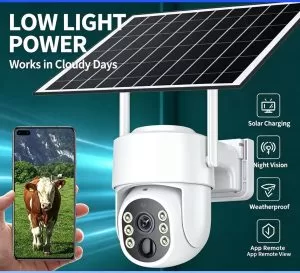
A Camera with its own panel — such as the solar PTZ or the Xingliao solar PTZ — is the closest thing to a fit-and-forget outdoor camera. The panel trickle-charges the battery through the day; the battery runs the camera at night.

Two honest caveats. The panel needs light: a north-facing wall under an overhang collects very little, and winter output drops substantially. And the camera still needs WiFi — if the gate is 30 metres from the house, the signal is the real problem, not the power. Our solar doorbell guide covers panel siting in more detail and the same rules apply here.

Option 2: battery camera

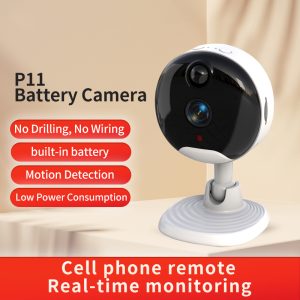
Simplest to install and the easiest to move. A battery camera such as the P11 mounts on any surface with an adhesive pad or two screws, records on motion, and comes down for charging.

Outdoors, expect shorter intervals than indoors: cold reduces capacity, and a camera watching a windy garden triggers far more often than one in a quiet hallway. If you are willing to charge it every couple of months, this is the cheapest route to a camera at the gate.

Option 3: 4G LTE camera

When there is no power and no WiFi, the answer is a camera with its own cellular link. The 4G LTE solar trail camera is built for exactly this: remote sites, allotments, farm gates, building plots — anywhere a router will never reach.

It needs a data SIM and a signal, and it costs more to run than a WiFi camera. But it is the only option that works completely independently of the building.

What still has to reach the camera

Option Needs mains Needs home WiFi Needs charging
Solar panel camera No Yes Rarely
Battery camera No Yes Every 1-3 months
4G LTE solar camera No No (SIM data) Rarely

Note that “no mains” never means “no WiFi” unless you go to 4G. Test your 2.4 GHz signal at the mounting point before buying — stand there with a phone and check. If it is weak, an outdoor extender or a mesh node in the nearest room usually fixes it.

Weather and mounting

Outdoor means IP-rated: look for IP65 or better for rain and dust. Mount under an eave if you can — not because the camera cannot take rain, but because lenses stay cleaner and infrared night vision is not fogged by water on the glass. Aim for 2.5 to 3.5 metres high: out of easy reach, still Low enough for a usable face angle.

FAQ
Will a solar camera run through a British or northern European winter?
It will run, but the panel contributes much less. Plan on one manual charge in late autumn rather than expecting the panel to carry you through to spring.
Do I need WiFi for a solar camera?
Yes, unless it is a 4G model. The panel replaces mains power, not the network connection.
How much data does a 4G camera use?
That depends entirely on how often you view live and how Many clips upload. Motion-triggered clips with occasional live viewing are modest; continuous streaming is not.
Can I use a power bank?
Some cameras will run from one, but outdoor-rated power banks are rare and it adds a failure point. A solar model is usually the better spend.
Does night vision work on battery?
Yes, infrared LEDs draw relatively little power. Cold is the bigger drain on the battery than the LEDs.
Can I mount to a fence?
Mechanically yes, but fences move. Movement triggers false motion alerts and shakes the image — use a wall or post for a PTZ camera.

Related Articles

You Might Also Like
Frequently Asked Questions

Is Outdoor Security Camera worth buying?

Based on the breakdown in this article, Outdoor Security Camera offers a solid mix of features and value. If your main goal matches the key benefits described above, it is a practical choice for everyday use.

How do I choose the right outdoor security camera for my needs?

Start with your core use case, then compare battery life, compatibility, and build quality as covered above. Choosing the right outdoor security camera comes down to matching specs with how you actually use it.

Does outdoor security camera require a companion app?

Most devices of this type pair with a free companion app for setup and firmware updates. A few advanced features may sit behind a paid plan, so check the official specs page before buying.
Posted on — Leave a comment

Dual-Lens Security Camera: What the Second Lens Is Actually For

A second lens on a Security camera is easy to dismiss as a spec-sheet trick. In practice it solves a specific problem that a single lens cannot: you cannot simultaneously watch a whole room and read a detail in it. Wide enough to see everything means too wide to identify anything.

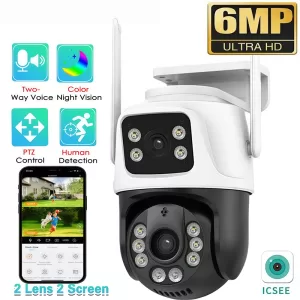
Our dual-lens models — the KT-A36, the KT-R13 6 MP and the outdoor dual-lens PTZ — use the second lens in one of two ways.

Two designs, two jobs

1. One fixed lens plus one moving lens

The fixed lens holds a constant view of the whole scene while the PTZ lens pans, tilts and zooms to follow movement. The value is that you never lose the overview: a single-lens PTZ Camera that swings away to follow somebody leaves you blind to whatever happens behind it. With two lenses, the overview keeps recording whatever the tracking lens is doing.

2. One wide lens plus one telephoto lens

Both lenses point at the same scene at different focal lengths. You get a wide context shot and a tight detail shot of the same moment — the difference between “a person approached the door” and “here is a readable face and the parcel they carried”.

Where a dual-lens camera earns its cost

  • Driveways and forecourts — the overview catches the vehicle, the detail lens catches the plate or the driver.
  • Shop floors and small warehouses — one camera covers the aisle and the till without a second install.
  • Large gardens — the fixed lens watches the gate, the PTZ follows whoever comes through it.

Where it does not: a small room, a corridor, or anywhere a single wide lens already covers everything you care about. If the space is smaller than about 25 square metres and has one entrance, one lens is enough and cheaper.

What to check on the spec sheet

  • Which lens does the tracking? On PTZ designs, confirm the moving lens is the one with optical zoom.
  • Night behaviour of both lenses. Two lenses need two sets of IR LEDs; a model that lights only one leaves the other blind after dark.
  • Storage load. Two streams use roughly twice the card space. Size the card accordingly.
  • Resolution honesty. A “6 MP” figure often describes the combined or the higher lens. Check per-lens resolution.

Installation notes

Dual-lens units are physically larger and heavier than a Mini camera, and the outdoor PTZ versions need a solid fixing — a soffit, a wall with proper plugs, not a fence panel that moves in the wind. Mount high enough to be out of reach but Low enough that the detail lens has a usable angle on faces; roughly 2.5 to 3.5 metres works outdoors.

Power is the other constraint: outdoors, an outdoor PTZ with two lenses wants mains or a Solar panel, not a small internal Battery. See options for outdoor cameras with no power outlet.

FAQ
Does a dual-lens camera record two videos at once?
Yes — both streams are recorded, and the app lets you view them together or separately.
Is auto-tracking useful or annoying?
Useful outdoors with pets and passing cars if sensitivity is tuned; annoying in a busy scene where it chases everything. Most models let you set tracking zones.
Can I turn one lens off?
Usually you can disable a view in the app, which is a way to halve storage use if you only need one angle.
Does it work at night?
Yes, provided both lenses have infrared or full-colour night support — check this per model rather than assuming.
Do I need a subscription for auto-tracking?
No, tracking runs on the camera itself. Cloud storage is a separate, optional service.
Is the outdoor model waterproof?
The outdoor dual-lens PTZ carries an IP65 rating for rain and dust. Indoor dual-lens models are not rated for outdoor use.

Related Articles

You Might Also Like
Frequently Asked Questions

Is Dual Lens Security worth buying?

Based on the breakdown in this article, Dual Lens Security offers a solid mix of features and value. If your main goal matches the key benefits described above, it is a practical choice for everyday use.

How do I choose the right dual lens security for my needs?

Start with your core use case, then compare battery life, compatibility, and build quality as covered above. Choosing the right dual lens Security comes down to matching specs with how you actually use it.

Does dual lens security require a companion app?

Most devices of this type pair with a free companion app for setup and firmware updates. A few advanced features may sit behind a paid plan, so check the official specs page before buying.
Posted on — Leave a comment

Solar Security Camera OEM: Complete Sourcing Guide for Brands in 2026

Why Solar Security Cameras Are Booming in 2026

Solar Security cameras have become one of the fastest-growing segments in the smart home industry. With rising demand for wire-free, installation-free Outdoor surveillance, brands are rushing to source reliable OEM partners. This guide covers everything you need to know about solar Security Camera OEM — from key specifications to certification requirements and minimum order quantities.

Key Specifications to Look For

1. Solar Panel Efficiency

Look for monocrystalline solar panels with at least 2W output. A 2W panel can fully charge a 5200mAh Battery in 3-4 days of sunlight. Avoid cheap polycrystalline panels — they degrade 30% faster.

2. Battery Capacity

5200mAh is the sweet spot for most brands. It allows 7-10 days of standby without sunlight. Premium models offer 9000mAh for 15+ days. Never go below 4400mAh — customers will complain about dead cameras in winter.

3. Video Resolution

2K (2304×1296) is the new standard for 2026. 1080p is acceptable for budget lines but should be positioned as entry-level. 4K solar cameras exist but drain the battery too fast — avoid them for OEM.

4. Night Vision

Color night vision with 4 infrared LEDs + 2 white LEDs is preferred. Black & white IR only looks outdated. Range should be at least 10 meters.

5. Waterproof Rating

IP65 minimum. IP66 is recommended for customers in rainy or coastal regions. Never accept IP64 — it fails in heavy rain.

Top OEM Platforms: Tuya vs Custom Firmware

Tuya-Based Solar Cameras

Pros: Fast time-to-market (2-4 weeks), existing Tuya Smart app, millions of existing users, lower MOQ (500pcs), regular firmware updates from Tuya.

Cons: You are locked into Tuya ecosystem, Tuya takes a cut per device, limited UI customization, data stored on Tuya cloud servers.

Custom Firmware Solutions

Pros: Your own branded app, full UI/UX control, no per-device fees, data on your own cloud, exclusive features you can patent.

Cons: 3-6 month development time, 2000+ MOQ, you maintain your own cloud infrastructure, higher upfront engineering cost ($20,000-50,000).

Certifications You Must Have

  • FCC — required for USA market
  • CE / RED — required for EU market
  • UKCA — required for UK after Brexit
  • RoHS — environmental compliance
  • IP65/IP66 — waterproof rating
  • UL 60950 — recommended for insurance and enterprise clients

Pricing Tiers and MOQ

Tier Spec Unit Price MOQ
Budget 1080p, 4400mAh, IP65 $18-22 500pcs
Mid-range 2K, 5200mAh, IP66, Color NV $28-35 500pcs
Premium 2K, 9000mAh, AI Detection, Spotlight $45-55 300pcs

Common Pitfalls to Avoid

  1. Under-sizing the Battery. Customers in northern regions need 30% more battery capacity because winter days are short.
  2. Skipping the waterproof test. Ask the factory for IP66 test reports from a certified lab, not just their own claim.
  3. Ignoring cloud server costs. Tuya charges per device per month. Calculate this over 3 years before pricing your product.
  4. No local after-sales support. Solar cameras fail — you need a replacement policy. Budget 3-5% of revenue for returns.

Why Choose Shenzhen XingLiao as Your OEM Partner?

At Shenzhen XingLiao Smart Technology, we have been manufacturing solar Security cameras for B2B brands since 2019. We offer:

  • Tuya-based and custom firmware options
  • Full customization: logo, packaging, app UI, firmware
  • FCC, CE, UKCA, RoHS certified products
  • MOQ as Low as 300pcs for premium models
  • 24-hour technical support and 2-year warranty

Ready to start your solar camera project? Contact us today for a free technical proposal and sample unit. We reply within 24 hours with pricing, lead time, and customization options.

Related Articles

You Might Also Like
Frequently Asked Questions

Is Solar Security Camera worth buying?

Based on the breakdown in this article, Solar Security Camera offers a solid mix of features and value. If your main goal matches the key benefits described above, it is a practical choice for everyday use.

How do I choose the right solar security camera for my needs?

Start with your core use case, then compare battery life, compatibility, and build quality as covered above. Choosing the right solar security camera comes down to matching specs with how you actually use it.

Does solar security camera require a companion app?

Most devices of this type pair with a free companion app for setup and firmware updates. A few advanced features may sit behind a paid plan, so check the official specs page before buying.

Posted on — Leave a comment

Tuya Security Camera Manufacturer Review: What to Look for in 2026When sourcing Tuya-compatible security cameras for your brand or business, choosing the right manufacturer is the most important decision you’ll make. A good OEM partner means reliable products, fast lead times, and smooth custom branding. A bad one means returns, complaints, and a damaged reputation.In this review, we break down everything you need to know when evaluating a Tuya security camera manufacturer in 2026.## Why Tuya Cameras?Tuya-powered cameras work out of the box with the Tuya Smart app, supporting: – Alexa and Google Home voice control – Remote viewing from anywhere – Motion detection alerts – Cloud storage and local SD card options – Custom branding on the app splash screenFor resellers, this means you don’t need to build your own app or cloud infrastructure. Customers already know and trust the Tuya ecosystem.

When sourcing Tuya-compatible Security cameras for your brand or business, choosing the right manufacturer is the most important decision you’ll make. A good OEM partner means reliable products, fast lead times, and smooth custom branding. A bad one means returns, complaints, and a damaged reputation.

In this review, we break down everything you need to know when evaluating a Tuya security Camera manufacturer in 2026.

Why Tuya Cameras?

Tuya-powered cameras work out of the box with the Tuya Smart app, supporting:

  • Alexa and Google Home voice control
  • Remote viewing from anywhere
  • Motion detection alerts
  • Cloud storage and local SD card options
  • Custom branding on the app splash screen

For resellers, this means you don’t need to build your own app or cloud infrastructure. Customers already know and trust the Tuya ecosystem.

What to Look for in a Manufacturer

1. Real Factory, Not a Trading Company

Many “manufacturers” on Alibaba are actually trading companies marking up prices. Look for:

  • Video factory tours on their website
  • In-house SMT and assembly lines
  • Their own QC team
  • CE/FCC/RoHS certificates

2. Camera Resolution and Night Vision

For 2026, 2K (3MP) has become the minimum. 4K (8MP) is available for premium models. Check:

  • Night vision range (20m+ is standard)
  • Color night vision vs IR
  • Wide angle (110-140 degrees)
  • Two-way audio

3. OEM/ODM Customization

Good manufacturers should offer:

  • Custom logo on camera housing
  • Custom packaging
  • Custom firmware (WiFi region, language)
  • App rebranding (white label)

4. MOQ and Lead Time

Typical OEM terms:

  • Standard models: MOQ 50-100 pcs
  • Custom housing: MOQ 500-1000 pcs
  • Sample lead time: 3-5 days
  • Bulk production: 15-25 days

Common Pitfalls

  • Hidden firmware costs: Some factories charge extra for custom firmware
  • No after-sales support: Ask about replacement policy for DOA units
  • WiFi module region locks: Make sure the camera uses a global WiFi module
  • Cloud subscription fees: Tuya cloud has per-device fees — who pays?

XingLiao as Your Tuya Camera Partner

At XingLiao (Shenzhen), we manufacture Tuya-compatible security cameras, video doorbells, and smart switches for brands in 60+ countries. We offer:

  • 3MP/4MP/8MP WiFi and PoE cameras
  • Custom logo and packaging from 50 pcs
  • CE/FCC/RoHS certified
  • 24-hour technical support
  • Sample shipping within 3 days

Looking for a Tuya camera manufacturer? Contact us for a free quote and sample.

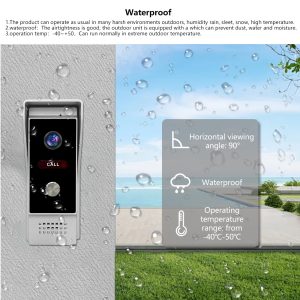
Waterproof outdoor unit of Tuya video door phone, rainproof doorbell camera, wide viewing angle, work temperature -40~50℃
Waterproof outdoor station for tuya wired video intercom, works under rain, snow and extreme temperature,90 degree horizontal viewing angle.

Related Articles

You Might Also Like
Frequently Asked Questions

Is Tuya Security Camera worth buying?

Based on the breakdown in this article, Tuya Security Camera offers a solid mix of features and value. If your main goal matches the key benefits described above, it is a practical choice for everyday use.

How do I choose the right tuya security camera for my needs?

Start with your core use case, then compare battery life, compatibility, and build quality as covered above. Choosing the right tuya security camera comes down to matching specs with how you actually use it.

Does tuya security camera require a companion app?

Most devices of this type pair with a free companion app for setup and firmware updates. A few advanced features may sit behind a paid plan, so check the official specs page before buying.

Posted on — Leave a comment

Reolink vs Tuya Security Camera

Reolink builds cameras for people who are happy to run cables to a recorder; the Tuya ecosystem builds cameras for people who want one app for the whole house. Both record locally Without a monthly fee, so the real decision is not price or storage — it is whether you are buying a camera system or a Smart Home.

The core difference: recorder-first or app-first

Reolink is built around the recorder. Its best-known models are PoE cameras that run one Ethernet cable to an NVR with a hard drive, plus battery and WiFi models for places a cable cannot reach. Power and data over one cable, weeks of retention on disk, and a single place to scrub through footage. It is a small CCTV system, and it behaves like one.

Tuya-based cameras are app-first. Each camera has its own WiFi radio and microSD slot, pair in minutes, and live in the same app as your switches, sockets, sensors and doorbell. There is no recorder in the cupboard and no cable run; you add cameras one at a time, wherever the WiFi reaches.

Installation

  • Reolink: planning, then drilling. PoE needs a cable from each camera to the recorder or a PoE Switch, which limits placement to where you can run cable. Once it is in, it is stable and never competes for WiFi bandwidth.
  • Tuya: decide the spot, check the 2.4 GHz signal with your phone, mount, pair. Ten minutes per camera, and solar models remove the power question entirely outdoors.

For a house where drilling is not allowed, or where you want to start with one camera and see, app-first wins on effort alone. For a property with four or more fixed positions and a cupboard to put a recorder in, recorder-first is the sturdier result.

Storage

  • Reolink: SD card in the camera, plus an NVR hard drive for long retention. Optional cloud. Footage survives a stolen camera if the recorder is hidden.
  • Tuya: SD card in the camera, optional cloud per camera. Adding an NVR is possible on some models but is not the default path.

Both avoid mandatory subscriptions — that is worth stating plainly, because the brands most people compare against charge monthly for the same recordings.

Ecosystem: cameras only, or the whole house

This is where the two stop being comparable. A Reolink setup is a camera system with an app. A Tuya setup can include:

  • Wall switches and sockets that turn lights and appliances on schedules
  • Door, water leak, smoke and temperature sensors that trigger cameras to record
  • A Video doorbell sharing the same notification feed
  • Curtain motors, thermostats and irrigation controllers in the same scenes

A door sensor opening and a camera panning to preset is a three-tap scene in one app. Across two brands it is either impossible or a weekend of integration work.

Image quality and detection

  • Resolution: Reolink’s higher-end PoE models reach 4K and 8MP with larger sensors, which matters for long-range identification. Tuya models in this class typically run 2MP to 4MP, which is ample for rooms, entries and driveways.
  • Night vision: both offer infrared; several Tuya models add full-colour night vision, which keeps usable detail after dark instead of grey shapes.
  • Detection: both do human or person detection. Reolink adds vehicle and pet detection on some lines; Tuya’s advantage is cross-device automation rather than more detection classes.
  • Coverage: pan/tilt and dual-lens models (one wide lens to detect, one tele lens to zoom) are common in the Tuya ecosystem and are the best value for driveways and gates.

Comparison at a glance

Reolink Tuya ecosystem
Design centre Camera + NVR system App for the whole house
Power/data PoE, battery or WiFi WiFi, battery or solar
Typical install Drilling and cable runs Mount and pair, minutes
Storage SD + NVR disk + optional cloud SD + optional cloud
Top resolution Up to 4K on PoE lines 2MP to 4MP typical
Works with Cameras Cameras, switches, sockets, sensors, doorbells
Subscription Not required Not required

Model ranges and specifications change often — check the current datasheet for the exact unit you are buying.

Which one should you buy

  • Want weeks of retention and don’t mind cables: a recorder-based PoE system.
  • Want one camera now, more later, no drilling: app-first WiFi cameras.
  • Already use Tuya or Smart Life for switches: stay in that app — one notification feed beats three.
  • Off-grid position with no power: solar or 4G camera, neither of which a PoE system solves.
  • Whole-home automation is the real goal: app-first, because sensors and switches are half the value.

XingLiao security cameras

Frequently Asked Questions

Do either of these require a monthly fee?

No. Both record to a memory card or a recorder with no subscription. Cloud plans are optional extras for off-site backup.

Which is better for a whole-house setup?

If cameras are the whole project, a recorder system is sturdier. If cameras are one part of a home that also has switches, sockets and sensors, an app-first ecosystem saves you from running three apps.

Can I mix them?

Yes, but expect separate apps and separate notification feeds. Most people regret mixing once they pass four devices.

Is 4K worth it for a home?

Only for long-range identification — a gate, a number plate, a far corner of a yard. For entries, rooms and driveways, 2MP to 4MP with good night vision gives you more usable footage per euro.

What about WiFi reliability outdoors?

Signal at the mounting point matters more than the camera. Test the 2.4 GHz signal with your phone at the exact spot before buying; if it is weak, a solar or 4G model, or a mesh node, solves it.

Do I need a recorder at all?

Not for one to three cameras. Memory cards in each camera cover most homes, and a recorder only starts to pay off when you want long retention across many cameras.

Will recordings survive if the camera is stolen?

Only if they are stored elsewhere — an NVR, a cloud plan, or an indoor monitor with its own storage. A camera with just an SD card loses everything with the camera.

Related guides

Browse all security cameras · Tell us how many positions you need and we will size the system

Related Articles

You Might Also Like
Posted on — Leave a comment

How to Choose a Security Camera for Your Home

A home security camera is the One Smart home device people buy first and keep the longest, because it answers a simple question: what is happening at home right now? But the shopping guides rarely explain the trade-offs. Should you get a plug-in indoor camera or a battery one? Is 2MP enough or do you need 4MP? Does an outdoor camera need solar? This guide walks through every decision in plain terms, so the camera you order is the camera you actually keep using.

Start with the location, not the camera

Every camera is designed around a placement, so decide where it will watch before deciding what to buy:

  • Indoor monitor: a room, a pet, a baby, the front hallway. Any camera works; comfort features matter most.
  • Entry watch: the front door or driveway. Weatherproofing and motion detection matter most.
  • Whole-property watch: yard, parking, outbuildings. Battery life or solar charging becomes the deciding factor.

Buying an indoor camera and mounting it under the eaves “temporarily” is how people end up with a dead camera in month two. Match the camera to the spot and the rest of the choices follow. M3 Pro Foldable 3-Axis Gimbal Stabilizer, Professional Handheld Gimbal for Smartphones

Power: plug-in, battery, or solar

Plug-in cameras (USB or adapter) never run flat and can stream continuously. Put them wherever a socket is within reach — a shelf, a countertop, near the crib. Their one limit is placement freedom: you are tied to the socket.

Battery cameras Install anywhere in minutes with no drilling and no wiring, which is exactly why landlords and renters love them. The trade-off is that they wake on motion rather than streaming all day, so a busy street can drain a battery in a week and a quiet room can run three months. Check whether the battery is rechargeable and how it charges.

Solar cameras are battery cameras with a panel that tops them up daily. For outdoor spots with reasonable sun, they effectively remove charging from your chore list forever. A few cloudy weeks are fine; a permanently shaded north wall is not — put a plug-in or wired model there instead.

Resolution: what 2MP, 3MP and 4MP actually mean

Resolution is the most oversold number in the market. The honest version:

  • 2MP (1080p): plenty for seeing a person, a pet, or whether the door was left open. Fine for small rooms.
  • 3MP: a comfortable middle ground — wider view, sharper detail, still light on bandwidth.
  • 4MP and above: worth it when you need to read a license plate at the gate, recognize a face across a yard, or crop into recordings and still see detail.

Two features matter more than megapixels in practice: night vision quality and motion detection accuracy. Basic infrared night vision shows grey shapes; full-color night vision keeps usable detail after dark. And a camera that alerts on every passing cat will get its notifications muted within a week — human detection or PIR-based detection is what keeps alerts useful long-term.

Framing: fixed, pan/tilt, or dual-lens

A fixed camera watches one angle. Simple, cheap, and nothing to mechanically wear out.

A pan/tilt (PTZ) camera turns and tilts on command from your phone, covering a whole room from one corner. Ideal as a single indoor watcher — one camera, every angle.

A dual-lens camera combines a wide fixed lens with a zooming lens: the wide one detects, the tele one zooms in automatically. For driveways and gates this is the current best value, because you get context and detail from one device.

Storage and what happens when you need the footage

  • TF card (microSD): records locally in the camera, works without any subscription, footage stays in your house. Most home users should insist on this option.
  • Cloud storage: convenient and survives a stolen or smashed camera, but usually a recurring fee.
  • Both: the comfortable answer — card for everyday, cloud as backup for the events that matter.

WiFi and app reality checks

Nearly every consumer camera in this class uses 2.4 GHz WiFi. If your router merges 2.4 and 5 GHz into one network name, pairing usually still works, but a weak signal at the far end of the garden is the number-one cause of “my camera keeps going offline.” Check the signal where the camera will hang before you blame the camera. The app side matters too: a camera running the Tuya or Smart Life ecosystem can sit in the same app as your switches, sockets and sensors, which is worth a lot once your Smart home grows past three devices.

A quick buying checklist

  • Where exactly will it hang, and is there power or sun there?
  • Indoor comfort or outdoor weatherproofing (IP65 or better)?
  • Do I need to identify faces and plates (4MP, dual-lens) or just see what’s happening (2-3MP)?
  • Full-color night vision if the area matters after dark.
  • Human or PIR detection, so alerts stay useful.
  • TF card slot, cloud, or both.
  • Does it join the same app as my other devices?
XingLiao security cameras
Frequently Asked Questions

How many cameras do I need for a house?

One well-placed camera per priority area beats four covering random corners. Typical starters: one indoor main-area watcher, one at the main entry. Add a solar outdoor unit for the driveway when the first two prove their value.

Do security cameras need WiFi?

WiFi cameras do — that is how you get live view and alerts on your phone. If the camera spot has no usable WiFi, options include cameras with local TF recording and screen-based Doorbell systems that run their own wireless link, no router required.

What resolution should I choose?

For rooms and general awareness, 2MP is fine. For entries, driveways or anything you might need as evidence, choose 3MP or 4MP. Beyond that, lens quality and night vision matter more than extra pixels.

Are battery cameras reliable?

Yes, with realistic expectations. They wake on motion rather than streaming continuously, so battery life depends on how busy the spot is. In a quiet indoor spot a charge lasts months; on a street with constant traffic it can be weeks. Solar panels solve this outdoors.

Can I use a security camera as a baby or pet monitor?

Indoor cameras with two-way audio and pan/tilt do this well — you can talk, listen and follow movement. Look for color night vision so the room stays visible without lights.

What is the difference between a security camera and a video doorbell?

A doorbell is a camera with a button and a chime, designed for the door and two-way conversation with visitors. A security camera is a general watcher. Many homes end up with one of each — the doorbell handles people, the camera handles everything else.

Do I need to pay a monthly fee?

Not with TF-card cameras — recording is local and free. Cloud plans are optional extras for off-site backup, typically a few dollars a month per camera.

Related guides

Browse all security cameras · Tell us where you want coverage and we will recommend the right model

Related Articles

You Might Also Like
Posted on — Leave a comment

Hotel Smart Security Solutions

Hotel Smart Security OEM Solutions: Video Doorbells, IPC & Smart Switches

For hotels and Apartment buildings, a unified smart-security bundle reduces staffing cost and lifts guest experience. We OEM the full stack under your brand.

What the bundle includes

  • Wi-Fi video doorbell with two-way audio and mobile alert
  • Indoor/outdoor IPC (2–5MP, PoE optional) with night vision
  • Touch Smart switches (Wi-Fi / Zigbee) for guest rooms

Why hotels choose us

  • White-label firmware & app with your logo
  • CE / FCC certified, RF compliant
  • Low-MOQ pilot batch, then volume ramp
  • Russian & English docs and support
FAQ

What is the MOQ? Pilot from a few hundred units; scale to volume.

Do you support OEM? Yes — logo, packaging, and app under your brand. Smart Sensors Buying Guide: How to Make Your Home Feel Its Environment

Which certifications? CE (EU), FCC (US), RF as required. Smart Lighting Complete Guide: From Color Temperature to Automation Scenes

Scope your hotel bundle: message us on WhatsApp or email sales@odmhome.com. Home Security Systems Explained: 5 Essential Devices to Protect Your Family

Related Articles

You Might Also Like
Frequently Asked Questions

Is Hotel Smart Security worth buying?

Based on the breakdown in this article, Hotel Smart Security offers a solid mix of features and value. If your main goal matches the key benefits described above, it is a practical choice for everyday use.

How do I choose the right hotel smart security for my needs?

Start with your core use case, then compare battery life, compatibility, and build quality as covered above. Choosing the Right hotel Smart security comes down to matching specs with how you actually use it.

Does hotel smart security require a companion app?

Most devices of this type pair with a free companion app for Setup and firmware updates. A few advanced features may sit behind a paid Plan, so check the official specs page before buying.
Posted on — Leave a comment

Dual-Lens vs Single-Lens Security Camera: What the Second Lens on the KT-A36 Actually Changes

Quick answer: a single-lens camera forces one compromise — wide enough to see the whole area, or tight enough to recognise a face, never both. A dual-lens design splits the job: one Lens holds the wide context permanently, the second covers detail and follows movement. That matters most at night and at distance, and it is the reason dual-lens units are replacing single-lens PTZ cameras at entrances, driveways and shop fronts.

The Compromise Every Single-Lens Camera Makes

A single fixed lens has one field of view. Zoom in digitally and you are enlarging pixels, not resolving detail — the plate or the face you wanted is still a blur. A single PTZ lens solves it by moving, but while it is turned towards what triggered it, it is no longer watching where it was pointed a second ago. That gap is exactly how things get missed. Smart Home Automation Scenes: 6 Practical Setups That Make Your Home Think

  • Wide and fixed — you see everything, you recognise nothing.
  • Narrow and fixed — great faces, blind corners.
  • Single PTZ — good tracking, but coverage moves with it and the wide view is lost while it tracks.

What the Second Lens Adds on the KT-A36

The KT-A36 keeps a fixed wide lens on the scene permanently and uses the second lens for detail and tracking. In practice that buys four things: Smart Sensors Buying Guide: How to Make Your Home Feel Its Environment

  1. Nothing is missed while tracking. The wide view never moves, so the recording always contains context — you see what happened before and after the event, not just the event.
  2. Usable detail at distance. The detail lens resolves a face or a plate that the wide lens only shows as a shape.
  3. Better night behaviour. Two optics with different fields mean the wide lens can run the infrared fill while the detail lens holds the subject — a common single-lens failure is infrared bouncing off a nearby wall and flattening the whole frame.
  4. Fewer nuisance recordings. With context and detail evaluated together, moving branches and headlight sweeps trigger less often than on a single wide-angle lens pointed at a street.

Where to Mount It (and the Two Mistakes to Avoid)

Mount height and angle matter more on a dual-lens Camera than on a single one, because both lenses have to be useful. Smart Lighting Complete Guide: From Color Temperature to Automation Scenes

  • 2.5–3m high, angled slightly down. High enough to be tamper-resistant, low enough that faces are not just the tops of heads.
  • Cover the approach, not the horizon. Point the wide lens at the path someone Must walk — a gate, a drive, a doorway — not at open sky or a distant road.
  • Mistake one: mounting under a soffit with the lens too close to the ceiling. The infrared reflects off the underside and the night picture turns milky. Leave clearance, or move the unit out from under the eave.
  • Mistake two: pointing through glass. A camera behind a window loses night vision entirely. Mount outside, or accept that the unit is a daytime-only camera indoors.

Storage: What to Decide Before You Install

Recording is only useful if the clip survives. Two decisions: Home Security Systems Explained: 5 Essential Devices to Protect Your Family

  • Local card vs cloud. A card is free after purchase and works with no subscription; it is also the First thing stolen with the camera. Cloud keeps footage off-site but costs monthly. Running both is the sensible answer for a business.
  • Continuous vs event recording. Continuous fills cards quickly and makes finding anything slow. Event-based recording with a short pre-roll is what most people actually want — the few seconds before motion starts are what explain the clip.

When a Single-Lens Camera Is Still the Right Buy

Be honest about the use case. A dual-lens unit is not automatically better value:

  • Indoor room monitoring — a single wide PTZ lens is cheaper and perfectly adequate for a living room or a nursery.
  • Tight budget across many points — four single-lens cameras usually cover more of a property than two dual-lens units.
  • Cameras you only glance at — if nobody reviews footage, the detail lens is being paid for and never used.

Buy the second lens where identification matters: entrances, driveways, stock rooms, tills. Buy single-lens everywhere you just need to know that something moved.

Related guides
Frequently Asked Questions

Is dual-lens just two cameras in one housing?

No — the value is that the wide lens stays fixed while the second one works the detail. Two independent cameras would not hold context during tracking.

Does it record from both lenses at once?

Yes. That is the point: the wide context and the detail are captured in the same event, so a clip is never missing the “before”.

Will it work at night without a light?

Yes, infrared handles it — but avoid mounting directly under an eave or behind glass, which are the two things that ruin night pictures on any camera.

Do I need a subscription?

No. Local card recording works out of the box; cloud is optional if you want footage stored off-site.

Related Reading

Product page: KT-A36 Dual-Lens Security Camera

Related Articles

You Might Also Like
Posted on — Leave a comment

Home Security Systems Explained: 5 Essential Devices to Protect Your Family

Why Smart Home Security Matters

However, Home Security has changed dramatically in recent years. You no longer need professional installation, monthly contracts, or expensive monitoring services. Today’s Smart security devices are affordable, easy to install yourself, and often more capable than traditional systems.

Therefore, This guide breaks down the five essential categories of Smart home security devices and explains how each one contributes to protecting your home and family.

1. Video Doorbells ??Your First Line of Defense

Moreover, A Smart video doorbell is the single most impactful security device you can buy. It lets you see, hear, and speak to anyone at your door from anywhere in the world.

Key Features to Look For

  • 1080p or higher resolution ??Clear enough to identify faces
  • Night vision ??Infrared or color night vision for after-dark visibility
  • Two-way audio ??Talk to visitors or delivery drivers
  • Motion detection with person recognition ??Avoid false alerts from cats and cars
  • Cloud or local storage ??Review footage after an incident

Placement Tips

In addition, Install at chest height (about 48 inches / 120cm), angled slightly downward. This captures faces clearly without being blocked by porch overhangs. Smart Lighting Complete Guide: From Color Temperature to Automation Scenes

2. Indoor Security Cameras ??Watch What Matters Most

For example, Indoor cameras serve multiple purposes: monitoring pets, checking on kids, keeping an eye on elderly family members, and deterring intruders who make it past your exterior defenses.

What to Consider

  • Field of view ??130? or wider covers most rooms
  • Two-way audio ??Talk to family members or scare off intruders
  • Pan/tilt capability ??Follow movement across a room
  • Privacy shutter ??Physical cover when you are home
  • Person detection ??Alerts only when a human is detected, not when a dog walks by

Consequently, Place cameras in main living areas, near entry points, and in hallways. Avoid bedrooms and bathrooms for privacy reasons. Tuya 4MP 2K HD Indoor Smart Camera: Color Night Vision for Family and Pet Monitoring

3. Door and Window Sensors ??Silent Guardians

Contact sensors are small, battery-powered devices that detect when a door or window opens. They are inexpensive, easy to install with adhesive backing, and form the backbone of any security system.

How They Work

Each sensor has two parts: a magnet and a sensor. When they separate (the door opens), the sensor triggers an alert. Modern sensors can also detect vibration and tilt, making them versatile.

Where to Install

  • All exterior doors (front, back, side, garage)
  • Ground-floor windows
  • Basement windows and access points
  • Pet doors and mail slots

Set up automation rules: if any sensor triggers after 10 PM, turn on all lights and send a phone notification.

4. Smart Locks ??Keyless, Worry-Free

A smart lock replaces or supplements your traditional deadbolt, giving you keyless entry, remote locking, and access management.

Key Benefits

  • No more spare keys ??Create temporary codes for guests, dog walkers, or service providers
  • Auto-lock ??Door locks automatically after 30 seconds
  • Remote control ??Lock or unlock from your phone
  • Entry logs ??See exactly who entered and when
  • Voice control ??”Lock the front door” as you go to bed

Choose a lock with both keypad and app control, so you have a backup if your phone dies.

5. Motion Sensors ??Detecting Movement Inside and Out

Motion sensors add another layer of detection to your security setup. They monitor large areas and trigger alerts or automations when movement is detected.

Indoor Motion Sensors

Use for security and automation. If armed at night, they detect intruders who bypass door sensors (through a broken window, for example). During the day, they turn lights on when you enter a room and off when you leave.

Outdoor Motion Sensors

Place near driveways, backyards, and side passages. Connect them to outdoor lights for instant illumination when someone approaches ??both for convenience and to deter potential intruders.

Putting It All Together: A Complete Security Setup

A well-rounded smart home security system for a typical house includes:

  • 1x Video doorbell (front door)
  • 1x outdoor camera (backyard or driveway)
  • 1-2x indoor cameras (main living areas)
  • Contact sensors on all exterior doors and ground-floor windows
  • 1x smart lock on the front door
  • 2-3x motion sensors (hallways, living room, exterior)

Connect everything to your smart home hub and create automation rules for “Home,” “Away,” and “Night” modes. The system should alert you instantly when something is wrong and take action automatically.

Conclusion

You do not need to buy everything at once. Start with a video doorbell ??it provides the most value for the money. Then add sensors and cameras over time. Each device you add multiplies the effectiveness of your security system, creating overlapping layers of protection that keep your family and belongings safe.

Related Articles

You Might Also Like
Frequently Asked Questions

Is Home Security Systems worth buying?

Based on the breakdown in this article, Home Security Systems offers a solid mix of features and value. If your main goal matches the key benefits described above, it is a practical choice for everyday use.

How do I choose the right home security systems for my needs?

Start with your core use case, then compare battery life, compatibility, and build quality as covered above. Choosing the right home security systems comes down to matching specs with how you actually use it.

Does home security systems require a companion app?

Most devices of this type pair with a free companion app for setup and firmware updates. A few advanced features may sit behind a paid plan, so check the official specs page before buying.