Every Smart Switch range is built around one wall standard, one protocol and one power rating, and the series number is what tells you which. This page lists the XingLiao Switch families side by side — market standard, protocol, rated load, plate size and the price band you can expect — so you can shortlist a series before asking for a quotation.
How to read a series
A series code like DS-101 or DS-121 covers a family of panels that share a plate format and an electronics platform. Within one series you choose the number of gangs, the finish and sometimes the protocol. Across series, three variables decide everything:
- Market standard — 86 mm square for most of Europe and Asia, 118×72 mm or 120×70 mm for the US, Australia and Brazil, 147×86 mm for wide plates, BS-format for the UK.
- Protocol — WiFi connects straight to the router; Zigbee needs a gateway but scales better across a whole house or a hotel floor.
- Rated load — lighting circuits are light work; sockets, heaters and motor loads need a much higher figure.
The series at a glance
Prices are EXW reference bands across the models in each series, excluding tax and freight, and they move with quantity: the four standard tiers are 1-50, 51-199, 200-999 and 1000-3000 piecesTreat the band as a shortlisting tool — the exact figure depends on gangs, finish and protocol.
| Series | Market standard | Protocol | Rated load | Plate size | Reference band (USD) |
|---|---|---|---|---|---|
| DS-101 (34 models) | EU / UK / CN | WiFi / Zigbee | 400 W | 86 × 86 × 35 mm | 4.5 – 14.1 |
| DS-121 (29 models) | US / AU / BR / IT / CA | WiFi / Zigbee | 400 W | 118 × 72 × 35 mm | 4.2 – 14.5 |
| DS-102 (21 models) | EU / UK / CN | WiFi / Zigbee | 4000 W | 86 × 86 × 35 mm | 6.5 – 14.1 |
| DS-1071 (11 models) | EU / UK / CN | WiFi / Zigbee | 600 W | 86 × 86 × 35 mm | 7.5 – 12.2 |
| DS-1081 (8 models) | EU / UK / CN | WiFi | 600 W | 86 × 86 × 39 mm | 5.5 – 9.0 |
| DS-122 (6 models) | US / AU | WiFi | 1200 W | 120 × 70 × 37 mm | 5.3 – 18.2 |
| DS-123 (6 models) | US / AU | WiFi | 1200 W | 120 × 70 × 37 mm | 10.1 – 13.6 |
| DS-104 (5 models) | EU / UK / CN | WiFi | 4000 W | 86 × 86 × 35 mm | 7.3 – 9.5 |
| DS-129 (5 models) | US / AU | WiFi | 2000 W | 118 × 72 × 35 mm | 8.0 – 10.3 |
| DS-14 (5 models) | EU | WiFi / Zigbee | 600 W | 147 × 86 × 40 mm | 14.5 – 16.5 |
| DS-161 (5 models) | EU / UK / CN | WiFi / Zigbee | 4000 W | 86 × 86 × 35 mm | 7.5 – 15.3 |
| DS-162 (5 models) | US / AU / BR / IT / CA | WiFi / Zigbee | 4000 W | 118 × 72 × 35 mm | 7.5 – 15.7 |
| DS-1021 (4 models) | EU / UK / CN | WiFi / Zigbee | 600 W | 86 × 86 × 35 mm | 6.5 – 12.5 |
| DS-1041 (4 models) | EU / UK / CN | Zigbee | 600 W | 86 × 86 × 35 mm | 5.6 – 14.0 |
| DS-1042 (4 models) | EU / UK / CN | Zigbee | 600 W | 86 × 86 × 35 mm | 6.1 – 14.0 |
| DS-111 (4 models) | EU / UK / CN | Zigbee | 600 W | 86 × 86 × 35 mm | 11.2 – 13.2 |
| DS-1110 (4 models) | EU / UK / CN | Zigbee | 600 W | 86 × 86 × 35 mm | 11.2 – 13.2 |
| DS-124 (4 models) | US / AU | Zigbee | — | 118 × 72 × 35 mm | 12.0 – 14.0 |
| DS-1011 (3 models) | EU / UK / CN | Zigbee | — | 86 × 86 × 35 mm | 10.6 – 12.5 |
| DS-107 (3 models) | EU / UK / CN | WiFi | 3500 W | 86 × 86 × 35 mm | 10.3 – 12.4 |
| DS-1211 (3 models) | AU | Zigbee | — | 118 × 72 × 35 mm | 11.3 – 13.2 |
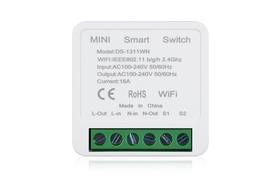
| DS-1311 (3 models) | EU | WiFi / Zigbee | — | 41 × 41 × 20 mm | 4.0 – 8.0 |
| DS-151 (3 models) | EU / UK / CN | WiFi / Zigbee | 1800 W | 86 × 86 × 35 mm | 6.9 – 13.8 |
| DS-1530 (3 models) | UK / CN | WiFi / Zigbee | — | 106 × 100 × 55 mm | 12.6 – 17.3 |
| DS-1539 (3 models) | UK / CN | WiFi / Zigbee | — | 106 × 100 × 55 mm | 8.9 – 15.8 |
| DS-1431 (2 models) | EU | WiFi / Zigbee | 600 W | 147 × 86 × 40 mm | 11.5 – 14.0 |
| DS-1437 (2 models) | EU | WiFi / Zigbee | — | 147 × 86 × 40 mm | 14.5 – 16.5 |
| DS-1460 (2 models) | EU | WiFi / Zigbee | — | 147 × 86 × 40 mm | 17.9 – 20.5 |
| DS-1611 (2 models) | BR | WiFi | — | 120 × 120 × 35 mm | 10.5 – 11.5 |
| DS-2211 (2 models) | US | WiFi | 1000 W | 120 × 30 × 40 mm | 8.9 – 12.7 |
| DS-106 (1 model) | EU / UK / CN | Zigbee | 8000 W | 86 × 86 × 35 mm | 15.3 – 16.0 |
Certification across these families is CE and RoHS as standard, with FCC available for the-bound models — confirm the exact certificates you need for your market when you request a quote. Reolink vs Tuya Security Camera
Choosing by market
- Europe, UK, China (86 mm boxes): DS-101 for general lighting, DS-102 or DS-161 when the circuit carries sockets or heating loads, DS-14 and DS-1431 upward for wide 147 mm plates.
- United States, Australia, Canada, Italy, Brazil: DS-121 and DS-162 for 118×72 mm plates, DS-122 and DS-123 for the 120×70 mm format, DS-1611 for the Brazilian 120×120 mm standard.
- United Kingdom sockets: DS-1530 and DS-1539, the five-hole and multi-gang socket families.
- Tight boxes and retrofits: DS-1311, a 41×41×20 mm module that fits where a full plate will not.
Choosing by protocol
- WiFi series (DS-101, DS-102, DS-1081, DS-121, DS-122, DS-123, DS-129, DS-161, DS-162) — no gateway, simplest for households and small projects.
- Zigbee series (DS-1041, DS-1042, DS-111, DS-1110, DS-124, DS-1011, DS-1211) — pair with a gateway, better for hotels, offices and whole-home installs where dozens of devices share one mesh.
- Higher-load platforms (DS-102 and DS-161 at 4000 W, DS-106 at 8000 W, DS-107 at 3500 W) — for sockets, water heaters, air-conditioning circuits and motor loads.
OEM and ODM
XingLiao runs its own mould and assembly operations, so a series is a starting point rather than a fixed catalogue: Video Doorbell Without Subscription
- Plate finish, glass colour, frame material and logo can be specified per project.
- Packaging, manuals and app branding are customised for OEM orders.
- MOQ follows the standard four-tier structure, with pricing stepping down at 51, 200 and 1000 pieces.
- Samples are normally available before a project commitment.
XingLiao switch series available online
- DS-121Y series WiFi touch switch — the 118×72 mm family for US, AU and EU-compatible boxes.
- DS-129 series WiFi touch switch — multi-gang panels, 2000 W platform.
- 147×86 touch switch series — wide plates for kitchens, offices and hotel rooms.
- — fan, curtain, dimmer and scene channels in the 86 mm format.
- — American standard plate with push-button feel.
- 118×72 US standard smart switch series — one to four gangs in the US format.
- 86×86 smart socket series — socket versions in the same 86 mm family.
- Tuya WiFi smart socket EU 16A — 16 A socket with energy monitoring.
Frequently Asked Questions
What is the MOQ for smart switches?
Orders start from the first tier of 1-50 pieces, with stepped pricing at 51-199, 200-999 and 1000-3000. Project and OEM work is quoted on the same structure, and samples are available before committing.
Which series fits a European 86 mm wall box?
DS-101, DS-102, DS-104, DS-161 and the DS-1071/DS-1081 families. Choose DS-102 or DS-161 when the circuit carries heavy loads; DS-101 is the general lighting platform.
Which series fits US or Australian boxes?
DS-121 and DS-162 at 118×72 mm, or DS-122 and DS-123 at 120×70 mm. DS-1611 covers the Brazilian 120×120 mm standard.
Do you supply Zigbee switches?
Yes — DS-1041, DS-1042, DS-111, DS-1110, DS-124, DS-1011 and DS-1211 are Zigbee families and need a gateway. They suit hotels and whole-home projects better than WiFi.
What certifications do the switches carry?
CE and RoHS across the range, with FCC for models destined for North America. Ask for the test reports for the specific series you are buying.
Can the load rating handle a water heater or air conditioner?
Only the higher-load platforms: DS-102 and DS-161 at 4000 W, DS-107 at 3500 W, DS-106 at 8000 W. Lighting series such as DS-101 are rated for 400 W and must not be used on heating circuits.
Can I get custom colours, logos and packaging?
Yes. XingLiao operates its own mould and assembly facilities, so finish, glass colour, frame material, logo, packaging and manuals can all be specified for OEM orders.
How do I get an exact price?
Send the series, gang count, finish, protocol and quantity tier. Prices on this page are reference bands for shortlisting; the firm figure depends on those five variables.
Related guides
- Smart switch guide: types, wiring and how to choose
- Smart switch boards explained
- WiFi smart switch board: neutral check and gang sizes
- Smart switch without a neutral wire
- How to choose a smart switch
Browse all smart switches and sockets · Send us the series, gangs and quantity and we will quote within 24 hours
Related Articles
- DS-1016 Series Smart Switch: 1 Gang / 2 Gang, Wiring and What to Check Before You Order
- DS-101BW vs a Standard Wall Switch: What Actually Changes in a European standard Retrofit
- Smart Switch: Types, Wiring and How to Choose
- Smart Switch for Water Heater and AC
- Smart Switch Without Neutral Wire
You Might Also Like
📌 This article is part of our Complete Smart Hub — more guides and buying tips inside.