Posted on — Leave a comment

Smart Switch Without a Neutral Wire: How the DS-101JL Single-Live-Wire Mode Works

Ask any installer in Europe what stops a Smart switch retrofit and you will get the same answer: there is no neutral in the switch drop. In most of the continent’s older housing stock the switch box carries a switched live and nothing else — the neutral is looped at the ceiling rose or the junction box, not at the wall. A neutral-referenced smart switch simply cannot be fitted there without pulling new cable.

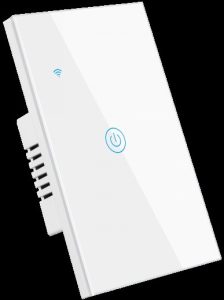
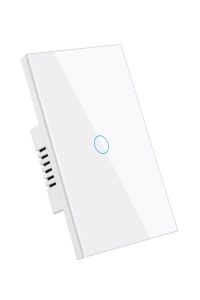
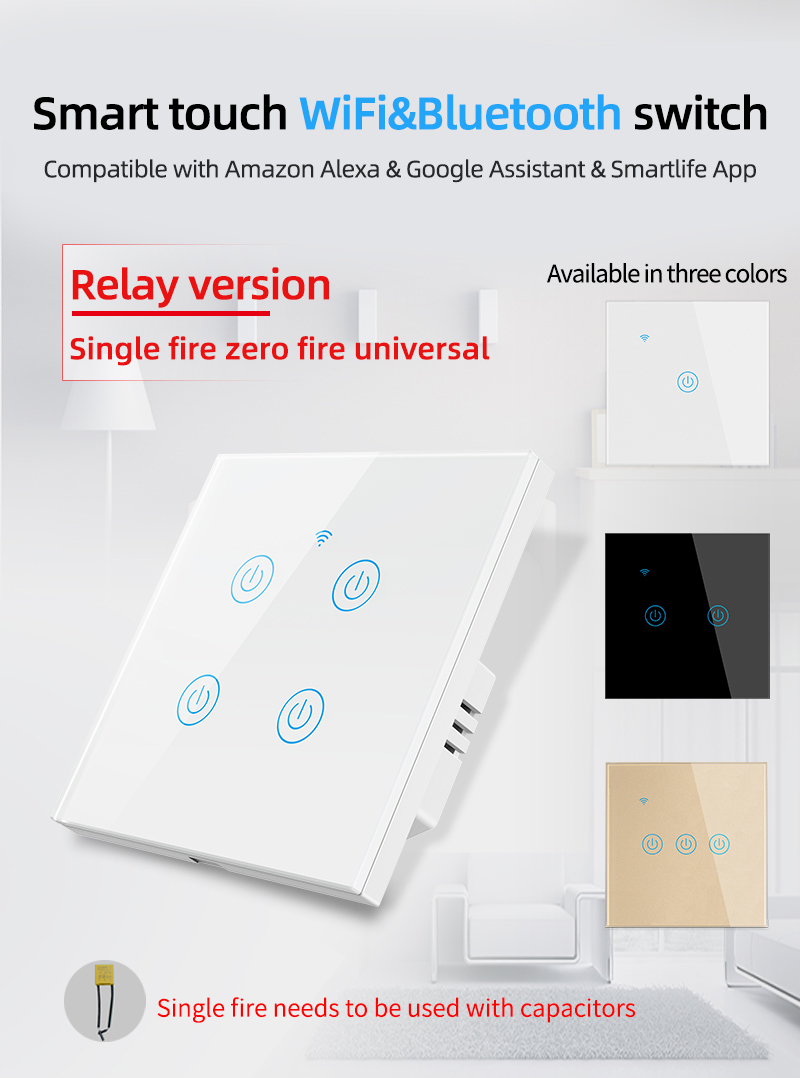
The DS-101JL is the answer to that specific objection: a 1- to 4-gang 86 mm Touch switch that can be wired either with a neutral or, using a bypass capacitor across the load, on a single live wire. This article explains the two wiring modes, the limits of the single-live-wire approach, and how to qualify a site before ordering.

Two wiring modes on one device

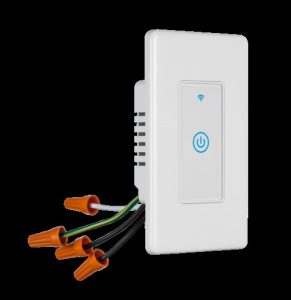
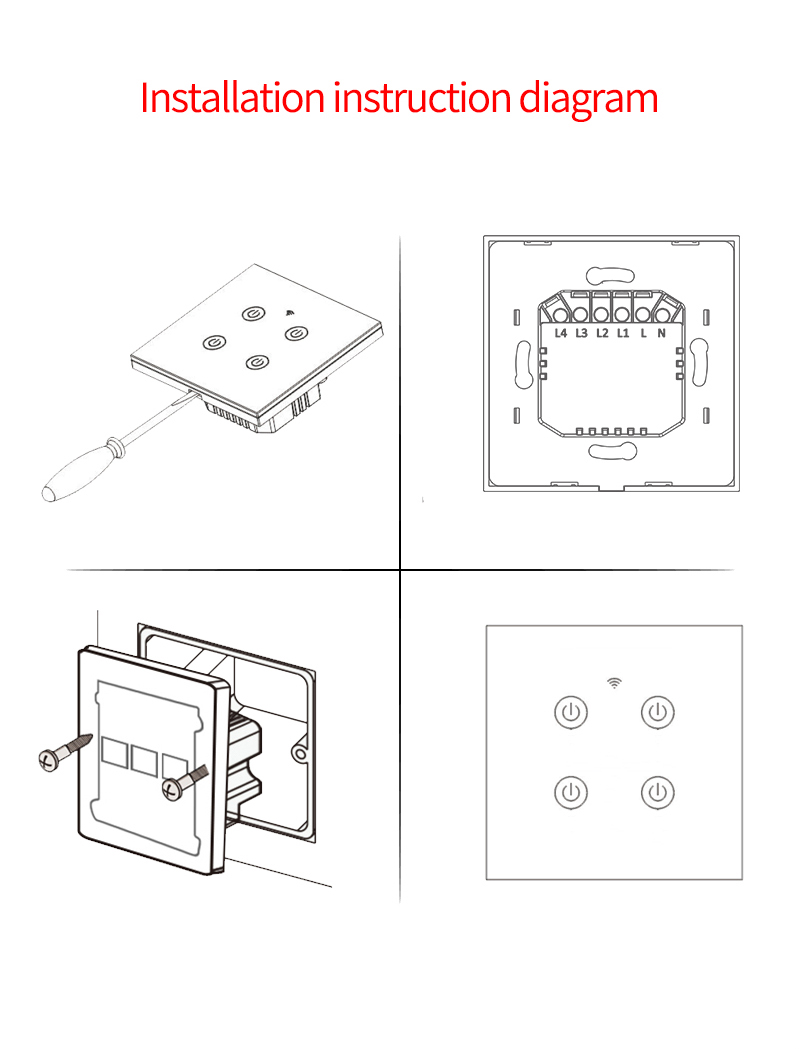
The rear terminal block is marked L4, L3, L2, L1, L, N. In neutral mode, L is the permanent live and N is connected to the neutral conductor. In single-live-wire mode, N is left unconnected and the device draws its standby current through the load, with a capacitor fitted across the lamp to provide a return path.
DS-101JL smart switch wiring modes diagram with and without neutral wire
Wiring diagram — the same device supports a neutral connection or a single-live-wire feed.

The detail page states the two configurations explicitly: Need Neutral and No Need Neutral + capacitance. That is the honest way to present it. A single-live-wire smart switch is not a magic neutral substitute; it is a circuit that keeps a small standby current flowing through the lamp, and every consequence of that follows from the physics.
Bypass capacitor fitted across LED lamp for single live wire smart switch installation
The bypass capacitor across the load provides the return path in single-live-wire mode.

Technical specification

Item Specification
Model DS-101JL (1–4 gang)
Standard / format EU 86 × 86 mm back box
Panel size 86 × 86 mm, 35 mm thickness, ~49 mm rear depth
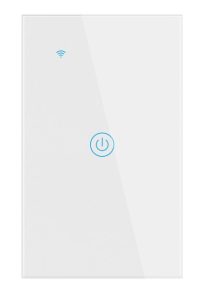
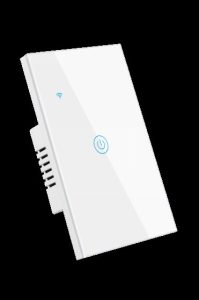
Faceplate Tempered Glass touch panel, PC + ABS flame-retardant housing (UL94 V-0)
Rated voltage AC 100–240 V, 50/60 Hz
Max load 600 W per gang
Max current 10 A
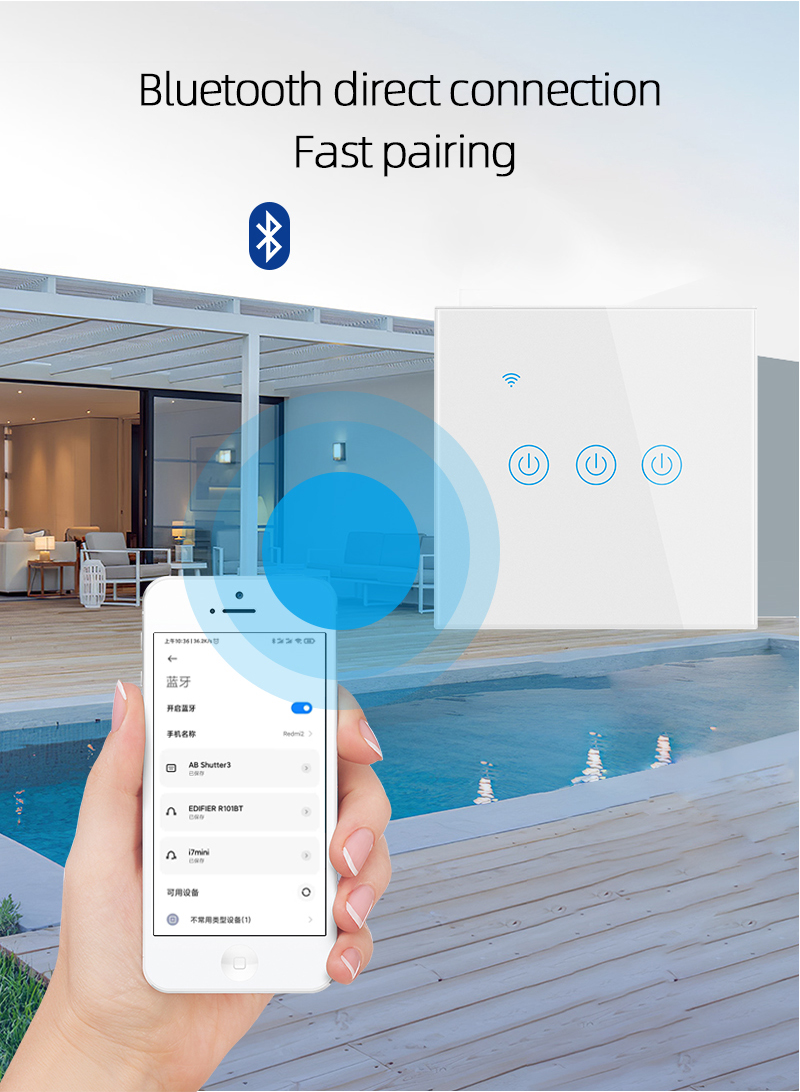
Wireless Wi-Fi 2.4 GHz + BLE
Wiring modes Neutral required / single live wire with bypass capacitor
Terminals L1, L2, L3, L4, L, N
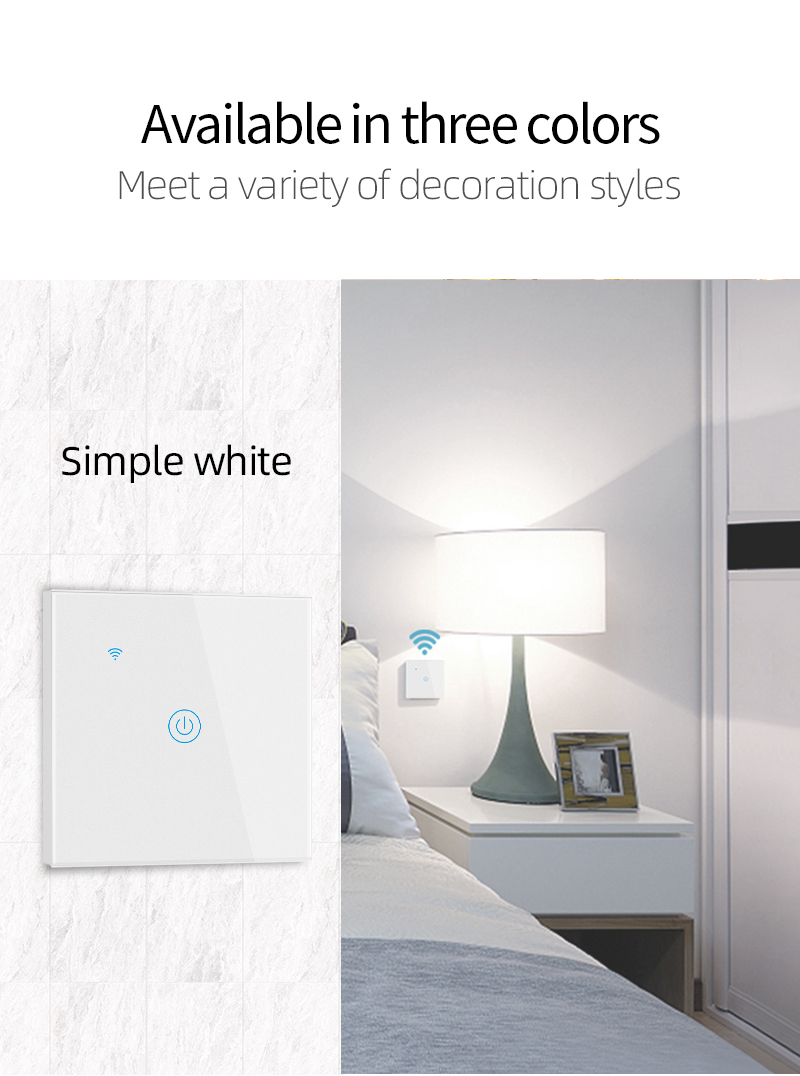
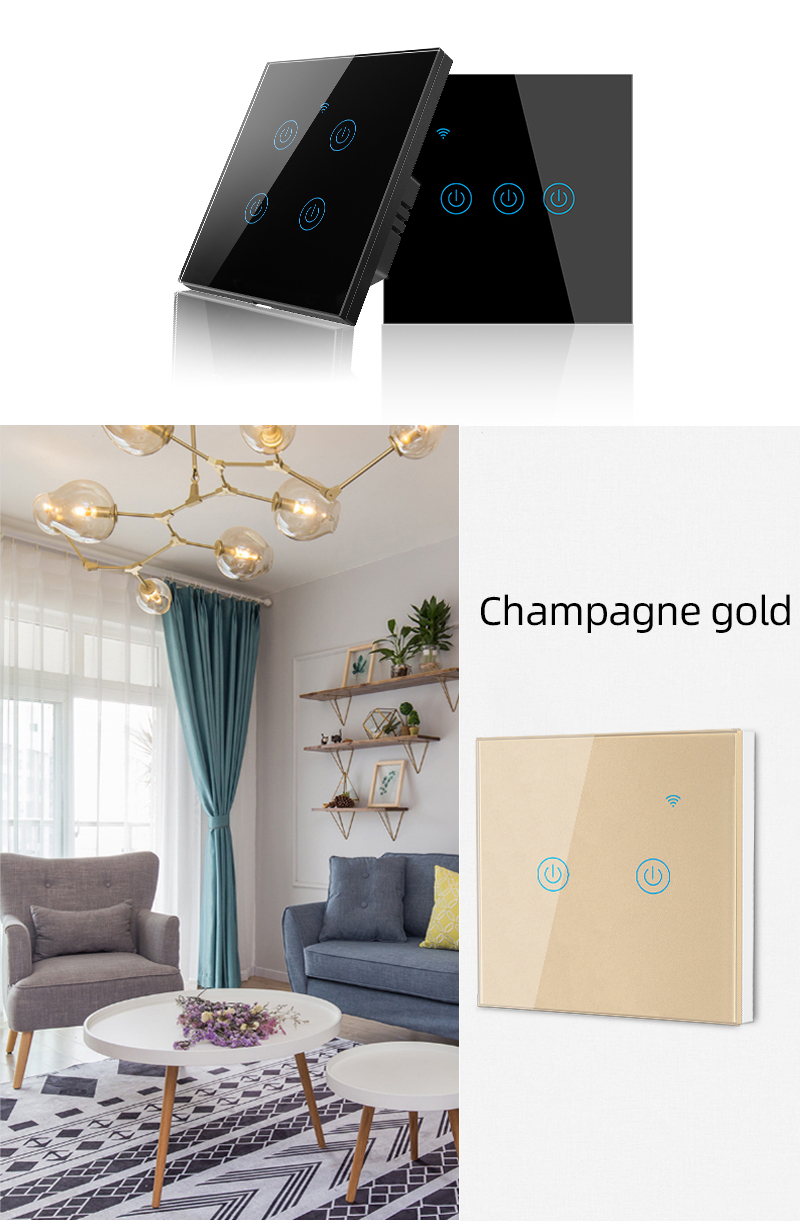
Colours White / Black / Champagne gold
Certification CE, RoHS, FCC, ETL

The five things that decide whether single-live-wire will work

1. The load must be a lighting load, and it must be present

The standby current has to flow through something. A single-live-wire switch with no lamp connected — or with the lamp removed — has no return path and will not power up. This is not a fault; it is the design. If a circuit needs to be isolated at the switch for maintenance, that is an argument for the neutral mode.

2. Low-wattage LED lamps are the main failure mode

Below a certain load, the standby current is not enough to keep the electronics alive and the lamp may flicker or glow faintly when “off”. The bypass capacitor raises the available current, which is why it is supplied with the device rather than being an optional accessory. On a circuit with one 5 W LED lamp, test before rolling out to a hundred rooms.

3. Dimmable and driver-based lamps behave differently

Lamps with an electronic driver — most GU10 retrofits, integrated LED downlights — can interact badly with the leakage path, showing a faint glow at night. In practice the fix is either a different lamp, a second capacitor, or switching that circuit to neutral mode. Budget for a lamp substitution on problem circuits rather than assuming the switch is at fault.

4. Never use single-live-wire mode on a socket circuit

The device is a lighting controller. Socket outlets, appliances with a mains switch, and anything that draws standby power on its own should not be switched this way. Keep the scope to lighting and the failure rate stays low.

5. Four gangs on one live feed aggregate the leakage

A four-gang single-live-wire unit draws standby current through the sum of its loads. On a lighting group where one gang feeds a single small lamp and three feed nothing, behaviour becomes unpredictable. Where gang count is high and loads are small, specify neutral mode.
DS-101JL rear terminals L4 L3 L2 L1 L N for single live wire wiring
Rear terminal block — L4 / L3 / L2 / L1, permanent live L, neutral N (unused in single-live-wire mode).

Site survey: the four questions to ask before quoting

  1. Is there a neutral at the switch drop? If yes, use neutral mode and stop worrying about lamp compatibility.
  2. What is the lamp type and wattage per gang? Filament lamps are forgiving; low-wattage LED retrofits are not.
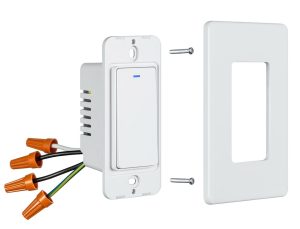
  3. Is the switch box deep enough? 35 mm panel thickness, roughly 49 mm of rear depth including terminals — check against the box.
  4. Who is the installer? Single-live-wire work involves mains voltage with the circuit live during testing. Specify a licensed electrician in the tender documents and put the wiring diagram in the manual.
Installation steps for DS-101JL wall switch in older EU building
Installation sequence — isolate the circuit, wire per diagram, fix the panel, restore power.

Where the single-live-wire capability pays for itself

Pre-1980s housing and heritage buildings

Where chasing walls is either expensive or prohibited, a switch that works on the existing two-wire drop converts an impossible upgrade into a same-day installation. This is the primary market for the JL variant.

Rental and social housing portfolios

Owners rarely permit new cabling. A device that fits the existing wiring and can be removed again at the end of a lease is the only version of the product a property manager will sign off.

Small hotels converting to app control

Room-by-room upgrade without closing floors. Where a room does have a neutral, use neutral mode; where it does not, the same SKU covers it. Keeping one part number across a mixed building simplifies spares.
DS-101JL smart switch installed in residential retrofit without neutral wire
Residential retrofit — no new cabling, no wall chasing.

Control, app and voice

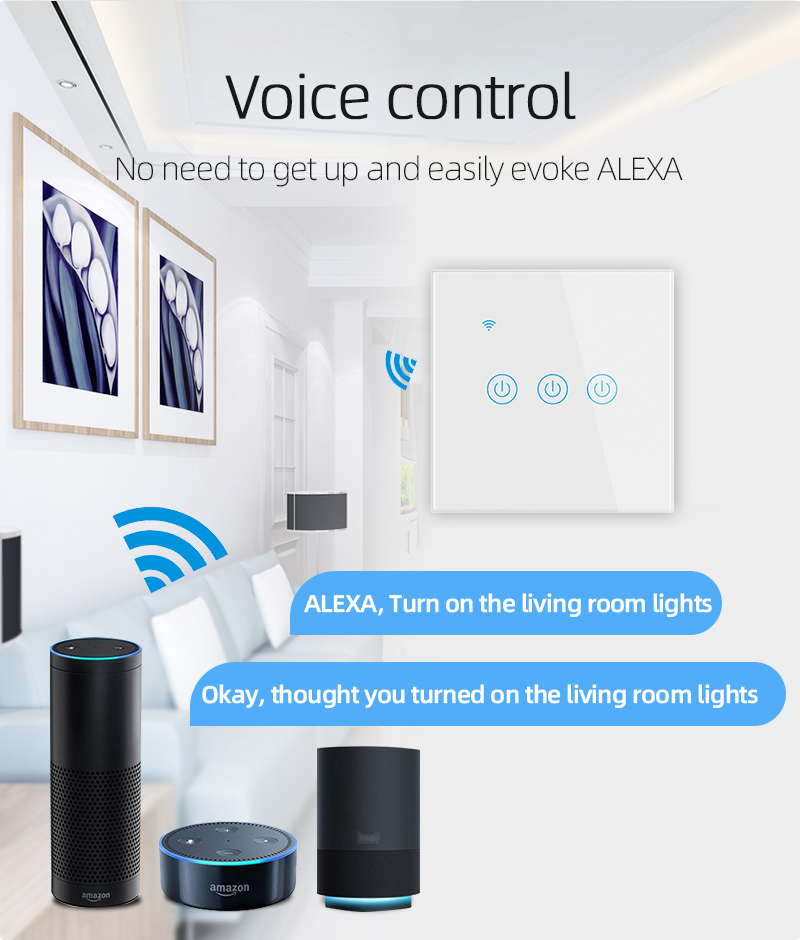
The switch runs on the Smart Life / Tuya stack over 2.4 GHz Wi-Fi with BLE for pairing. Local BLE commissioning means a room can be paired before the building network is live — a practical advantage on phased fit-outs. Alexa and Google Assistant are supported once the account is linked, and device sharing lets facilities staff control rooms without holding the owner credentials.
DS-101JL voice control with Alexa and Google Assistant
Voice control and app scheduling across the gang range.

OEM / ODM

Private-label programmes run on the standard 86 mm glass housing without new tooling: laser-etched logo on the glass, custom retail box, multilingual manual, neutral packaging for marketplace sellers, and firmware-level brand configuration. Because the single-live-wire capability is a documented wiring option rather than a hardware variant, a distributor can carry one SKU and address both neutral and non-neutral sites — which is usually the difference between a viable stock holding and an unviable one.

Compliance and documentation to request

Ask for the CE and RoHS declarations, the ETL and FCC reports if you sell outside the EU, the wiring diagram in the destination language, and the capacitor specification. The last item is frequently missing from competitor packs and is exactly what an electrician needs when a lamp glows in the dark.


DS-101JL certification CE RoHS FCC ETL documentation
Certification set — CE, RoHS, FCC and ETL reports available with quotation.
DS-101JL glass touch panel finish and product detail for single live wire switch
Finish and build detail — verify panel colour and terminal layout against the purchase order.

Before you order

Send us the site profile: how many drops have a neutral, the lamp type and wattage per circuit, gang count per room and the destination country. We will confirm whether the JL variant is the right part number for each circuit, supply the sample and capacitor, and quote on the gang mix you Actually need rather than a flat blend. Mixed orders combining the 86 mm EU range with the 118 mm US-format range ship in a single consolidated container.

Request DS-101JL pricing, the wiring diagram and a test sample → tell us the number of non-neutral drops in the project and we will advise on capacitor quantities in the same reply.

Related Articles

You Might Also Like

Frequently Asked Questions

Is Smart Switch Without Neutral Wire worth buying?

Based on the breakdown in this article, Smart Switch Without Neutral Wire offers a solid mix of features and value. If your main goal matches the key benefits described above, it is a practical choice for everyday use.

How do I choose the right smart switch without neutral wire for my needs?

Start with your core use case, then compare battery life, compatibility, and build quality as covered above. Choosing the right smart switch without neutral wire comes down to matching specs with how you actually use it.

Does smart switch without neutral wire require a companion app?

Most devices of this type pair with a free companion app for setup and firmware updates. A few advanced features may sit behind a paid plan, so check the official specs page before buying.

Posted on — Leave a comment

Smart Switch With No Neutral Wire: What Actually Works in an Old House

The most common reason a Smart switch never gets installed is not the app, the protocol or the price. It is opening the box and finding two wires where the instructions show three. That third wire is the neutral, and a great deal of older housing does not have One at the switch.

This guide is about what to do at that moment: how to confirm what you are looking at, which options genuinely work, and which “no neutral” products are worth buying. For the wider choice of board, start from the smart switch board buying guide.

Why a switch wants a neutral at all

A mechanical switch is a piece of metal that joins two wires. It needs nothing else. A Smart switch is a small computer: it has to stay alive while the light is off, so that “Turn on the hallway light” from your phone still works at midnight. That standby current needs a complete circuit — live in, neutral back — regardless of whether the lamp is lit. With no neutral at the switch, the electronics have nowhere to return to.

How to check what is in your box

With the breaker off and the plate removed:

  • Two wires plus earth — live and switched live only. No neutral. This is the classic old-house switch.
  • Three wires plus earth — the third is very likely neutral, but colour codes pre-2004 are unreliable; confirm with a tester, not by eye.
  • A bundle of neutrals tucked at the back, capped — common in flats where the neutral loop lives in the ceiling rose instead of the switch box. An electrician can often extend this into the box.

If you are renting or cannot open the box, the safe assumption is no neutral, and the right product is one that does not Need it.

Option 1: a switch designed to run without one

Single-fire (no-neutral) switches pass a tiny current through the lamp to keep themselves alive. It works, with three caveats worth knowing before you buy: very low-wattage LED lamps may flicker or glow faintly when off, the minimum load matters, and some lamps simply do not cooperate. A bypass capacitor across the lamp usually fixes the glow. Where the lamp is the problem rather than the switch, automating at the appliance instead — a water heater switch or a Smart plug on the floor lamp — sidesteps the wiring entirely.

Option 2: have a neutral drawn to the box

This is the proper fix and it is often cheaper than people expect if the ceiling rose above already has a neutral loop. It is a job for an electrician, it means chasing the wall or fishing a cable through conduit, and it is the only option that leaves you able to fit any switch you like later. If you are already redecorating, do this — the marginal cost during a rewire is small.

Option 3: move the smart part somewhere else

The switch position is not the only place intelligence can live. A relay Module in the ceiling rose or behind the socket keeps the existing plate completely untouched, which is what you want with rented walls, listed finishes, or a landlord who notices things. The trade is that the physical switch still works mechanically, so a smart-off can be overridden by anyone in the room — fine for a hallway, annoying for a nursery.

What this means for the board you order

Neutral-free positions and neutral-required positions do not always mix on one plate, so check per board rather than per range. On the DS touch range, the DS-1011ZC and DS-1016 are the single-gang and two-gang plates usually chosen for retrofit work; larger boards such as DS-104 and DS-126 go in where the wiring is already modern. On a wide European cut-out the 147 × 86 series is the shape to specify. If the whole point is to avoid touching a switch at all, the wave gesture switch mounts in place of one and needs no contact.

The five-minute check before you buy

Run this before ordering anything, and the odds of a failed install drop sharply:

  1. Open the box, count the conductors. Two plus earth means no neutral.
  2. Note the lamp type and wattage. Low-wattage LEDs are what flicker on a single-fire switch.
  3. Check the box depth. Smart plates are deeper than mechanical ones.
  4. Decide whether the wall can be chased. If not, the answer is a module or a plug, not a new plate.
  5. Ask whether the switch has to work with the router off. If yes, that is an argument for Zigbee with a hub rather than WiFi.
Frequently Asked Questions

Will a no-neutral switch damage my LED lamps?

It will not damage them, but some lamps glow faintly or flicker because of the standby current passing through them. A bypass capacitor supplied with most switches fixes it; if it does not, the lamp is the problem.

Can I just use a smart bulb instead?

Yes, and it is often the cheapest answer for one room — but the wall switch then has to stay on permanently, which visitors will turn off. A smart switch keeps the wall behaviour normal.

Is it legal to add a neutral myself?

Depending on where you live, adding a circuit is licensed work. Replacing a like-for-like switch on existing wiring generally is not; drawing a new conductor usually is. Check locally.

Do Zigbee switches avoid the problem?

No. The neutral requirement comes from how the switch powers itself, not from how it talks. A Zigbee switch with no neutral is still a no-neutral switch.

Related Articles

You Might Also Like
Posted on — Leave a comment

Smart Switch Without Neutral Wire

Most Smart switches expect a neutral wire in the wall box, and a lot of houses built before the 1990s simply do not have one at the switch. That single wire is the reason a switch that works perfectly in one room refuses to behave in the next, and it is worth understanding before you buy anything.

Why the switch wants a neutral at all

A normal mechanical switch does not need power. It just joins and breaks the live wire, so two wires are enough. A Smart switch contains a WiFi radio and a microcontroller that must stay alive even when the light is off, which means it needs a permanent supply: live in, and a return path through neutral. Without that return path the radio has nowhere to draw current, so it cannot stay online.

In newer wiring the neutral is usually there, bundled and capped at the back of the box. In older wiring — and in a great many UK and European homes — the box contains only a switch loop: live in and switched live out, no neutral. How to Set Up a CCTV Camera System at Home

How to tell what you have

With the breaker off and the plate pulled away from the wall: How to Build a Home Automation System with Tuya

  • Two wires plus earth: almost certainly a switch loop. No neutral available.
  • A bundle of same-coloured conductors joined with a connector: very likely neutral — but confirm with a tester, because in some boxes those are switched lives.
  • US boxes: white conductors are normally neutral, though older switch loops used white as a live, so never trust colour alone.

Take a photograph before disconnecting anything. The photo is what you will want when you are holding three wires and a new switch. Reolink vs Tuya Security Camera

Your three real options

1. A switch designed to work without neutral

Some panels draw a small leakage current through the lamp itself when the light is off. The current is tiny — below the threshold where a filament lamp glows — but it is enough to keep the radio alive. These are sold as no-neutral or single-fire models, and availability depends on the series and the number of gangs, so ask for the specific version rather than assuming.

2. A bypass capacitor across the load

A small capacitor supplied with some switches is fitted in parallel with the lamp, usually at the fitting in the ceiling rose rather than at the plate. It gives the leakage current a path that does not run through the LED driver, which is what stops the flicker. It works, but it means a second trip to the ceiling and it needs to be accessible.

3. Move the smart part somewhere else

If the box is genuinely unusable, control the load at a different point instead:

  • A relay module at the fixture or in the ceiling rose, where neutral is usually present.
  • A Smart socket or smart plug on the lamp or appliance — no wall work at all, and it is the right answer for floor lamps, fans and space heaters.
  • A lamp-side smart bulb, which keeps the wall switch as a physical on/off.

LED lamps: why they flicker and how to stop it

The classic no-neutral symptom is an LED lamp that glows faintly or blinks when switched off. The leakage current that keeps the switch alive also trickles into the LED driver, which stores it until it dumps a pulse of light. Three fixes, in order of preference:

  • Fit the supplied bypass capacitor at the fitting.
  • Use a lamp with a known-compatible driver; cheap drivers are the worst offenders.
  • Choose a switch whose no-neutral design is specified for LED loads, and check the minimum load figure.

What to check before you order

  • Neutral present or not — decide this first; everything else follows from it.
  • Load type and wattage: LED, fluorescent, inductive (fan, pump) and resistive (heater) behave differently, and most panels publish a minimum load.
  • Number of gangs: a two-gang panel in a no-neutral box is a harder problem than a single gang.
  • Plate format: 86 mm, 120 mm, 147×86, UK or US standard — measure the existing plate.
  • WiFi: a 2.4 GHz network with usable signal at the switch.

When to call an electrician

If you find shared neutrals, aluminium wiring, no earth at the plate, or a consumer unit without RCD protection, stop and get a professional in. Adding a neutral by pulling a new cable is a job for someone who can certify it — and in many countries that work legally requires one.

XingLiao switches, sockets and modules

Frequently Asked Questions

Can a smart switch work with only two wires?

Some can. No-neutral models draw a small current through the lamp to stay powered. Availability depends on the series and gang count, so ask for the no-neutral version explicitly before ordering.

Why does my LED lamp glow after switching off?

Leakage current from the switch trickles into the LED driver. Fit the bypass capacitor at the fitting, or move to a lamp with a better driver. It is not dangerous, just annoying.

Is it safe to install a smart switch without a neutral?

With a model designed for it, yes. The unsafe part is improvising — putting a neutral-required panel in a switch loop, or bridging terminals to fake a return path. Both can leave the panel live when you expect it to be dead.

Do I need to rewire the house?

Usually not. Most people either use a no-neutral model, fit a bypass capacitor, or control the load from a socket or the fixture instead. Rewiring is the last resort.

Will the switch still work manually?

Yes. Touch panels keep a touch zone that works without WiFi, and schedules stored on the device keep running. Only app control and notifications need the internet.

Which rooms usually have this problem?

Hallways and staircases wired as two-way switch loops, and any house where lighting circuits were added later. Kitchens and extensions built after the 1990s usually have neutral at the plate.

Related guides

Browse all smart switches and sockets · Tell us what is in your wall box and we will confirm the right series

Related Articles

You Might Also Like
Posted on — Leave a comment

WiFi Smart Switch Board: Neutral Wire Check, Gang Sizes and How to Choose

What Is a WiFi Smart Switch Board?

A WiFi Smart switch board is a wall switch panel with a wireless module built in. It replaces the ordinary switch on your wall and lets you turn lights and appliances on or off from your Phone, from a voice assistant, or on a Schedule — while the physical buttons on the wall keep working exactly as before.

That last point matters more than people expect. Smart bulbs fail the “guest test”: someone flips the wall switch off, the bulb loses power, and every app and voice command stops working. A smart switch board keeps the circuit live, so the room stays smart no matter who walked in and pressed what. C08 Gimbal Stabilizer 69cm, Extendable Selfie Stick Tripod for iPhone & Android F6 3-Axis Gimbal Stabilizer, Handheld Smartphone Gimbal for Smooth Video

WiFi Switch Board vs Smart Switch vs Smart Plug

These three get confused constantly. Here is the practical difference: C07 Mini Gimbal Stabilizer 66cm, Foldable Extendable Selfie Stick Tripod for Smartphones

  • Smart switch board — replaces the wall switch itself. Best for fixed lighting, ceiling lights, and anything wired into the wall. Permanent, needs Installation.
  • Smart switch module — a small relay that hides behind your existing switch, keeping the original faceplate. Good when you rent, or when the building rules say you cannot change the visible hardware.
  • Smart plug — plugs into a socket, controls whatever is plugged in. Zero installation, but useless for ceiling lights and easy for anyone to unplug.

If you are wiring a new build or renovating, switch boards are the right layer to install — you do it once and the whole room becomes controllable. If you are renting or testing the idea, start with plugs and modules.

The One Question That Decides Everything: Do You Have a Neutral Wire?

Open the switch box and count the wires. Most smart switch boards need a neutral wire (usually blue or black) in the box to power their electronics. Many older homes — especially in Europe, the UK, and older buildings in Asia and the Middle East — only run live and switched-live to the switch, with the neutral tucked away in the ceiling rose. F10 3-Axis Gimbal Stabilizer, Handheld Smartphone Stabilizer for Smooth Video Recording

Outcomes:

  • Neutral present — almost any WiFi switch board works, including Zigbee and Matter models. This is the simple case.
  • No neutral — you need a single-fire (no-neutral) model, or a capacitor bundled across the load. Single-fire boards are fussier: with very small LED loads they can flicker or buzz, and some need a minimum load to behave.

Check before you buy. It is the single most common reason a smart switch gets returned, and it has nothing to do with the brand.

How Many Gangs Do You Need?

“Gang” simply means how many switches sit on one plate. Count the switches currently on the wall in that position — 1-gang, 2-gang, 3-gang and 4-gang are standard, and larger 6 to 12-module boards exist for whole-room or hotel-style layouts where lighting, curtains, scenes and air conditioning share one panel.

Two things to verify:

  • Physical size and box depth. A smart board is deeper than a mechanical switch because of the electronics behind the glass. If you are retrofitting into an old shallow box, measure the depth first.
  • Independent loads. On a multi-gang board, each gang is an independent channel. That is what lets you control the ceiling Light, the strip light and the exhaust fan separately from one panel.

If you are planning a larger panel, our guide to 12-module smart switch boards covers layout and load planning in detail, and touch switch boards explains the differences between capacitive touch, mechanical rocker and hybrid panels.

Glass, PC, and Touch: What Actually Changes

The panel material is mostly about looks and cleaning:

  • Tempered glass — the premium look, flat, wipe-clean, resists yellowing. Fingerprints show more. Common in hotels and modern apartments.
  • PC / flame-retardant plastic — cheaper, lighter, more impact-tolerant, and easier to produce in custom colours and prints.
  • Touch vs physical — capacitive touch panels have no moving parts and look seamless; some people still prefer a mechanical rocker for muscle memory in the dark. Hybrid boards offer both.

Whichever you pick, look for a board rated for your mains voltage (110–240V, 50/60Hz), with a relay rated above the load you plan to switch, and a fire-retardant enclosure.

App, Voice, and Automation

Most WiFi switch boards sold internationally run on the Tuya / Smart Life platform, which is why the same hardware appears under many brand names. What you get:

  • Control from anywhere, with a live on/off state so you can see whether you left the lights on.
  • Schedules and timers — porch light on at sunset, off at 23:00.
  • Scenes: one tap or one voice command that triggers several devices at once.
  • Voice control through Alexa and Google Assistant, and usually Siri Shortcuts.
  • Works with Google Home or Alexa speakers, and for Home kit users, check whether the model carries Matter support.

A practical note: a WiFi board connects directly to your router, so each board takes an address on your network. In a whole-house project with 20+ boards, that is worth thinking about — a Zigbee board plus one smart home gateway keeps the load off your router and usually responds faster in local scenes.

Installation and Safety

Switch off the breaker, confirm with a tester, photograph the existing wiring before you remove anything, and match live / neutral / load to the diagram that came with the board. If your local code requires a licensed electrician for fixed wiring, use one — in many countries a DIY mains install voids insurance.

After mounting, the usual pairing flow is: hold the button until the indicator blinks, open the app, add device, select your 2.4GHz WiFi network, and name the gang something you will recognise later (“Kitchen ceiling”, not “Switch 3”).

Remember that smart boards need 2.4GHz WiFi during setup. If your router merges 2.4 and 5GHz under one name, temporarily split them or the board may not be found.

Buying for a Project: MOQ, Customisation and Lead Time

For homeowners, one or two boards is enough. For distributors, hotel projects and OEM brands, the numbers look different. This is what we run at Xingliao:

  • Stock models (neutral packaging): from 100 pcs — mixed models and colours allowed, ships in days.
  • Samples: from 5 pcs — charged, and credited against your first bulk order.
  • Logo as sticker or silk print: from 10 pcs per model.
  • Laser-engraved logo: from 300 pcs.
  • Custom packaging and manual: 500–1,000 pcs.
  • Your own product ID (private PID — app panel, firmware identity, cloud listing): from 1,000 pcs.
  • New tooling and ODM design: 2,000–3,000 pcs.
  • Sampling 7–15 days; tooling 25–40 days.
  • Certification support: CE, FCC, RoHS, UKCA, CCC, PSE.

Switch panels are one of the easiest categories to brand because the faceplate is the first thing a customer sees. If you want your own logo on the glass and your own brand inside the app, that is the 500-pcs tier. Tell us the quantity and market and we will quote against a real spec.

Browse the current range in our smart switch category, or read the full comparison in smart switch board and how to choose a smart switch.

Related guides
Frequently Asked Questions

Does a WiFi smart switch board work without internet?

Local control still works on most models — pressing the panel and, for Zigbee boards, running local scenes through the gateway. Remote control from outside your home and voice assistants require internet. If you want automations that survive an outage, choose a gateway with local scene execution.

Can I install one if my switch box has no neutral wire?

Yes, but you must buy a no-neutral (single-fire) model. Standard boards will not power up. Check the spec sheet for “no neutral required” before ordering, and expect some LED loads to need a bypass capacitor.

Will it still work if my WiFi goes down?

The physical buttons always work — that is the point of a switch board. Only app and voice control go offline. Zigbee-based boards paired to a local gateway usually keep their automations running too.

Can one board control a fan and a light separately?

On multi-gang boards, yes — each gang is an independent channel with its own relay. Just make sure the total load stays within the board’s rating and that each gang is wired to its own load.

What is the minimum order for a custom-branded switch board?

Samples start at 5 pcs and are charged, with the sample cost credited against your first bulk order. A sticker or silk-printed logo runs from 10 pcs per model, laser engraving from 300 pcs, custom packaging 500–1,000 pcs, and your own product ID from 1,000 pcs. Standard models under your own brand start at 5 pcs per model, and new tooling starts around 2,000–3,000 pcs with 25–40 days for tooling.

Do you support Matter or Zigbee versions?

Both exist depending on the model. If your project targets Apple Home or wants a mesh that does not load the router, ask for the Zigbee or Matter variant rather than pure WiFi.

Related Articles

You Might Also Like