However, Choosing a trail camera used to mean hiking out to swap SD cards and hope you caught something good. A 4G LTE trail camera changes that completely. In fact, it sends photos and motion alerts straight to your phone the moment an animal trips the sensor. Therefore, No WiFi, no monthly site visits, no guesswork. This guide breaks down what to look for and highlights one model from odmhome.com that does it all without breaking the bank. In short, Lte trail Cameras features is the deciding factor for most Buyers.
What Is a 4G Trail Camera?
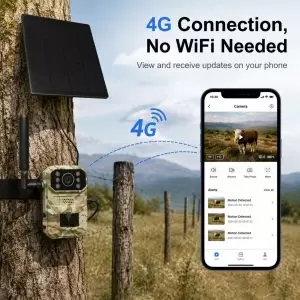
A 4G trail camera is a cellular-enabled wildlife camera that connects directly to mobile networks instead of relying on WiFi. When the PIR (passive infrared) motion sensor detects movement, the camera automatically captures photos or Video. For example, Furthermore, it pushes instant notifications to your phone via a companion app. This means you can monitor a hunting lease, farm pasture, or remote cabin from hundreds of miles away — as long as there is cell service in the area. Traditional trail cameras require you to physically visit the camera to pull the SD card. In addition, Consequently, that means disturbing the site, burning gas, and waiting weeks to see what walked by. A 4G camera eliminates all of that. Instead, you get real-Time intelligence so you can make decisions faster — move your stand, check on livestock, or respond to a security alert before the trail goes cold.
Key Features to Look For
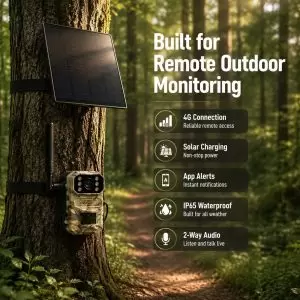
When shopping for a 4G trail camera, these are the specs that actually matter. Moreover, Pay attention to each one, because they all affect real-world performance.
| Feature |
What to Look For |
Why It Matters |
| Connectivity |
4G LTE with external antenna |
Stronger signal in remote areas where cell coverage is weak |
| Trigger Speed |
0.3 seconds or faster |
Faster trigger means fewer missed animals — a deer walking through will not be half out of frame |
| Field of View |
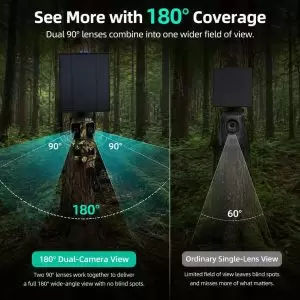
180° dual camera (two 90° lenses combined) |
Covers 3x more area than standard 60° single-lens cameras — no blind spots |
| Night Vision |
Low-light color imaging + IR LEDs |
Color night photos let you identify animals and people, not just grainy shapes |
| Power Supply |
5W solar panel + 6000mAh battery |
Solar keeps it running for months without battery swaps — critical for remote setups |
| Storage |
Cloud backup + local microSD up to 128GB |
Dual storage means your footage survives even if the camera is stolen or damaged |
| Weather Rating |
IP65 or higher |
Survives heavy rain, snow, dust, and extreme temperatures year-round |
| Housing |
Camouflage pattern |
Blends into the environment — will not spook game or attract attention |
| App Alerts |
Real-time push notifications |
You know about activity the moment it happens, not days later |
| Two-Way Audio |
Built-in speaker and microphone |
Listen to and speak through the camera — useful for deterrence or livestock |
Where to Buy 4G Trail Cameras
You can find trail cameras on Amazon, at outdoor retailers like Cabela’s and Bass Pro, or directly from brand websites. However, for 4G cellular models specifically, buying directly from a specialized retailer like odmhome.com gives you a few advantages. First, you get better product support and clearer setup guidance. Furthermore, Additionally, pricing is often better since you are not paying marketplace markup. Just make sure the retailer offers a solid return policy and actually responds to customer questions. After all, cellular cameras involve SIM card setup and carrier compatibility that you may need help with.
Our Featured Pick: 4G LTE Solar Trail Camera
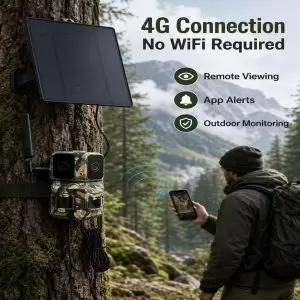
The 4G LTE Solar Trail and Hunting Camera available at odmhome.com hits all the marks above. As a result, Here is what stands out after looking at the specs and feature set.
4G Connectivity — No WiFi Needed
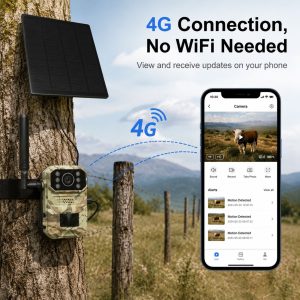
The camera connects via 4G LTE with an external antenna. Therefore, it pulls signal even in fringe coverage areas where a standard phone might show one bar. You insert a SIM card from any major carrier, download the app, pair the camera, and you are live. Importantly, No router, no WiFi, no complex network configuration.
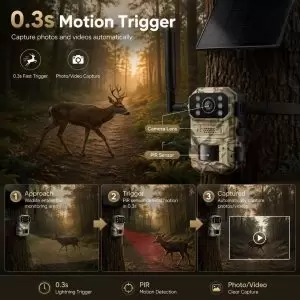
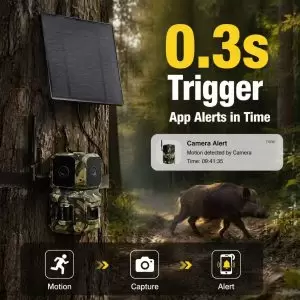
0.3-Second PIR Motion Trigger
The PIR motion sensor detects heat and movement and triggers the camera in 0.3 seconds. As a result, it is fast enough to catch a running coyote, a wild boar, or a buck stepping through a trail without missing the shot. The moment motion is detected, the camera captures photos and video automatically. Notably, Furthermore, it sends a push notification to your phone with a thumbnail of what was captured. Typically, you see the alert within 5 to 10 seconds depending on carrier latency.
180° Dual Camera — No Blind Spots
The 180° dual camera setup is where this model really pulls ahead. Most trail cameras offer a 60° field of view, which covers a narrow corridor and leaves blind spots. However, However, this camera uses two 90° lenses that combine into one full 180° wide-angle panorama with no blind spots. That means you can monitor a wide clearing, a long field edge, or an entire fence line with a single unit. In other words, fewer cameras, less cost, wider coverage.
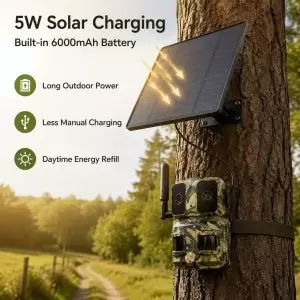
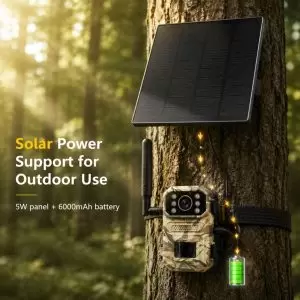
5W Solar Panel + 6000mAh Battery
For power, the camera ships with a 5W solar panel paired with a built-in 6000mAh rechargeable battery. Therefore, In typical conditions with a few hours of sunlight per day, the solar panel keeps the battery topped off indefinitely. Specifically, the sun refills the battery during the day while the camera runs on standby at night. Even in cloudy or winter conditions, the 6000mAh battery can run the camera for weeks before needing a recharge. For example, This is a game-changer for anyone who has a remote site that takes a half-day round trip to reach. Moreover, less manual charging means fewer human visits that disturb the wildlife you are trying to monitor.
Low-Light Color Night Vision
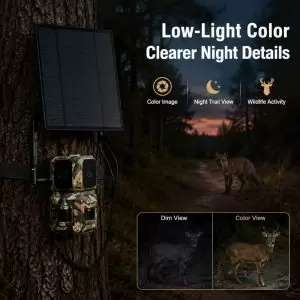
Night performance is where this camera truly separates itself from the pack. Standard trail cameras produce grainy black-and-white IR images at night. In addition, In contrast, you can tell something moved, but you cannot tell if it was a doe or a spike buck. This camera features low-light color imaging technology that captures full-color detail even in dim light. Instead of guessing at shapes in the dark, you get clear, identifiable photos with visible antler points, coat color, and environmental detail. Moreover, Additionally, eight infrared LEDs provide invisible no-glow night vision that will not spook animals. Meanwhile, the low-light color mode gives you the detail that pure IR simply cannot match. For hunters who need to identify specific animals, or property owners who need to recognize faces and license plates, this is a critical advantage.
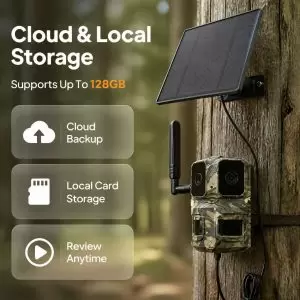
Cloud and Local Storage Up to 128GB
Storage is handled two ways, and both are important. Furthermore, First, the camera supports local microSD cards up to 128GB. This means you always have an on-site backup of every photo and video — even without cell service, the camera keeps recording to the card. Additionally, the cloud storage option automatically backs up footage to remote servers. As a result, Therefore, even if the camera is stolen, damaged, or the SD card fails, your recordings are safe in the cloud. You can review and download footage anytime through the phone app, from anywhere.
Two-Way Audio and IP65 Weatherproof
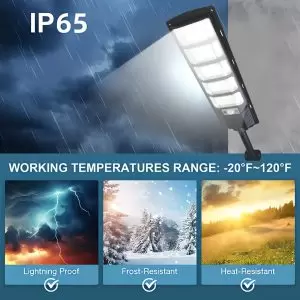
The camera also features two-way audio with a built-in speaker and microphone. This means you can not only hear what is happening at the camera location — birds, wind, an animal call — but also speak through the camera remotely. Importantly, This is useful for deterring trespassers, calling livestock, or communicating with someone at a remote gate. Few trail cameras in this price range include this feature. Furthermore, the camera housing is camouflaged and rated IP65 for weather resistance. Notably, It handles rain, snow, dust storms, and temperature swings from freezing winters to scorching summers. Mount it on a tree with the included strap, connect the solar panel, and leave it. The external antenna can be positioned independently for the best signal reception.
How to Set It Up
Setting up the camera takes about 10 minutes if you follow these steps: 1. However, Insert an activated 4G LTE SIM card. Any major carrier works — Verizon, AT&T, T-Mobile in the US, or Vodafone, EE, Orange, O2 in Europe. Make sure the SIM has a data plan active before inserting. 2. Therefore, Download the companion app on your iOS or Android phone. Create an account and log in. 3. Power on the camera and follow the in-app pairing process. For example, The camera connects to the cellular network automatically once the SIM is recognized. 4. Mount the camera on a tree or post at roughly 3 to 5 feet off the ground, angled slightly downward. Use the included mounting strap. 5. In addition, Connect the 5W solar panel and position it where it will get the most direct sunlight — south-facing if you are in the Northern Hemisphere. 6. Adjust motion sensor sensitivity in the app. Start at medium and tweak up or down based on false alerts from wind, branches, or small animals. 7. Moreover, Test the setup by walking in front of the camera. You should receive a motion alert within 10 seconds with a thumbnail.
Best Use Cases
Hunters — Scout deer patterns on a remote lease without driving out every week to pull SD cards. Set it on a trail crossing or feeding area, and check your phone for daily movement updates. Furthermore, The color night vision lets you identify specific bucks, not just “a deer walked by.” Ranchers and Farmers — Monitor cattle, horses, or other livestock in distant pastures. Get alerts when animals move near fence lines or water sources. Additionally, the two-way audio lets you call livestock from across the property. Property Owners — Secure remote cabins, construction sites, or storage areas. As a result, The camera acts as a security system with real-time alerts — no WiFi or power grid required. Moreover, the 180° coverage means one camera watches what would normally take two or three. Wildlife Researchers — Track animal populations, migration patterns, or behavior. The 180° coverage and color night vision provide data that standard cameras miss. Importantly, Furthermore, the cloud storage ensures no data is ever lost.
Frequently Asked Questions
Q: Do I need WiFi for this camera to work? A: No. The camera connects via 4G LTE cellular networks. As long as you have cell coverage at the camera location and a data plan on your SIM card, it works. Notably, WiFi is not needed at all. Q: Which SIM card should I use? A: Any 4G LTE SIM card from a major carrier works. In the US, Verizon, AT&T, and T-Mobile are all compatible. However, In Europe, Vodafone, EE, Orange, and O2 all work. Choose a carrier with the best coverage in your installation area. Q: How much data does the camera use per month? A: It depends on motion activity. Therefore, A typical setup sending 20 to 50 photos per day uses roughly 1 to 3 GB per month. However, if the camera sends video clips, expect 5 to 10 GB. A basic data plan of 2 to 5 GB is usually sufficient. For example, Q: How long does the 6000mAh battery last without solar? A: The built-in 6000mAh battery can run the camera for approximately 2 to 4 weeks on standby without any solar input. However, with the 5W solar panel connected and a few hours of sunlight per day, the camera runs indefinitely. Q: Will the night vision spook animals? A: No. In addition, The infrared LEDs use no-glow technology, meaning they emit light invisible to both animals and humans. Therefore, wildlife will not be disturbed by any visible flash. The low-light color mode also works without spooking animals — it uses available ambient light, not a flash. Moreover, Q: What storage options does the camera have? A: The camera supports local microSD cards up to 128GB for on-site recording. Additionally, it offers optional cloud storage that automatically backs up your footage online. You can use either or both. Furthermore, Q: Does the camera have audio? A: Yes. The camera features two-way audio with a built-in speaker and microphone. You can hear what is happening at the camera location and also speak through the camera remotely using the phone app. As a result, Q: Can more than one person access the camera? A: Yes. The companion app supports multiple users. Therefore, you can share access with a hunting partner, family member, or employee so everyone receives motion alerts. Importantly, Q: Can I add multiple cameras to one account? A: Yes. You can add as many cameras as you need to a single app account and monitor them all from one dashboard. This is useful for covering multiple trail crossings or properties. Notably, Q: What happens if there is no cell signal at my location? A: The camera will not be able to send real-time alerts without cellular coverage. However, it will still capture photos and video to the local microSD card up to 128GB. You can retrieve the footage manually when you visit the site.
Final Thoughts
A 4G LTE solar trail camera is the most practical upgrade you can make to your outdoor monitoring setup. However, The combination of cellular connectivity, 5W solar power with 6000mAh battery, 0.3-second trigger, 180° dual-lens coverage, low-light color night vision, two-way audio, and dual cloud/local storage up to 128GB means you spend less time driving to check cameras. Instead, you spend more time acting on real-time information. Whether you are patterning a trophy buck, watching over cattle, or securing a remote property, this camera delivers the intelligence you need without the limitations of WiFi or battery swaps. Therefore, If you are ready to upgrade your trail camera game, the 4G LTE Solar Trail and Hunting Camera is available now at odmhome.com — with shipping to both US
Related Articles
You Might Also Like



 2-Wire Video Door Phone Intercom System 7-Inch IPS Touchscreen Monitor Original price was: $149.00.$115.00Current price is: $115.00.
 6-Inch Baby Monitor Original price was: $180.98.$110.98Current price is: $110.98.
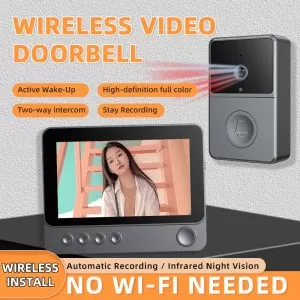 UOBX Video Doorbell System Original price was: $59.99.$44.99Current price is: $44.99.
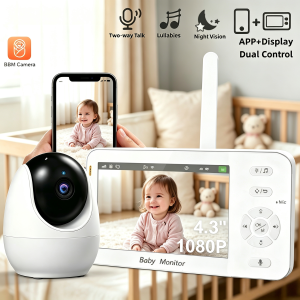 ABM206 Baby Monitor Price range: $83.98 through $95.98











 3.