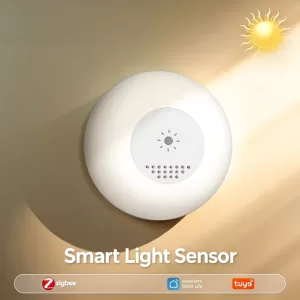
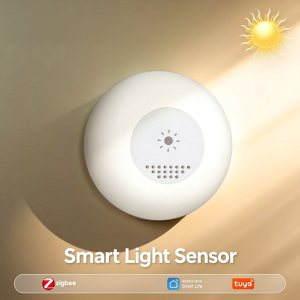
 Zigbee light sensor tiny” width=”300″ height=”300″>
However, Most Smart homes are still pretty dumb about one thing: Light itself. They use timers that fire at 7 PM sharp, even on a stormy winter afternoon when it’s already pitch dark at 4. They forget to close the curtains when the afternoon sun starts bleaching your sofa. They turn on hallway lights at midnight when you’re trying to sleep. They turn off the bedroom lights at 6 AM when you actually need them most. In short, Zigbee
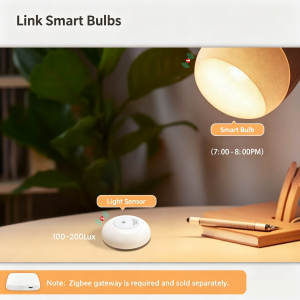
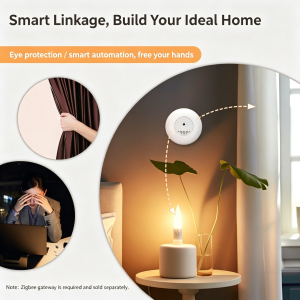
Therefore, The Tuya Zigbee Smart Light Sensor fixes all of that. This tiny, battery-powered disc quietly measures the actual ambient light in your room 24/7, then tells your smart home exactly what to do about it. Curtains open when the sun rises. Lights fade on at dusk. Blinds close when the glare gets too intense. All without you touching a single switch, app, or voice command. Moreover, It’s the missing sensor that turns a collection of smart devices into a home that genuinely thinks and at under $15, it’s the cheapest upgrade with the biggest impact you’ll make to your smart home in 2025. In addition, A smart light sensor is a small wireless device that measures ambient light intensity (in Lux) and reports it to your smart home hub in real time. Once connected, it becomes the trigger for automation rules that respond to actual daylight conditions — not the clock on your wall. For example, Without a light sensor, your smart home is blind to its most important environmental input. With one, you unlock automations that feel almost magical: Consequently, It’s the kind of device you install and forget — then wonder how you ever lived without it. This ultra-compact (50mm × 17mm) white disc uses a high-precision photodiode to continuously measure ambient light levels from 0 to 1000 Lux — the full range from total darkness to direct sunlight. It runs on a single CR2032 battery for up to 365 days, and connects to your smart home via the Zigbee 3.0 protocol — the most widely adopted standard for reliable, low-power smart home devices. Key specifications at a glance: Picture this. It’s 6:30 AM in summer. The sun is already up. Your curtains are still closed from last night. You don’t want to wake up to a jarring alarm — you want to wake up to soft, natural sunlight gently filling your bedroom. Without a light sensor: Your curtains stay closed until 7 AM when the timer fires. You wake up in the dark, fumble for your phone, and manually open them. With this Zigbee light sensor: And in the evening, the reverse happens automatically: You never touched a switch. The light in your home made the decision for you — and it was right every single time. You’re reading a book on the sofa at 7:30 PM. The room is getting dim, but you’re comfortable and don’t want to get up. The reading lamp is across the room. With this light sensor + smart bulb setup: Conversely, when morning comes and the sun brightens the room, the same sensor signals the bulb to turn off. No more lights left on all day because nobody remembered to flip the switch. Popular time-based automations for smart bulbs: If you work from home or spend hours in front of a screen, you’ve probably experienced eye strain from working in a dim room with a bright monitor. The contrast between your screen and ambient lighting is a major cause of fatigue, headaches, and long-term vision problems. If you work from home or spend hours in front of a screen, you’ve probably experienced eye strain from working in a dim room with a bright monitor. The contrast between your screen and ambient lighting is a major cause of fatigue, headaches, and long-term vision problems. The fix: pair this light sensor with a smart desk lamp or smart bulb. Create a rule: “When ambient light is below 300 Lux between 9 AM and 6 PM → set desk lamp to 80% brightness, color temperature 4500K (daylight white).” Now your workspace lighting automatically matches the ambient conditions outside. On bright sunny days, the lamp dims because natural light is already enough. On dark winter days, it brightens to compensate. Your eyes stay comfortable all day, and you didn’t touch a single switch. The image above shows a woman rubbing her eyes in front of a laptop — a scene that plays out in millions of home offices every day. The same scene with this sensor installed? No more squinting, no more headaches, no more 4 PM eye fatigue. Eye protection is just one application. The same setup works for: One sensor in the living room is great. But a multi-sensor setup across your home creates a truly intelligent lighting system that responds to the actual conditions in every room — not a one-size-fits-all schedule. Here’s how a real whole-home setup works: Each room’s threshold is tuned to its purpose. The system runs locally on your Zigbee gateway — no internet required, instant response, and completely reliable. The result: your home’s lighting feels thoughtful and intentional, even though you haven’t touched a switch in months. Scaling tips for whole-home setups: The Smart Life and Tuya Smart apps transform this tiny sensor into a window into your home’s lighting conditions — anywhere in the world. The app provides: The light curve visualization is particularly useful for understanding your home’s lighting patterns. You might discover that: You can also manually trigger scenes from the app when needed. Spontaneous movie night? Tap “Movie Mode” in the app and the lights dim, curtains close, and the TV turns on. The light sensor is just one piece of a much larger smart home system that responds to your life. Pro tip: Use the app’s Record tab to track automation triggers over time. If you notice a specific rule firing at unexpected moments, you can adjust the threshold in real time without re-pairing the device. The sensor runs on a single CR2032 coin cell battery (pre-installed) and lasts up to 365 days under typical usage. The Zigbee 3.0 protocol keeps power consumption ultra-low, and the sensor only draws current during measurement updates — most of the time, it’s in deep sleep mode drawing microamps. When the battery finally runs low, you receive a push notification in the Smart Life app — no more guessing when devices need new batteries. The app displays real-time battery percentage for every paired sensor, so you can plan replacements in advance. Replacing the battery takes 10 seconds: twist open the cover, swap the CR2032, twist closed. No tools, no service calls, no downtime. No wiring. No drilling. No electrician. The included 3M adhesive pad lets you mount this sensor on virtually any flat surface: Explore more smart home, security and translator products.https://odmhome.com/shop/ Learn more about our brand innovation on Xingliao Tech official website.https://xingliaotech.com For wholesale & business cooperation, reach us via WhatsApp: +8617666669273 Xingliao Tech Official Site — ODM smart home devices & factory capabilities Based on the breakdown in this article, Zigbee Light Sensor Tiny offers a solid mix of features and value. If your main goal matches the key benefits described above, it is a practical choice for everyday use. Start with your core use case, then compare battery life, compatibility, and build quality as covered above. Choosing the right zigbee light sensor tiny comes down to matching specs with how you actually use it. Tuya 3D Face Recognition Smart Lock: Buying Guide, Setup Tips, and FAQ Most devices of this type pair with a free companion app for setup and firmware updates. A few advanced features may sit behind a paid plan, so check the official specs page before buying. Tuya WiFi IR Remote Review: Universal Control Meets Climate Intelligence 📌 This article is part of our Complete Sensor Hub — more guides and buying tips inside. Further reading: Best Kids Alarm Clock with Sleep Trainer 2026 | XingLiao Smart HomeWhat Is a Smart Light Sensor, and Why Do You Need One?
Meet the Tuya Zigbee Smart Light Sensor
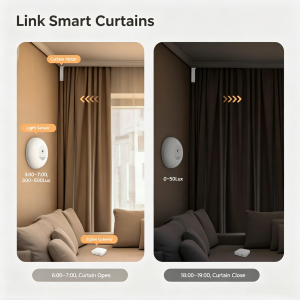
Real-World Scenario 1: Automated Curtain Control
Real-World Scenario 2: Smart Bulb That Knows When to Turn On
Real-World Scenario 3: Eye Protection & Screen Comfort
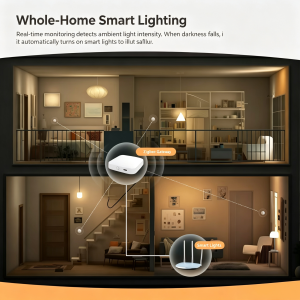
Real-World Scenario 4: Whole-Home Smart Lighting
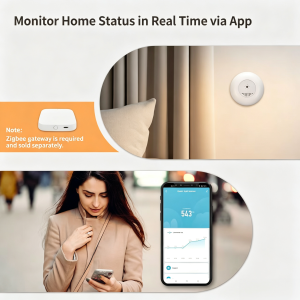
Real-Time Monitoring via Smart Life App
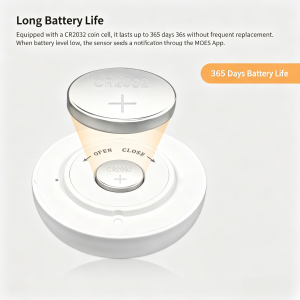
365-Day Battery Life with Low Battery Alert
Place or Stick — Install Anywhere in Seconds
Smart Solutions for Hotels & Hospitality — touch-free switches for guest rooms and bathrooms
Senior Care & Healthcare Solutions — hygienic, easy-to-use controls for care facilities
Xingliao Shop — retail samples and small-batch ordersRelated Articles
You Might Also Like
Frequently Asked Questions
Is Zigbee Light Sensor Tiny worth buying?
How do I choose the right zigbee light sensor tiny for my needs?
Does zigbee light sensor tiny require a companion app?