Posted on — Leave a comment

Video Doorbell vs Traditional Doorbell: 5 Reasons to Upgrade

Foldable Solar Power Bank 20000mAh Waterproof Outdoor Charger ... - view 5

The Traditional Doorbell Is Obsolete

However, The traditional doorbell has served us well for decades, but in 2026, it is simply not enough. Here are 5 compelling reasons to upgrade to a Video doorbell intercom System and take your Home security to the next level. In short, Video doorbell

Consumer Reports doorbell reviews

Smart video doorbell with motion detection

For a detailed guide, read our smart doorbell camera guide.

5 Reasons to Upgrade to a Video Doorbell

1. See Who Is at Your Door

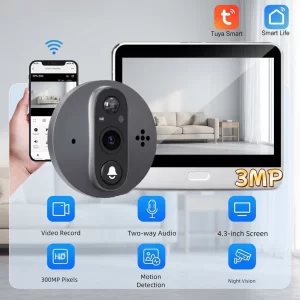
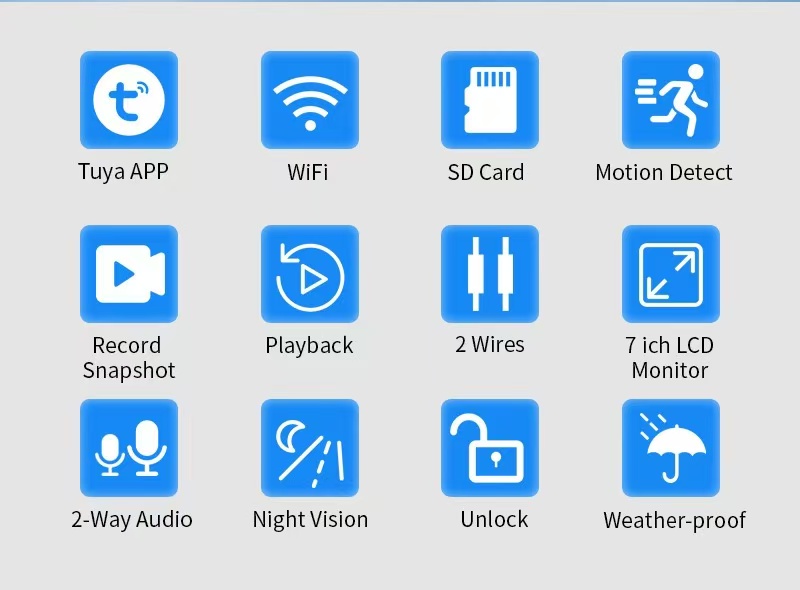
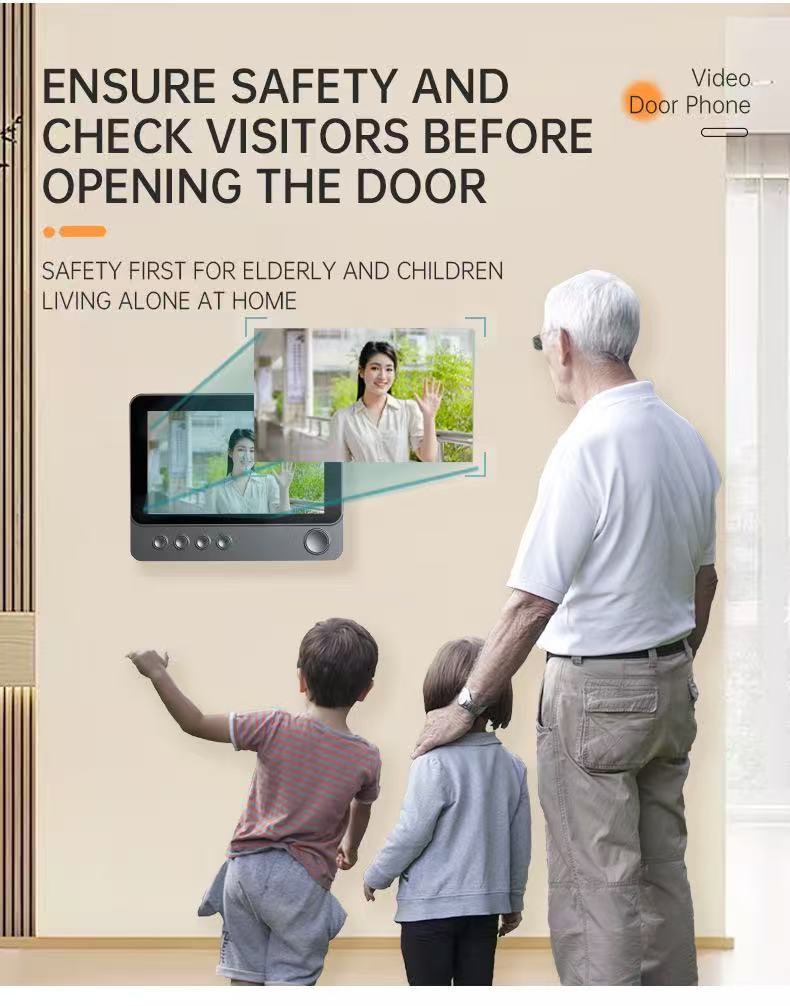
Therefore, A traditional doorbell only tells you someone is at the door. Therefore, A video doorbell shows you exactly who it is, day or night, with 1080P HD video and night vision. You can identify visitors before opening the door — no more guessing games. Best Smart Home Starter Kit for 2026: Switches, Doorbells, Cameras, Sensors and Pet Feeders Compared

2. Talk to Visitors Remotely

Moreover, Two-way audio lets you speak with visitors even when you are not home. For example, Tell the delivery person to leave the package at the door, or warn a stranger that you are watching. This peace of mind is priceless. Smart WiFi Pet Feeder: Automated Pet Care with APP Control Smart Home Market Trends 2026: What Distributors Must Know About Modular Security, Voice Control and Energy-Saving Devices

3. Remote Door Unlock

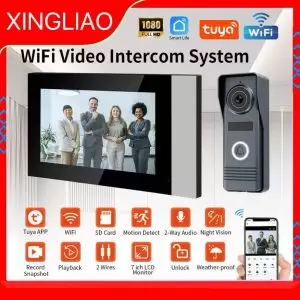
In addition, With a video intercom system, you can unlock the door for trusted visitors with a single tap on your phone or monitor. In addition, No more rushing to the door when you are in the middle of something. Just a tap away from welcoming guests. Smart Home Wholesale FAQ: 15 Questions Every Buyer Asks Before Ordering in Bulk

4. Motion Detection Alerts

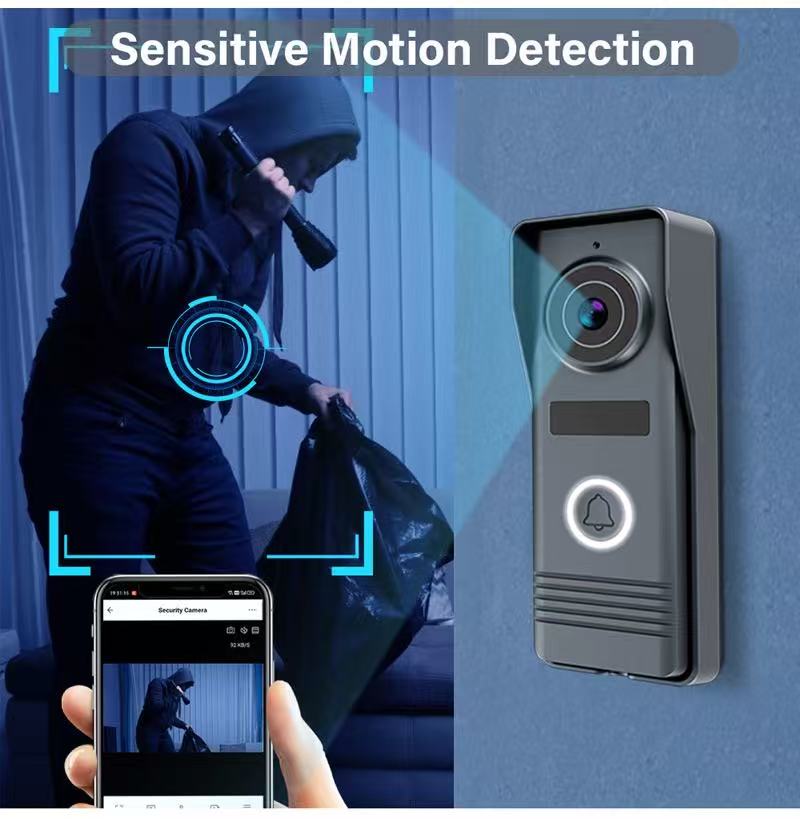
For example, Smart doorbells detect motion before someone even presses the button. Moreover, Receive instant push notifications when someone approaches your entrance. This is proactive security, not reactive — giving you control over who enters your property.

5. Integration with Smart Home

However, Video doorbells that support Tuya Smart can trigger automations. Furthermore, When someone rings the doorbell, your smart lights can turn on, your security camera can start recording, and your smart lock can unlock for recognized faces. Complete home automation at your fingertips.

2-Wire Installation Made Simple

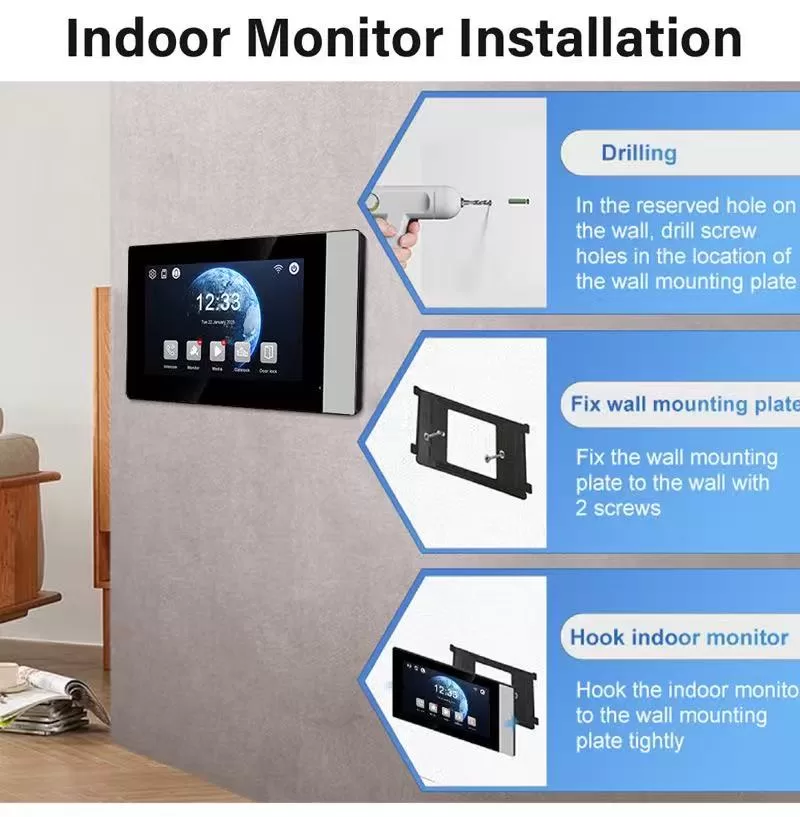
Modern video intercom systems use 2-wire bus technology, meaning only 2 non-polarized wires are needed for power, audio, and video. No electrician required. As a result, No wall demolition. DIY-friendly installation that anyone can do.

Ready to Make the Switch?

Upgrading to a video doorbell is one of the easiest home security improvements you can make. Visit odmhome.com for the best video doorbell intercom systems, or contact us via WhatsApp: +86 176 6666 9273.

Video doorbell intercom system installation

Related Articles

You Might Also Like

Related guides

Frequently Asked Questions

Is Video Doorbell Traditional Doorbell worth buying?

Based on the breakdown in this article, Video Doorbell Traditional Doorbell offers a solid mix of features and value. If your main goal matches the key benefits described above, it is a practical choice for everyday use.

How do I choose the right video doorbell traditional doorbell for my needs?

Start with your core use case, then compare battery life, compatibility, and build quality as covered above. Choosing the right video doorbell traditional doorbell comes down to matching specs with how you actually use it.

Does video doorbell traditional doorbell require a companion app?

Most devices of this type pair with a free companion app for setup and firmware updates. A few advanced features may sit behind a paid plan, so check the official specs page before buying.
Posted on — Leave a comment

How to Choose the Right Smart Switch for Your Home

Foldable Solar Power Bank 20000mAh Waterproof Outdoor Charger ... - view 5

Why Smart Switches Are the Foundation of Home Automation

However, Smart switches are often the first device people install when building a Smart home. They are affordable, easy to install, and immediately useful. But with so many options on the market, how do you choose the right smart switch for your needs?

smart home products

Consumer Reports smart switch guide Video Doorbell Review 2026: What to Look For, Smart Features Compared, and Buyer’s Guide P10 Mini WiFi Security Camera: Compact 24/7 Indoor Surveillance for Home & Pets

>>

Smart home wall switch installation

5 Key Factors When Choosing a Smart Switch

1. Therefore, Number of Gangs (Channels)

Therefore, Smart switches come in 1-gang, 2-gang, 3-gang, 4-gang, 6-gang and 8-gang configurations. Count how many lights or devices you want to control from a single switch location. A hallway might need 1-gang, while a living room might need 3-gang or more.

2. For example, WiFi Protocol

Moreover, Most smart switches use WiFi 2.4GHz. This is the most common and compatible option. Make sure your home router supports 2.4GHz (most do). In addition, Some premium models also support 5GHz or Zigbee. Smart Home Market Trends 2026: What Distributors Must Know About Modular Security, Voice Control and Energy-Saving Devices

3. Voice Assistant Compatibility

In addition, Check if the switch works with Amazon Alexa, Google Home, or Apple HomeKit. Tuya-based switches support Alexa and Google Home out of the box, giving you flexible voice control options. Smart Home Wholesale FAQ: 15 Questions Every Buyer Asks Before Ordering in Bulk M8 Dopamine Color Wireless Lavalier Microphone: Get Clear Studio Audio For Vlogging & Live Streaming

4. Moreover, Touch vs Button

For example, Touch panel switches offer a modern, sleek look with tempered glass surfaces. Traditional Button switches are more familiar and may be preferred in commercial settings or by older family members.

5. Certification

Therefore, Always look for CE, FCC, and RoHS certifications. Furthermore, These ensure the switch meets international safety and environmental standards. Never compromise on safety when wiring into your home’s electrical system.

Installation Tips

Most smart switches require a neutral Wire. If your home does not have neutral wires in the switch boxes, look for no-neutral wire models (though they are less common). As a result, Always turn off the breaker before installation.

Ready to Upgrade?

Choosing the right smart switch doesn’t have to be complicated. Browse our collection of CE-certified smart switches at odmhome.com, or contact us via WhatsApp: +86 176 6666 9273 for personalized recommendations.

Smart home lighting control panel

Related Articles

You Might Also Like

Pick a smart switch that matches your wiring

Short version: check whether your wall box has a neutral wire, then choose frame size, then gang count. These four cover most homes and project specs.

Frequently Asked Questions

Is Choose Right Switch worth buying?

Based on the breakdown in this article, Choose Right Switch offers a solid mix of features and value. If your main goal matches the key benefits described above, it is a practical choice for everyday use.

How do I choose the right choose right switch for my needs?

Start with your core use case, then compare Battery life, compatibility, and build quality as covered above. Choosing the right choose right switch comes down to matching specs with how you actually use it.

Does choose right switch require a companion app?
Most devices of this type pair with a free companion app for setup and firmware updates. A few advanced features may sit behind a paid plan, so check the official specs page before buying.

Posted on — Leave a comment

Smart Home Security Guide: 7 Essential Devices for 2026

Foldable Solar Power Bank 20000mAh Waterproof Outdoor Charger ... - view 5

Why Smart Home Security Matters More Than Ever

However, In 2026, home security has evolved dramatically. With package theft, unauthorized visitors, and remote monitoring needs on the rise, Smart home security devices have become essential for every household. Whether you live in an apartment, villa, or run a business, these devices will transform how you protect your property.

motion sensor lights

Consumer Reports security guide

>>

Smart home security camera system monitoring

7 Essential Smart Home Security Devices to Protect Your Home

1. Therefore, Video Door Phone Intercom System

Therefore, A 2-wire video door phone intercom is the foundation of any smart security setup. With a 7-inch IPS touchscreen monitor and 1080P HD camera, you can see, speak to, and unlock the door for visitors — all from inside your home or remotely via smartphone.

  • See who’s at your door before opening it
  • Two-way audio communication
  • Remote door unlock via mobile APP
  • IP65 waterproof for outdoor durability
  • Night vision for 24/7 protection

2. Smart Door/Window Sensors

Moreover, These small but powerful sensors alert you the moment a door or window is opened unexpectedly. For example, Place them on every entry point for complete perimeter security. When triggered, you receive an instant push notification on your phone. Smart WiFi Pet Feeder: Automated Pet Care with APP Control Smart Home Market Trends 2026: What Distributors Must Know About Modular Security, Voice Control and Energy-Saving Devices

3. Motion Detection Cameras

In addition, Smart security cameras with PIR motion detection go beyond passive recording. In addition, They actively monitor your property and send real-time alerts when movement is detected. Look for models with 1080P or 4K resolution and night vision capability. Smart Home Wholesale FAQ: 15 Questions Every Buyer Asks Before Ordering in Bulk

4. Smart Locks

For example, Replace your traditional key with a smart door lock that supports fingerprint, PIN code, RFID card and APP control. Moreover, Perfect for families — no more hiding spare keys under the mat. Integration with Tuya Smart ecosystem allows seamless automation.

5. Smoke and Gas Leak Detectors

However, Security isn’t just about intruders. Smart smoke alarms and gas leak detectors protect your family from invisible threats. Furthermore, These devices send instant alerts to your phone, even when you’re away from home.

6. Smart LED Lighting

Automated lighting is one of the most effective burglary deterrents. Program your smart LED lights to turn on and off at different times when you’re away, making your home appear occupied. As a result, Motion-activated exterior lights also discourage unwanted visitors.

7. Water Leak Sensors

Often overlooked but critically important. Water leak sensors placed near washing machines, water heaters, and under sinks can save you thousands in water damage repairs. They detect leaks early and alert you immediately.

Building Your Smart Security Ecosystem

The key to effective smart home security is integration. Importantly, All these devices work best when connected through a single platform like Tuya Smart. This allows you to create automations such as:

  • When motion is detected → turn on lights + start recording
  • When door sensor triggers → send notification + lock all doors
  • When smoke detector triggers → cut power + alert emergency contacts

Where to Start?

Begin with a video door phone intercom system — it’s the most impactful single upgrade you can make. Then expand your ecosystem gradually with sensors, cameras, and smart locks. Notably, Every device you add strengthens your security net.

Ready to upgrade your home security? Visit our store at odmhome.com or contact us via WhatsApp: +86 176 6666 9273.

Related Articles

You Might Also Like
Frequently Asked Questions

Is Security Devices worth buying?

Based on the breakdown in this article, Security Devices offers a solid mix of features and value. If your main goal matches the key benefits described above, it is a practical choice for everyday use.

How do I choose the right security devices for my needs?

Start with your core use case, then compare battery life, compatibility, and build quality as covered above. Choosing the right security devices comes down to matching specs with how you actually use it.

Does security devices require a companion app?
Most devices of this type pair with a free companion app for setup and firmware updates. A few advanced features may sit behind a paid plan, so check the official specs page before buying.

Posted on — Leave a comment

Wearable Ionic Air Purifier: What a Neck-Hung Negative Ion Device Actually Does (and What It Doesn’t)

Wearable Ionic Air Purifier Mini Neck Hung Portable Car Home F...

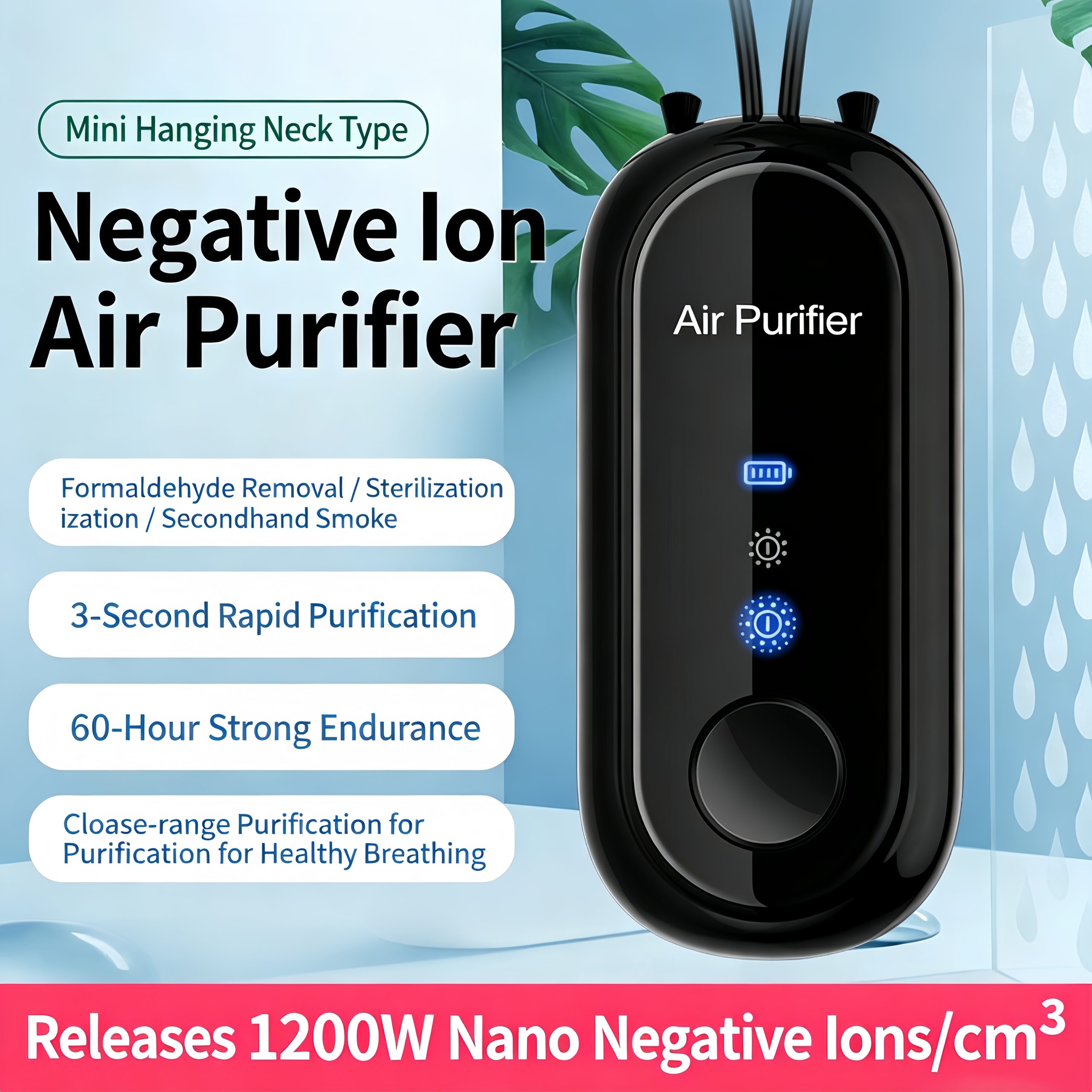
However, Quick answer: a wearable ionic air purifier does not filter air through a HEPA mesh — nothing is trapped. It releases negative ions into the air immediately around you. This causes nearby particles to clump together and fall out of your breathing zone. That makes it a personal comfort device rather than a room purifier: useful in a Car, on a train, in a queue or at a desk, and not a substitute for a filtered machine in a bedroom. Therefore, It is silent, has no filter to replace and runs for hours on a charge —. This is exactly why people keep wearing one.

EPA air purifier guide Window Vacuum Cleaner: Say Goodbye To Streaky Glass At Home & In Your Car

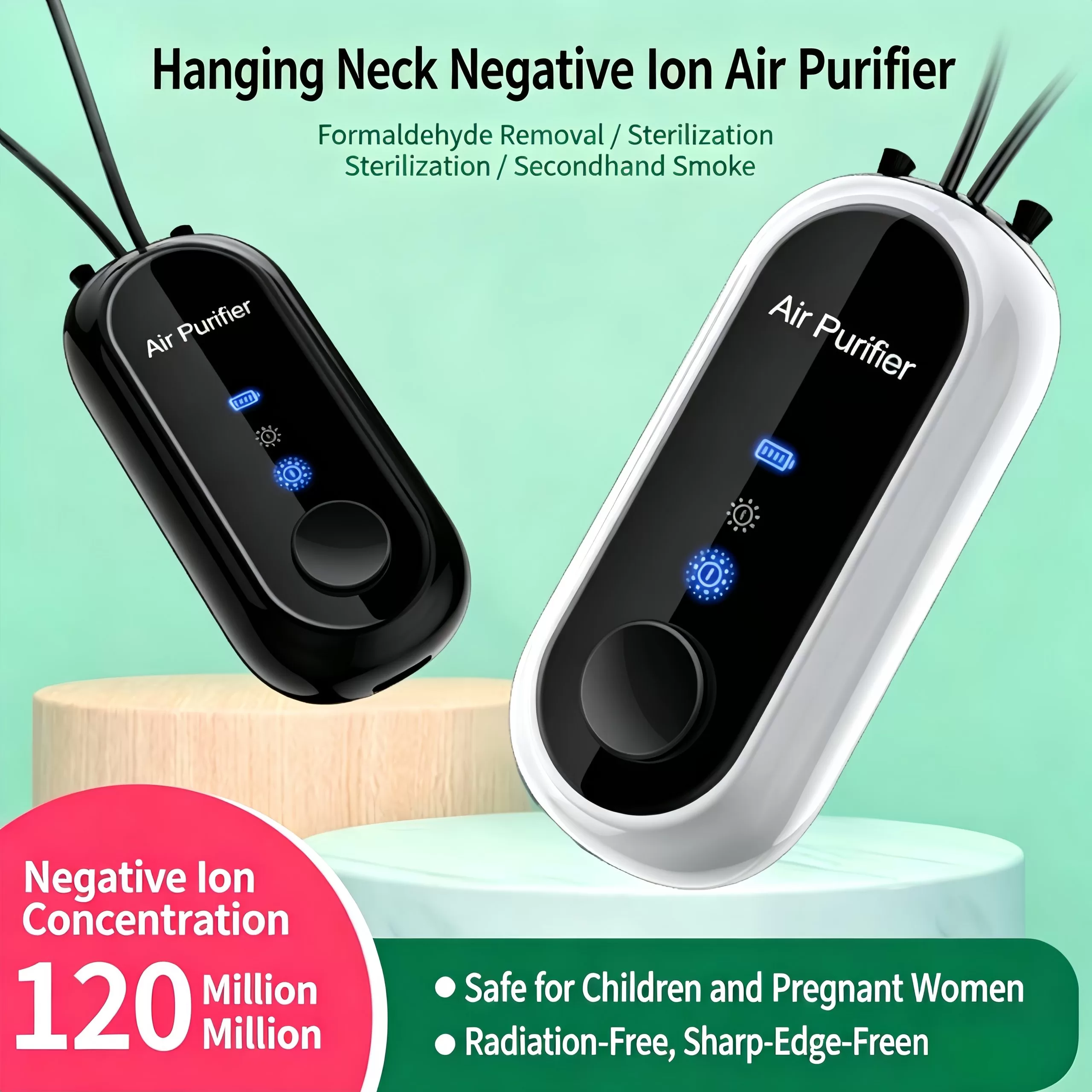
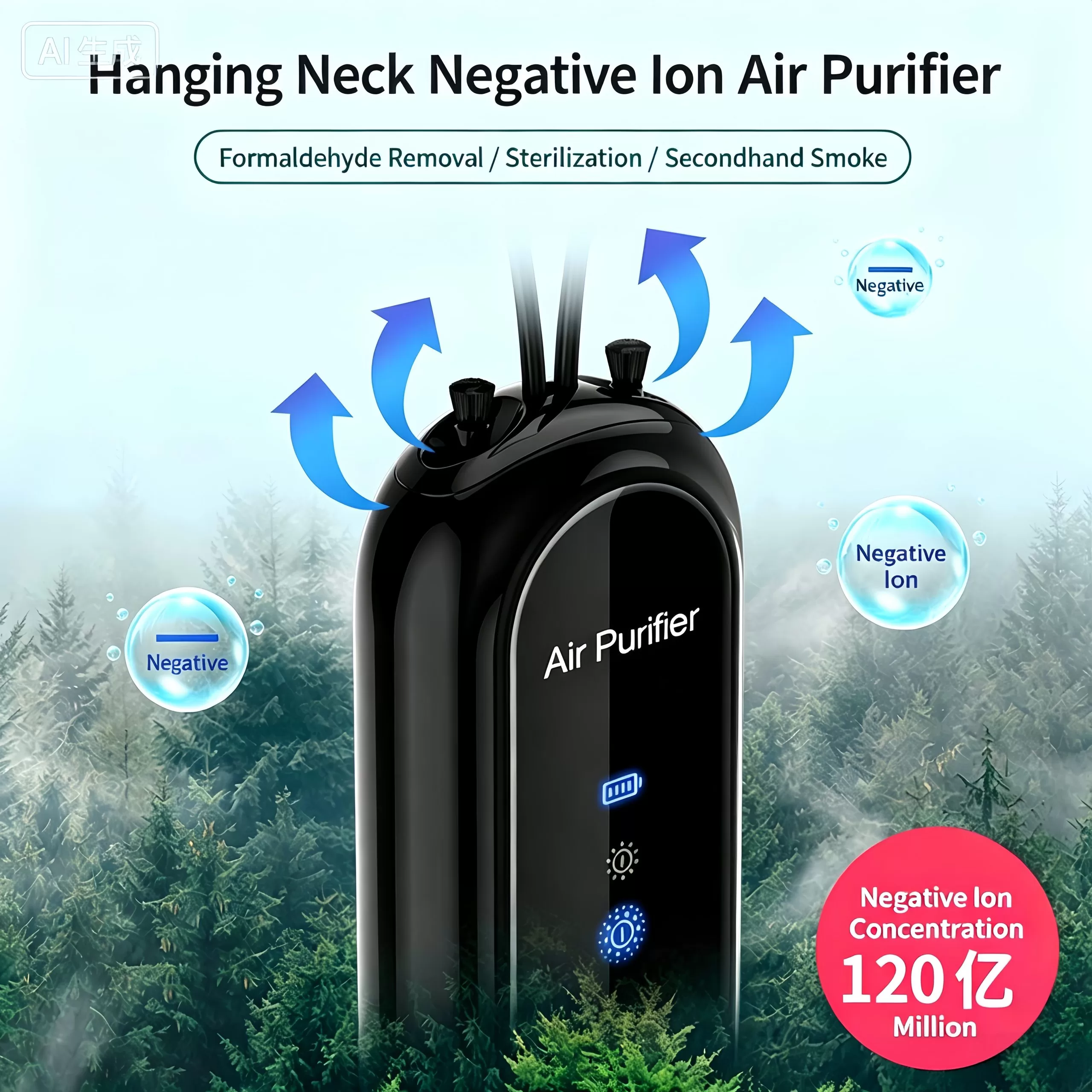
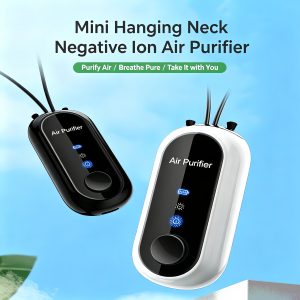
Wearable ionic air purifier with 120 million negative ion concentration, neck hung mini portable design for car and home
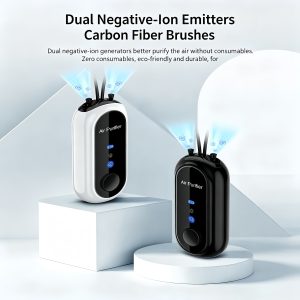
No filter, no fan, no noise — the whole device is a small ion emitter worn at the collar.

How a Wearable Ionic Air Purifier Works

Therefore, Air contains particles carrying a positive charge: dust, pollen fragments, smoke, some aerosol droplets. An ioniser generates negative ions that attach to those particles. Once several particles carry the same charge and ionise together, they become heavier, drift out of the air and settle onto nearby surfaces instead of staying susPended where you inhale them. 4‑in‑1 Tuya Bluetooth Smart Knob Lock Fingerprint Interior Door Lock

  • It changes where the particle goes — out of your breathing zone and onto a surface you can wipe.
  • It does not destroy anything — there is no filter, no Chemical reaction, nothing collected inside the device.
  • Range is short — the effect is strongest within roughly the space around your head and shoulders.

Moreover, That short range is the whole design. For example, A wearable unit is not competing with a tower purifier for a living room; it is trying to improve the half-metre of air you are actually breathing.

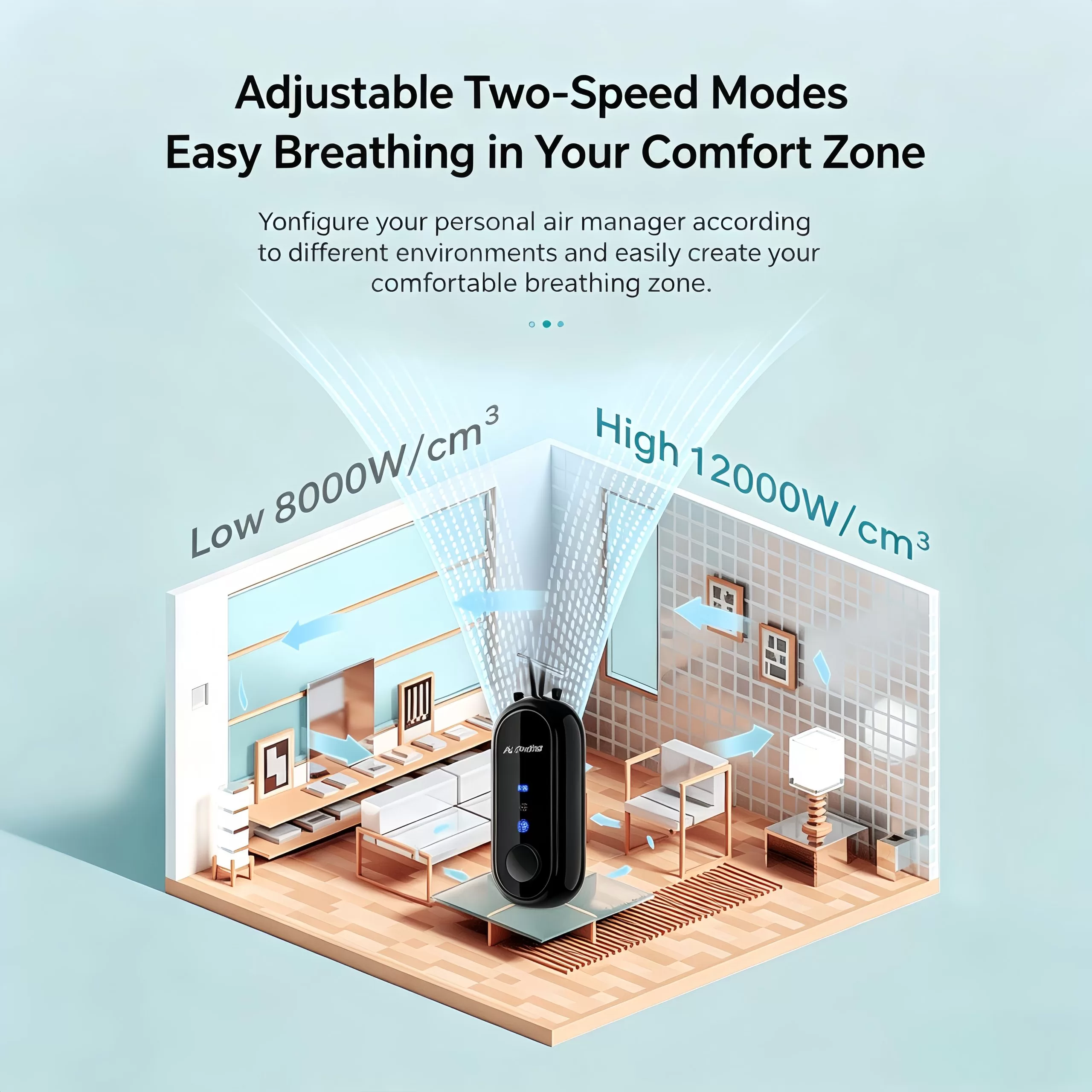
Wearable ionic air purifier with adjustable two speed modes, low and high, for a personal breathing comfort zone
Two output modes let you trade intensity for battery life depending on where you are.

Where Wearing One Genuinely Helps

Commuting and public transport

In addition, Bus, metro, train and plane cabins are enclosed spaces with recirculated air and a constantly changing set of fellow passengers. This is the single most common reason people buy a wearable purifier: it is small, silent, and it works without anyone else in the carriage noticing.

Cars and rideshare

For example, A small cabin is the ideal environment for a short-range ioniser. Traffic fumes, dust from the road and stale recirculated air are all within the device’s effective radius.

Desks, queues and indoor errands

Therefore, Anywhere you sit still for twenty minutes in shared air — a waiting room, a checkout line, an open-plan desk — the device is doing the same job it does on a train.

Wearable ionic air purifier releasing 12 billion negative ions, neck hung mini portable unit photographed against a forest background
Outdoor air is where people notice the contrast most — clean baseline, then a crowded or smoky pocket.

What It Will Not Do

  1. It will not clean a room. There is no fan pulling air through a filter; a wearable unit has no meaningful clean air delivery rate for a whole space.
  2. It does not remove gases or odours completely. Ionisation targets particles; formaldehyde, VOCs and smells need an activated carbon filter in a mains-powered machine.
  3. Particles settle nearby rather than disappear. Expect to wipe surfaces a little more often in a car or at a desk.
  4. Results vary with humidity and airflow. Still, dry air shows the biggest effect; a strong draught disperses ions quickly.

Anyone who understands those four points is a satisfied owner. In addition, Anyone expecting a room purifier the size of a lanyard is a return waiting to happen —. This is why the listing copy matters as much as the hardware.

Safety Notes Buyers Ask About

Modern wearable units are built around low-voltage, low-output emission and are marketed as producing no radiation and no ozone — the two concerns usually raised about older or larger ionisers. A few sensible points:

  • Ozone — choose designs specified as ozone-free; that is a design property, not a marketing adjective, and it should be documented.
  • Radiation — these devices contain no radioactive source; the emission is generated electrically.
  • Pregnancy and infants — a wearable unit is a personal device, not a nursery appliance. For a baby’s room, use a proper filtered purifier.
  • Medical conditions — anyone with a respiratory condition should treat this as a comfort product, not a treatment.
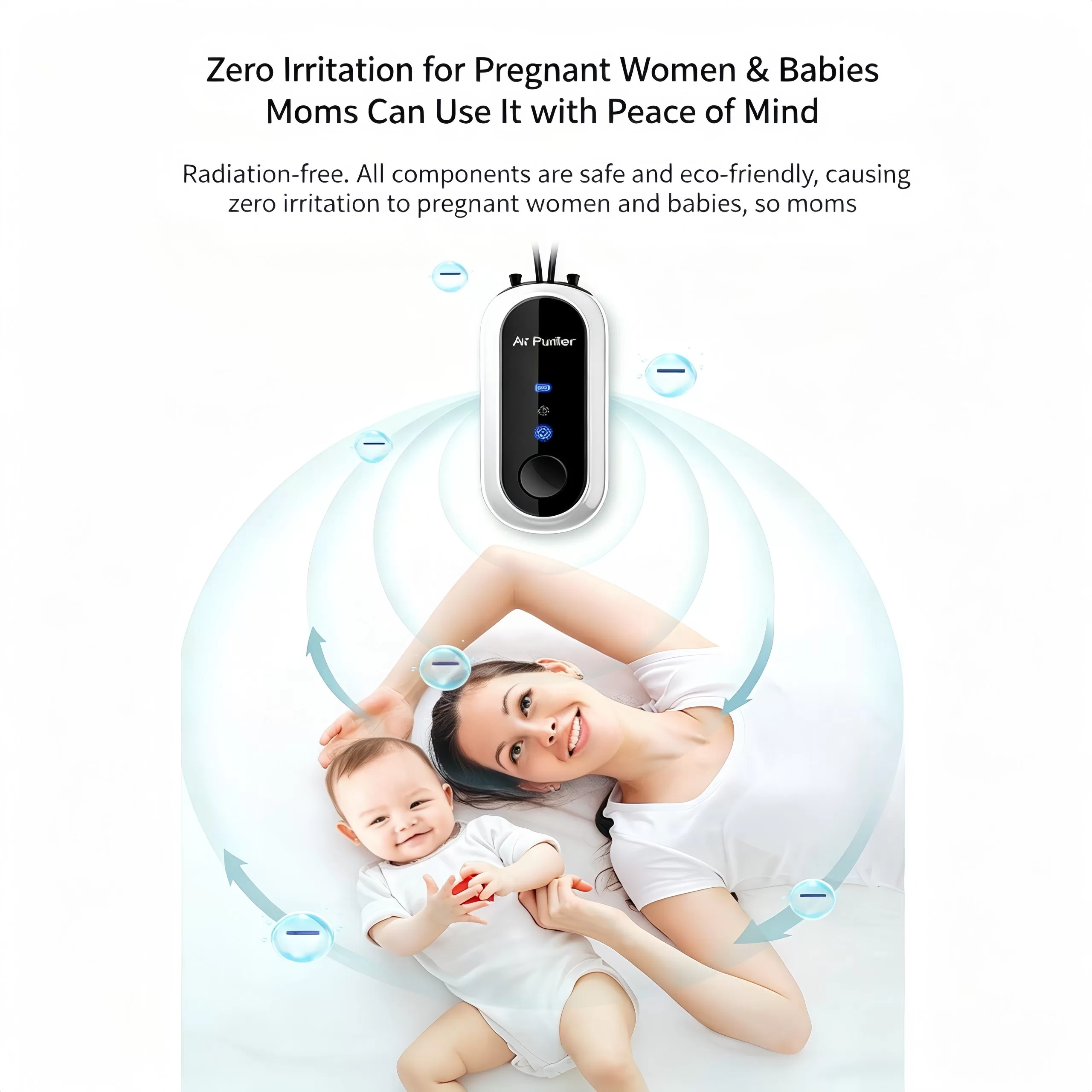
Wearable ionic air purifier described as safe for pregnant women and babies with zero radiation and zero ozone output
Ozone-free, low-voltage designs are what make a device like this comfortable to wear close to the face all day.

What to Check Before You Buy a Wearable Ionic Air Purifier

  1. Stated ion output — and whether it is measured at the emitter or at a distance; the two look very different on paper.
  2. Ozone-free certification — ask for the test report, not just the claim.
  3. Battery life per mode — a realistic number of hours on low and on high.
  4. Weight and wearing comfort — anything worn for hours has to be genuinely Light.
  5. Charging standard — USB-C rechargeable, with a cable and documentation in the box.
  6. Compliance paperwork — CE, RoHS, UN38.3 and an MSDS if you are shipping batteries internationally.
Wearable ionic air purifier negative ion personal cleaner, USB rechargeable mini portable unit for travel and commuting
USB charging keeps running costs at zero — there is no filter to buy, ever.
Frequently Asked Questions

Does it actually work?

It reduces suspended particles in the air immediately around you by making them settle out. Moreover, It does not filter a room and it does not remove gases.

Is there a filter to replace?

No. There is no filter and no fan — nothing to buy, nothing to wash, nothing to wear out except the battery over years.

Can I wear it all day?

Yes, that is the design intent. It is light, silent and runs for hours per charge; most people Switch it on for commutes and crowded indoor stretches.

Does it produce ozone?

Choose units specified and tested as ozone-free. Furthermore, Reputable suppliers can show the test report rather than just the claim.

Is it safe around children or during pregnancy?

It is a personal, low-voltage device. For an infant’s room or for anyone with a respiratory condition, use a proper filtered air purifier instead.

Will it remove cigarette smoke or cooking smells?

Partly for the smoke particles, and not really for odours — smells are gases and need activated carbon to be removed.

Related Reading

Product page: Wearable Ionic Air Purifier Mini Neck Hung Portable Car Home Formaldehyde Smoke Remover

You Might Also Like

Related Articles
Posted on — Leave a comment

Foldable Solar Power Bank 20000mAh: How Many Phone Charges You Actually Get, and Who Should Buy One

Foldable Solar Power Bank 20000mAh Waterproof Outdoor Charger ...

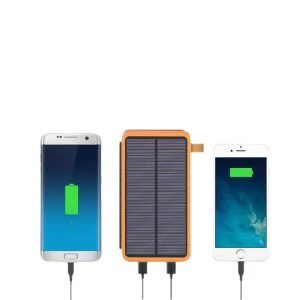
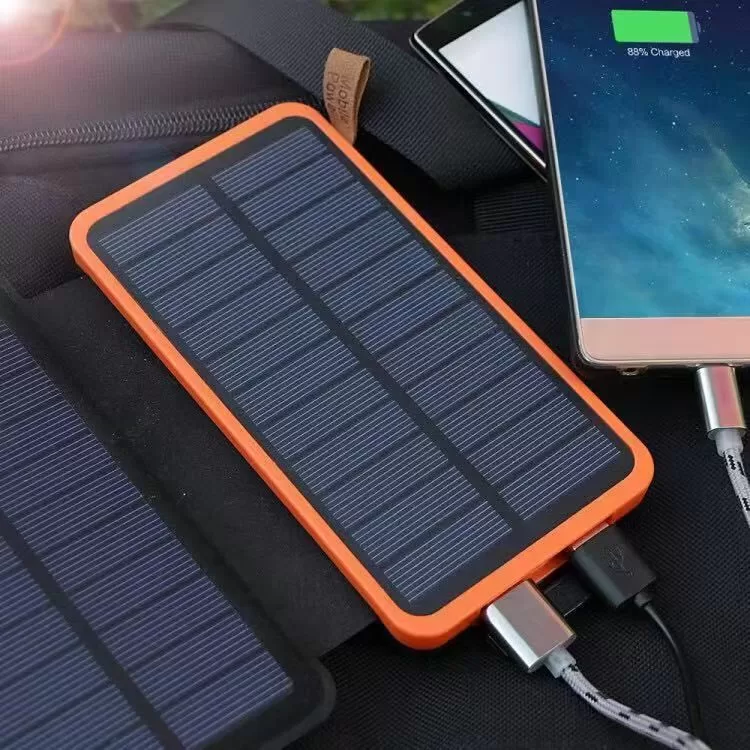
Quick answer: a 20000mAh power bank delivers roughly four to five full charges for an average 4000–5000mAh phone — but almost all of that comes from the wall outlet you charged it from before you left. The fold-out Solar panel is a trickle charger: in good sun it typically adds enough for a partial top-up over a long day, not a full refill. Buy this form factor for the rugged shell, the big battery and the built-in emergency light; treat the panel as the thing that keeps you alive on day three, not the thing that charges you on day one.

A rugged shell, a high-capacity cell and a fold-out panel — the three things that decide whether this class of product is worth Carrying.

What 20000mAh Actually Means

Capacity printed on the box is measured at the cell’s internal voltage (3.7V), but your phone charges at 5V or 9V. Therefore, The conversion loses energy, and so does heat. The rule of thumb used across the industry is that you get about 60–70% of the printed number out of the USB port.

  • 20000mAh cell → roughly 12000–14000mAh usable at the port.
  • Average phone (4000–5000mAh) → about 4 to 5 full charges.
  • A tablet or a camera battery → one to two charges.
  • A phone plus a headlamp plus a watch for a long weekend → comfortable, with margin.

That is the honest number to put on a product page. Anyone promising eight phone charges from a 20000mAh unit is quoting the cell rating, not what comes out of the cable.

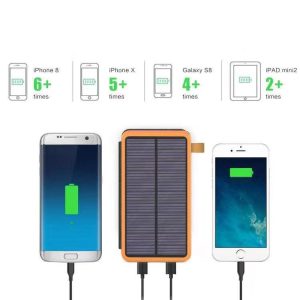
Foldable Solar Power Bank 20000mAh Waterproof Outdoor Charger ... - view 3
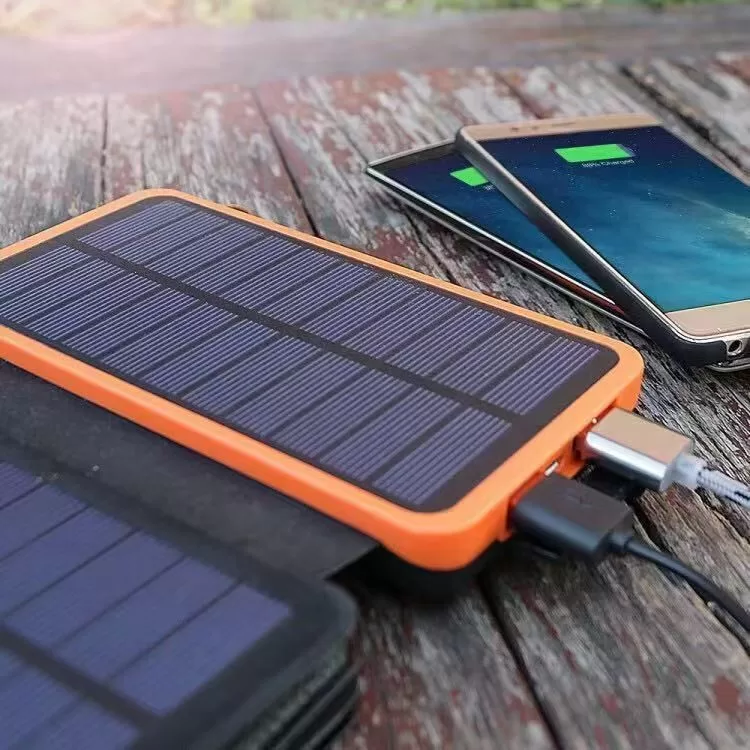
Charging a handset from the USB port is where the rated capacity meets reality — expect four to five full charges.

The Solar Panel: Set the Expectation Correctly

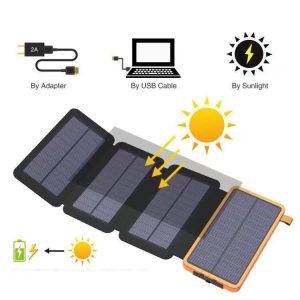
This is where most returns happen. For example, A panel the size of a folded paperback simply cannot produce the current a fast charger does. In direct midday sun a small fold-out panel might deliver a few hundred milliamps — enough to add perhaps 10–20% to the internal battery over an afternoon of good exposure, more if the unit is left angled and undisturbed.

  1. It is a maintenance charger. Leave it on a pack lid while you walk and it slowly offsets standby drain and small top-ups.
  2. Angle matters more than cloud cover. A flat panel at noon beats a tilted one at dusk by a wide margin.
  3. Heat is the enemy. A panel baking on a dashboard loses efficiency and heats the cells it is charging.
  4. Always leave home full. Solar is the backup plan, not the plan.

Framed this way, the panel is genuinely useful: on a three-day trip it is the difference between a dead phone and a working one. Framed as a primary charger, it disappoints.

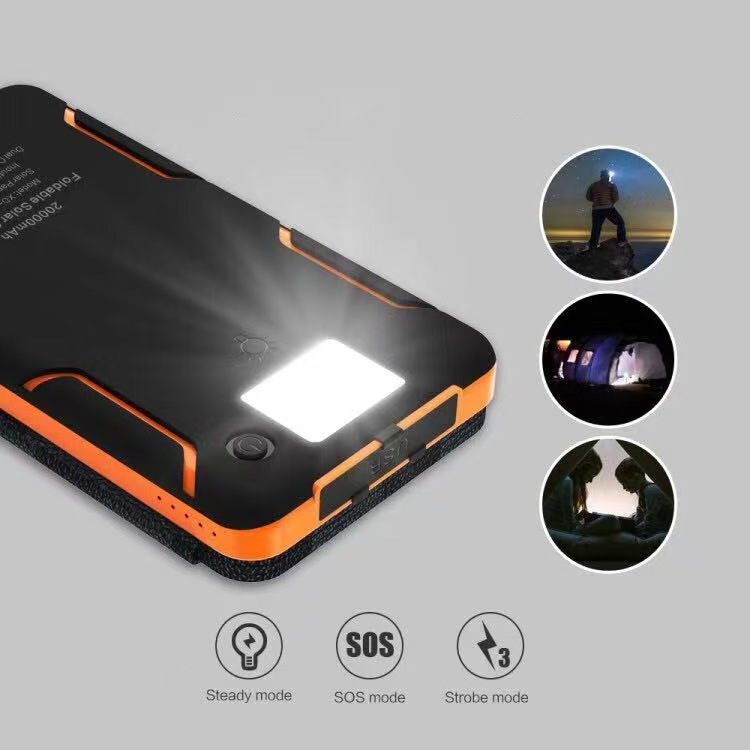
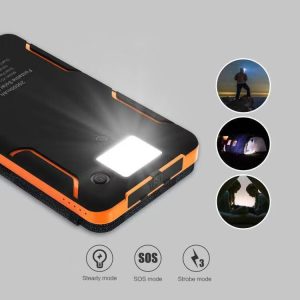
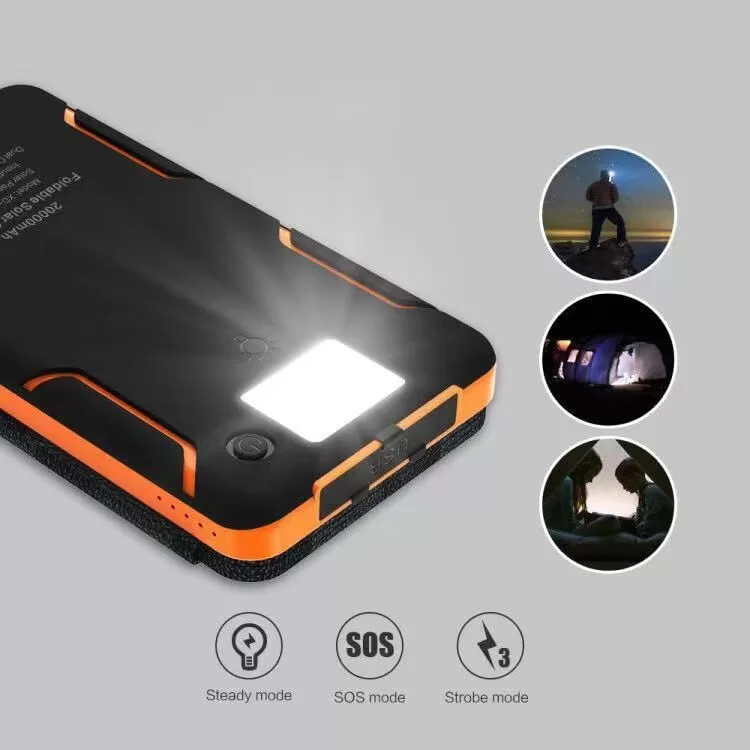
Foldable solar power bank 20000mAh with orange rugged border and built-in LED flashlight showing three lighting modes
Three lighting modes turn the same battery into a lantern, a strobe and an emergency beacon.

The Built-In LED Is Half the Reason to Buy It

The torch on this class of power bank is not an afterthought. In addition, A steady beam lights a tent or a work area; a slow strobe works as a marker; a fast strobe or SOS pattern is a distress signal that carries much further than a voice. For anyone building an emergency kit — or a retail kit aimed at campers, drivers and job sites — the light is often the feature customers remember.

  • Steady mode — camp lighting, power cuts, working under a bonnet at night.
  • Slow strobe — makes a bag or a campsite easy to find in the dark.
  • SOS / fast strobe — signalling when a phone has no signal and no battery.

Where This Product Sells

Camping, hiking and overland travel

Multi-day trips are the core use case. Weight is the trade-off: a rugged 20000mAh unit is heavier than a slim travel bank, but it is the one you can drop, get rained on and still rely on.

Foldable Solar Power Bank 20000mAh Waterproof Outdoor Charger ... - view 4
Hikers and campers are the natural audience — long days away from a socket, and gear that gets treated roughly.

Emergency and disaster kits

Households that keep a kit for outages want three things: a big cell that holds charge for months, a torch, and no dependence on the grid. Moreover, This covers all three in one object, which is exactly why it belongs in a kit rather than in a drawer.

Outdoor work and job sites

Tradespeople, survey crews and delivery drivers use the same unit for phones, radios and headlamps, and the rugged housing survives being thrown into a toolbox.

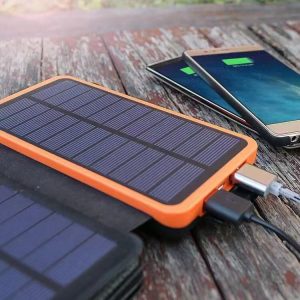
Foldable solar power bank 20000mAh outdoor rugged charger with solar panel fold-out design
A fold-out panel plus a sealed housing is what separates an outdoor unit from an indoor power bank.

What to Check Before You Buy or Stock One

  1. Real rated output — ask for the usable capacity at the port, not just the cell figure.
  2. Ingress rating — IP65 or better means it survives rain and dust rather than just splashes.
  3. Port count and protocols — two outputs and a modern fast-charge protocol cover phones and tablets without adapters.
  4. Torch modes — confirm whether it has steady, strobe and SOS, and how they are cycled.
  5. Panel durability — a fold-out panel should be laminated, not a thin film that creases and dies.
  6. Certification for transport — UN38.3 and MSDS matter the moment you ship these by air.

Get those six right and the product sells itself. Get the capacity story wrong on the listing and it comes back as a return.

Frequently Asked Questions

Can the solar panel fully recharge the power bank?

Not in a single day in most conditions. Treat it as a slow top-up that extends a trip, and charge from the mains before you leave.

How many times will it charge my phone?

Plan on four to five full charges for a typical 4000–5000mAh handset, less if you fast-charge or use the torch heavily.

Can I take it on a plane?

Yes, in cabin baggage — 20000mAh sits under the usual airline limit for spare batteries, but the unit should ship with UN38.3 documentation.

Does it work in cloudy weather?

It works, but output drops sharply. Furthermore, Bright overcast gives a fraction of direct sun; heavy cloud gives almost nothing.

Is it worth it if I only need it for day trips?

Probably not — a slim 10000mAh bank is lighter and cheaper. The rugged, solar, torch-equipped format earns its weight on trips of two days or more.

Related Reading

Product page: Foldable Solar Power Bank 20000mAh Waterproof Outdoor Charger with LED Light & SOS Strobe Modes

You Might Also Like

Related Articles
Posted on — Leave a comment

Foldable Solar Power Bank: The Ultimate Off-Grid Charging Guide for Outdoor Enthusiasts

However, Foldable Solar Power Bank: The Ultimate Off-Grid Charging Guide for OutDoor Enthusiasts

Therefore, Imagine being three days into a backcountry hike when your phone hits zero percent. No GPS, no camera, no emergency contact. A foldable Solar power bank eliminates this problem by turning sunlight into electricity, keeping your devices charged anywhere on the planet. Window Vacuum Cleaner: Say Goodbye To Streaky Glass At Home & In Your Car

Foldable solar power bank 20000mAh with orange rugged border and built-in LED flashlight displaying three lighting modes for outdoor camping and emergency use
The 20000mAh foldable solar power bank features a built-in LED flashlight with Steady, SOS, and Strobe modes, IP65 waterproof rating and Dual USB charging for outdoor adventures.

What Is a Foldable Solar Power Bank?

However, A foldable solar power bank is a portable charger that combines a high-capacity battery with foldable solar panels. Therefore, The panels collect sunlight and convert it into electricity. This is stored in the built-in battery. You can then use that stored energy to charge your phone, tablet, GPS, or any USB-powered device. Furthermore, the foldable design means the panels stay compact when stored but expand to a large collection surface when deployed.

Therefore, Unlike a standard power bank that dies after a few charges, a solar model keeps generating electricity as long as the sun is shining. For example, Additionally, most models include USB charging as a backup, so you can top up the battery at home before heading out.

Key Features to Look For

Not all solar power banks are created equal. Here are the specifications that actually matter when choosing one for outdoor use:

Feature What to Look For Why It Matters
Battery Capacity 10000-20000mAh Higher capacity means more charges per device
Solar Panel Type Monocrystalline Higher efficiency than polycrystalline in compact size
Waterproof Rating IP65 or higher Survives rain, splashes, and dust storms
USB Output Ports At least 2 ports Charge Multiple devices simultaneously
LED Flashlight Built-in with multiple modes Replaces a separate camping light
Charging Input USB-C or Micro USB Solar is backup, USB is primary charging method

foldable solar power bank

How Solar Charging Actually Works

The solar panels on a foldable power bank use photovoltaic cells to convert sunlight into direct current electricity. This electricity flows into the built-in battery for storage. In addition, When you plug in your phone, the battery delivers power through the USB ports at a controlled voltage.

However, solar charging is slower than wall charging. A typical foldable solar panel on a power bank produces about 100-200mAh per hour in direct sunlight. Therefore, a full solar recharge of a 20000mAh battery takes approximately 40-60 hours of direct sun exposure. Moreover, For this reason, solar should be treated as a supplementary charging method rather than the primary one.

The best approach is to charge the power bank fully via USB before your trip, then use solar to top up the battery during the day. Meanwhile, hiking or camping.

Real-World Charging Capacity

A 20000mAh foldable solar power bank delivers substantial power. Here is how many full charges you can expect for common devices:

Device Battery Size Approx. Full Charges
iPhone 8 1821mAh 6+ times
iPhone X and newer 2716-4352mAh 4-5 times
Samsung Galaxy S series 3000-5000mAh 4 times
iPad mini 5124mAh 2+ times
GPS handheld 2000mAh 5-6 times

foldable solar power bank

Note that these are approximate figures. Furthermore, Actual charging capacity depends on conversion efficiency, cable quality, and battery health. Moreover, charging two devices at once will drain the power bank faster than charging one at a time.

Dual USB Charging: Power Two Devices at Once

One of the most practical features of a quality foldable solar power bank is dual USB output. Two USB-A ports allow you to charge two Smartphones simultaneously at up to 5V/2.1A per port. As a result, This is particularly useful when traveling with a partner or when you need to charge your phone and GPS at the same time.

Additionally, smart IC technology inside the power bank detects the connected device and delivers the optimal charging current. This protects your devices from overcharging, overheating, and short circuits.

foldable solar power bank

Built-in LED Flashlight: Three Modes for Every Situation

A foldable solar power bank with a built-in LED flashlight eliminates the need to carry a separate camping light. The best models offer three lighting modes:

Mode Function Best Used For
Steady Continuous bright light Campsite illumination, reading, cooking, tent setup
SOS International Morse code distress signal Emergency rescue situations when lost or injured
Strobe Rapid flashing light Roadside warning, signaling, wildlife deterrence

foldable solar power bank

How to Use a Foldable Solar Power Bank on the Trail

The foldable solar panel can be attached to the outside of your backpack using a carabiner clip or MOLLE straps. Importantly, As you hike during the day, the panel faces outward and collects sunlight, continuously trickle-charging the internal battery. By the time you reach camp in the evening, you have extra power stored and ready to use.

Here are some tips for maximizing solar collection. Meanwhile, hiking:

  • Face the panel toward the sun and adjust as direction changes
  • Avoid shadows from trees, buildings, or your own body
  • Clean the panel surface regularly with a cloth to remove dust and dirt
  • On cloudy days, expect 20-30% of normal charging efficiency
  • Keep the panel unfolded during rest stops for maximum exposure

foldable solar power bank

IP65 Waterproof Rating: Built for the Outdoors

An IP65 rating means the power bank is fully protected against dust ingress and water jets from any direction. Rain, splashes from a river crossing, and dusty trail conditions will not damage the device. Notably, The rugged outer shell with reinforced corners absorbs impact from drops and bumps.

However, IP65 does not mean the device can be submerged underwater. For boating or kayaking, store the power bank in a dry bag as an extra precaution.

Solar Power Bank vs. Standard Power Bank

Is a solar power bank worth it over a regular power bank? Here is a quick comparison:

Feature Foldable Solar Power Bank Standard Power Bank
Charging Method Solar + USB dual recharge USB only
Off-Grid Duration Days to weeks with sunlight Limited to stored capacity
Built-in Flashlight Yes, with 3 modes Usually no
Weight Heavier due to solar panel Lighter
Weather Resistance IP65 waterproof standard Varies by model
Best For Multi-day outdoor trips Daily city use

FAQ: Foldable Solar Power Bank

Q: How long does it take to fully charge the power bank via USB? A: Approximately 4-5 hours using a standard 5V/2A USB charger.

Q: How long does solar charging take to fully charge the battery? A: In direct sunlight, expect 40-60 hours for a full 20000mAh charge. However, Solar is best used as a top-up method during the day. Meanwhile, hiking.

Q: Can I charge two devices at the same time? A: Yes. Dual USB-A ports support simultaneous charging at up to 5V/2.1A per port.

Q: Will the solar panel charge on cloudy days? A: Yes, but efficiency drops to approximately 20-30% of full sunlight output. Overcast days will produce minimal charging.

Q: Is the power bank truly waterproof? A: The IP65 rating protects against dust and water jets from any direction. Therefore, It survives rain and splashes but should not be submerged in water.

Q: What devices are compatible? A: Any device that charges via USB, including iPhones, Android phones, iPads, tablets, GPS units, Bluetooth headphones, cameras, and small LED lights.

Q: Can I take this on an airplane? A: Yes. Power banks under 100Wh (approximately 27000mAh) are allowed in carry-on baggage. A 20000mAh power bank is well within this limit. For example, However, always check your airline’s specific regulations before flying.

Q: How heavy is a foldable solar power bank? A: A typical 20000mAh model weighs approximately 500 grams, making it manageable for backpacking trips where power is essential.

Final Thoughts

A foldable solar power bank is not a gimmick. It is a practical tool for anyone who spends time off the grid. The combination of massive 20000mAh battery storage, renewable solar charging, dual USB output, and a built-in LED flashlight with emergency modes makes it one of the most versatile pieces of outdoor gear you can carry.

Whether you are a weekend camper, a long-distance hiker, or simply someone preparing for emergency situations, this device ensures you stay connected and illuminated no matter how far you are from the nearest wall outlet.

You Might Also Like
Frequently Asked Questions

Is Foldable Solar Power Bank worth buying?

Based on the breakdown in this article, Foldable Solar Power Bank offers a solid mix of features and value. If your main goal matches the key benefits described above, it is a practical choice for everyday use.

How do I choose the right foldable solar power bank for my needs?

Start with your core use case, then compare battery life, compatibility, and build quality as covered above. Choosing the right foldable solar power bank comes down to matching specs with how you actually use it.

Does foldable solar power bank require a companion app?
Most devices of this type pair with a free companion app for setup and firmware updates. A few advanced features may sit behind a paid plan, so check the official specs page before buying.

Does foldable solar power bank work with both iPhone and Android?

Yes, in most cases this type of device ships with iOS and Android apps, and standard Bluetooth protocols keep cross-platform pairing simple.

Related Articles
Posted on — Leave a comment

Wearable Ionic Air Purifier: Buying Guide, Safety Tips, and FAQ

However, Most air purifiers sit in one room and clean the air around themselves. A wearable ionic air purifier does something different. It creates a personal clean air zone that moves with you, whether you are driving, working at your desk, or walking through a polluted city street. Therefore, This guide covers what to Look for, how negative ion technology works, and answers the most common Questions from buyers in the US and Europe.

However,

wearable ionic air purifier

Tuya WiFi Smart Boiler Switch: Energy‑Saving Control for Electric Water Heaters & Home Heating Smart Home Automation Guide 2026: 7 Practical Scenes That Save Time, Money and Energy

Buying Tips: What to Look for in a Wearable Air Purifier

Therefore, The first specification to check is negative ion output. This device generates 12 billion negative ions per second, which is significantly higher than standard portable purifiers that typically produce 1 to 5 million. More ions mean faster and more effective removal of airborne pollutants including formaldehyde, second-hand smoke, PM2.5, dust, and bacteria. For example, Additionally, higher ion output creates a denser protective zone around your breathing area.

Therefore, The second factor is safety certification. Many ionizers produce ozone as a byproduct, which is harmful to the respiratory system, especially for pregnant women, babies, and people with asthma. This device is certified with zero ozone output and zero radiation, making it completely safe for sensitive populations. In addition, Furthermore, always check the ozone specification before buying any ionic air purifier. Best Smart Home Starter Kit for 2026: Switches, Doorbells, Cameras, Sensors and Pet Feeders Compared

Moreover, The third factor is battery life. A 800mAh lithium battery provides up to 30 hours of continuous operation on a single charge. Cheaper models with smaller batteries may only last 6 to 8 hours, requiring daily charging. Moreover, Moreover, USB charging compatibility means you can power up from a phone charger, power bank, or car USB port. Smart Home Market Trends 2026: What Distributors Must Know About Modular Security, Voice Control and Energy-Saving Devices

wearable ionic air

wearable ionic air purifier

Feature Wearable Ion Purifier Desktop Air Purifier Disposable Mask
Portability Wearable, 60 grams Stationary, 2-5 kg Disposable
Negative Ion Output 12 billion per second 1-5 million None
Battery Life 30 hours per charge Plugged in always N/A
Filter Replacement None needed Every 3-6 months Single use
Ozone Output Zero Varies by model None
Coverage Area Personal zone, 1 cubic meter Room, 15-30 square meters Mouth and nose only
Ongoing Cost Zero, filter-free $20-60 per year for filters $30-50 per month
Best For Personal on-the-go air Single room purification Short-term protection

How to Use: Getting the Most Out of Your Wearable Purifier

In addition, The device has two speed modes that adapt to different air quality situations. Low speed mode runs quietly and is ideal for sleeping, working in an office, or spending time in mildly polluted inDoor air. High speed mode delivers concentrated negative ion output for rapid purification in heavily polluted environments such as smoky rooms, newly renovated spaces with formaldehyde, or high-traffic outdoor areas.

wearable ionic air purifier

Wear the purifier around your neck with the ion emission ports facing upward, positioned about 15 to 20 centimeters from your nose and mouth. Furthermore, The 60-gram weight is light enough to wear for extended periods without neck strain. Furthermore, the silicone neck band is flexible and adjusts to different neck sizes comfortably.

For maximum effectiveness, charge the device fully before first use. This takes approximately 2 hours via USB. The LED indicator shows battery status so you always know when it is time to recharge. As a result, A full charge covers an entire workday or a long road trip without interruption.

wearable ionic air purifier

Multi-Scene Application: Where to Use It

The portable design makes this purifier suitable for multiple environments. In the car, it removes exhaust fumes and formaldehyde released from new car interior materials. At Home, it captures kitchen odors, Pet dander, and second-hand smoke. Importantly, In the office, it reduces airborne bacteria and dust around your workspace. Additionally, during travel on planes, trains, and buses, it creates a personal clean air zone in crowded spaces where air quality is often poor.

wearable ionic air purifier

Safety for Pregnant Women and Babies

One of the most important certifications on this device is its safety for pregnant women and babies. The zero radiation and zero ozone output means the device produces no harmful byproducts during operation. Notably, Negative ions are naturally occurring particles found in abundance near waterfalls, forests, and ocean surf. Therefore, the device recreates this natural air quality without any chemical emissions or electromagnetic radiation.

wearable ionic air purifier

FAQ

Q: What does 12 billion negative ions mean?
A: The device generates 12 billion negative ions per second from its emission ports. These ions attach to airborne pollutants like PM2.5, formaldehyde, and smoke particles, making them heavy enough to fall out of the air you breathe. However, Higher ion output means faster and more thorough air purification in your personal breathing zone.

Q: Is this safe for pregnant women and babies?
A: Yes. The device produces zero ozone and zero radiation, making it completely safe for pregnant women, newborns, and young children. Negative ions are naturally occurring particles found in nature, so there are no chemical emissions or harmful byproducts.

Q: How long does the battery last?
A: The 800mAh lithium battery provides up to 30 hours of continuous operation on a single charge. Therefore, Low speed mode extends battery life further, while high speed mode uses more power for concentrated purification. Charging takes approximately 2 hours via USB.

Q: Does this purifier need filter replacements?
A: No. The ionic technology uses no filters and requires no replacement cartridges. For example, This means zero ongoing maintenance costs compared to filter-based purifiers that need replacement cartridges every 3 to 6 months at $20 to $60 per set.

Q: What is the difference between low speed and high speed mode?
A: Low speed mode runs quietly with moderate ion output, suitable for sleeping, working, and daily indoor use. High speed mode delivers maximum ion output for rapid purification in heavily polluted environments like smoky rooms or newly renovated spaces with formaldehyde.

Q: Can I wear it while sleeping?
A: Yes. The device operates silently with no fan or Motor noise, making it suitable for overnight use. In addition, The 60-gram weight is light enough to wear comfortably. Meanwhile, lying down. Use low speed mode for quiet, gentle purification throughout the night.

Q: How effective is it against second-hand smoke?
A: Negative ions attach to smoke particles and cause them to fall out of the air. The 12 billion ion output is highly effective against second-hand smoke in your personal breathing zone. Moreover, However, it will not clean an entire room the way a large desktop purifier would.

Q: Can children wear it?
A: The neck-hung design is suitable for adults and older children. For younger children, place the device on a nearby surface within 1 meter of their breathing area. The zero radiation and zero ozone certification ensures safety for all age groups.

You Might Also Like
Frequently Asked Questions

Is Wearable Ionic Air Purifier worth buying?

Based on the breakdown in this article, Wearable Ionic Air Purifier offers a solid mix of features and value. If your main goal matches the key benefits described above, it is a practical choice for everyday use.

How do I choose the right wearable ionic air purifier for my needs?

Start with your core use case, then compare battery life, compatibility, and build quality as covered above. Choosing the right wearable ionic air purifier comes down to matching specs with how you actually use it.

Does wearable ionic air purifier require a companion app?
Most devices of this type pair with a free companion app for setup and firmware updates. A few advanced features may sit behind a paid plan, so check the official specs page before buying.

Related Articles
Posted on — Leave a comment

How to Choose a Smart Home in China: A Buyer’s Checklist

Smart home device factory production line in China

However, Quick answer: Verify that the supplier actually manufactures (ask for the business licence scope and a live Video walkthrough of the SMT line), confirm the certifications your Market requires before you discuss price, check who owns the firmware and whether protocol support such as Zigbee or Matter is in-house, insist on a pre-production sample plus a retained golden sample, and only then negotiate cost. Buyers who reverse that order consistently pay more in the long run.

<figure class="wp-block-image size-large">Smart home device factory production line in China

A real production line is the single thing a catalogue cannot fake.

Step 1: Establish Whether You Are Talking to a Factory

Therefore, A large share of the “manufacturers” listed on B2B platforms are trading companies, which is not automatically bad — traders can consolidate small orders across categories — but you should know. This one you are dealing with. This is because it determines your cost floor and how quickly a technical change can be made. Smart Home Automation Guide 2026: 7 Practical Scenes That Save Time, Money and Energy

  • Check the business licence. The registered business scope on a Chinese business licence states whether manufacturing is permitted. Ask for a copy and read the scope, not just the name.
  • Ask for a live video walkthrough. Not a promotional film. Therefore, Ask to see the SMT line, the assembly floor and the ageing test rack, live, with a specific request such as “show me the board being tested”.
  • Ask a technical question only engineering could answer. Something like “which Zigbee module is on this board, and can it be swAPPed for a different chipset?” A trader has to go and ask; a factory answers on the call.
  • Count the assembly lines and ask about monthly capacity. Vague answers about capacity usually mean the work is subcontracted.

Step 2: Settle Certifications Before You Discuss Price

Moreover, This is where most first orders go wrong. Prices Get agreed, samples get approved, and only then does someone discover the unit is not certified for the destination market — at. This point certification becomes a several-month delay.

Market Commonly required Notes
European Union CE (RED for radio devices), RoHS, REACH Radio equipment needs RED, not just the CE mark
United Kingdom UKCA, RoHS Separate from CE; check the current transition rules
United States FCC (Part 15 for radio), UL/ETL where mains powered Retailers often require UL even where law does not
Canada ISED, CSA or cUL Often bundled with US approvals
Australia / NZ RCM Requires a local responsible supplier
Battery shipments UN38.3, MSDS Needed for air and sea freight of lithium cells

In addition, Ask specifically: do you already hold these certificates, and do they cover the exact model I am buying? A test report for a similar product is not the same as a certificate for your SKU. Best Smart Home Starter Kit for 2026: Switches, Doorbells, Cameras, Sensors and Pet Feeders Compared

Smart home products assembly and testing facility
Ask which certificate covers. This exact model number — approximations cause delays.

Step 3: Ask Who Owns the Firmware

For example, Smart home hardware is a software product wearing a plastic case. The questions that predict whether a supplier will be useful in year two are all about firmware: Q81 Wireless Button Microphone – Mini Invisible Lapel Mic for Vlogging, Interview & Live Streaming

  • Is firmware developed in-house? If it is outsourced, a bug fix depends on a third party’s schedule.
  • Which protocols are supported, and can they be changed? Wi-Fi, Zigbee, Z-Wave and Matter each have different implications for your market. For example, Our protocol comparison covers the trade-offs in detail.
  • Who hosts the cloud, and what happens if you change supplier? Being locked to a supplier’s cloud is a real commercial risk.
  • Can the app be branded? White-label app availability is often the difference between a product line and a commodity.
  • How are OTA updates delivered? Devices in the field need Security patches.
Smart control panel production and quality inspection
Firmware ownership determines how fast you can respond to a problem in the field.

Step 4: Understand the Real Cost Structure

Therefore, Unit price is one line in a much longer calculation. Before comparing quotes, make sure every supplier is quoting on the same basis: Smart Home Wholesale FAQ: 15 Questions Every Buyer Asks Before Ordering in Bulk

  • Incoterms — EXW, FOB and CIF are not comparable numbers. Standardise on one before comparing.
  • Tooling and mould charges — who owns the tool, and does it transfer if you move production?
  • MOQ per variant — a Low headline MOQ that applies per colour or per SKU is not a Low MOQ.
  • Packaging and printing plates — custom retail packaging carries its own setup cost and lead time.
  • Certification modifications — changing an antenna or a power supply can invalidate an existing certificate.
  • Spare parts policy — agree a defect rate and a spares allocation up front.

Step 5: Sample Properly — The Three-Sample Rule

One sample is not enough. In addition, Order three, from separate production runs where possible:

  1. Engineering sample — to confirm the specification and test the app.
  2. Pre-production sample — built with production tooling, to confirm fit, finish and packaging.
  3. Retained golden sample — signed off and kept by both sides as the reference for inspecting bulk shipments.

Then test the samples in conditions that resemble real use, not a bench: weak Wi-Fi, cold mornings, a fully charged and a nearly flat battery, and several days of continuous operation. Most field failures are environmental, and a bench test will not surface them.

Zigbee gateway devices prepared for shipment
Test samples the way customers will use them — not on a bench next to the router.

Step 6: Inspect Before Shipment

Whatever the relationship, pay for a third-party pre-shipment inspection on the first three orders at minimum. It is a small cost relative to a container of returns. Moreover, Specify:

  • AQL level — the acceptable quality limit, agreed in writing.
  • Function testing — a defined percentage powered on and paired.
  • Packaging and labelling check — barcodes, country of origin, warning text, manual language.
  • Drop-test and carton check — export packaging failures cause damage nobody insures.

Red Flags Worth Walking Away From

  • Refusal to do a live factory walkthrough, or a walkthrough that never shows the production floor.
  • Certificates that do not match the model number being quoted.
  • Pressure to skip the pre-production sample.
  • Firmware questions answered only by sales staff, repeatedly.
  • Quotes that change after the deposit is discussed.
  • No written warranty or defect-rate commitment.
Smart video doorbell units packed for bulk export
Consistent packing and documentation is what makes repeat orders uneventful.

How Xingliao Works With Buyers

Xingliao Smart Home manufactures video doorbells, control panels, cameras, sensors and gateways on its own production lines, which means the conversation can start at the engineering level rather than the catalogue level. OEM branding, custom packaging, protocol configuration and firmware adjustments are handled in-house. Take a look at the factory to see the assembly and testing process, or review the current product range.

Frequently Asked Questions

What is a realistic MOQ for OEM smart home devices?

It depends on whether you change the tooling. Using an existing mould with your own branding usually starts in the hundreds; a new enclosure design moves to the thousands. Furthermore, Ask which applies rather than accepting a single headline number.

How long does certification take?

If the supplier already holds certification for the exact model, it is immediate. A new radio certification typically runs several weeks to a few months depending on the market and the test house backlog — which is why it should be settled before pricing.

Can I use my own app?

Often yes, if the supplier documents the device API or supports a standard platform. Ask whether the cloud is supplier-hosted or whether a local API is available.

What warranty terms are normal?
Twelve months is typical for smart home hardware, with an agreed defect-rate allowance and spare parts supplied against confirmed failures. As a result, Get both the period and the remedy in writing.

Start the Conversation

Send us your target market, the categories you want and your volume range, and we will tell you honestly whether we are the right fit. Contact the team with your requirements.

Related Articles

You Might Also Like
Posted on — Leave a comment

Smart Home Devices for Apartments: What Works Without Drilling or Rewiring

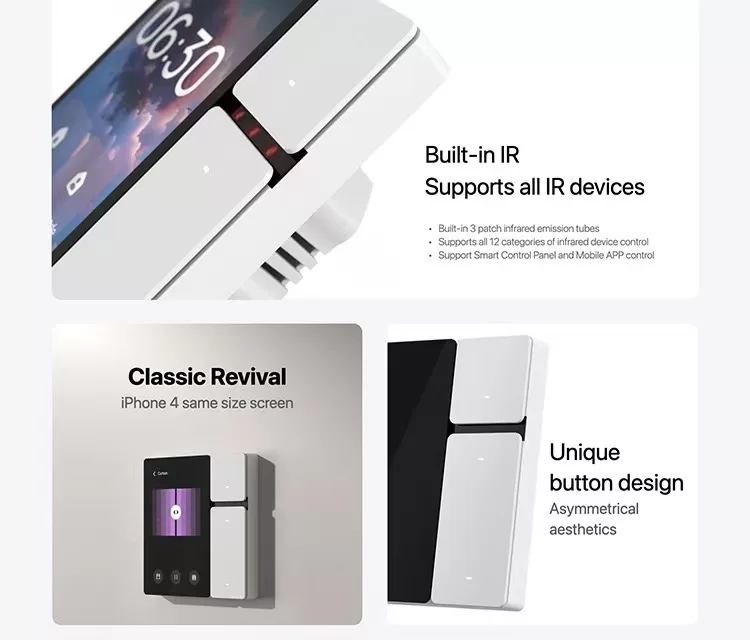
Compact 4-inch smart home control panel for apartments

However, Quick answer: In a rental you can install Smart plugs, bulbs, sensors on adhesive pads, Window Cameras, battery Video doorbells, a compact Control Panel and motorised curtain retrofits — all without a drill. The three things that will cause problems with a landlord are replacing wired switches, drilling into tile or exterior walls, and anything that alters the door lock. Everything else is reversible.

Compact 4-inch smart home control panel for apartments
A small control panel gives an apartment a single point of control without touching the wiring.

Why Apartments Need a Different Approach

Therefore, Most smart home advice assumes you own the place. Therefore, It suggests replacing switch plates, running cable to the door and mounting cameras under the eaves — none of which is available to a renter. What a renter needs is different in three specific ways: Smart Home Automation Guide 2026: 7 Practical Scenes That Save Time, Money and Energy

  • Everything must be reversible. The deposit depends on it.
  • Everything must travel. The next flat should take the same kit.
  • Installation should take minutes, not an afternoon. Nobody wants to patch and repaint on a twelve-month tenancy.

Moreover, Fortunately, the products that meet all three criteria now cover almost every category worth having.

What You Can Install With No Tools At All

Smart plugs

In addition, The simplest entry point. Plug one in, plug a lamp or a fan into it, and you have scheduling and remote control. For example, They also double as energy monitors on many models. Nothing is permanently changed, and they move house in a box.

Smart bulbs

For example, Screw into existing fittings. Dimmable and colour-changing options need no electrician. In addition, The one caveat is the wall switch: if somebody turns the switch off, the bulb loses power and becomes dumb — worth explaining to everyone in the flat. Smart Home Market Trends 2026: What Distributors Must Know About Modular Security, Voice Control and Energy-Saving Devices

Adhesive-mounted sensors

Therefore, Door, window, motion and water-leak sensors all ship with double-sided pads. A door sensor on the front door tells you when someone comes in; a leak sensor under the kitchen sink is genuinely worth its price the first time it fires. Smart Home Wholesale FAQ: 15 Questions Every Buyer Asks Before Ordering in Bulk

Smart control panel mounted without drilling in a rental flat
Adhesive pads hold sensors securely and peel off without marking.

What Needs Adhesive, Suction or a Screw — But Nothing More

Window cameras

This is the category that solves apartment security. An outdoor camera means a ladder and a masonry drill; a window camera mounts to the inside of the glass with a suction or adhesive bracket and looks straight through at the street or courtyard.

  • Why it suits renting — no exterior fixings, uses the indoor power outlet and gets a far better Wi-Fi signal than anything outside a wall.
  • The one trade-off — reflections from interior lighting can wash out the picture at night. Moreover, Choose a window that faces a dark exterior and close the curtains behind the camera.

We went into the mounting options and night-performance tips in our window camera and rain sensor guide.

Battery or solar video doorbells

With adhesive mounting, these need nothing more than a clean door frame. If the entrance gets daylight, a solar-assisted unit removes the charging routine entirely. Our walkthrough of installing a video doorbell without existing wiring covers the four mounting approaches and which one suits which entrance.

Compact control panels

A 4-inch panel is the right size for a flat — big enough to be useful, small enough to sit on a shelf or mount with a single adhesive bracket. Furthermore, It becomes the one place where lights, plugs, scenes and the door camera all meet, which is what stops a smart home from turning into six apps.

If you are weighing up screen sizes, our Tuya control panel guide explains what a central screen is actually worth in a small property.

Apartment smart home setup with plug-in devices
Plug-in devices plus one small screen covers most of what a flat needs.

Curtain and blind retrofits

Motorised curtain tracks that clamp onto the existing rail, or tube motors that slide inside a roller blind, need no new wiring. They are the most underrated apartment upgrade: waking up to curtains that open themselves changes how a room feels, and the whole thing unclips on moving day.

The Three Things That Will Upset a Landlord

  1. Replacing wired switches or sockets. This alters the fixed electrical installation and, in many jurisdictions, legally requires a qualified electrician. Do not do it in a rental — use smart bulbs and plugs instead.
  2. Drilling into tile, stone or exterior walls. Impossible to repair invisibly. As a result, If you must fix something, use adhesive pads rated for the surface, or a tension-mounted pole.
  3. Changing the door lock. A smart lock on a rental door is usually a deposit dispute waiting to happen. A video doorbell answers the same question — who is at the door — without touching the lock cylinder.
Smart home control screen on a bedside table
A bedside panel makes the “good night” scene the most-used button in the flat.

A Sensible Order to Buy In

Buying everything at once is how people end up with a drawer of unused gadgets. This sequence builds capability with each step:

  1. Two or three smart plugs — learn whether scheduling actually changes your routine.
  2. A door sensor and a leak sensor — the first devices that generate genuinely useful notifications.
  3. A window camera or battery doorbell — covers the entry. This is the point most renters care about.
  4. A compact control panel — once you have six or more devices, one screen beats six apps.
  5. Curtain or blind motor — the upgrade that makes the flat feel finished.

Every item on that list is packable in an afternoon and works in the next property.

Renter friendly smart home devices on a shelf
All of it packs into one box on moving day.
Related guides
Frequently Asked Questions

Will adhesive strips damage paint when I remove them?

Quality removable pads such as command-style strips usually come away cleanly, but on old or flaking paint they can lift a layer. Importantly, Test a small area first, and warm the pad with a hairdryer before peeling slowly.

Can I take smart devices with me when I move?

Everything on this list, yes. The only exception is anything wired into the fixed installation —. This is exactly why this guide excludes it.

Do I need a hub in a small flat?

Not for Wi-Fi devices. A hub becomes worthwhile once you have several Zigbee sensors, or if you want a control panel that talks to all of them locally.

Is a video doorbell allowed in a rented flat?

Usually with adhesive mounting, but check the tenancy agreement regarding the door and communal areas, and angle the camera to cover your own doorway rather than a neighbour’s.

Build a Renter-Friendly Setup

Apartment living rules out drilling, not automation. Browse devices that install without tools, or tell us about the flat and we will suggest a starter kit that fits the space and the landlord’s rules.

Related Articles

You Might Also Like
Posted on — Leave a comment

Why Your Video Doorbell Keeps Going Offline (And How to Fix It for Good)

Video doorbell showing offline status in app

However, Quick answer: A Video Doorbell that drops offline is rarely faulty. In roughly this order of likelihood, the cause is weak Wi-Fi at the door, the Doorbell sitting on a 5 GHz network it cannot hold, insufficient power from the transformer or a low battery, router features such as band steering, AP isolation or MAC filtering, a congested 2.4 GHz channel, firmware that needs updating, or — least often — genuine hardware failure. Work through them in that order and you will find it in under half an hour.

Video doorbell showing offline status in app
“Offline” almost always means the link, not the hardware.

Start Here: The Two-Minute Triage

Therefore, Before opening any settings, run these three checks. Therefore, They identify the majority of cases immediately.

  1. Power-cycle the doorbell. Pull the battery or switch off the breaker for 30 seconds. If it reconnects and stays up for days, you were looking at a transient router issue, not a fault.
  2. Check whether anything else on the network dropped at the same time. If the whole Wi-Fi went down, the doorbell is a symptom.
  3. Note the pattern. Drops at the same time every day point to scheduled router restarts or channel changes. Drops only in cold weather point to the battery. For example, Drops only when someone is at the door point to power delivery.

Cause 1: Weak Wi-Fi at the Door (Most Common)

Moreover, The front door is usually the worst-covered spot in the house. The router is typically at the back of the property, and the signal has to pass through exterior walls, insulation, sometimes a metal door, and foil-backed insulation in the frame.

Therefore, How to test it properly: stand exactly where the doorbell is mounted, phone in hand, and run a speed test. Do not trust the bar icon.

  • Below −70 dBm — the connection will drop. In addition, This is the single most common cause.
  • −60 to −70 dBm — marginal; works until the microwave runs.
  • Above −60 dBm — signal is fine, look elsewhere.

Moreover, Fixes, cheapest first: move the router a metre or two away from thick walls and metal appliances; if the doorbell supports it, add a Wi-Fi extender or mesh node on the inside wall nearest the door; as a last resort, consider a model with a wired Ethernet or PoE option.

Checking Wi-Fi signal strength at the front door
Test from the mounting position, not from the living room.

Cause 2: It Joined the 5 GHz Network

In addition, Nearly all video doorbells only support 2.4 GHz Wi-Fi, but many routers broadcast one network name for both bands. If the doorbell was set up while the phone was on 5 GHz, it can appear to pair and then fail to hold the connection.

Fix: in the router settings, temporarily split the SSIDs into separate names for 2.4 GHz and 5 GHz, then re-run setup and pick the 2.4 GHz network explicitly. Once it is stable you can re-enable a single name if you prefer, though leaving them split is the more reliable arrangement for Smart home devices generally.

Cause 3: Not Enough Power

This is the cause most people miss. This is because the symptom looks like a network problem. Moreover, A doorbell draws a surge when it wakes, streams video and sounds the chime. If the transformer or battery cannot supply that surge, the unit browns out and reboots — which shows up in the app as going offline.

  • Battery units — a pack that reads 40% can still collapse under load in cold weather. Cold reduces usable capacity substantially, which is why drop-offs often appear in winter.
  • Wired units — check the transformer rating against the doorbell’s requirement. Furthermore, An old 8 V transformer fitted for a basic bell is a very common reason a modern video doorbell restarts when someone presses the button.
  • Sign that confirms it — the doorbell goes offline exactly when rung or during a live view, then comes back on its own.
Video doorbell wiring and transformer power supply check
Insufficient transformer output looks exactly like a network fault.

Cause 4: Router Features That Quietly Break IoT Devices

Several default and optional router settings are hostile to Smart home hardware. Check each of these:

  • AP or client isolation — prevents devices from talking to each other. Some doorbells need local discovery to stay registered. As a result, Turn it off.
  • Band steering — pushes devices to 5 GHz. This many doorbells cannot use.
  • MAC address filtering or access control — blocks the doorbell after a router reboot or firmware update if the MAC was never whitelisted.
  • Aggressive DHCP lease times — a very short lease can drop devices that sleep for long periods.
  • Guest network — if the doorbell is on a guest SSID with isolation, local control will fail.

Assigning the doorbell a reserved (static) IP address in the router is a five-minute change that eliminates a surprising number of recurring dropouts.

Cause 5: Congested 2.4 GHz Channel

2.4 GHz has only three non-overlapping channels. In a block of flats, dozens of access points compete for them, and the result is intermittent latency that a doorbell interprets as a lost connection.

Fix: use a Wi-Fi analyser app to find. This of channels 1, 6 and 11 is least used in the installation, and set the router to that channel manually rather than leaving it on “Auto”.

Router settings for 2.4 GHz smart home devices
Channel 1, 6 or 11 — pick the quietest and lock it.

Cause 6: Outdated Firmware

Firmware updates fix connection stability more often than any other single change. Both the doorbell and the router matter here, and router firmware is the one people forget — it is frequently years out of date.

Fix: update the doorbell through its app first, then check the router’s administration page for a firmware update. Importantly, Reboot the router afterwards and observe for 48 hours before concluding anything.

Cause 7: Genuine Hardware Fault

The least likely cause, but it does happen. Suspect the hardware only after the six items above have been ruled out, and look for these signs:

  • The unit drops offline even when placed next to the router.
  • Physical damage, corrosion or water ingress at the connectors.
  • The doorbell gets abnormally hot, or will not complete a full charge.
  • A full factory reset does not change the behaviour.

Preventing It From Coming Back

Once it is stable, these four habits keep it that way:

  1. Reserve a static IP for the doorbell in the router’s DHCP settings.
  2. Keep the 2.4 GHz SSID separate from the 5 GHz one.
  3. Split the smart home devices onto their own SSID if the router supports it, so a guest’s phone cannot congest the doorbell’s network.
  4. Re-check signal strength seasonally — foliage on trees and new furniture both change 2.4 GHz propagation more than expected.
Video doorbell back online with stable connection
A stable connection, confirmed. A few router settings prevent most repeat faults.
Frequently Asked Questions

Why does my video doorbell go offline only at night?

Three likely reasons: scheduled router reboots, temperature-related battery capacity loss, or infrared night mode drawing more current than the power supply can deliver. Notably, Test by triggering a live view at the same time each evening.

Does a Wi-Fi extender actually help a doorbell?

Yes, provided the extender itself gets a good signal and is placed on the inside wall closest to the door rather than next to the router. A mesh node is the better long-term option.

How do I know if my transformer is underpowered?

Check its output rating against the doorbell’s requirement. If the doorbell reboots precisely when the button is pressed or a live view starts, the power supply is the strong suspect.

Is it worth resetting the doorbell to factory settings?

Only after working through signal, power and router settings. However, A reset erases the Wi-Fi credentials and motion zones, so it should be the last step, not the first.

Still Not Resolved?

If you have worked through the list and the unit still drops, send us the model, your router make and the signal reading at the door. We will help you determine whether it is configuration or hardware. Contact our support teamor look at models with stronger wireless performance

Related Articles

You Might Also Like