Why Your Windows Always Have Streaks & How to Fix It Permanently
Clean windows and glass surfaces instantly make a Home look brighter, cleaner, and more refreshing. However, most people struggle with one common problem no matter how hard they try: annoying water streaks, foggy residues, and dusty marks that never disAPPear completely. Many homeowners spend extra time wiping repeatedly, only to find new streaks appearing after the glass dries. If you have ever experienced this frustrating situation, you are not alone.
Traditional window cleaning methods have remained unchanged for decades. People usually rely on cleaning spray, ordinary towels, paper rags, and manual wiping. Although these methods seem simple and affordable, they bring many hidden troubles that affect cleaning results and waste plenty of time. Understanding why manual cleaning always fails is the key to achieving truly spotless glass surfaces.
The Hidden Problems of Traditional Window Cleaning
The biggest disadvantage of using towels and rags is uneven water absorption. Ordinary cloths leave tiny water droplets on the glass surface. When these droplets evaporate naturally under sunlight or inDoor ventilation, they leave mineral marks, dust residues, and linear streaks. This is why windows often look clean when wet but turn blurry and messy after drying.
In addition, manual wiping easily causes secondary dust pollution. Towels usually contain accumulated fine dust, lint, and fiber residues. While wiping the glass, these tiny fibers stick to the surface, creating invisible haze that affects light transmission. For bathroom mirrors, shower glass, and car windows, the situation becomes even worse because of soap foam, oil stains, and hard‑water scale.
Dirty water dripping is another unavoidable issue. During manual cleaning, excess water flows down from the glass edge, wetting window sills, walls, floors, and car Door gaps. After cleaning, users need to spend extra time mopping the floor and tidying up the environment, which greatly reduces cleaning efficiency. For families with high windows or large glass partitions, traditional cleaning also brings safety risks and physical fatigue. Standing on stools while holding wet rags increases the chance of slipping or falling.
Many people try to solve streaks by buying expensive glass cleaner liquids. Yet high‑quality detergent cannot fix the core problem. Detergent can dissolve dirt, but it cannot remove residual water. As long as dirty water is left on the surface to evaporate, streaks will still show up. Countless households fall into this trap: buying more cleaning supplies instead of improving the cleaning workflow itself.
Why Professional Cleaning Results Are Always Better
If you have ever hired professional cleaning workers, you may have noticed that their cleaning effect is far cleaner than household manual wiping. The core reason is not their technique, but their professional cleaning tools. Professional cleaners use integrated squeegee and vacuum equipment to ensure that water stains are removed instantly without natural evaporation.
The principle is simple: as long as the dirty water is completely collected at the moment of wiping, there will be no residual water droplets, no evaporation marks, and no streaks. This professional cleaning principle has been widely used in commercial cleaning, office glass maintenance, and high‑end vehicle beauty services. For a long time, such equipment was bulky, wired, and too costly for ordinary home users.
In recent years, with the upgrading of household cleaning tools, this professional technology has gradually entered ordinary families in the form of portable handheld devices. Consumers no longer need to hire expensive cleaning crews. They can get professional‑grade glass cleaning results right at home. Still, many shoppers feel confused when facing so many new cleaning gadgets on the market. It is important to understand how this category of tool actually works before making a purchase.
What Is a Window Vacuum Cleaner and How Does It Work?
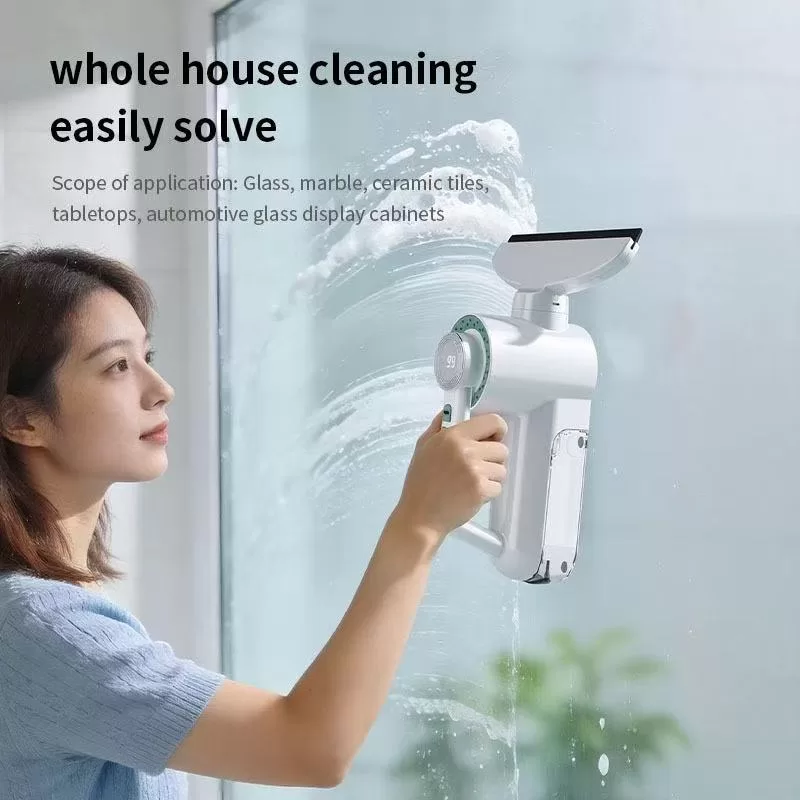
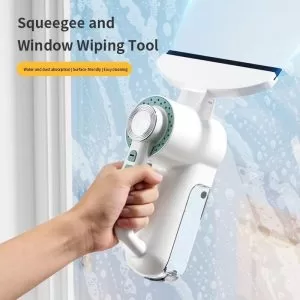
A window vacuum cleaner is a professional glass cleaning tool that integrates silicone scraping and vacuum water absorption. Different from traditional single wiping tools, it completes two core actions in one step: scraping off dirt and foam on the surface and instantly sucking all sewage into the built‑in water tank. This working principle completely avoids the root cause of water streaks — residual water droplet evaporation.
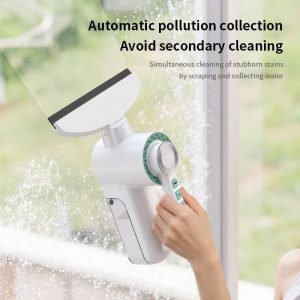
The core working logic is scientific and efficient. The soft silicone strip fits closely with the glass surface to ensure no gaps during wiping. At the same time, the built‑in high‑suction Motor generates stable negative pressure to collect all sewage and foam into the sealed water tank. The whole process does not rely on natural air drying. Whatever gets scraped away gets stored inside the device instead of dripping onto floors or window frames.
You might ask: can this kind of tool only work on window glass? Actually, its usable range covers almost all smooth hard surfaces around daily life. Mirrors, shower room tiles, marble countertops, glass tabletops, and vehicle windows are all suitable application scenarios. This multi‑scene characteristic makes it different from many single‑purpose cleaning gadgets that end up gathering dust in storage cabinets.
Key Points to Evaluate When Choosing a Window Vacuum
Not all window vacuums deliver equal performance. When browsing product pages, many buyers only look at appearance and price and ignore several critical parameters that directly determine user experience.
Suction power is the first factor. Insufficient suction cannot fully absorb dirty water, which will still produce partial water marks. For household‑grade handheld models, stable suction around 1200Pa strikes a good balance between weight and cleaning capacity. Too strong suction means heavier weight and shorter battery life, while weak suction cannot complete sewage collection properly.
Battery life and wireless design are also worth attention. Wired models limit movement range, especially for high‑position windows and car‑washing scenarios. A proper rechargeable wireless design removes cable restrictions. Users can move freely around the house or take the tool out for car‑glass maintenance.
The capacity and structure of the wastewater tank cannot be overlooked either. A reasonably‑sized water tank avoids frequent dumping during continuous cleaning. Meanwhile, the tank should be easy to open and rinse, preventing mold and peculiar smell after long‑term use. Silicone blade quality also matters; poor‑quality rubber will deform after short‑term use and leave strip‑shaped scratches on glass.
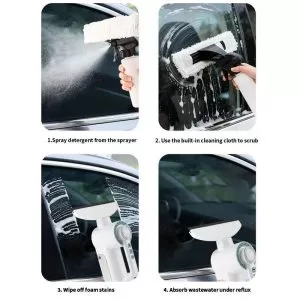
Good cleaning equipment should not bring complicated learning costs. A qualified household window vacuum can be mastered within a few tries. The whole workflow follows four simple steps. First, spray diluted cleaning liquid evenly across the glass surface. Second, scrub the surface to dissolve stubborn dirt and oil films. Third, push the squeegee blade slowly across the glass. Fourth, the vacuum absorbs all dirty water into the internal tank. After finishing the work, just open the water tank and pour away the collected sewage.
For families with many large windows, this workflow greatly cuts down cleaning time. There is no need to prepare multiple towels, no need to mop the floor repeatedly for dripping water. Elderly users or people with limited physical strength can also finish glass‑cleaning work without heavy physical labor. Car owners can keep this lightweight device in the trunk to handle smudged windshields after rainy days.
Final Thoughts: Is a Window Vacuum Worth Adding to Your Cleaning Kit?
Many household cleaning tools solve partial problems, while others turn out to be short‑lived gimmicks. The window vacuum targets a long‑existing real‑life pain point: streaks caused by uncollected dirty‑water evaporation. It transfers mature commercial‑cleaning‑room technology into lightweight consumer hardware.
If you often struggle with streaky glass, spend lots of time on repeated wiping, or hate dripping dirty water messing up your room, this type of tool will bring obvious improvement to your housework experience. Our rechargeable handheld window vacuum delivers 1200Pa stable suction, cordless lightweight body, built‑in wastewater tank, and supports multi‑surface cleaning for home and car use. It brings professional‑level cleaning results to ordinary households with an affordable budget.
Housework does not have to be exhausting. Choosing the right tool helps you cut redundant repetitive labor and get brighter, spot‑free glass with much less effort.
Related Articles
You Might Also Like
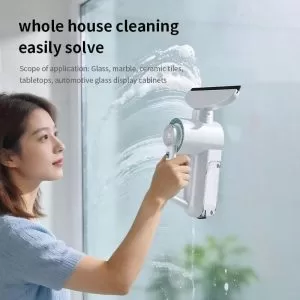 Electric Window Vacuum Cleaner, 1200Pa Rechargeable Glass Scraper Squeegee with Type-C Charging Original price was: $22.90.$17.90Current price is: $17.90.
 3–1 CO Detector Temperature & Humidity Monitor – Plug & Pla… Price range: $32.56 through $45.59
Frequently Asked Questions
Is Window Vacuum Cleaner worth buying?
Based on the breakdown in this article, Window Vacuum Cleaner offers a solid mix of features and value. If your main goal matches the key benefits described above, it is a practical choice for everyday use.
How do I choose the right window vacuum cleaner for my needs?
Start with your core use case, then compare battery life, compatibility, and build quality as covered above. Choosing the right window vacuum cleaner comes down to matching specs with how you actually use it.
Does window vacuum cleaner require a companion app?
Most devices of this type pair with a free companion app for setup and firmware updates. A few advanced features may sit behind a paid plan, so check the official specs page before buying.
