Posted on — Leave a comment

Window Camera: Filming Through Glass Without Glare or Reflections

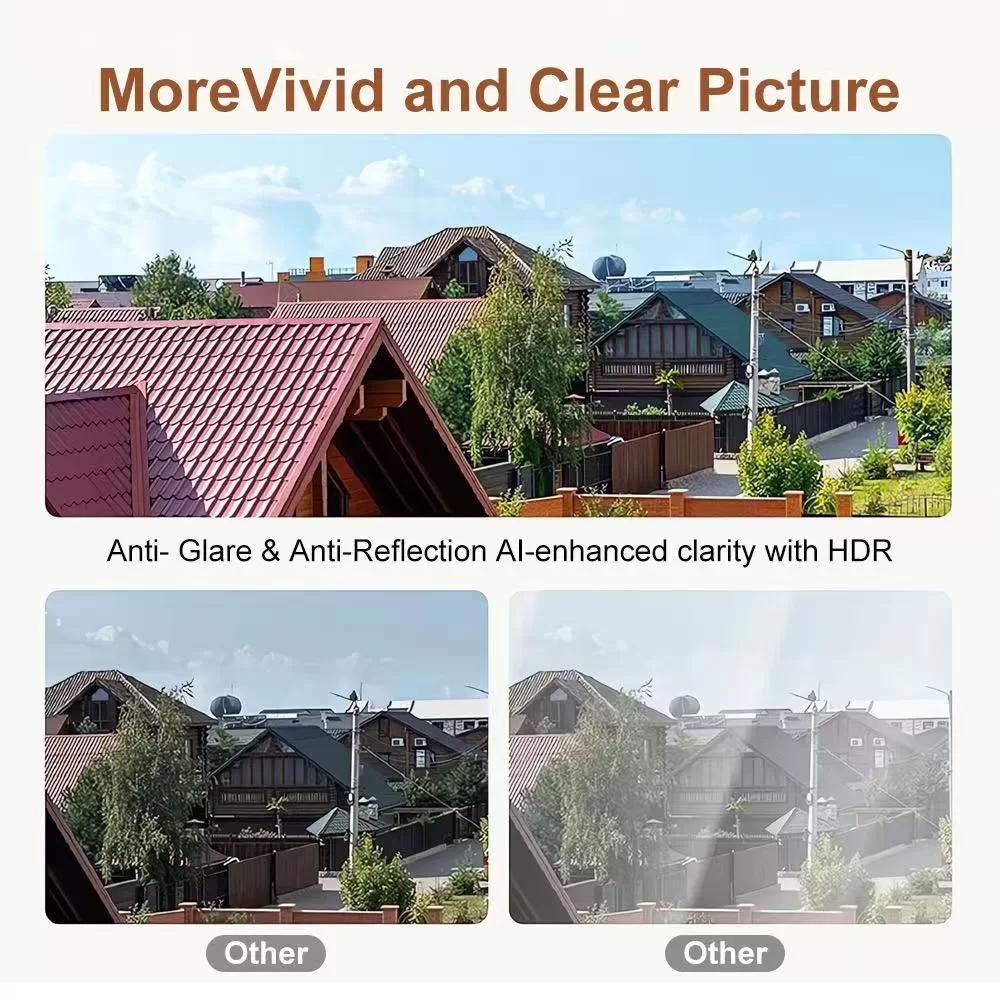
Pointing a normal indoor camera out of a window produces disappointing footage: a reflection of the room by day, and infrared LEDs bouncing off the glass at night so the image fogs into grey. It is one of the most common Camera mistakes, and it is not fixed by buying a better Camera — it is fixed by using a camera designed for glass.

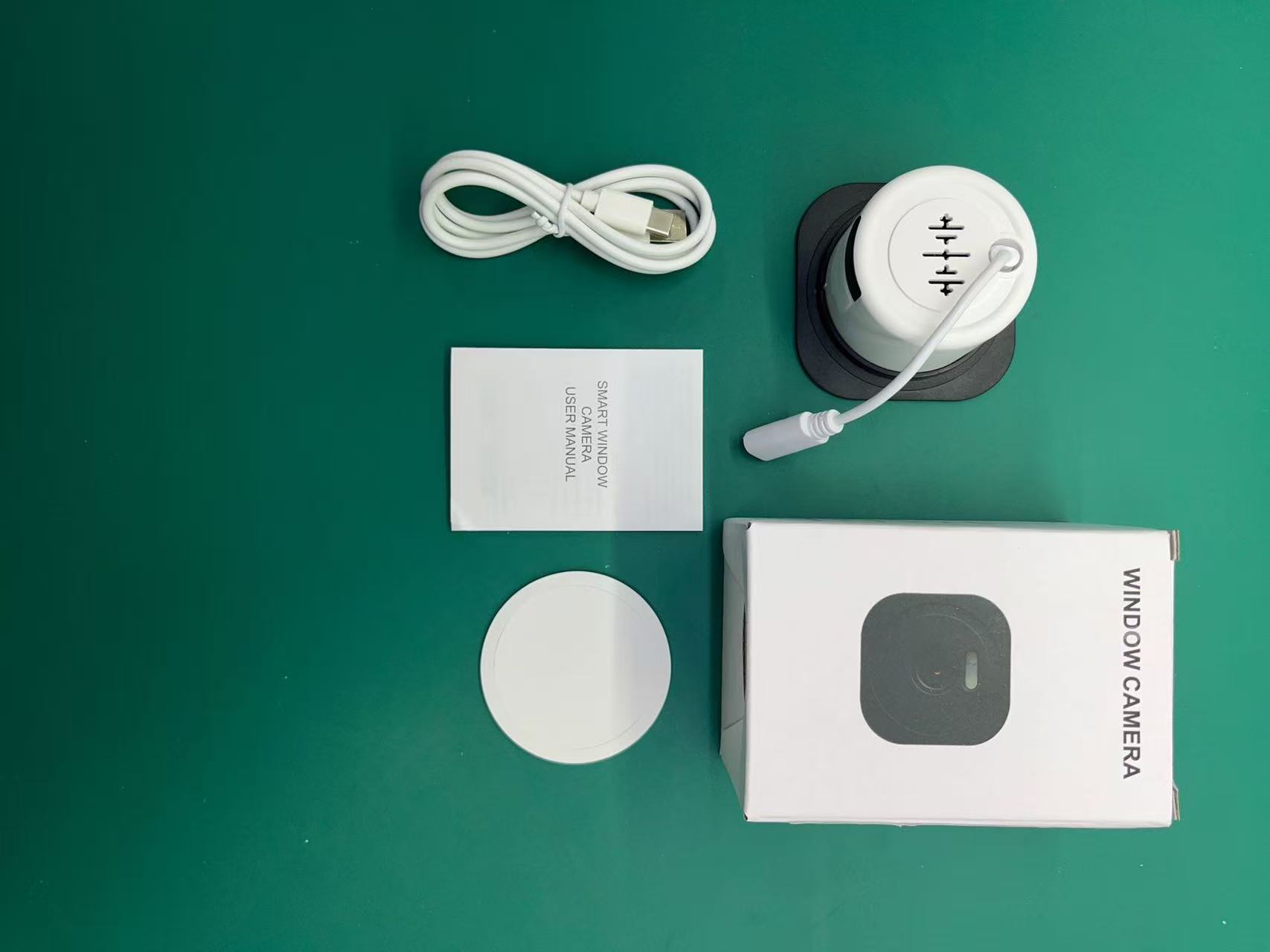
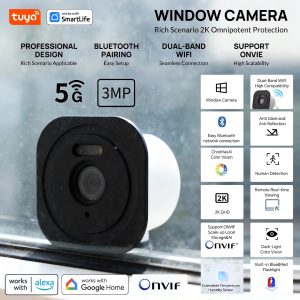
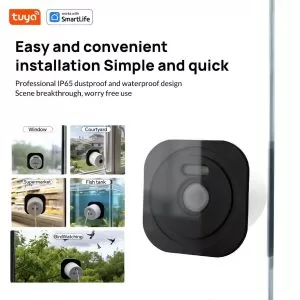
The Tuya Smart Window Camera is built for this: it mounts flat against the pane so the Lens is coupled to the glass, which removes the air gap that causes reflections and lets infrared pass through instead of bouncing back.

Why glass breaks a normal camera

Three separate problems:

  1. Reflections. Any gap between lens and glass lets the lens see its own reflection and the room behind it, especially when it is darker outside than in.
  2. Infrared bounce. Night vision works by lighting the scene with IR LEDs. Glass reflects infrared almost perfectly, so the camera lights up the window itself and sees nothing beyond it.
  3. Exposure. A camera metering the bright outdoors will underexpose, and one metering the room will blow out the street. Auto exposure flickers between the two.

A window camera solves the first two physically — flush mounting removes the gap, and the LEDs are arranged to fire through the pane. The third is handled by exposure tuning for an outward view.

Where a window camera makes sense

  • Flats with no outdoor space — no drilling into an exterior wall you do not own.
  • Street-facing rooms — watching a parked car or the pavement without an outdoor install.
  • Ground-floor windows on a busy path — coverage where an outdoor camera would be tampered with.
  • Rentals — mounted inside, taken with you when you leave.

Getting a clean image: practical steps

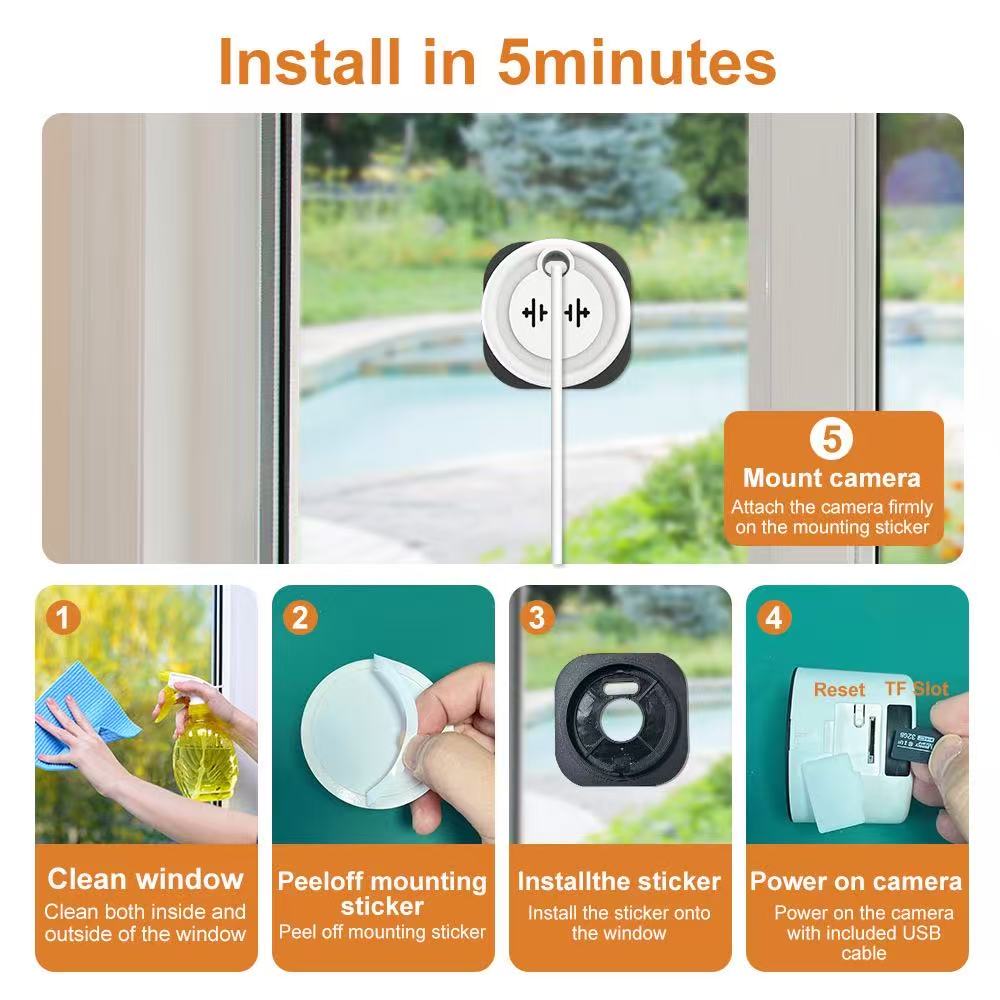
  1. Clean both sides of the glass. Smears that are invisible to the eye show up as haze in footage.
  2. Mount flush and sealed. The unit adheres to the pane; any gap reintroduces reflections.
  3. Avoid direct sun on the pane. A window in full afternoon sun will glare regardless of the camera.
  4. Turn the room lights off at night if you are filming out after dark — interior light is the main source of remaining reflection.
  5. Consider the angle. Straight out through the glass gives the cleanest image; filming at a steep angle through the pane degrades it.

When to choose an outdoor camera instead

Glass always costs some image quality. If you can mount outside — an eave, a wall, a soffit — an outdoor camera such as the outdoor dual-lens PTZ will give you a sharper, wider view with better night performance. Choose the window camera when mounting outside is impossible, not merely inconvenient.

If you are weighing Battery against mains for the outdoor option, our battery vs plug-in comparison covers that decision, and this guide covers outdoor spots with no socket.

FAQ

Can I just put a normal indoor camera in the window?
You can, but expect reflections by day and a washed-out infrared picture at night. A window camera is designed around the glass rather than fighting it.
Does it work with double glazing?
Yes. Double glazing is fine — the mount couples to the inner pane. Tinted or heavily coated glass reduces image quality.
Will it fall off?
The mount uses a strong adhesive pad rated for the weight. Clean the glass with alcohol before fitting and press firmly; on a cold pane, warm the area first.
Can I see number plates?
At 3 MP / 2K, a plate directly in front of the window within a few metres is often readable. Plates at distance or at an angle are not reliable.
Does it record at night?
Yes, with the room lights off. Interior lighting is the main cause of night-time reflection.
Do I Need WiFi?
Yes, 2.4 GHz, same as the rest of the range. Test signal strength at the window before fitting.

Related Articles

You Might Also Like

Frequently Asked Questions

Is Window Camera Filming worth buying?

Based on the breakdown in this article, Window Camera Filming offers a solid mix of features and value. If your main goal matches the key benefits described above, it is a practical choice for everyday use.

How do I choose the right window camera filming for my needs?

Start with your core use case, then compare battery life, compatibility, and build quality as covered above. Choosing the right window camera filming comes down to matching specs with how you actually use it.

Does window camera filming require a companion app?

Most devices of this type pair with a free companion app for setup and firmware updates. A few advanced features may sit behind a paid plan, so check the official specs page before buying.

Posted on — Leave a comment

Door and Window Sensor Installation: Fitting, Gaps and Automations

A door and window sensor is a two-part reed Switch: a magnet on the moving part, a sensor body on the frame. When the magnet moves more than about 15–20 mm away, the circuit opens and the sensor reports “open”. Fit the body on the fixed frame, the magnet on the door or sash, keep the gap under 10 mm when closed, and align the two marks — almost every “it says open when it is shut” problem is alignment or gap, not a faulty unit.

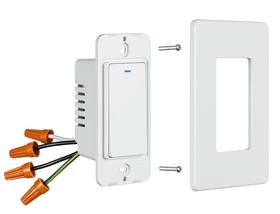
This guide covers windows, doors, sliding doors, garage doors and the awkward cases, plus the automations that are actually worth setting up. Smart Switch Series: Models, Specs, MOQ

Fit it in five steps

  1. Clean both surfaces with alcohol and dry them. Adhesive on paint that is flaking, or on dusty uPVC, fails within weeks.
  2. Dry-fit first: hold the two parts together in the closed position and watch the app or the LED. Find the position Where “closed” is stable.
  3. Mount the larger body on the fixed frame so the battery and button stay accessible; put the small magnet on the moving door or sash.
  4. Mind the gap: keep the closed gap under 10 mm and the faces parallel. On uPVC windows with a deep rebate, use the slim spacer or the narrow magnet edge.
  5. Press for 30 seconds and leave the adhesive 12 hours before testing repeatedly.

Doors

  • Front and back doors: top corner on the latch side, body on the frame. Top mounting keeps it out of the way of bags, pets and small children.
  • Which side: the hinge side works too, but the sensor must sit very close to the hinge to avoid a large travel arc — latch side is easier.
  • Metal doors: a steel door or a steel frame can shield the magnet slightly and, more importantly, weaken the radio link. Test before sticking, and consider a Zigbee repeater nearby.
  • French and double doors: one sensor per leaf, or one on the active leaf plus a second on the other if you want to know which one is open.

Windows

  • Casement and tilt-and-turn: top corner opposite the handle, magnet on the sash. Remember a tilt-and-turn window has two open states — if you want to know which, add a second sensor or use a handle-position sensor.
  • Sliding sash and patio doors: mount at the meeting rail in the closed position, keeping the two parts parallel as they pass. The gap on sliders is often larger, so check the spec (some sensors tolerate 20 mm+).
  • Rooflights and skylights: fine, but keep the sensor body Where condensation will not drip on it.

Awkward cases

  • Garage and roller doors: use a sensor rated for outdoor or garage use (temperature range matters) or a tilt sensor on the door panel, which reports angle rather than contact.
  • Gates and sheds: choose IP-rated outdoor sensors and expect shorter battery life in cold weather.
  • Fridges and freezers: mount externally; the magnet works through the door seal, and it is a cheap way to catch a door left ajar.
  • Mailbox and letterbox: a small sensor plus a notification is a genuinely useful, low-cost automation.

Automations worth setting

  • Heating off when a window is open for more than two minutes, back on when it closes — the single most useful one.
  • Arm the alarm mode only when all external doors report closed, so you never arm with a door ajar.
  • Night alert if a ground-floor door opens between 00:00 and 05:00.
  • Child and Pet safety: a chime when a specific door opens, Without triggering a full alarm.
  • Left-open reminder after 10 minutes for an external door, and for the fridge after 2 minutes.
Frequently Asked Questions

How do I stop a door sensor reporting open when it is closed?

Check the gap and the alignment first: the two marks should face each other and the closed gap should be under 10 mm. Deep window rebates and warped doors are the usual culprits — use a spacer or move the magnet.

Which part goes on the door and which on the frame?

Sensor body on the fixed frame, magnet on the moving door or window. It works the other way round, but mounting the body on the frame keeps the battery change easy and avoids cable or Wiring strain. Smart Switch for Water Heater and AC

Do door sensors work on sliding doors?

Yes, mounted at the meeting rail so the two parts stay parallel as the panel slides. Watch the gap: some sliders sit further apart, so check the sensor’s maximum operating distance. Reolink vs Tuya Security Camera

How long does the battery last?

Usually one to two years for a coin-cell contact sensor. Cold garages and outbuildings shorten that considerably, and the app’s low-battery notification is the only warning you get.

Can one sensor cover two doors?

No. One sensor covers one opening. For double doors you need one per leaf if you want to know which leaf is open.

Do they work without internet?

Contact detection and local automations run on the hub and keep working. Cloud routines and remote notifications need a connection.

Related guides

Browse door, window and leak sensors · Ask us about your window types

Related Articles

You Might Also Like

Recommended Products

Posted on — Leave a comment

Smart Home Sensors Explained: Window Camera and Rain Sensor for a Home That Reacts

Smart window camera mounted on a glass window facing outside

However, Cameras and Smart plugs get the attention, but the devices that make a house feel genuinely intelligent are usually the quiet ones. Two good examples: a window camera that watches the outside from behind the glass, and a rain Sensor that closes the skylight before anyone notices the weather changed. Neither needs a drill, and together they turn a connected house into one that reacts.

Smart window camera mounted on a glass window facing outside
Mounted behind glass, a window camera keeps a clear view without any exterior wiring.

Window Camera: Eyes Where You Would Not Put a Drill Hole

Therefore, An outdoor camera normally means a ladder, a masonry bit and a weatherproofing job. Therefore, A window camera skips all of it. It mounts to the inside of a window with an adhesive or suction bracket and looks straight through the glass at the street, the driveway or the garden.

  • No exterior installation — renters can install it, and nobody needs scaffolding.
  • Indoor power and Wi-Fi — the outlet is already there, and signal strength is far better than outside a wall.
  • Two-way audio and siren — speak through the unit or trigger an alarm from the app.
  • Night vision tuned for glass — infrared illumination is managed to reduce the reflection that usually ruins through-glass footage.
  • Motion zones — limit alerts to the driveway instead of every car on the street.

Moreover, The one trade-off is glass: reflections from interior lighting can wash out the image at night, so the best results come from a window that Faces a dark exterior and has a blind or curtain behind the camera.

Window security camera with suction mount and wide view
Suction or adhesive mounting means no holes, no ladder and no landlord conversation.

Rain Sensor: The Automation Nobody Thinks About Until It Works

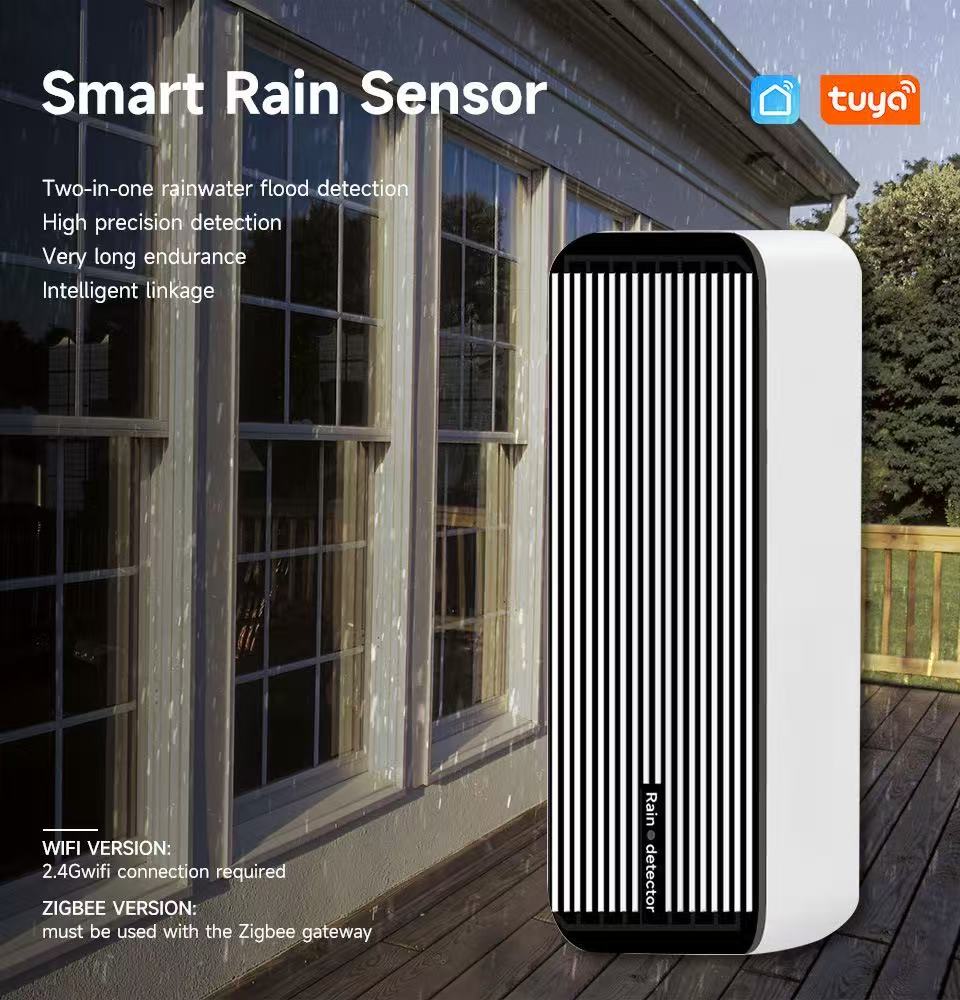
In addition, A rain sensor does one job: it detects water and reports it. That sounds trivial until you wire it into a routine. For example, The moment rain is detected, the house can close skylights and motorised windows, retract an awning, pause irrigation, and send a notification. It is the difference between a house that is merely connected and one that looks after itself while the owner is at work.

  • Window and skylight closing — the single most useful automation, and the reason people buy the sensor.
  • Awning and pergola retraction — protects fabric and motors from storm damage.
  • Irrigation pause — stops the garden system from watering during a downpour.
  • Laundry alerts — a notification to bring in washing before it soaks.
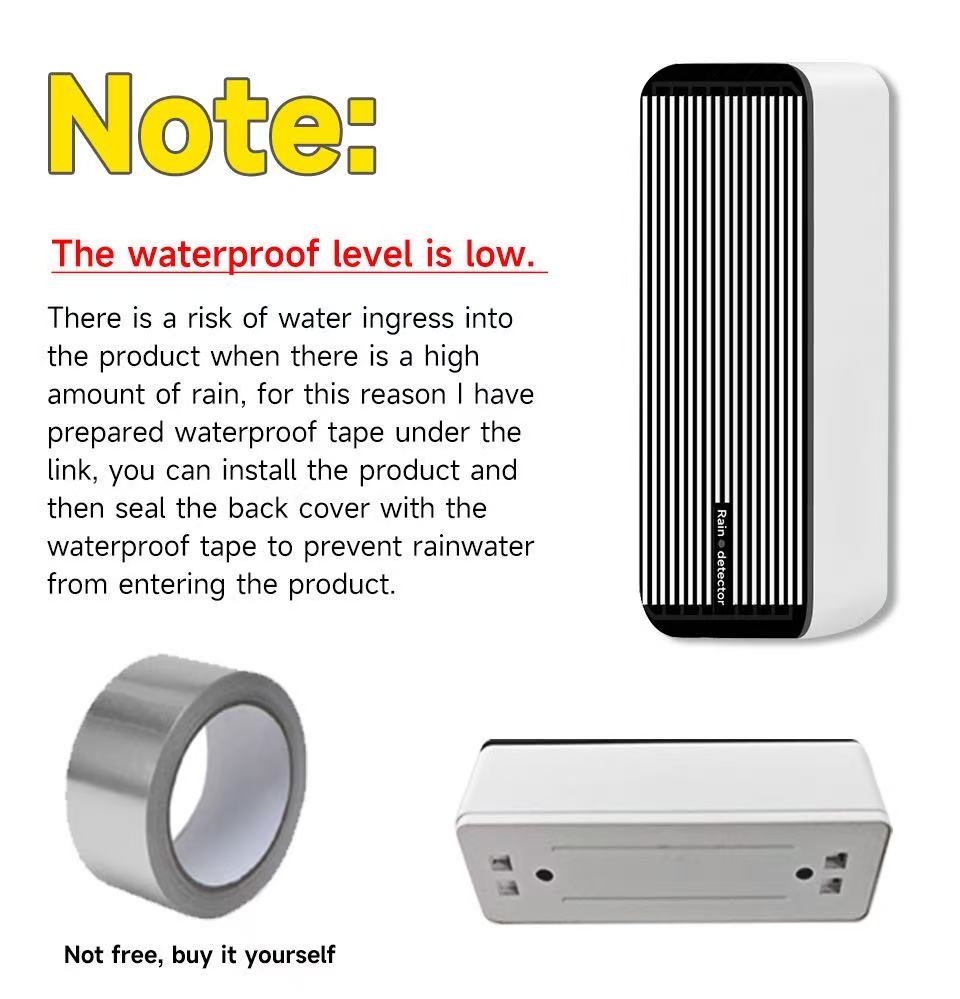
  • Low-power wireless design — battery powered and mounted outdoors on a sill, bracket or gutter edge.
Window camera live view on a smartphone app
App-based live view and alerts make a window camera useful from anywhere.

Combining Sensors Into Automations That People Actually Keep

For example, The value of sensors compounds when they are linked. A few combinations that stay switched on long after the novelty wears off: Tuya WiFi IR Remote Review: Universal Control Meets Climate Intelligence

  1. Rain detected → close all skylights and windows, retract awning. The classic, and the one customers talk about.
  2. Window camera detects motion after 11pm → turn on the porch light and push an alert. Lighting plus camera is far more effective than a camera alone.
  3. Door opened while rain sensor is wet → send an “umbrella” reminder. Cheap to build, genuinely delightful.
  4. Rain stops for 30 minutes → resume irrigation schedule. Saves water without anyone thinking about it.
  5. Vacation scene → camera recording on, rain sensor closing windows, notifications to the owner’s phone. The full picture for a house left empty.
Smart rain sensor installed on an outdoor windowsill
A compact rain sensor sits on the sill and reports the moment water is detected.

Choosing the Right Sensor Mix for a Project

However, For a distributor or installer, sensors are among the highest-margin, lowest-return-rate products in a smart home catalogue — but only if the mix matches the property type. In addition, Apartments and rentals lean heavily on window cameras. This is because nothing can be drilled. Houses with skylights, awnings or motorised windows are the natural home for rain sensors. Hospitality and senior-care projects tend to buy both, plus door and motion sensors, and run them through a single automation layer.

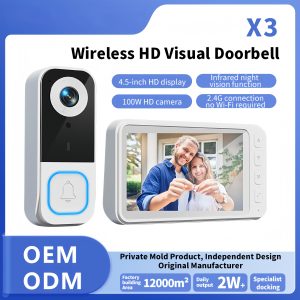
Xingliao Smart Home manufactures and supplies a full sensor family alongside doorbells, control panels and cameras, all from the same production facility, so firmware, packaging and app ecosystem stay consistent across the range.

Wireless rain sensor detecting rainfall for home automation
A consistent ecosystem means sensors, doorbells and panels all work from one app.

Plan Your Sensor Line-Up

Sensors are what turn a one-off device sale into a system the customer keeps expanding. Browse the sensor range or contact our team for wholesale pricing, bundle recommendations and OEM options.

You Might Also Like

Related Articles
Frequently Asked Questions

Is Sensors Explained Window Camera worth buying?

Based on the breakdown in this article, Sensors Explained Window Camera offers a solid mix of features and value. If your main goal matches the key benefits described above, it is a practical choice for everyday use.

How do I choose the right sensors explained window camera for my needs?

Start with your core use case, then compare battery life, compatibility, and build quality as covered above. Choosing the right sensors explained window camera comes down to matching specs with how you actually use it.

Does sensors explained window camera require a companion app?

Most devices of this type pair with a free companion app for setup and firmware updates. A few advanced features may sit behind a paid plan, so check the official specs page before buying.

Posted on — Leave a comment

Best Smart Window Camera 2026

Best Smart Window Camera 2026: Easy Install Home Security Guide

However, Finding the right Security camera for your home doesn’t have to mean drilling holes or running cables. A Smart window camera offers a simple, damage-free way to monitor your property from the inside out. In 2026, these compact devices have become one of the fastest-growing categories in home security.

Therefore, This guide explains what a window camera is, why it beats traditional Outdoor cameras for many homeowners, and what features to look for when choosing one.

What Is a Smart Window Camera?

Moreover, A smart window camera is a compact security camera designed to mount on a window using adhesive or suction. It faces outward through the glass, capturing everything happening outside while staying protected Indoors. Because it sits inside your home, it avoids weather damage, tampering, and complicated wiring.

In addition, Most modern window cameras connect via WiFi and integrate with apps like Tuya Smart or Smart Life, giving you live video, motion alerts, two-way audio, and cloud storage from your phone.

Why Choose a Window Camera Over an Outdoor Camera?

Tuya Smart Window Camera 3MP 2K QHD with Smart Life app - Xingliao Smart Home
3MP 2K QHD window camera with 2.4G/5G WiFi, motion detection, night mode, and two-way audio. Control via Tuya Smart / Smart Life app. Shop at odmhome.com.

Smart window camera 5 minute peel and stick installation guide
Install the Xingliao smart window camera in 5 minutes with peel-and-stick mounting. No tools or drilling required.

Window Camera Traditional Outdoor Camera
No drilling or wiring Requires mounting brackets and cable routing
Protected from weather Exposed to rain, dust, and extreme temperatures
No risk of theft or tampering Can be damaged, blocked, or stolen
5-minute installation Often needs professional installation
Works for renters Usually permanent modification to property
Indoor Power source May need outdoor-rated Power solutions

For example, For apartments, rental homes, and anyone who wants security without construction, a smart window camera is the ideal solution.

Key Features to Look For

Resolution

Consequently, Look for at least 3MP (2K QHD) resolution. At 2304 × 1296 pixels, you get 23% more detail than standard 1080p, making it easier to identify faces, license plates, and package details.

WiFi Connectivity

Dual-band WiFi (2.4G/5G) ensures a stable connection even in homes with many connected devices. The 5GHz band reduces interference and improves streaming quality.

Night Vision

Advanced cameras offer both infrared night vision for discreet monitoring and white light mode for full-color nighttime footage. Features like F1.0 aperture and BSI sensors dramatically improve low-light performance.

Weather Resistance

Even though the camera sits indoors, look for IP65 waterproof rating if you plan to use it in humid environments like kitchens, bathrooms, or near aquariums.

Motion and Sound Detection

Smart alerts notify you instantly when the camera detects movement or unusual sounds. This turns your window camera into an active security system rather than just a passive recorder.

Two-Way Audio

Built-in microphone and speaker let you talk to delivery drivers, warn intruders, or check in on pets from anywhere.

Easy Installation

The best window cameras use peel-and-stick mounting and can be installed in under 5 minutes with no tools.

Best Uses for a Smart Window Camera

Home Security

Monitor your front door, backyard, or driveway from a window inside your home. Get instant alerts when someone approaches.

Apartment Living

Renters can’t drill into walls or install permanent fixtures. A window camera provides full security without violating lease agreements.

Storefront Monitoring

Small business owners can monitor shop entrances, displays, and parking areas from inside the store.

Pet and Wildlife Watching

Point a window camera at your backyard bird feeder or aquarium to capture animals in stunning 2K detail.

Baby and Elderly Monitoring

Use indoors to keep an eye on nurseries or elderly family members without intrusive camera placement.

Xingliao Tuya Smart Window Camera: Top Pick for 2026

At Xingliao Smart Home, our Tuya Smart Window Camera delivers professional-grade security with consumer-friendly simplicity.

Key features:

  • 3MP 2K QHD resolution with 23% more detail than 1080p
  • 2.4G/5G dual-band WiFi for stable, lag-free streaming
  • F1.0 aperture + BSI sensor for superior night vision
  • IP65 waterproof and dustproof design
  • 5-minute peel-and-stick installation
  • Two-way audio for real-time communication
  • Motion and sound detection with instant phone alerts
  • Night mode + white light for full-color or infrared recording
  • Tuya Smart / Smart Life app control from anywhere

Whether you’re securing a home, monitoring a shop, or watching wildlife, the Xingliao window camera adapts to your needs.

Shop the Xingliao Smart Window Camera at odmhome.com

How to Install a Smart Window Camera

    Tuya Smart Life app window camera live view playback motion detection controls
    Control your Xingliao window camera from anywhere with the Tuya Smart / Smart Life app. Live view, playback, alerts, and settings.

  1. Clean the window glass inside and out
  2. Peel the backing from the mounting sticker
  3. Attach the mounting base to the window
  4. Connect the camera and plug in the USB power cable
  5. Pair with the Tuya Smart app and start monitoring
Tuya window camera multi scene use home courtyard supermarket fish tank bird watching
Use the Xingliao window camera for home security, courtyard monitoring, shop surveillance, aquarium viewing, and bird watching.

Total setup time: under 5 minutes. No tools, no drilling, no damage.

Smart Window Camera vs Doorbell Camera

A doorbell camera shows you who is at the door. A window camera shows you everything happening across your property — driveways, gardens, side yards, and back entrances. For complete coverage, many homeowners use both.

Final Thoughts

A smart window camera is one of the easiest and most affordable ways to add security to any home. With 3MP resolution, dual-band WiFi, and 5-minute installation, there’s no reason to leave your property unprotected.

For a reliable, feature-rich option at a competitive price, the Xingliao Tuya Smart Window Camera is a standout choice in 2026.

Ready to secure your home?

👉 Shop the Xingliao Smart Window Camera at odmhome.com


Xingliao Smart Home — Smart Living for Everyone. Explore premium smart security cameras, sensors, and home automation devices at odmhome.com.

3MP 2K QHD window camera night vision infrared vs white light color reproduction
F1.0 aperture and BSI sensor deliver 23% more detail with vivid infrared and full-color white light night vision.

Related Articles

You Might Also Like
Frequently Asked Questions

Is Window Camera worth buying?

Based on the breakdown in this article, Window Camera offers a solid mix of features and value. If your main goal matches the key benefits described above, it is a practical choice for everyday use.

How do I choose the right window camera for my needs?

Start with your core use case, then compare battery life, compatibility, and build quality as covered above. Choosing the right window camera comes down to matching specs with how you actually use it.

Does window camera require a companion app?

Most devices of this type pair with a free companion app for setup and firmware updates. A few advanced features may sit behind a paid plan, so check the official specs page before buying.