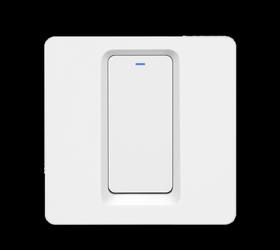
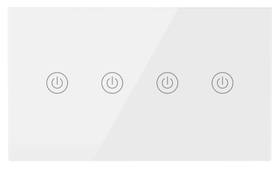
Smart switches for home use replace a standard wall switch with a connected one, so the light, fan or curtain it controls can be turned on by app, voice, schedule or automation — while the physical button still works exactly as before. For most homes this is the cheapest and least disruptive way to automate lighting: you keep your existing bulbs, you do not need a hub for Wi-Fi models, and one switch can automate every bulb on that circuit at once.
The catch is that a Smart switch is not a universal part. It has to match the wiring in your wall (neutral wire or not), the size of your wall box and plate, the number of gangs you need, and the ecosystem your family already uses. This guide walks through those four decisions in the order that actually matters, with the sizes and protocols we ship every day. M1 Foldable 3-Axis Gimbal Stabilizer, Portable Handheld Gimbal for Smartphones
What a smart switch does that a smart bulb does not
A Smart bulb is controlled at the bulb; a smart switch is controlled at the wall. That single difference changes almost everything about how the room behaves. M2 Pro Foldable 3-Axis Gimbal Stabilizer, Advanced Handheld Gimbal for Smartphones
- The wall button still works. Guests, children and anyone with a phone out of battery can still turn the light on. With smart bulbs, flipping the wall switch off kills the bulb’s connection — the classic “why is my smart bulb offline” problem.
- One device covers many bulbs. A six-light ceiling track needs one smart switch, not six smart bulbs.
- It works with the lights you already own. No need to replace every bulb with a Wi-Fi one, and no colour-temperature mismatch between fittings.
- Automations are physical. Scene buttons, double-press actions and “turn everything off at the front door” work even if the internet is down, because the logic stays local on a Zigbee hub or runs on the switch itself.
Where bulbs win: colour. If you want RGB mood lighting or tuneable white, that has to happen in the bulb. A switch only controls power. M2 Foldable 3-Axis Gimbal Stabilizer, Portable Handheld Gimbal for Smartphones
Decision 1 — Wiring: do you have a neutral wire?
Open a switch plate (turn the breaker off first) and look at the wires behind it. This is the single most common reason a return happens.
| What is in the box |
What you can install |
Notes |
| Live + switched live only (2 wires) |
No-neutral switch, or a capacitor-based model |
No-neutral switches sip power through the load; very low-wattage LED lamps can flicker. Add the supplied capacitor across the lamp if you see it. |
| Live + neutral + switched live (3 wires) |
Any Wi-Fi or Zigbee switch |
This is the standard in most homes built after 2000 in the EU/UK and in most North American homes. |
| Live + neutral + 2 travellers (staircase) |
2-way / 3-way smart switch pair, or one smart switch + one mechanical |
Both ends of a staircase circuit must be replaced with a matched pair for full control from both positions. |
Rule of thumb: if your home was wired before the 1990s, assume no neutral and either buy a no-neutral model or budget for an electrician to pull one. If you are unsure, a no-neutral switch is the lower-risk purchase — it works in both cases, with the flicker caveat above. F10 3-Axis Gimbal Stabilizer, Handheld Smartphone Stabilizer for Smooth Video Recording
Decision 2 — Plate size and gang count
Plate sizes are regional and they are not interchangeable. Ordering a 86 mm plate for a 118 mm box leaves a gap; ordering the wrong gang count means the plate cannot cover the hole.
| Standard |
Plate size |
Typical market |
Gangs available |
| EU / CN round & square |
86 × 86 mm |
Germany, France, Spain, most of Asia |
1 / 2 / 3 |
| UK / British Standard |
86 × 86 mm and 147 × 86 mm |
UK, Ireland, UAE, Malaysia, Singapore |
1 / 2 / 3 / 4 / 6 (147 × 86) |
| US / North America |
118 × 72 mm (decorator style) |
USA, Canada, Mexico |
1 / 2 / 3 / 4 |
| Large-format touch panels |
120 × 74 mm, 147 × 86 mm |
Hotels, premium residential |
2 / 3 / 4 / 6 / 8 |
Gang count is the number of independent switches on one plate. Count what is on the wall today and buy the same — a 4-gang plate cannot be cut down to 2, and a 2-gang plate will not cover a 4-gang hole.
Decision 3 — Protocol: Wi-Fi, Zigbee or Matter
| Protocol |
Needs a hub? |
Works when internet drops |
Best for |
| Wi-Fi (Tuya / Smart Life) |
No |
Local button only; app control needs cloud |
Retrofit jobs, 1–5 switches, rentals, DIY |
| Zigbee 3.0 |
Yes |
Yes — automations run on the hub |
Whole-home, 10+ devices, scenes and sensors |
| Matter over Wi-Fi / Thread |
No (needs a Matter controller) |
Yes |
Apple Home / Google / Alexa mixed households |
| RF 433 / 315 MHz |
No |
Yes |
No-Wi-Fi homes, garages, outbuildings |
A practical choice: start with Wi-Fi if you are automating fewer than six points. Move to Zigbee once you want door sensors, motion sensors and “if the hallway sensor triggers at night, turn on the hallway light at 20 %” — those automations need a hub to run locally and to keep the mesh responsive.
Decision 4 — Load type and rating
Every switch has a maximum load and a minimum load. Exceeding the maximum burns the relay; going under the minimum causes the flicker already mentioned.
- Resistive loads (incandescent, most LED drivers, heaters): typically 10 A per gang for lighting.
- Curtain / motor loads: use a dedicated curtain switch with a reversible relay and a defined run time — a lighting switch will damage a tubular motor.
- Fan speed control: needs a fan-specific module, not a dimmer.
- Dimming: only if both the switch and the lamp are dimmable (trailing-edge for LED).
Which rooms get the most benefit
- Entry & hallway — “arrive home” scene, and a single off button by the door that kills every light.
- Bedroom — bedside scene, and a double-press on the switch that turns the whole flat off Without reaching for a phone.
- Living room — 3- or 4-gang plate replaces a bank of switches; scene buttons for film / reading / evening.
- Bathroom — combine the switch with a door/window or PIR sensor so the extractor and light run on occupancy, not on memory.
- Staircase — 2-way pair so both ends keep working.
- Outdoor & garage — schedules for dusk-to-dawn; use an IP-rated enclosure if the plate is exposed.
Installation: what a competent DIY job looks like
- Turn off the breaker and verify with a non-contact tester — do not trust the switch position.
- Photograph the existing wiring before you disconnect anything.
- Identify live (L), neutral (N) and the switched live going to the lamp.
- Connect L and N to the smart switch, and the switched live to the output terminal(s).
- For multi-gang plates, each gang has its own output but shares L and N.
- Mount the plate, restore power, then pair: hold the button until the indicator blinks, and add the device in the app.
- Test the physical button before you close the plate. If the button works and the app does not, it is a pairing or Wi-Fi band problem, not a wiring one.
One fault that catches everyone: 2.4 GHz. Wi-Fi smart switches do not join 5 GHz networks. If your router has band steering on, split the SSIDs during setup, or the switch will never appear in the app.
Frequently Asked Questions
Do smart switches work without internet?
The physical button always works. App and voice control need internet for Wi-Fi models. Zigbee models keep local automations running through the hub even when the broadband is down, which is why whole-home installs favour Zigbee.
Can I use a smart switch with Alexa and Google Home at the same time?
Yes. Tuya-based Wi-Fi switches link to both; you enable the skill/action once and the same device appears in both ecosystems. Matter devices can be shared across Apple Home, Google and Alexa simultaneously.
Why does my LED lamp flicker or glow when the switch is off?
With a no-neutral switch, a small current flows through the lamp to power the switch electronics. High-impedance LED drivers turn that into a visible glow. Fitting the supplied anti-flicker capacitor across the lamp, or moving to a neutral-wire model, fixes it.
How many smart switches can one home handle?
On Wi-Fi, the practical limit is your router — most consumer routers start struggling around 30–40 always-connected devices. On Zigbee, a single hub handles 50–100 devices because they mesh with each other instead of with the router.
Do I need an electrician?
If you have a neutral wire and you are replacing a like-for-like plate, it is a 15-minute DIY job in most of the EU and UK. In North America and anywhere without a neutral, and for any work inside a consumer unit, use a licensed electrician — in many jurisdictions DIY work on fixed wiring is not legal.
What should a buyer check before a bulk order?
Plate standard for the destination country, gang count mix, neutral availability in target housing stock, certification (CE / UKCA / FCC / RoHS, plus CCC or PSE where required), app platform (Tuya vs private), and whether the glass panel, frame and button colour can be matched to the local range.
Related products
Related guides
Related Articles
You Might Also Like
📌 This article is part of our Complete Smart Hub — more guides and buying tips inside.
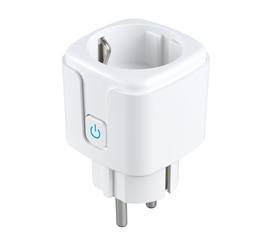 WiFi Smart Socket Module — EU / UK / US Standard Price range: $7.97 through $8.00
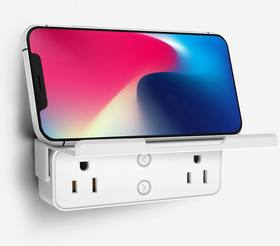 US Standard WiFi Smart Socket — 1-in 2-out, with or without Shelf Clamp Price range: $11.36 through $12.66
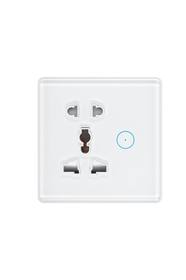
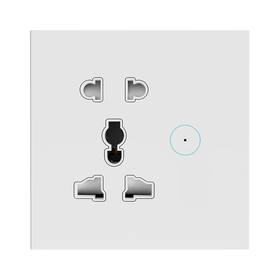 86 × 86 mm 5-Hole Universal Smart Socket (WiFi) Price range: $7.30 through $9.00