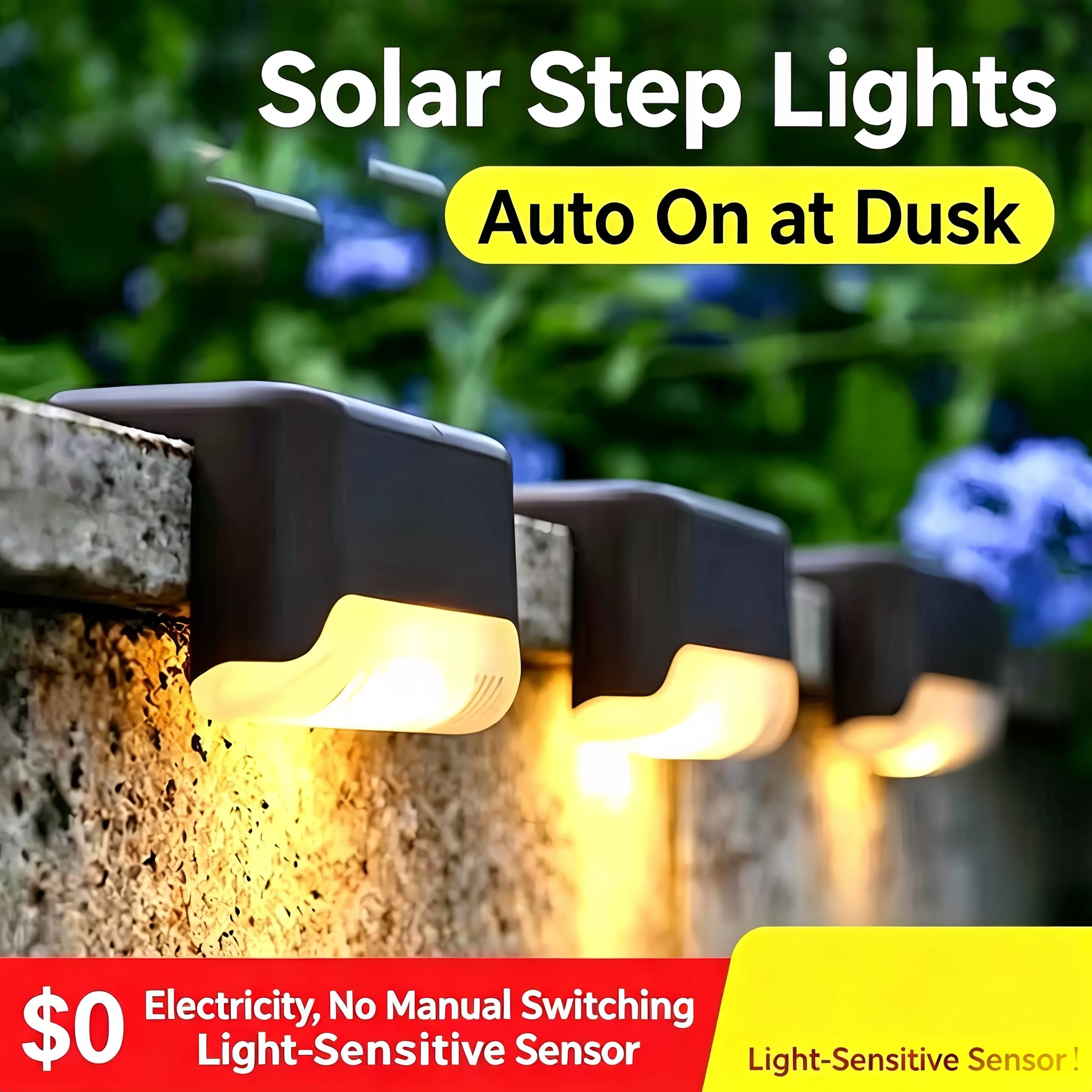
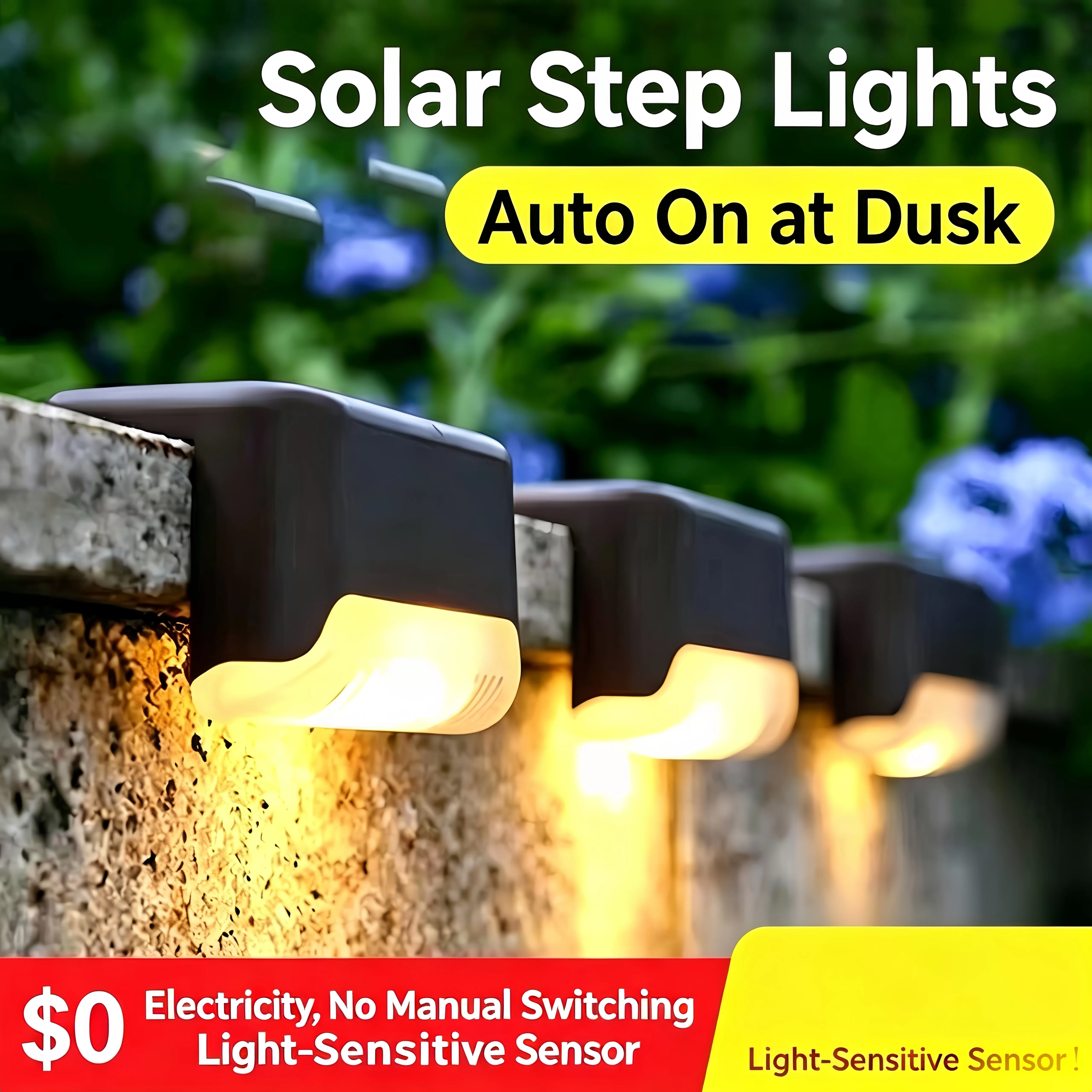
Planning a solar step light installation in your Home? The right placement makes the difference between a well-lit staircase and a fixture that dies after two weeks. This guide covers the best and worst spots to mount your solar step lights, so you get maximum brightness and lifespan.
Best Spots for Solar Step Light Installation
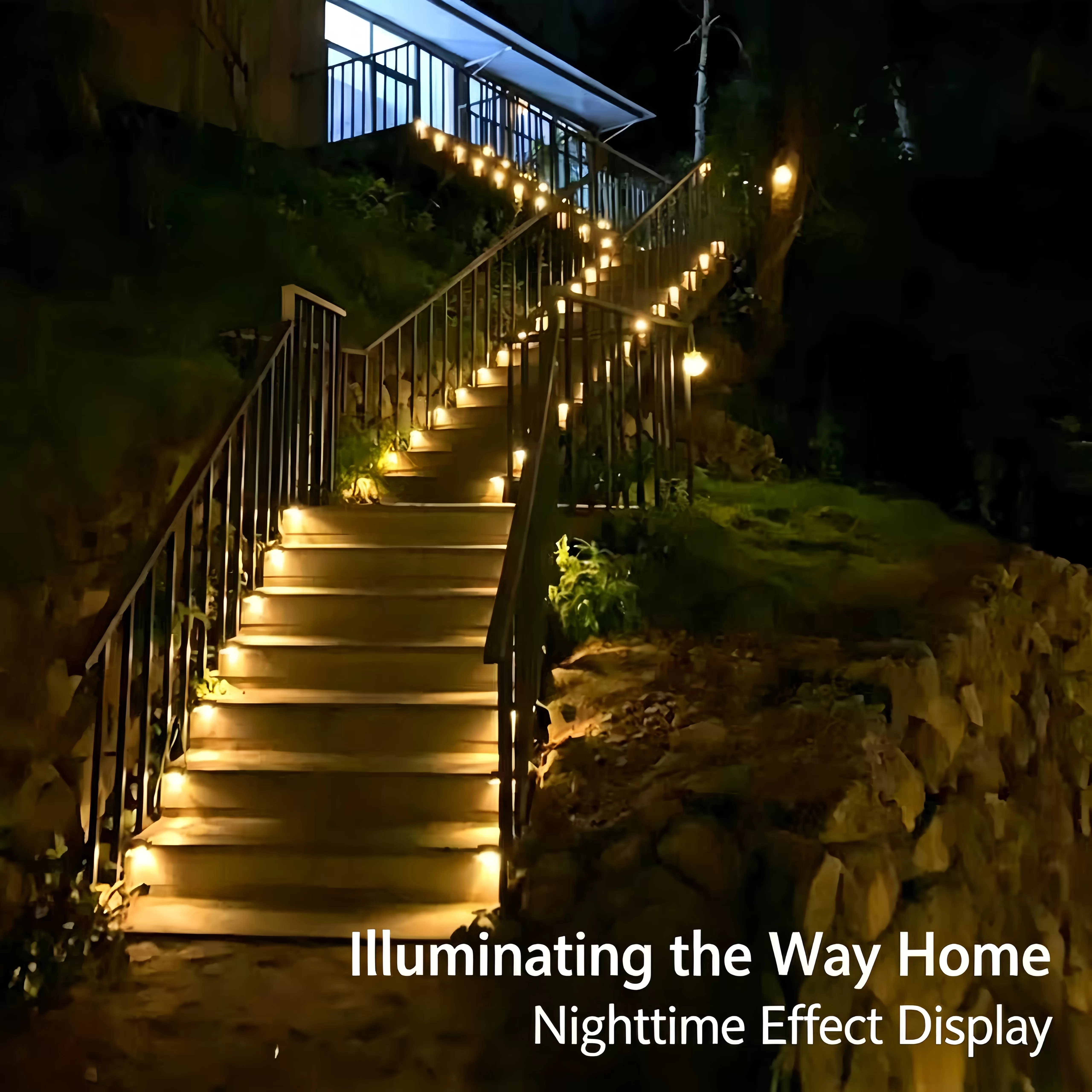
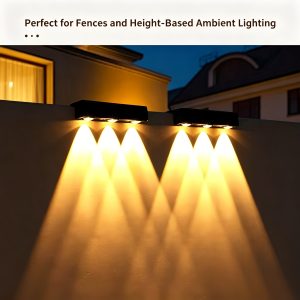
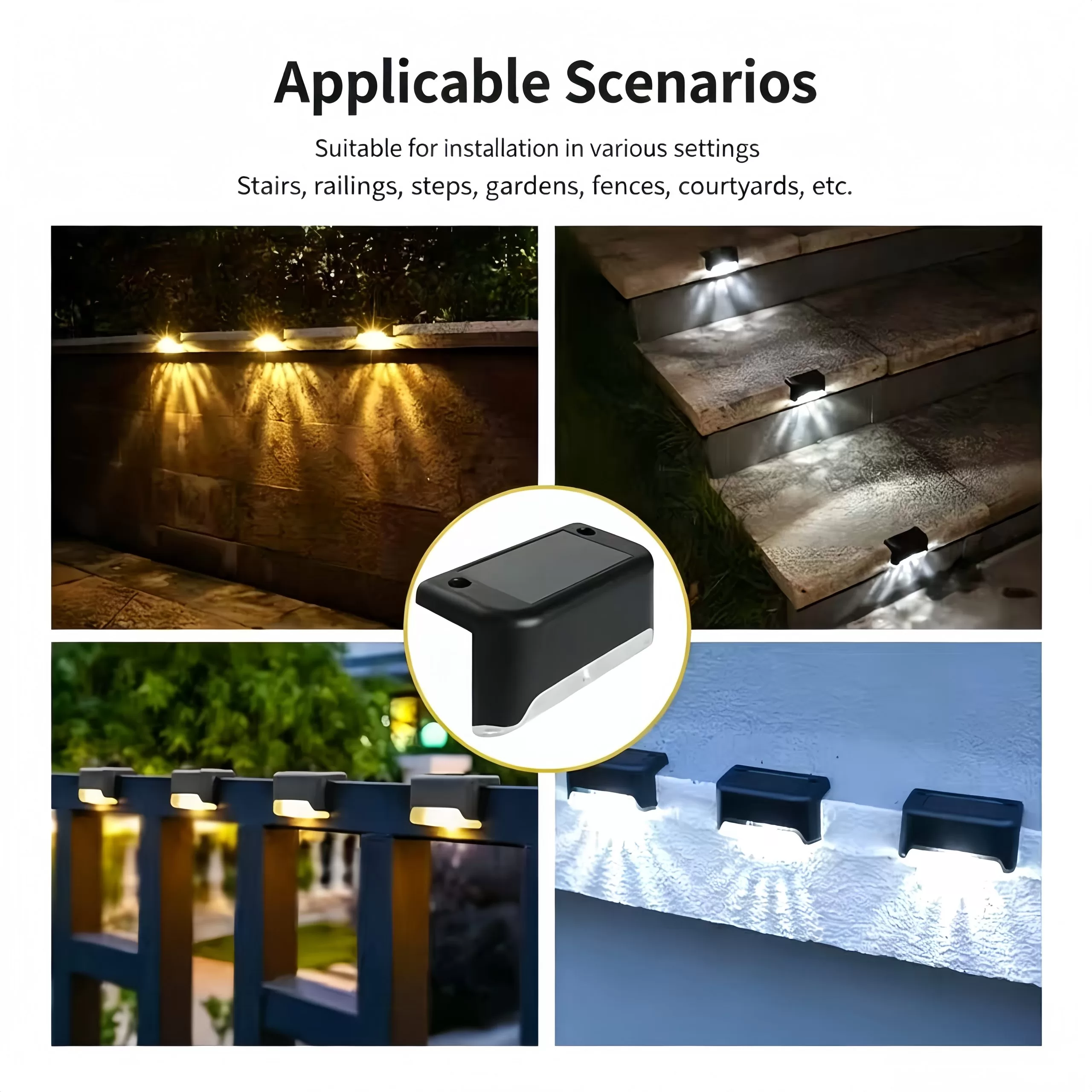
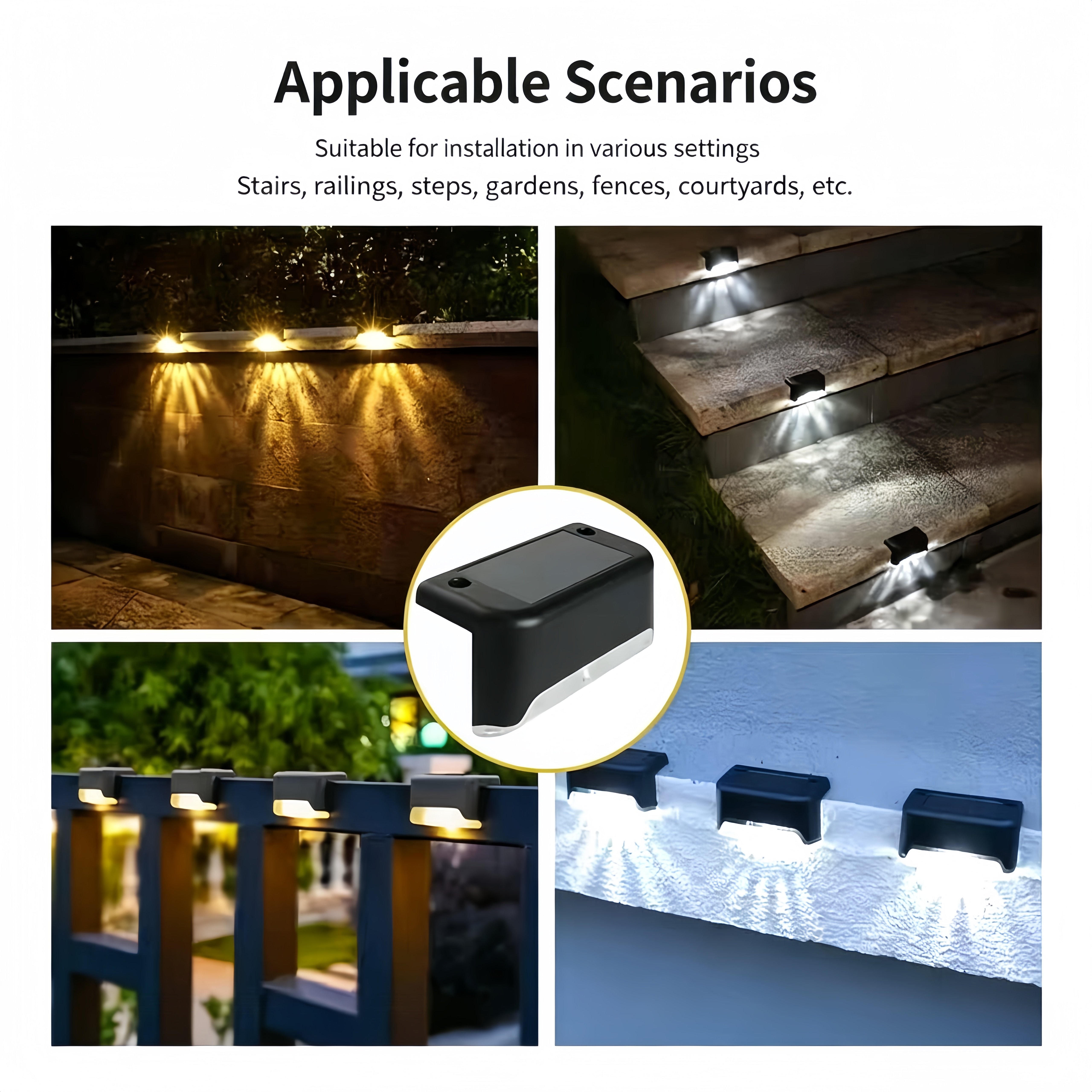
The ideal locations get 4-6 hours of direct sunlight daily. OutDoor wooden staircases facing south or west are perfect. Therefore, Deck perimeters with open sky exposure also work well. Stone walls along garden paths provide a sturdy mounting surface and excellent solar charging.
Raised patio edges and porch steps are also great choices. These areas typically have no overhead obstructions and benefit most from safety lighting. For example, For a complete overview of solar step lights, check our solar step lights guide.
Worst Spots: Where Not to Install
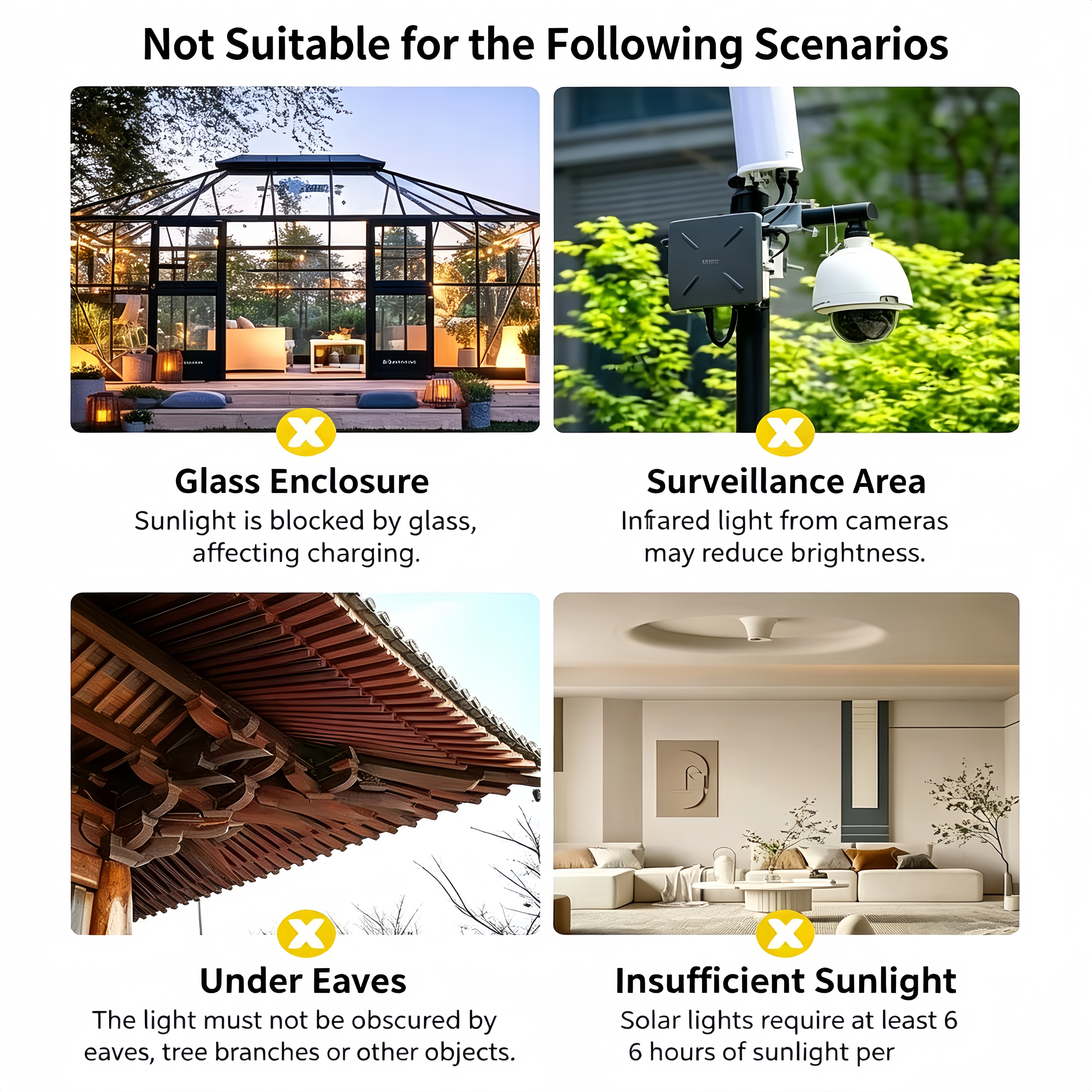
Avoid mounting under heavy tree canopies, roof overhangs, or awnings that block sunlight. North-facing stairs receive the least direct sun, especially in winter. Enclosed porches and covered entryways also starve the solar panel of adequate charge. If your steps are fully shaded, a solar fence wall light mounted on a nearby sunny wall may be a better choice. In addition, For motion-activated security, consider pairing with a solar motion sensor wall light.
Solar Step Light Installation Tips
Clean the mounting surface before attaching the fixture. Use screws for permanent installations on wood or masonry. For temporary placement on smooth surfaces, heavy-duty outdoor adhesive strips work well. Moreover, Angle the solar panel face south whenever possible.
Proper placement comes down to sunlight exposure and surface choice. Pick a south-facing spot with clear sky, mount securely, and let the sun do the rest. Furthermore, Your stairs will stay safely lit every night with zero wiring and zero energy bills.
📌 This article is part of our Complete Solar Hub — more guides and buying tips inside.
Frequently Asked Questions
Is Solar Step Light Installation worth buying?
Based on the breakdown in this article, Solar Step Light Installation offers a solid mix of features and value. If your main goal matches the key benefits described above, it is a practical choice for everyday use.
How do I choose the right solar step light installation for my needs?
Start with your core use case, then compare battery life, compatibility, and build quality as covered above. Choosing the right solar step light installation comes down to matching specs with how you actually use it.
Does solar step light installation require a companion app?
Most devices of this type pair with a free companion app for setup and firmware updates. A few advanced features may sit behind a paid plan, so check the official specs page before buying.
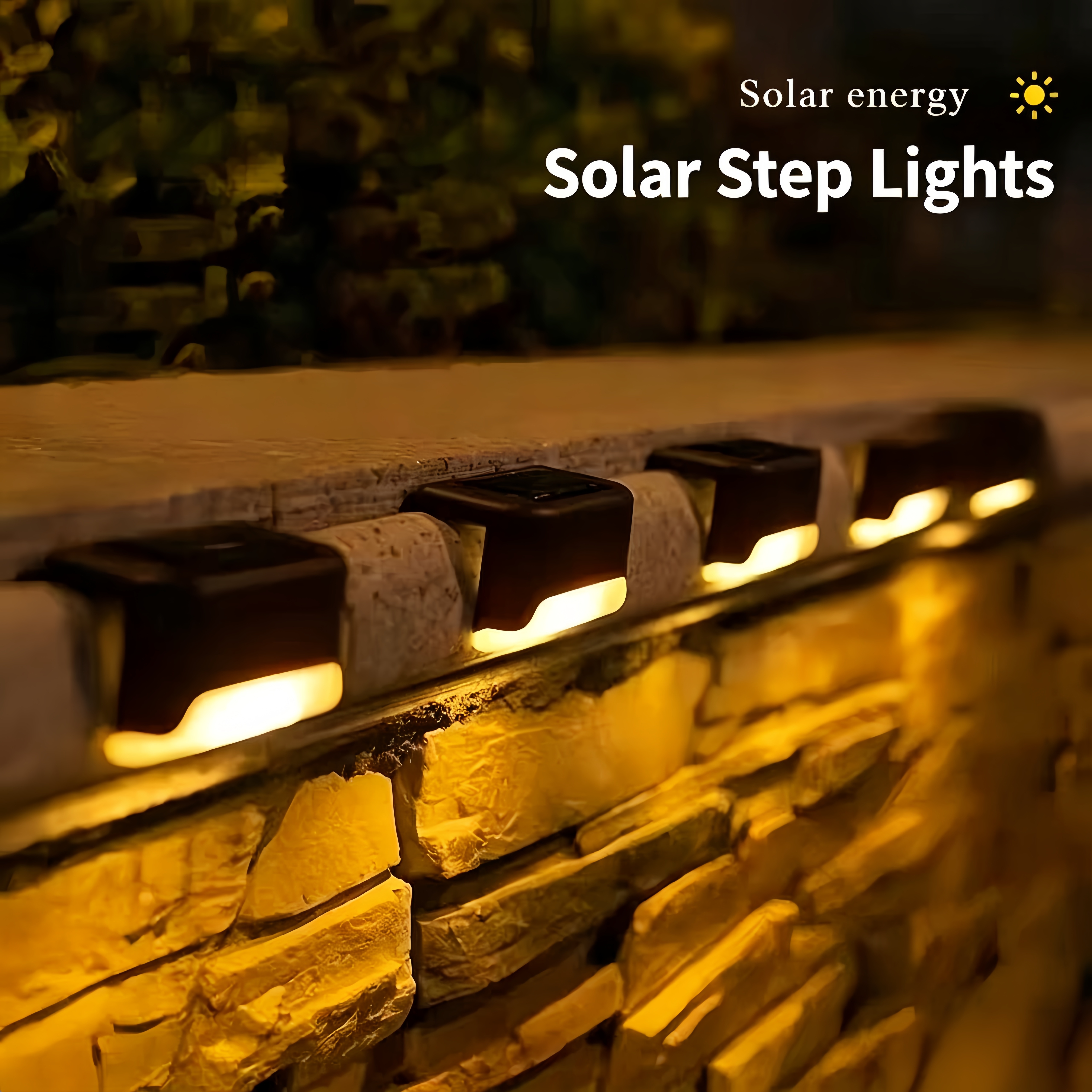
Looking for a wire-free way to light up your outDoor stairs? Solar step lights are one of the easiest and most cost-effective outdoor lighting upgrades you can make. These self-contained LED fixtures charge during the day and automatically illuminate your steps at dusk, with no wiring, no electrician, and no ongoing Energy costs.
What Makes Solar Step Lights Different?
Unlike traditional hardwired step lighting, each solar unit operates independently. A small solar Panel on top charges an internal battery during daylight hours. Therefore, At dusk, a built-in light sensor triggers the LED to turn on automatically. Most models run for 6-8 hours on a full charge, which covers the entire evening for most households.
The key advantage is installation simplicity. You can mount them on wood stairs, concrete steps, stone walls, or metal railings using the included screws or adhesive pads. For example, No junction boxes, no conduit, no breaker work. This makes them ideal for retrofit projects where running cable would be expensive or impractical.
Where to Install Solar Step Lights
The best locations are outdoor staircases, deck perimeters, garden pathways, and raised patio edges. They work particularly well on porches and entry steps where safety is a concern. In addition, For maximum solar charging, place them where they receive at least 4-6 hours of direct sunlight daily.
Avoid installing them under heavy tree canopies or roof overhangs that block sunlight. North-facing steps may also struggle to get enough charge in winter months. If you have shaded areas, consider our solar fence wall lights as an alternative, or pair them with solar motion sensor wall lights for combined ambient and security lighting.
How Waterproof Are Solar Step Lights?
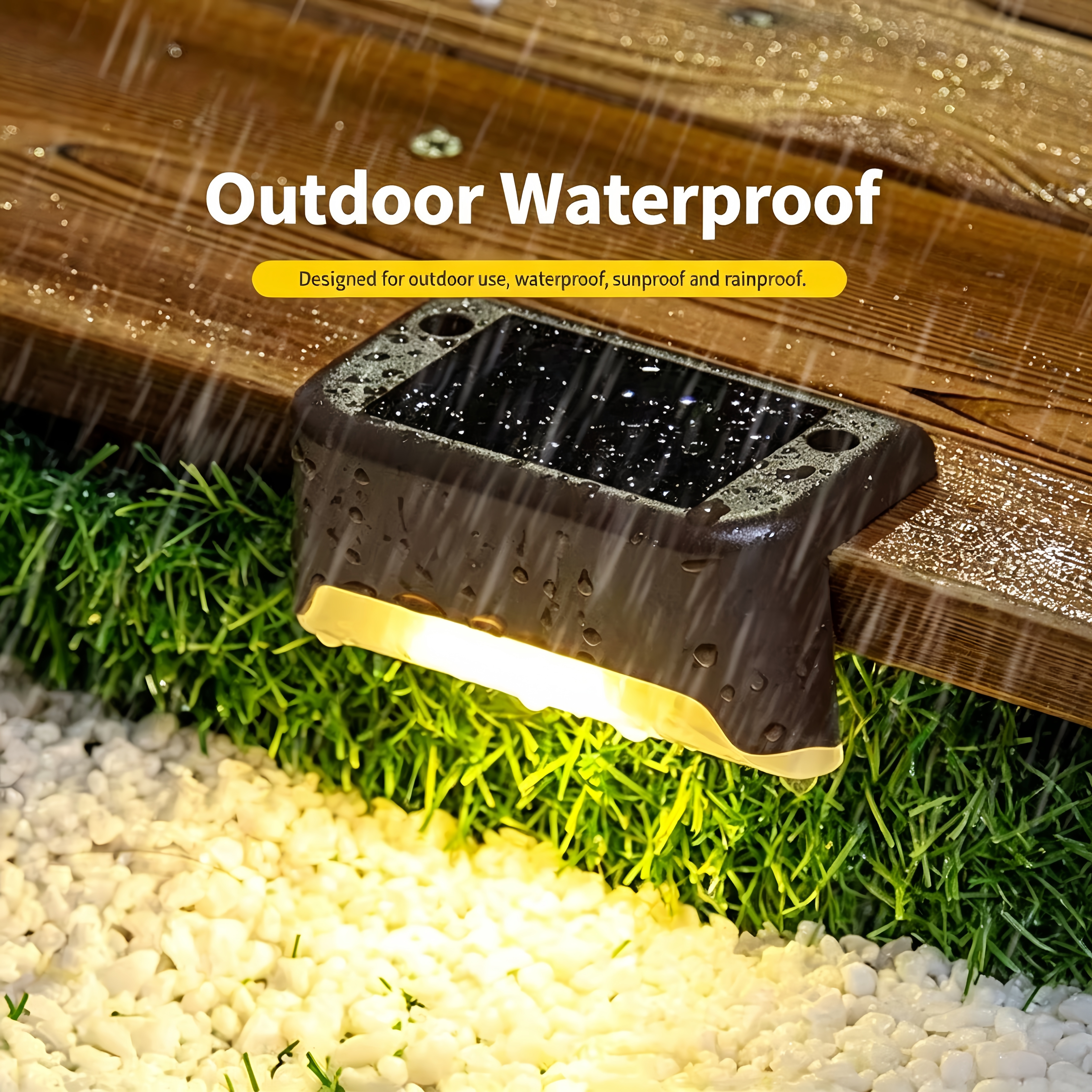
Quality units carry an IP65 rating or higher, meaning they withstand rain, snow, and garden sprinklers without damage. Moreover, The LED modules are sealed inside polycarbonate or stainless steel housings. This prevents corrosion and extends the lifespan to 2-3 years of daily use. For more details on outdoor solar lighting standards, you can refer to the U.S. Department of Energy lighting guide.
Conclusion: Are They Worth It?
If you want to improve stair safety and add evening curb appeal without hiring an electrician, solar step lights are the fastest solution available. They are affordable, easy to install, and completely free to operate. Furthermore, With proper placement and a quality IP65-rated unit, your stairs will stay safely lit every night with zero maintenance.
📌 This article is part of our Complete Solar Hub — more guides and buying tips inside.
Frequently Asked Questions
Is Solar Step Lights Wire worth buying?
Based on the breakdown in this article, Solar Step Lights Wire offers a solid mix of features and value. If your main goal matches the key benefits described above, it is a practical choice for everyday use.
How do I choose the right solar step lights wire for my needs?
Start with your core use case, then compare battery life, compatibility, and build quality as covered above. Choosing the right solar step lights wire comes down to matching specs with how you actually use it.
Does solar step lights wire require a companion app?
Most devices of this type pair with a free companion app for setup and firmware updates. A few advanced features may sit behind a paid plan, so check the official specs page before buying.
However, Solar Fence Wall Light: The Complete Guide to Zero-Cost OutDoor Wall Wash Lighting
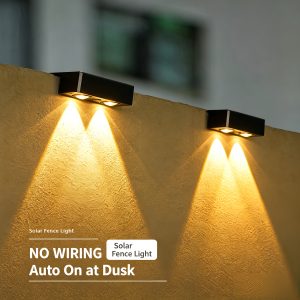
Therefore, A dark fence or unlit garden wall makes your outdoor space feel cold and uninviting at night. A Solar fence wall light fixes this instantly without wiring, electricians, or electricity bills. Therefore, Furthermore, it adds a warm decorative glow that enhances the beauty of your home exterior. Window Vacuum Cleaner: Say Goodbye To Streaky Glass At Home & In Your Car
How It Works: Solar Charging and Auto Light Control
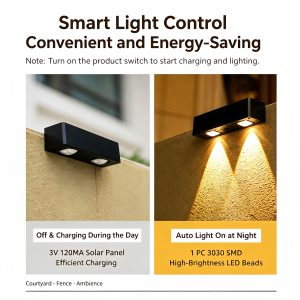
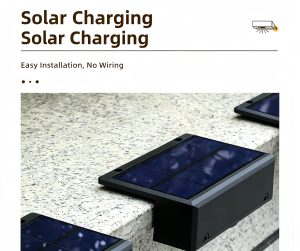
Moreover, The solar fence wall light operates on a simple but effective principle. Firstly, the integrated 3V 120mA solar panel absorbs sunlight during the day. For example, Consequently, this energy charges the built-in 1.2V 1000mAh rechargeable battery. Moreover, a Smart light sensor detects when the sun goes down. Therefore, the LED turns on automatically at dusk and off at dawn.
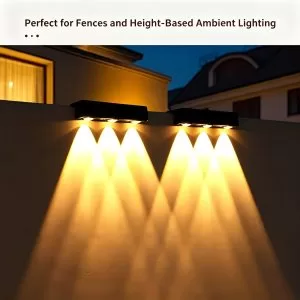
Therefore, Additionally, the light features a 3030 SMD high-brightness LED bead. In addition, This chip projects a warm downward beam that washes the wall surface. Furthermore, the illumination distance reaches approximately 3 meters. As a result, it creates a beautiful wall wash effect on fences, garden walls, and courtyard boundaries. Car Cup Holder Expander: The Complete Guide to 360° Rotating Dual-Slot Drink Holders
Key Features:
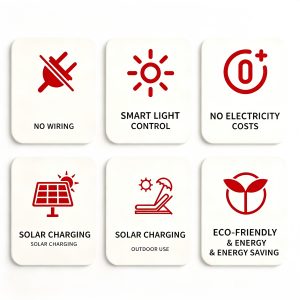
Moreover, The solar fence wall light packs six core features into one compact unit:
(table: 6 features with benefits)
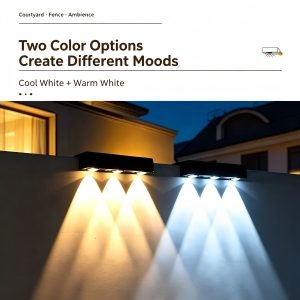
Two Color Options for Different Moods:
(paragraphs about cool white. Moreover, And warm white, both using same 3030 SMD LED)
Product Specifications:
(table: 11 specs)
Where to Install:
(table: 6 locations with recommended color options)
Installation Tips:
(paragraphs with 3-minute installation, sun direction, switch activation)
Based on the breakdown in this article, Solar Fence Wall Light offers a solid mix of features and value. If your main goal matches the key benefits described above, it is a practical choice for everyday use.
How do I choose the right solar fence wall light for my needs?
Start with your core use case, then compare battery life, compatibility, and build quality as covered above. Choosing the right solar fence wall light comes down to matching specs with how you actually use it.
Does solar fence wall light require a companion app?
Most devices of this type pair with a free companion app for setup and firmware updates. A few advanced features may sit behind a paid plan, so check the official specs page before buying.
📌 This article is part of our Complete Solar Hub — more guides and buying tips inside.
However, Solar Motion Sensor Wall Light: The Complete Guide to 300° Three-Sided OutDoor Security Lighting
Therefore, A dark driveway or unlit front porch is an oPen invitation for trips, falls, and unwanted visitors. A Solar motion sensor wall light solves this problem instantly without hiring an electrician or paying monthly electricity bills. Therefore, This guide covers everything you need to know about choosing, installing, and maximizing the upgraded three-sided solar wall light for your home. Window Vacuum Cleaner: Say Goodbye To Streaky Glass At Home & In Your Car
What Makes the Three-Sided Design Different:
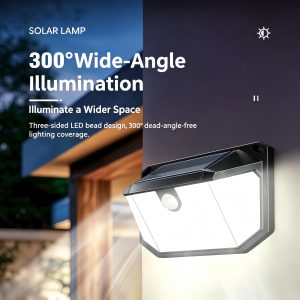
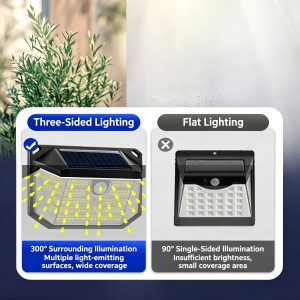
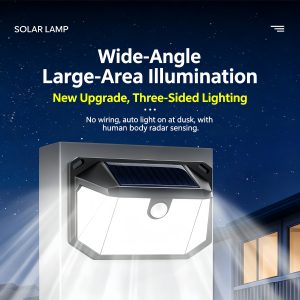
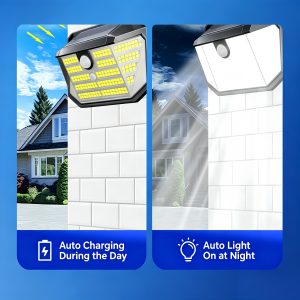
Moreover, Most solar wall lights on the market use a single flat LED panel that only illuminates straight ahead, leaving the sides and corners of your property in shadow. The upgraded three-sided solar wall light solves this problem by placing ultra-bright LED beads on the front panel. For example, And both side panels simultaneously. This delivers a 300° wide-angle coverage area that floods your entire outdoor space with light from a single mounting point.
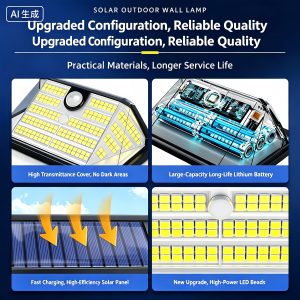
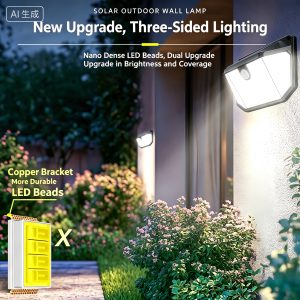
In addition, The key difference comes down to coverage angle. A traditional flat solar light covers approximately 90° — just a narrow cone directly in front. In addition, The three-sided design covers 300°, which is more than three times wider. Furthermore, the nano dense LED beads combined with a copper bracket deliver higher brightness and better heat dissipation, meaning the light stays brighter for longer without degrading. Car Cup Holder Expander: The Complete Guide to 360° Rotating Dual-Slot Drink Holders
Based on the breakdown in this article, Solar Motion Sensor Wall offers a solid mix of features and value. If your main goal matches the key benefits described above, it is a practical choice for everyday use.
How do I choose the right solar motion sensor wall for my needs?
Start with your core use case, then compare battery life, compatibility, and build quality as covered above. Choosing the right solar motion sensor wall comes down to matching specs with how you actually use it.
Does solar motion sensor wall require a companion app?
Most devices of this type pair with a free companion app for setup and firmware updates. A few advanced features may sit behind a paid plan, so check the official specs page before buying.
📌 This article is part of our Complete Solar Hub — more guides and buying tips inside.
Quick answer: a 20000mAh power bank delivers roughly four to five full charges for an average 4000–5000mAh phone — but almost all of that comes from the wall outlet you charged it from before you left. The fold-out Solar panel is a trickle charger: in good sun it typically adds enough for a partial top-up over a long day, not a full refill. Buy this form factor for the rugged shell, the big battery and the built-in emergency light; treat the panel as the thing that keeps you alive on day three, not the thing that charges you on day one.
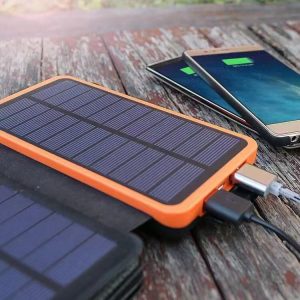
A rugged shell, a high-capacity cell and a fold-out panel — the three things that decide whether this class of product is worth Carrying.
What 20000mAh Actually Means
Capacity printed on the box is measured at the cell’s internal voltage (3.7V), but your phone charges at 5V or 9V. Therefore, The conversion loses energy, and so does heat. The rule of thumb used across the industry is that you get about 60–70% of the printed number out of the USB port.
20000mAh cell → roughly 12000–14000mAh usable at the port.
Average phone (4000–5000mAh) → about 4 to 5 full charges.
A tablet or a camera battery → one to two charges.
A phone plus a headlamp plus a watch for a long weekend → comfortable, with margin.
That is the honest number to put on a product page. Anyone promising eight phone charges from a 20000mAh unit is quoting the cell rating, not what comes out of the cable.
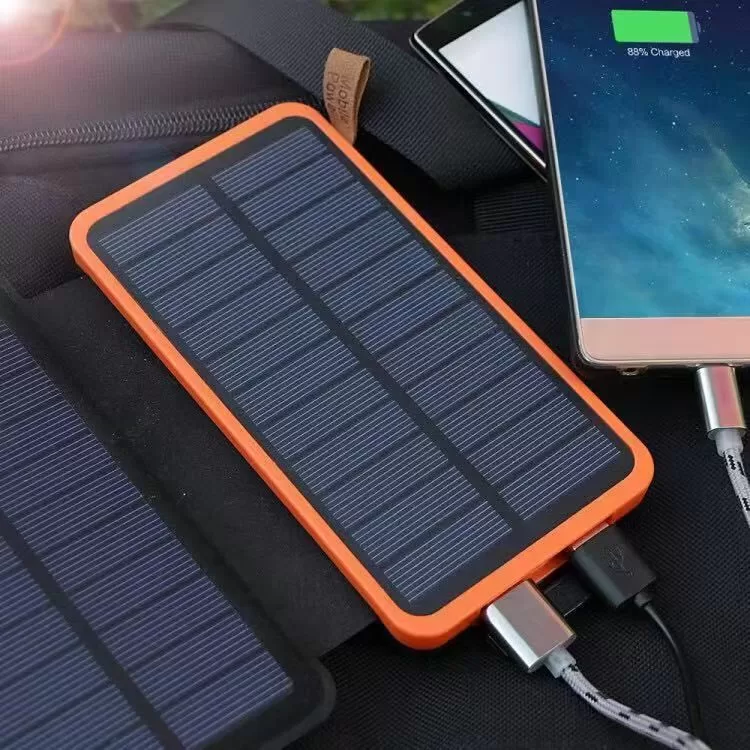
Charging a handset from the USB port is where the rated capacity meets reality — expect four to five full charges.
The Solar Panel: Set the Expectation Correctly
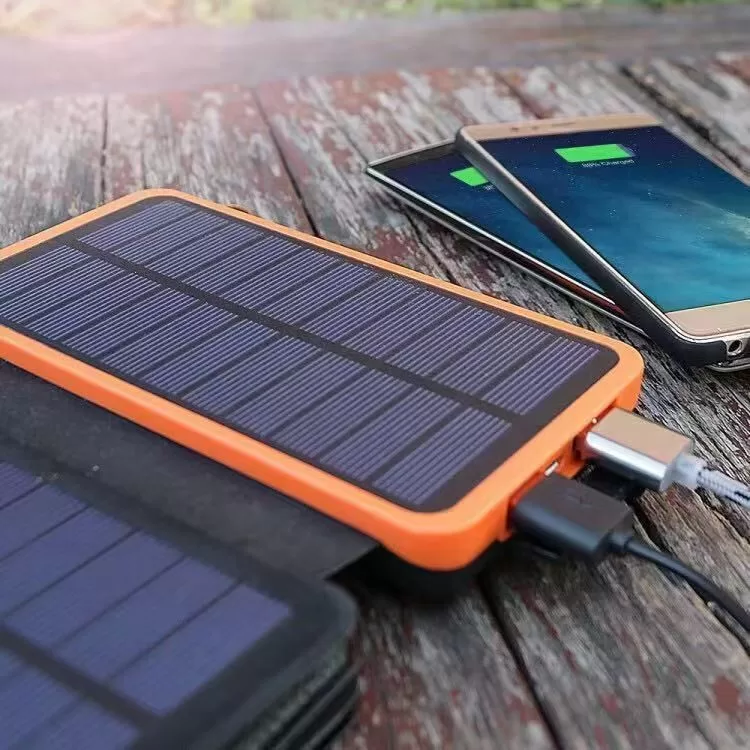
This is where most returns happen. For example, A panel the size of a folded paperback simply cannot produce the current a fast charger does. In direct midday sun a small fold-out panel might deliver a few hundred milliamps — enough to add perhaps 10–20% to the internal battery over an afternoon of good exposure, more if the unit is left angled and undisturbed.
It is a maintenance charger. Leave it on a pack lid while you walk and it slowly offsets standby drain and small top-ups.
Angle matters more than cloud cover. A flat panel at noon beats a tilted one at dusk by a wide margin.
Heat is the enemy. A panel baking on a dashboard loses efficiency and heats the cells it is charging.
Always leave home full. Solar is the backup plan, not the plan.
Framed this way, the panel is genuinely useful: on a three-day trip it is the difference between a dead phone and a working one. Framed as a primary charger, it disappoints.
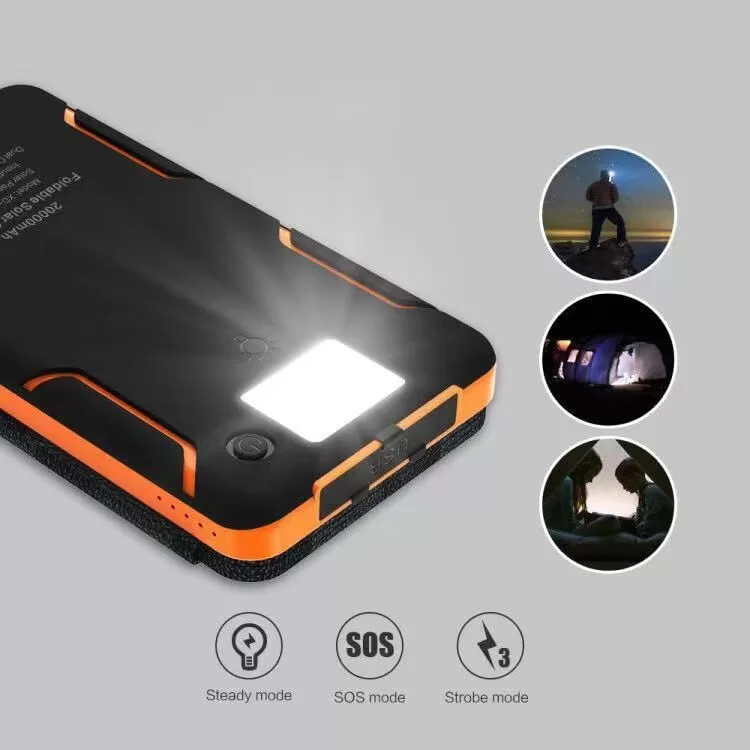
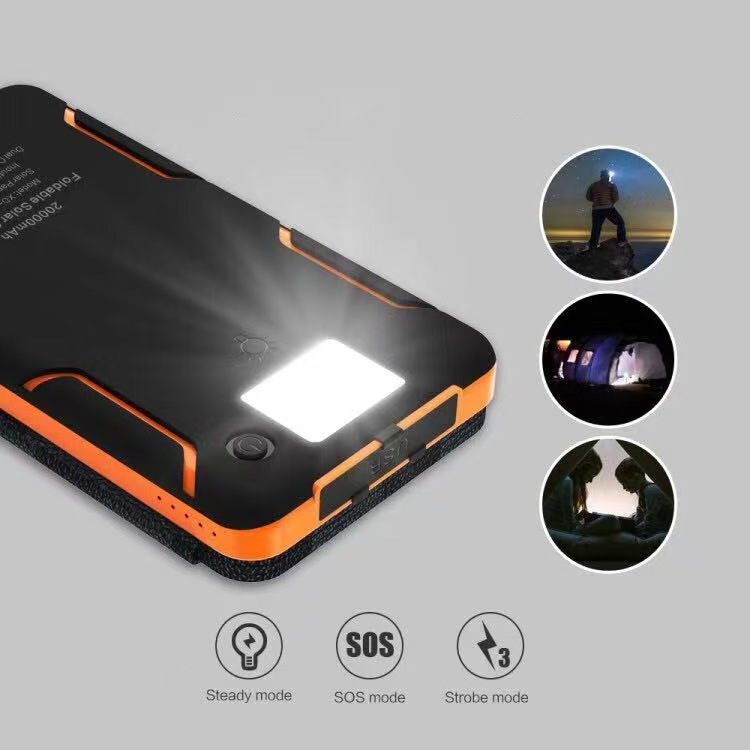
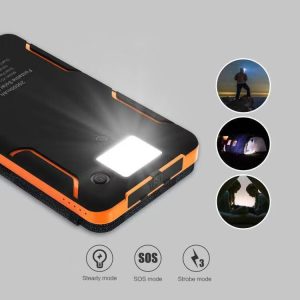
Three lighting modes turn the same battery into a lantern, a strobe and an emergency beacon.
The Built-In LED Is Half the Reason to Buy It
The torch on this class of power bank is not an afterthought. In addition, A steady beam lights a tent or a work area; a slow strobe works as a marker; a fast strobe or SOS pattern is a distress signal that carries much further than a voice. For anyone building an emergency kit — or a retail kit aimed at campers, drivers and job sites — the light is often the feature customers remember.
Steady mode — camp lighting, power cuts, working under a bonnet at night.
Slow strobe — makes a bag or a campsite easy to find in the dark.
SOS / fast strobe — signalling when a phone has no signal and no battery.
Where This Product Sells
Camping, hiking and overland travel
Multi-day trips are the core use case. Weight is the trade-off: a rugged 20000mAh unit is heavier than a slim travel bank, but it is the one you can drop, get rained on and still rely on.
Hikers and campers are the natural audience — long days away from a socket, and gear that gets treated roughly.
Emergency and disaster kits
Households that keep a kit for outages want three things: a big cell that holds charge for months, a torch, and no dependence on the grid. Moreover, This covers all three in one object, which is exactly why it belongs in a kit rather than in a drawer.
Outdoor work and job sites
Tradespeople, survey crews and delivery drivers use the same unit for phones, radios and headlamps, and the rugged housing survives being thrown into a toolbox.
A fold-out panel plus a sealed housing is what separates an outdoor unit from an indoor power bank.
What to Check Before You Buy or Stock One
Real rated output — ask for the usable capacity at the port, not just the cell figure.
Ingress rating — IP65 or better means it survives rain and dust rather than just splashes.
Port count and protocols — two outputs and a modern fast-charge protocol cover phones and tablets without adapters.
Torch modes — confirm whether it has steady, strobe and SOS, and how they are cycled.
Panel durability — a fold-out panel should be laminated, not a thin film that creases and dies.
Certification for transport — UN38.3 and MSDS matter the moment you ship these by air.
Get those six right and the product sells itself. Get the capacity story wrong on the listing and it comes back as a return.
Frequently Asked Questions
Can the solar panel fully recharge the power bank?
Not in a single day in most conditions. Treat it as a slow top-up that extends a trip, and charge from the mains before you leave.
How many times will it charge my phone?
Plan on four to five full charges for a typical 4000–5000mAh handset, less if you fast-charge or use the torch heavily.
Can I take it on a plane?
Yes, in cabin baggage — 20000mAh sits under the usual airline limit for spare batteries, but the unit should ship with UN38.3 documentation.
Does it work in cloudy weather?
It works, but output drops sharply. Furthermore, Bright overcast gives a fraction of direct sun; heavy cloud gives almost nothing.
Is it worth it if I only need it for day trips?
Probably not — a slim 10000mAh bank is lighter and cheaper. The rugged, solar, torch-equipped format earns its weight on trips of two days or more.
However, Foldable Solar Power Bank: The Ultimate Off-Grid Charging Guide for OutDoor Enthusiasts
Therefore, Imagine being three days into a backcountry hike when your phone hits zero percent. No GPS, no camera, no emergency contact. A foldable Solar power bank eliminates this problem by turning sunlight into electricity, keeping your devices charged anywhere on the planet. Window Vacuum Cleaner: Say Goodbye To Streaky Glass At Home & In Your Car
The 20000mAh foldable solar power bank features a built-in LED flashlight with Steady, SOS, and Strobe modes, IP65 waterproof rating and Dual USB charging for outdoor adventures.
What Is a Foldable Solar Power Bank?
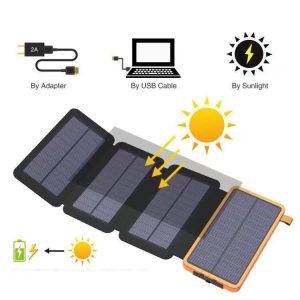
However, A foldable solar power bank is a portable charger that combines a high-capacity battery with foldable solar panels. Therefore, The panels collect sunlight and convert it into electricity. This is stored in the built-in battery. You can then use that stored energy to charge your phone, tablet, GPS, or any USB-powered device. Furthermore, the foldable design means the panels stay compact when stored but expand to a large collection surface when deployed.
Therefore, Unlike a standard power bank that dies after a few charges, a solar model keeps generating electricity as long as the sun is shining. For example, Additionally, most models include USB charging as a backup, so you can top up the battery at home before heading out.
Key Features to Look For
Not all solar power banks are created equal. Here are the specifications that actually matter when choosing one for outdoor use:
Feature
What to Look For
Why It Matters
Battery Capacity
10000-20000mAh
Higher capacity means more charges per device
Solar Panel Type
Monocrystalline
Higher efficiency than polycrystalline in compact size
Waterproof Rating
IP65 or higher
Survives rain, splashes, and dust storms
USB Output Ports
At least 2 ports
Charge Multiple devices simultaneously
LED Flashlight
Built-in with multiple modes
Replaces a separate camping light
Charging Input
USB-C or Micro USB
Solar is backup, USB is primary charging method
How Solar Charging Actually Works
The solar panels on a foldable power bank use photovoltaic cells to convert sunlight into direct current electricity. This electricity flows into the built-in battery for storage. In addition, When you plug in your phone, the battery delivers power through the USB ports at a controlled voltage.
However, solar charging is slower than wall charging. A typical foldable solar panel on a power bank produces about 100-200mAh per hour in direct sunlight. Therefore, a full solar recharge of a 20000mAh battery takes approximately 40-60 hours of direct sun exposure. Moreover, For this reason, solar should be treated as a supplementary charging method rather than the primary one.
The best approach is to charge the power bank fully via USB before your trip, then use solar to top up the battery during the day. Meanwhile, hiking or camping.
Real-World Charging Capacity
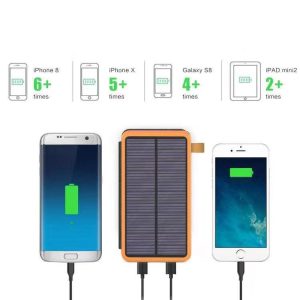
A 20000mAh foldable solar power bank delivers substantial power. Here is how many full charges you can expect for common devices:
Device
Battery Size
Approx. Full Charges
iPhone 8
1821mAh
6+ times
iPhone X and newer
2716-4352mAh
4-5 times
Samsung Galaxy S series
3000-5000mAh
4 times
iPad mini
5124mAh
2+ times
GPS handheld
2000mAh
5-6 times
Note that these are approximate figures. Furthermore, Actual charging capacity depends on conversion efficiency, cable quality, and battery health. Moreover, charging two devices at once will drain the power bank faster than charging one at a time.
Dual USB Charging: Power Two Devices at Once
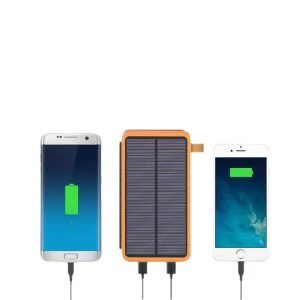
One of the most practical features of a quality foldable solar power bank is dual USB output. Two USB-A ports allow you to charge two Smartphones simultaneously at up to 5V/2.1A per port. As a result, This is particularly useful when traveling with a partner or when you need to charge your phone and GPS at the same time.
Additionally, smart IC technology inside the power bank detects the connected device and delivers the optimal charging current. This protects your devices from overcharging, overheating, and short circuits.
Built-in LED Flashlight: Three Modes for Every Situation
A foldable solar power bank with a built-in LED flashlight eliminates the need to carry a separate camping light. The best models offer three lighting modes:
How to Use a Foldable Solar Power Bank on the Trail
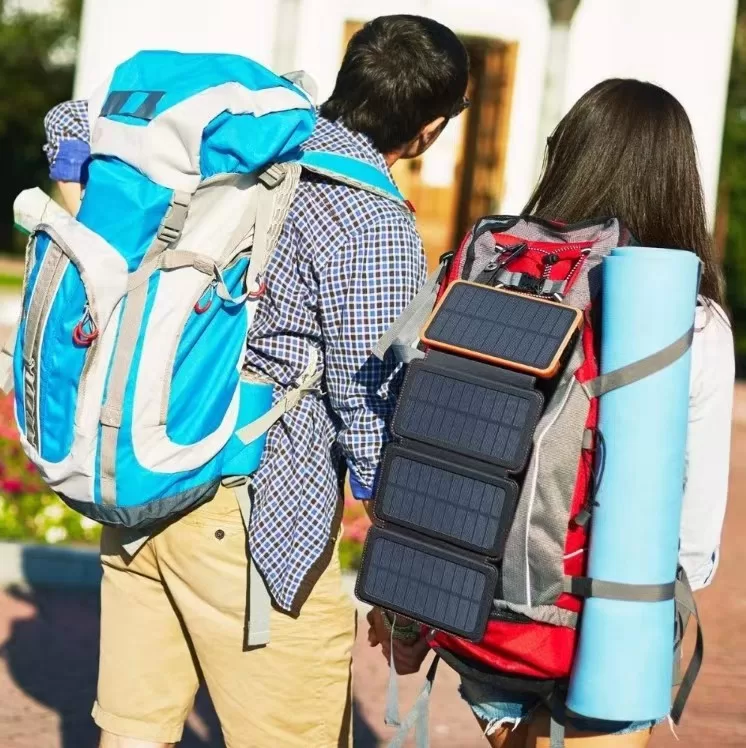
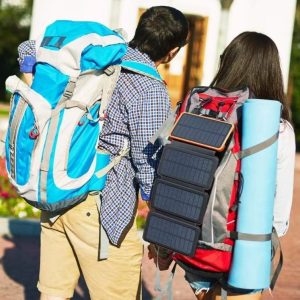
The foldable solar panel can be attached to the outside of your backpack using a carabiner clip or MOLLE straps. Importantly, As you hike during the day, the panel faces outward and collects sunlight, continuously trickle-charging the internal battery. By the time you reach camp in the evening, you have extra power stored and ready to use.
Here are some tips for maximizing solar collection. Meanwhile, hiking:
Face the panel toward the sun and adjust as direction changes
Avoid shadows from trees, buildings, or your own body
Clean the panel surface regularly with a cloth to remove dust and dirt
On cloudy days, expect 20-30% of normal charging efficiency
Keep the panel unfolded during rest stops for maximum exposure
IP65 Waterproof Rating: Built for the Outdoors
An IP65 rating means the power bank is fully protected against dust ingress and water jets from any direction. Rain, splashes from a river crossing, and dusty trail conditions will not damage the device. Notably, The rugged outer shell with reinforced corners absorbs impact from drops and bumps.
However, IP65 does not mean the device can be submerged underwater. For boating or kayaking, store the power bank in a dry bag as an extra precaution.
Solar Power Bank vs. Standard Power Bank
Is a solar power bank worth it over a regular power bank? Here is a quick comparison:
Feature
Foldable Solar Power Bank
Standard Power Bank
Charging Method
Solar + USB dual recharge
USB only
Off-Grid Duration
Days to weeks with sunlight
Limited to stored capacity
Built-in Flashlight
Yes, with 3 modes
Usually no
Weight
Heavier due to solar panel
Lighter
Weather Resistance
IP65 waterproof standard
Varies by model
Best For
Multi-day outdoor trips
Daily city use
FAQ: Foldable Solar Power Bank
Q: How long does it take to fully charge the power bank via USB? A: Approximately 4-5 hours using a standard 5V/2A USB charger.
Q: How long does solar charging take to fully charge the battery? A: In direct sunlight, expect 40-60 hours for a full 20000mAh charge. However, Solar is best used as a top-up method during the day. Meanwhile, hiking.
Q: Can I charge two devices at the same time? A: Yes. Dual USB-A ports support simultaneous charging at up to 5V/2.1A per port.
Q: Will the solar panel charge on cloudy days? A: Yes, but efficiency drops to approximately 20-30% of full sunlight output. Overcast days will produce minimal charging.
Q: Is the power bank truly waterproof? A: The IP65 rating protects against dust and water jets from any direction. Therefore, It survives rain and splashes but should not be submerged in water.
Q: What devices are compatible? A: Any device that charges via USB, including iPhones, Android phones, iPads, tablets, GPS units, Bluetooth headphones, cameras, and small LED lights.
Q: Can I take this on an airplane? A: Yes. Power banks under 100Wh (approximately 27000mAh) are allowed in carry-on baggage. A 20000mAh power bank is well within this limit. For example, However, always check your airline’s specific regulations before flying.
Q: How heavy is a foldable solar power bank? A: A typical 20000mAh model weighs approximately 500 grams, making it manageable for backpacking trips where power is essential.
Final Thoughts
A foldable solar power bank is not a gimmick. It is a practical tool for anyone who spends time off the grid. The combination of massive 20000mAh battery storage, renewable solar charging, dual USB output, and a built-in LED flashlight with emergency modes makes it one of the most versatile pieces of outdoor gear you can carry.
Whether you are a weekend camper, a long-distance hiker, or simply someone preparing for emergency situations, this device ensures you stay connected and illuminated no matter how far you are from the nearest wall outlet.
Based on the breakdown in this article, Foldable Solar Power Bank offers a solid mix of features and value. If your main goal matches the key benefits described above, it is a practical choice for everyday use.
How do I choose the right foldable solar power bank for my needs?
Start with your core use case, then compare battery life, compatibility, and build quality as covered above. Choosing the right foldable solar power bank comes down to matching specs with how you actually use it.
Does foldable solar power bank require a companion app?
Most devices of this type pair with a free companion app for setup and firmware updates. A few advanced features may sit behind a paid plan, so check the official specs page before buying.
Does foldable solar power bank work with both iPhone and Android?
Yes, in most cases this type of device ships with iOS and Android apps, and standard Bluetooth protocols keep cross-platform pairing simple.
📌 This article is part of our Complete Solar Hub — more guides and buying tips inside.
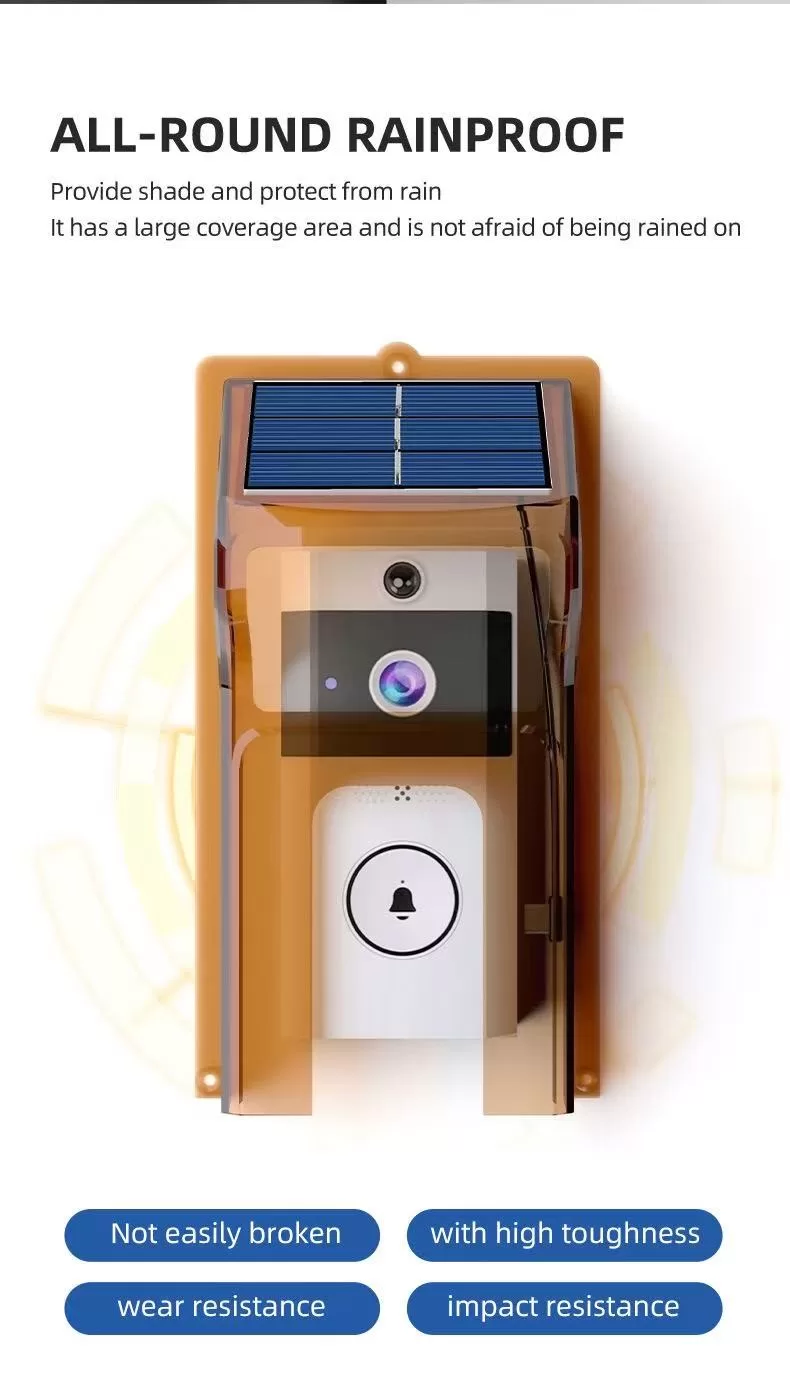
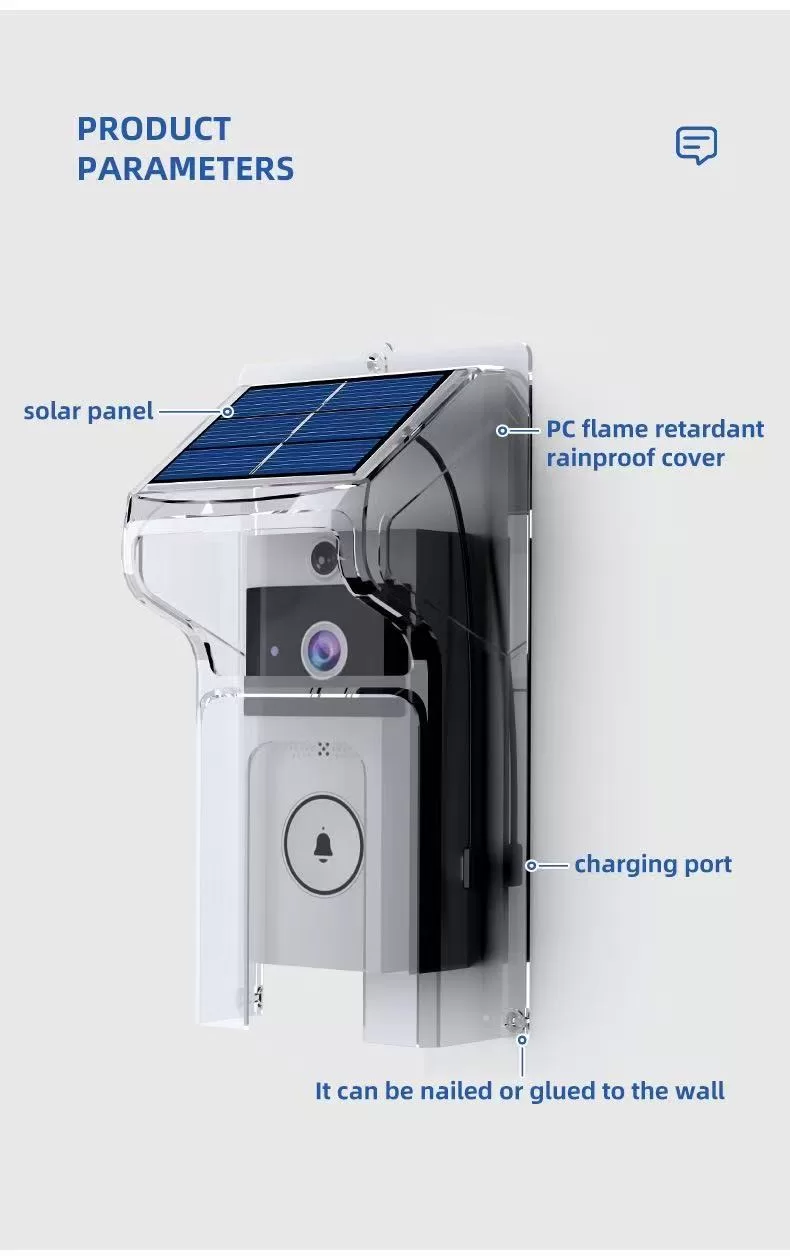
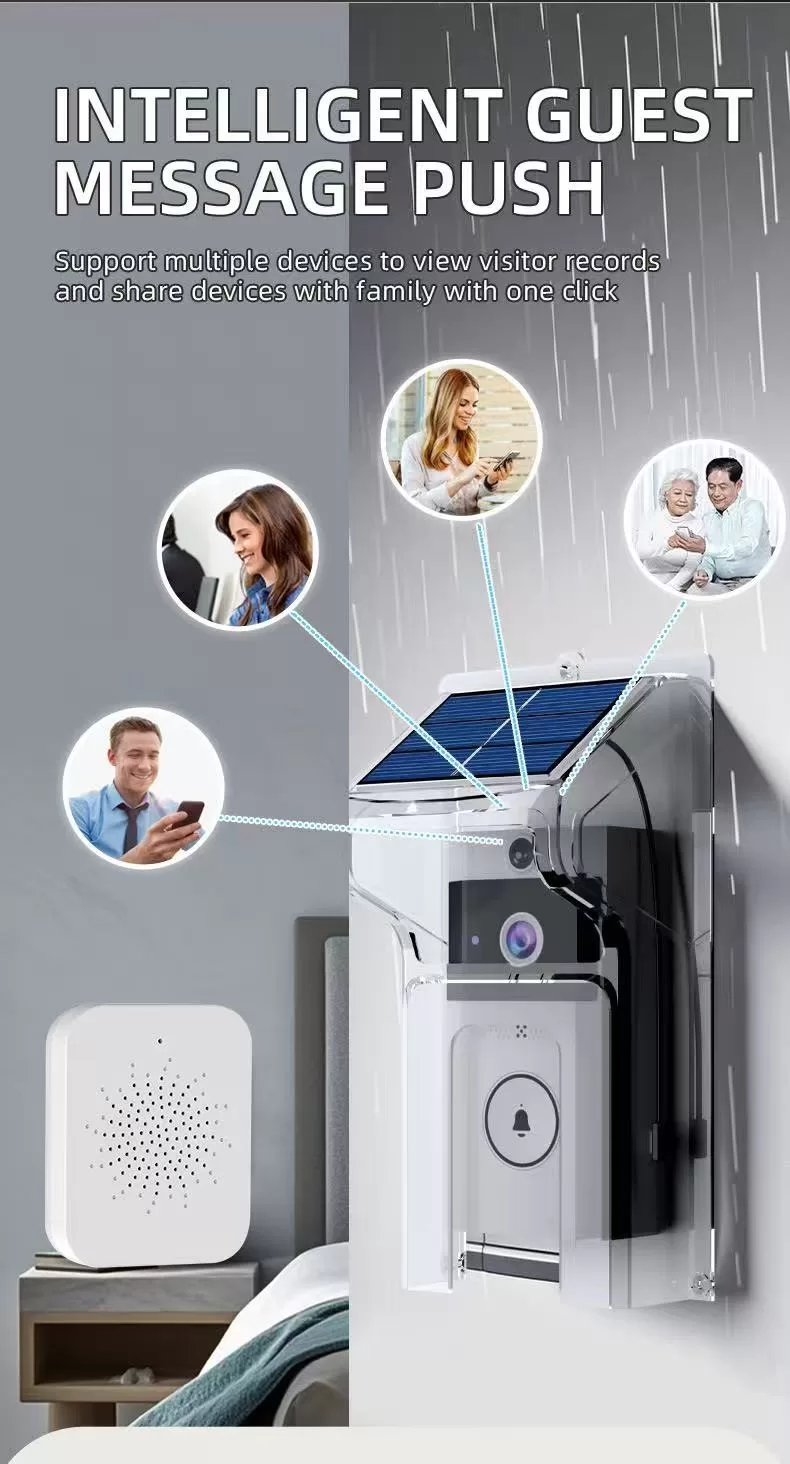
However, Running cable to a front Door is the single biggest reason Video Doorbell projects stall. The U9 solar Video doorbell removes that problem: a rechargeable battery powers the unit, and a compact solar panel keeps it topped up through ordinary daylight. No electrician, no drilling through the door frame, no monthly battery swap. In short, Solar video doorbell
A wire-free doorbell installs in minutes and stays charged on daylight alone.
OEM branding and custom packaging are available on volume orders.
Request Pricing
Whether you need a single pallet for an online storefront or a consistent supply for a housing project, we can quote to your volume. View the smart doorbell range or send us your requirements for pricing, lead time and samples.
📌 This article is part of our Complete Doorbell Hub — more guides and buying tips inside.
Frequently Asked Questions
Is Solar Video Doorbell Wire worth buying?
Based on the breakdown in this article, Solar Video Doorbell Wire offers a solid mix of features and value. If your main goal matches the key benefits described above, it is a practical choice for everyday use.
How do I choose the right solar video doorbell wire for my needs?
Start with your core use case, then compare battery life, compatibility, and build quality as covered above. Choosing the right solar video doorbell wire comes down to matching specs with how you actually use it.
Does solar video doorbell wire require a companion app?
Most devices of this type pair with a free companion app for setup and firmware updates. A few advanced features may sit behind a paid plan, so check the official specs page before buying.
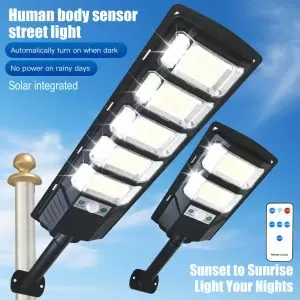
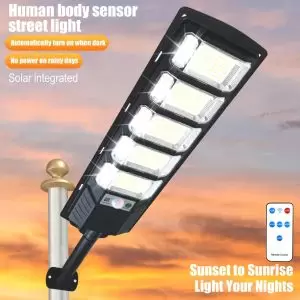
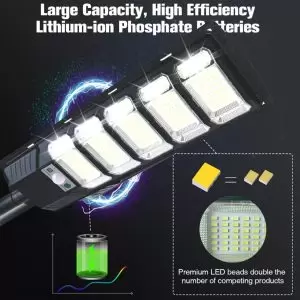
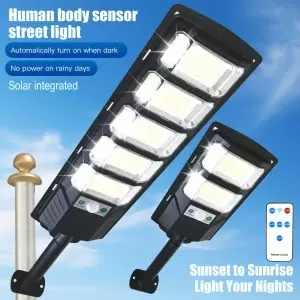
However, Solar street lights have come a long way from the dim, unreliable units sold a decade ago. The latest generation of all-in-one solar integrated street lights combines high-efficiency monocrystalline solar panels, premium COB LED chips, lithium iron phosphate batteries and PIR human body sensors into a single weatherproof housing. This guide walks through what to Look for, how the 4 lighting modes work, and answers the most common questions from US and European buyers. In short, Solar motion sensor
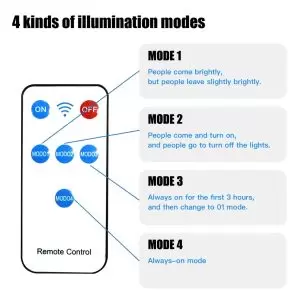
Moreover, The included remote Control gives you four illumination modes. Moreover, Each mode balances brightness and battery life differently, so choosing the right one depends on your specific application.
In addition, Mode 1 keeps the light at a dim standby level all night and switches to full brightness when the PIR sensor detects motion. When the person leaves, it returns to dim. This is ideal for walkways and patios where you want constant low-level lighting with a brightness boost when someone walks by.
Mode 2 turns the light fully on when motion is detected and turns it completely off when no one is around. Furthermore, This is the most energy-efficient mode, because the battery only drains during active motion events. Therefore, it is best for driveways and security applications.
Mode 3 keeps the light at full brightness for the first 3 hours, then automatically switches to Mode 1 for the rest of the night. This is perfect for front entrances and commercial pathways that need full illumination during evening hours.
Mode 4 is a constant always-on mode that keeps the light at full brightness throughout the night until the battery runs out. As a result, Use this mode for events or situations where you need continuous maximum lighting.
Installation: Two Methods for Any Location
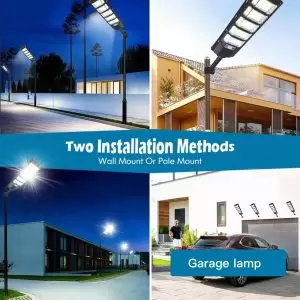
The light supports two installation methods, so you can mount it almost anywhere. Wall mounting uses the included bracket and screws to attach the fixture directly to a vertical wall surFace. This is ideal for garage exteriors and fence posts. Pole mounting uses the adjustable arm to attach the fixture to a vertical pole. This is ideal for garden pathways and driveway edges.
For maximum solar charging, position the integrated solar panel to face south in the Northern Hemisphere. Importantly, Ensure the panel receives at least 6 hours of direct sunlight per day without shading from trees or buildings.
Weather Performance and Durability
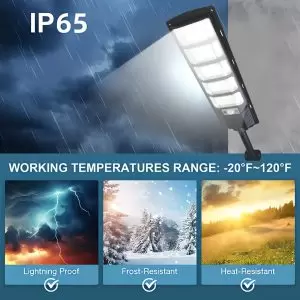
The IP65 waterproof rating means the light is completely sealed against dust and protected against water jets from any direction. It operates in temperatures from -20 degrees Fahrenheit to 120 degrees Fahrenheit, covering the full range of US and European climates. Additionally, the housing is rated as lightning proof, frost-resistant, and heat-resistant.
The ABS one-piece housing is UV-stabilized, meaning it will not yellow or crack under prolonged sun exposure. Notably, Furthermore, the sealed design prevents moisture from entering the electronics. This is the number one cause of failure in cheaper solar lights.
FAQ
Q: How long does the battery last on a full charge?
A: With a full day of direct sunlight charging, the lithium iron phosphate battery powers the light for 8 to 10 hours. In Mode 2 where the light only activates on motion, the effective runtime can extend significantly longer.
Q: Does the light work on cloudy or rainy days?
A: The solar panel charges at a reduced rate on cloudy days. A fully charged battery can power the light for 2 to 3 days without any sun. However, However, extended periods of heavy overcast weather will eventually deplete the battery.
Q: What is the detection range of the PIR motion sensor?
A: The PIR sensor detects human body heat and movement within a 120-degree angle and up to 16 feet away. When motion is detected, the light switches to full brightness instantly.
Q: Can I control the light from inside my house?
A: Yes. The included wireless remote control operates from up to 26 feet away, so you can switch modes, turn the light on or off, and select brightness levels from inside your home.
Q: What is the difference between Mode 1 and Mode 2?
A: Mode 1 keeps the light at a dim level all night and boosts to full brightness when motion is detected. Therefore, Mode 2 turns the light fully on when motion is detected and turns it completely off when no one is around.
Q: How do I choose between wall mount and pole mount?
A: Wall mounting is best for garage exteriors and porch areas. Pole mounting is ideal for garden pathways and driveway edges. Both methods use the included bracket and hardware.
Q: Is the light bright enough for a driveway?
A: Yes. For example, The five-panel LED configuration with premium high-density LED beads produces bright, uniform white light. For longer driveways, install multiple units spaced 8 to 12 meters apart.
Q: What temperature range can the light handle?
A: The light operates from -20 degrees Fahrenheit to 120 degrees Fahrenheit. It is rated as frost-resistant, heat-resistant, and lightning proof.
Based on the breakdown in this article, Solar Motion Sensor Street offers a solid mix of features and value. If your main goal matches the key benefits described above, it is a practical choice for everyday use.
How do I choose the right solar motion sensor street for my needs?
Start with your core use case, then compare battery life, compatibility, and build quality as covered above. Choosing the right solar motion sensor street comes down to matching specs with how you actually use it.
Does solar motion sensor street require a companion app?
Most devices of this type pair with a free companion app for setup and firmware updates. A few advanced features may sit behind a paid plan, so check the official specs page before buying.
📌 This article is part of our Complete Solar Hub — more guides and buying tips inside.
Based on the breakdown in this article, Solar Video Doorbell Wireless offers a solid mix of features and value. If your main goal matches the key benefits described above, it is a practical choice for everyday use.
How do I choose the right solar video doorbell wireless for my needs?
Start with your core use case, then compare battery life, compatibility, and build quality as covered above. Choosing the right solar video doorbell wireless comes down to matching specs with how you actually use it.
Does solar video doorbell wireless require a companion app?
Most devices of this type pair with a free companion app for setup and firmware updates. A few advanced features may sit behind a paid plan, so check the official specs page before buying.
Does solar video doorbell wireless work with both iPhone and Android?
Yes, in most cases this type of device ships with iOS and Android apps, and standard Bluetooth protocols keep cross-platform pairing simple.
📌 This article is part of our Complete Doorbell Hub — more guides and buying tips inside.
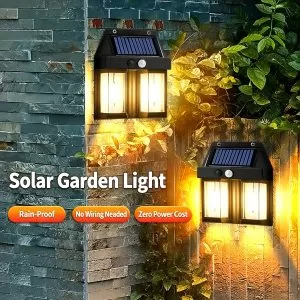 Solar Outdoor Patio Garden Light Waterproof LED Ambient Lanter… Price range: $5.96 through $9.96
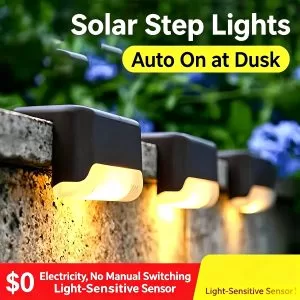 Solar Step Light Outdoor Waterproof LED Fence Railing Stair Li… Original price was: $9.98.$4.96Current price is: $4.96.
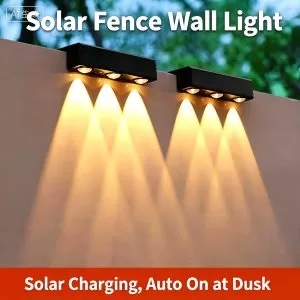 Solar Fence Wall Light Outdoor Waterproof LED Wall Wash Light … Price range: $7.74 through $8.86
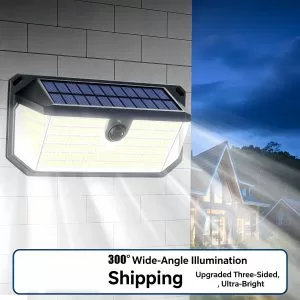 Solar Motion Sensor Wall Light Outdoor 300° Wide Angle Three-… Price range: $15.56 through $29.96