How to Choose an Outdoor Security Camera in 2026: Don’t Blind Yourself to the Truth
However, One blind spot. One missed threat. One decision that could cost you Everything.
Let’s confront an uncomfortable reality. Smart Curtain Motor Track: Automated Window Control System Therefore, You’ve installed a security camera. You’ve got the APP on your phone. You sleep soundly believing your property is protected. But here’s the question that keeps security professionals awake at night: How many blind spots does your camera have? Best Smart Home Starter Kit for 2026: Switches, Doorbells, Cameras, Sensors and Pet Feeders Compared Moreover, In 2026the average outdoor camera leaves 40% of its coverage area in shadow — not literal shadow, but surveillance shadow. That corner where your garage meets the fence. The pathway behind your shed. The side entrance that delivery drivers use. All invisible. All unprotected. Smart Home Market Trends 2026: What Distributors Must Know About Modular Security, Voice Control and Energy-Saving Devices In addition, A single-lens camera, no matter how high its resolution, is fundamentally limited by physics. One lens. One angle. One point of failure. Smart Home Control Panel: The Hub of Your Smart Home For example, So before you buy another “4K security camera” that leaves half your property exposed, let’s talk about what actually matters in 2026. Consequently, The biggest innovation in 2026 security cameras isn’t 8K resolution or AI recognition — it’s dual lens systems Here’s why single-lens cameras fail: Dual lens cameras solve this permanently:
Wait — Is Your Security Camera Actually Securing Anything?
The 2026 Outdoor Camera Checklist: What Really Matters
1. Dual Lens Technology: Two Eyes Are Better Than One
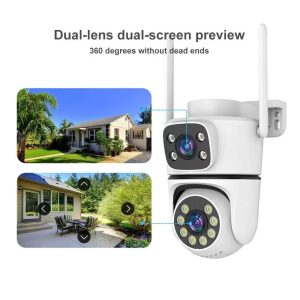
The 2026 standardIf your outdoor camera doesn’t have dual lenses, you’re buying yesterday’s technology.
2. True 360° Coverage: Pan, Tilt, and No Compromise
A camera that doesn’t move is a camera that misses things. Period.
Minimum requirements for 2026:
- Horizontal rotation355° — nearly full circle coverage
- Vertical rotation75° — from ground level to roofline
- Auto-trackingCamera follows moving objects automatically
- Preset patrol routesProgram specific paths for periodic scanning
Why this mattersA static camera catches what happens in its frame. A PTZ (Pan-Tilt-Zoom) camera catches what happens, period.
3. Night Vision: Color or Nothing
In 2026, “night vision” doesn’t mean grainy black-and-white footage anymore. It means full-color night vision
The evolution:
- 2019-2022Infrared black-and-white — identifiable, but detail-poor
- 2023-2024Starlight sensors — better low-light, still monochrome
- 2025-2026Full-color night vision — daytime clarity, midnight conditions
What to look for:
- Dual-light system — infrared for invisible illumination, white LED for color capture
- Large aperture — F1.6 or wider (lower number = more light)
- Advanced ISP — image signal processing that reduces noise without smearing detail
If your camera still switches to black-and-white at night, it’s time to upgrade.
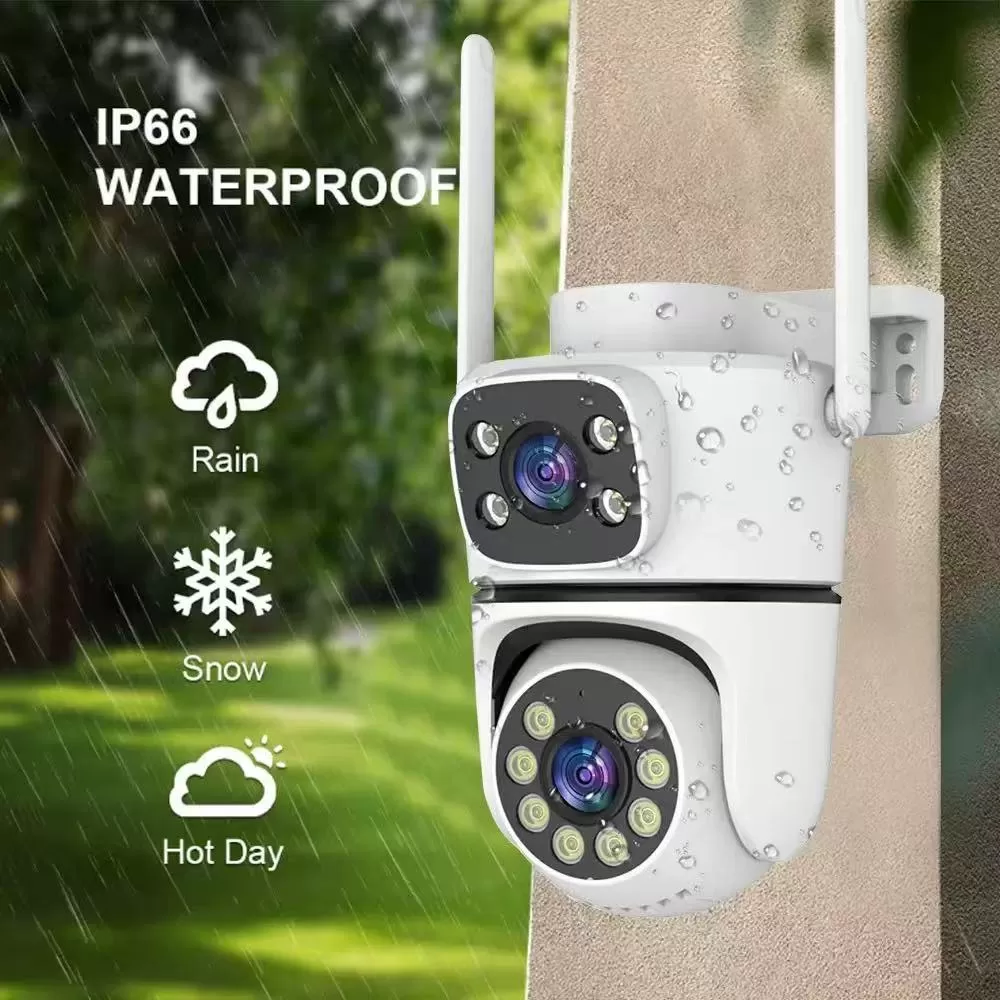
4. Weather Resistance: IP66 Is the Floor, Not the Ceiling
Outdoor cameras live in a hostile environment. Rain, dust, snow, direct sunlight, temperature swings from -10°C to 60°C.
2026 weatherproofing standards:
- IP66 minimum — dust-tight, protected against powerful water jets
- IP67 preferred — can survive temporary immersion
- Operating range-20°C to 60°C for northern climates, -10°C to 60°C standard
- Lightning protection — surge protection for power and network lines
- UV-resistant housing — won’t degrade or discolor in direct sun
Pro tipCheck the actual operating temperature range, not just the IP rating. A camera that dies at -5°C is useless in Chicago winters.
5. Connectivity: 5G WiFi + PoE = Reliability
Wireless cameras are convenient. Wired cameras are reliable. In 2026, you shouldn’t have to choose.
The ideal setup:
- 5G WiFi 6/6E — for wireless installations with maximum bandwidth
- PoE (Power over Ethernet) — single cable for power and data, no WiFi congestion
- Dual-band fallback — 2.4GHz when 5G signal is weak
- Local storage + Cloud — SD card for local backup, cloud for off-site security
AvoidCameras that only work on 2.4GHz WiFi — increasingly congested and prone to interference.
6. Smart Detection: Not All AI Is Created Equal
“AI-powered detection” is marketing speak in 2026. Here’s what actually works:
Essential detection types:
- Human detection — distinguishes people from animals, vehicles, shadows
- Vehicle detection — recognizes cars, trucks, motorcycles
- Package detection — alerts when deliveries arrive
- Perimeter intrusion — virtual fence lines that trigger alerts
Gimmicks to ignore:
- “10,000+ object recognition” — you need 5 categories, not 10,000
- “Emotion detection” — interesting tech, zero security value
- “Age/gender estimation” — privacy nightmare, no practical benefit
7. Two-Way Audio: More Than Just Talking
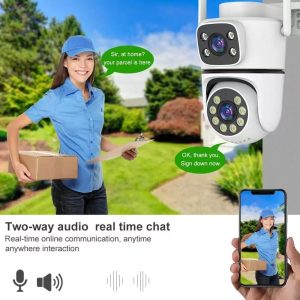
Two-way audio isn’t just for telling delivery drivers where to leave packages. In 2026, it’s a security tool.
Use cases:
- Deterrence — “You’re being recorded, leave now”
- Verification — speak with visitors before opening the door
- Emergency — guide family members during incidents
- Remote management — instruct contractors, pet sitters, cleaners
Quality indicators:
- Noise cancellation — wind, traffic, rain filtered out
- Echo suppression — full-duplex conversation, not walkie-talkie style
- Siren integration — 110dB+ alarm triggered remotely
8. Storage: Local, Cloud, or Both?
2026 storage options:
| Type | Pros | Cons |
|---|---|---|
| SD Card (Local) | No subscription, works offline | Limited capacity, physical theft risk |
| Cloud | Off-site backup, easy sharing | Subscription cost, bandwidth usage |
| NVR/DVR | Massive capacity, professional grade | Higher upfront cost, complex setup |
| Hybrid | Best of both worlds | Slightly more complex |
Our recommendationHybrid. SD card for immediate local recording, cloud for backup and remote access. If someone steals the camera, you still have the footage.
The Hidden Costs of Cheap Cameras
Before you buy that $29 “4K security camera” from an unknown brand, consider:
- Subscription traps — $5-15/month for basic features
- Data privacy — who’s watching your footage? Where is it stored?
- App quality — buggy apps that crash when you need them most
- Support — no customer service when something breaks
- Lifespan — cheap cameras die in 6-12 months outdoors
Real cost of a “cheap” camera over 3 years:
- Camera: $29
- Subscription: $15/month × 36 months = $540
- Replacements (2x): $58
- Total: $627
Quality camera, no subscription, 3-year warranty:
- Camera: $199
- No subscription
- No replacements
- Total: $199
Math isn’t hard. Quality pays for itself.
So, What’s the Answer? Two Lenses. One Device. Zero Blind Spots.
After testing dozens of outdoor cameras across every price point, the conclusion is unavoidable: dual lens technology isn’t the future — it’s the present.
Single-lens cameras are compromise devices. They force you to choose between wide coverage and detail zoom. Between overview and inspection. Between seeing the threat and identifying it.
Dual lens cameras refuse that compromise.
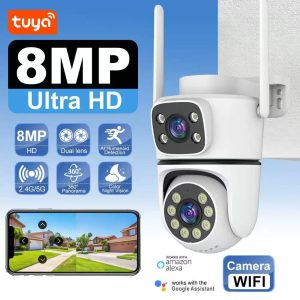
This is where the Tuya-powered dual lens security camera approach stands apart in 2026. Instead of one lens trying to do everything, it uses two specialized lenses working in harmony:
- Wide-angle lens (8MP)355° panoramic coverage — sees everything happening across your property
- Detail lens (8MP)10× digital zoom with auto-tracking — locks onto threats and delivers identification-grade clarity
- Both recording simultaneously — never miss the big picture or the critical detail
The technical foundation:
- 3264×2448 resolution — true 8MP clarity, not upscaled 4MP
- CMOS sensor with backlit compensation — handles challenging light conditions
- F4.0 aperture with full-color night vision — see faces, license plates, and colors at midnight
- IP66 weatherproofing — survives rain, dust, snow, and temperature extremes
- 5G WiFi + PoE dual connectivity — wireless flexibility or wired reliability, your choice
- Two-way audio with noise cancellation — crystal clear communication in any weather
But the real differentiator? The ecosystem.
This isn’t just a camera — it’s a node in the Tuya Smart home network. Connect it to:
- Smart door locks — see who’s at the door, unlock remotely
- Motion sensors — trigger recording before motion reaches the camera
- Smart lights — floodlights activate when camera detects intrusion
- Alarm systems — 110dB siren triggers automatically or manually
- Smart displays — view camera feed on kitchen or living room panels
Everything works through one app. One interface. One system.
Final Verdict: What Should You Buy in 2026?
If you have a small property (apartment, townhouse):
A single dual-lens camera at the main entrance covers 80% of your needs. Add a second for the rear if accessible.
If you have a medium property (suburban home, small business):
Two dual-lens cameras — front and rear — with overlapping coverage zones. The auto-tracking feature means one camera can monitor multiple entry points.
If you have a large property (estate, farm, warehouse):
Three to four dual-lens cameras at key positions, supplemented by fixed cameras for perimeter coverage. Use the PTZ cameras as “active” responders and fixed cameras as “passive” recorders.
If you care about privacy:
Demand local storage options, end-to-end encryption, and clear data policies. Tuya’s platform supports local SD recording with optional cloud backup — your choice, not forced.
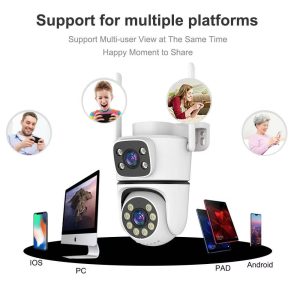
If you want it to just work: Choose a camera with broad smart home compatibility. Tuya works with Alexa, Google HomeSmartThingsand thousands of third-party devices. No vendor lock-in.
The Bottom Line
Choosing an outdoor security camera in 2026 isn’t about megapixels or brand names. It’s about eliminating blind spots — both physical and technological.
Ask the hard questions:
- Does this camera see everything I need it to see?
- Can it identify a face at 20 meters, day or night?
- Will it survive my local weather for 3+ years?
- Can I access footage without paying a monthly ransom?
- Does it work with the smart home devices I already own?
Get those answers right, and your camera becomes a guardiannot just a gadget.
Two lenses. One device. Zero blind spots. One decision that protects everything.
What’s your current security setup? Are you still relying on single-lens cameras, or have you upgraded to dual-lens technology? Share your experience in the comments — I’d love to hear what’s working (and what isn’t) in your area.
Ready to eliminate your blind spots? Explore the full range of Tuya-powered dual lens security cameras and find your perfect fit.
📞 Contact Xingliao () today:
- WhatsApp/WeChat+86 17666669273
- Websitexingliao.com
- Emailinfo@xingliao.com
- LocationShenzhen, China — Global shipping available
From 8MP dual-lens PTZ cameras to complete smart home security systems — all built on the Tuya ecosystem with One Screen One System integration.
About the author: Security technology consultant and smart home integrator with 12 years of experience designing surveillance systems for residential and commercial properties. Currently maintaining a 24-camera setup across three locations — all dual-lens, zero blind spots.
Related Articles
- V15S Tuya Smart Watch: Alexa Voice Control, SpO2 Health Monitoring, and Smart Home Integration
- Tuya 4MP HD Smart WiFi PTZ Camera: 360° Auto Tracking Home Monitoring Guide
- Tuya 2MP 4MP Indoor PTZ Smart Camera: 360° Panoramic Home Monitoring with Intelligent Tracking
- 4G Solar-Powered PTZ Security Camera: Wireless Outdoor Surveillance
- P8 Facial Recognition Door Lock: 3D Face + Palm Vein Smart Lock with Tuya Video Intercom
You Might Also Like
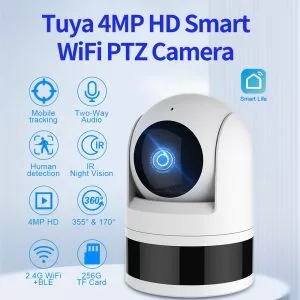 Tuya 4MP Indoor WiFi Smart Camera – HD Night Vision Pan-Tilt Remote Home Monitor with Two-Way Audio Original price was: $39.96.$29.98Current price is: $29.98.
 Tuya 2MP 4MP Indoor PTZ Smart Camera – 360° Panoramic WiFi Pan-Tilt Home Monitor with Two-Way Audio Price range: $21.69 through $25.96
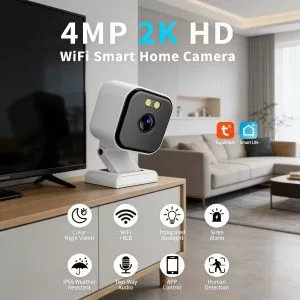 Tuya 4MP 2K HD WiFi Smart Home Camera – Indoor Color Night Vision Pet Monitor with Human Detection Original price was: $35.98.$27.96Current price is: $27.96.
 Tuya USB camera Original price was: $59.99.$36.88Current price is: $36.88.
Frequently Asked Questions
Is Tuya Dual Lens Camera worth buying?
Based on the breakdown in this article, Tuya Dual Lens Camera offers a solid mix of features and value. If your main goal matches the key benefits described above, it is a practical choice for everyday use.
How do I choose the right tuya dual lens camera for my needs?
Start with your core use case, then compare battery life, compatibility, and build quality as covered above. Choosing the right tuya dual lens camera comes down to matching specs with how you actually use it.
Does tuya dual lens camera require a companion app?
Most devices of this type pair with a free companion app for setup and firmware updates. A few advanced features may sit behind a paid plan, so check the official specs page before buying.
📌 This article is part of our Complete Camera Hub — more guides and buying tips inside.