Choose a Smart thermostat when you want to control temperature — schedules, setpoints, and a boiler or heat pump that runs only when the room needs it. Choose a smart switch or relay when you want to control a circuit — a towel rail, a panel heater, a water heater, a floor heating mat — on a timer or remotely, Without measuring the room. If you want both heating comfort and energy savings on a wet system, the thermostat is usually the right first purchase.
This is the decision that most people get wrong, and it comes down to one question: does the device need to know the room temperature?
What a smart thermostat does
A thermostat measures room temperature and switches the heat source to hold a setpoint. Smart versions add scheduling, remote control, geofencing, and — on the better ones — weather compensation and open-window detection. Typical Wiring: a boiler switched live (often 3 A rated for the boiler contact) plus a mains supply, sometimes with a separate receiver near the boiler.
- Best for: gas boilers, combi boilers, heat pumps, underfloor heating zones, and anyone whose goal is lower gas or electricity use.
- Needs: a wiring point at the thermostat location or a wireless receiver at the boiler; check whether you have a neutral at the switch box.
- Watch for: proprietary wiring (some heat pump controls), and boilers with their own bus protocol that a generic thermostat cannot drive.
What a smart switch or relay does
A smart switch or relay simply makes or breaks a circuit to a fixed load. It does not measure temperature. A 16 A smart switch on a towel rail turns it on for 30 minutes each morning; a 30 A relay on a water heater runs it on an off-peak tariff Window. That is control, not regulation.
- Best for: electric towel rails, panel heaters, convectors, water heaters, floor heating mats with their own thermostat, and anything you want on a timer.
- Needs: the right current rating (16 A ≈ 3.6 kW, 30 A ≈ 7 kW at 230 V) and, for in-wall modules, usually a neutral at the box.
- Watch for: inrush current on some heaters, and the temptation to control a boiler’s mains supply directly — that is what the thermostat’s switched output is for.
Which one fits your heating
- Gas or combi boiler with radiators: smart thermostat. It modulates and schedules the boiler; a switch would only turn the whole thing on and off.
- Electric underfloor heating: a thermostat with a floor probe is the safe answer. If the mat already has its own thermostat, put a smart relay in front of it for scheduling and keep the probe in control of temperature.
- Electric towel rail: smart switch, 16 A, on a Schedule. Temperature control adds nothing here.
- Water heater or immersion: smart relay rated for the element (often 30 A), ideally on an off-peak schedule, with a hard over-temperature cut-out left in Place.
- Heat pump: usually the manufacturer’s own controller. Adding a generic thermostat can defeat the weather compensation that makes a heat pump efficient.
- Air conditioner or split unit: an IR or WiFi controller made for that unit, not a wall thermostat.
Savings: what is realistic
Scheduling is Where the money is, and both devices can do it. Turning heating down by 1 °C typically trims a few percent off a heating bill; not heating an empty house for eight hours a day saves far more. The thermostat wins on top of that because it stops short-cycling and overshoot — a switch left “on” simply runs the heater until you remember to turn it off.
Practical setup: heat the rooms you use, to the temperature you actually want, only when they are occupied. Then add a lower setback temperature rather than switching off completely, so you are not reheating cold walls and furniture.
Frequently Asked Questions
Can I control my boiler with a smart switch?
Not directly. A boiler is switched by the thermostat’s low-voltage or volt-free contact. Use a smart thermostat for the boiler and reserve smart switches for fixed resistive loads such as towel rails, panel heaters and water heaters.
Do I need a neutral wire?
Most in-wall smart switches and relays need a neutral at the box; many older switch boxes do not have one. No-neutral models and battery/hub-based switches exist, but check before buying.
What rating do I need for an electric heater?
Work from the load: 2 kW needs about 9 A, so a 10 A switch is marginal and a 16 A switch is safer; 3 kW needs 13 A, so use 16 A. Water heaters and large storage units often need a 30 A relay or contactor.
Is a smart thermostat worth it for underfloor heating?
Yes, if it supports a floor probe or a floor limit. The probe protects the floor finish and stops the screed overshooting, which is why a plain relay is not enough on its own.
Can I use both together?
Often yes, and it is a good combination: a smart thermostat on the boiler or heat source, and a smart relay on a specific circuit such as a towel rail or an immersion that should only run at certain times.
Will heating still work if the internet goes down?
A thermostat should keep its schedule and keep the heating running, because that logic is local. Choose models that keep a schedule on the device rather than relying on cloud routines.
Related guides
- Zigbee vs WiFi: which to use for each device
- Smart switch boards and wall switches
- Smart plugs and WiFi wall sockets
- How to install a WiFi touch smart switch
- How to build a home automation system
- Smart socket vs smart plug: which to buy
- Smart switch for water heaters and air conditioners
Browse thermostats and control panels · Tell us your heating type and we will advise
Related Articles
- Smart Plug Energy Monitoring: Find the Appliance That Costs You Most
- Zigbee vs WiFi for Smart Home Devices: What to Use Where
- Upgrade Your Home Heating: Why A Tuya Smart Thermostat Makes Your House Smarter & Saves Energy
- Smart Home Automation Scenes: 6 Practical Setups That Make Your Home Think
- Smart Home Starter Guide 2026: How to Build Your First Connected Home
You Might Also Like
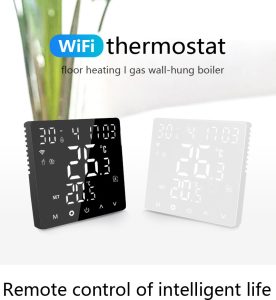 Tuya WiFi Smart Thermostat | 16A Electric Floor Heating & 3A Gas Boiler Temperature Controller Original price was: $29.90.$25.50Current price is: $25.50.
 Tuya Smart Watch 1.28 Inch Full Round HD – Alexa Voice Control Blood Oxygen Heart Rate Pressure Monitor Original price was: $69.96.$52.99Current price is: $52.99.
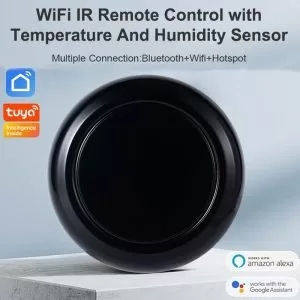 Tuya Smart WiFi IR Remote Control Temperature & Humidity Sensor Original price was: $29.96.$25.96Current price is: $25.96.
 X18 Kids Video Walkie Talkie with Camera – Two-Way Video Talk, No Network Required, Long Range Outdoor Toy for Kids, Birthday Gift (2 Pack, Blue & Pink) Original price was: $55.96.$42.96Current price is: $42.96.
📌 This article is part of our Complete Smart Hub — more guides and buying tips inside.