A Zigbee gateway (also called a Zigbee hub) is the device that joins your Zigbee products into one network and connects that network to your Home router. It is the translator: sensors and switches speak Zigbee, your phone speaks Wi-Fi, and the gateway sits between them. It is also where automations are stored, which is why a Zigbee Home keeps working when the internet does not.
Without a gateway there is no Zigbee home. Every Zigbee Switch, sensor and remote has to join one, and the gateway has to be powered and within radio range of at least some of them.
What the gateway actually does
- Forms the mesh. It is the coordinator of the Zigbee network and decides how messages hop between devices.
- Translates protocols. Zigbee in, Wi-Fi/Ethernet out to your router and the app.
- Runs automations locally. “If the Door opens after sunset, turn on the hall light” executes on the hub, so it survives a broadband outage.
- Stores the device list and scenes. Reset the hub and you re-pair everything — back up your device list.
- Bridges ecosystems. Many current hubs are also Matter controllers or IR blasters, so one box covers Zigbee devices, infrared remotes and Apple/Google/Alexa.
Wired vs wireless gateway
| Type | Connection to router | Pros | Cons |
|---|---|---|---|
| Wired (Ethernet) | RJ45 cable | Most stable, immune to Wi-Fi congestion, no reconfiguration when you change router password | Needs a cable to the router |
| Wireless (Wi-Fi) | 2.4 GHz | Place anywhere with a socket | Shares the crowded 2.4 GHz band; needs re-pairing if the Wi-Fi SSID or password changes |
| Socket gateway | Wi-Fi, built into a wall socket | Invisible, no extra box, always powered | Fixed position — often not central |
| Multi-mode hub | Wi-Fi or Ethernet | Zigbee + Bluetooth + IR + Matter in one box | Higher cost; more firmware to keep updated |
If the installation is a house, an apartment block or anything you will not revisit, choose wired. If it is a single flat and the router is in the middle, wireless is fine.
Planning a Zigbee network that stays healthy
- Place the hub centrally and off the floor. Zigbee range indoors is roughly 10–20 m per hop through walls.
- Every mains-powered Zigbee device is a repeater. Switches and plug-in modules strengthen the mesh; battery sensors do not repeat.
- Aim for one powered device per room in larger homes so every battery sensor has a neighbour.
- Keep it out of metal. A hub inside a metal cabinet or next to a microwave loses range.
- Separate the radios. Zigbee and Wi-Fi share 2.4 GHz. Put Wi-Fi on channels 1, 6 or 11 and keep the hub a metre from the router.
- Pair from the farthest device inward so each device joins through its nearest repeater rather than hopping a long way.
Capacity: how much is too much
Advertised limits of 50–150 devices are theoretical. What matters in practice:
- Direct children — a hub handles a limited number of directly connected devices (often around 30–40). Everything beyond that should route through a powered repeater.
- Battery sensors — keep them below half the total; they sleep and generate wake-up traffic.
- Automations — complex scenes with many conditions add hub load; a few dozen is comfortable.
- Report frequency — temperature and power sensors that report every few seconds create far more traffic than door contacts that report on change.
Rule of thumb: one hub comfortably serves a three-bedroom home with 30–50 devices. Beyond that, add a second hub and split by floor.
Tuya gateway vs Matter gateway vs proprietary hub
| Option | Ecosystem | Works with | Choose when |
|---|---|---|---|
| Tuya / Smart Life Zigbee gateway | Tuya | Thousands of Tuya devices; Alexa, Google Home | You want breadth of cheap, widely available devices |
| Multi-mode hub (Zigbee + BLE + IR) | Tuya / Matter | Zigbee devices, Bluetooth sensors, legacy IR remotes | You are bringing infrared appliances under app control too |
| Matter controller / border router | Matter over Thread & Wi-Fi | Apple Home, Google, Alexa simultaneously | You need cross-platform control without cloud accounts |
| Proprietary hub (vendor-locked) | One brand | Only that brand’s devices | Rarely — it limits future purchases |
Frequently Asked Questions
Do I need one gateway per brand?
You need one gateway per ecosystem, not per brand. Devices certified for the same platform (for example Tuya) all join the same hub regardless of who manufactured them.
Can two gateways coexist?
Yes. Two hubs on the same account allow you to split a large home by floor, and Zigbee networks on different channels do not interfere. Devices join whichever hub you pair them with.
What happens if the gateway goes offline?
Local automations and bound remotes stop if the hub is powered down — the mesh needs a coordinator. This is why the hub should be on a stable power supply and, ideally, a small UPS.
Is a smart speaker enough as a hub?
Some speakers include a Zigbee or Thread radio and can act as a hub, but capability varies by model and region. A dedicated gateway is more predictable and easier to troubleshoot.
Do I need a gateway for Wi-Fi devices?
No. Wi-Fi switches, plugs and Cameras connect to your router directly. A gateway is only required for Zigbee (and, in some setups, Thread) devices.
What should a project buyer specify?
Wired or wireless, device capacity and direct-child limit, Zigbee 3.0 compliance, whether it bridges to Matter, IR/Bluetooth support where needed, local automation support, certification for the destination market (CE, UKCA, FCC, RoHS), and minimum order quantities.
Related products
- Zigbee Smart Gateway (wired & wireless) — the general-purpose hub: Ethernet or Wi-Fi uplink, coordinator for the whole mesh.
- ZHUB-C Zigbee Wired Gateway — Ethernet-connected coordinator for stable, permanent installs.
- MHUB-MS Zigbee + Bluetooth Wired Multi-mode Gateway — covers Zigbee and Bluetooth devices on a wired uplink.
- MPH-S1 EU Multi-mode Socket Gateway — hub built into a wall socket; invisible, always powered, EU format.
- BHUB Bluetooth Gateway — adds Bluetooth sensors and trackers to the same app.
Related guides
- Zigbee smart switch: how it works
- Zigbee vs Wi-Fi smart home devices
- Smart home gateway overview
- Contact us for gateway supply and OEM options.
Related Articles
- Zigbee Smart Switch: How It Works and When to Choose It
- Smart Home Gateway Explained: Zigbee, Tuya and Bluetooth Compared
- Zigbee vs WiFi for Smart Home Devices: What to Use Where
- Solar Rainwater Sensor: Zigbee 3.0 Leak Detection with Tuya Smart Home Automation
- Smart Home Protocols Compared: Wi-Fi vs Zigbee vs Z-Wave vs Matter (2026 Buyer’s Guide)
You Might Also Like
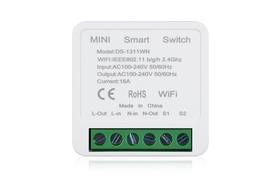 Mini Smart Breaker Module — WiFi / ZigBee / HomeKit Price range: $6.00 through $9.00
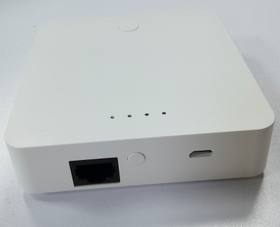 ZigBee Smart Gateway — Wired & Wireless Price range: $19.78 through $22.25
 147 × 86 mm Touch Switch Series — 4 / 6 / 8 Gang, WiFi & ZigBee Price range: $12.50 through $16.50
📌 This article is part of our Complete What Hub — more guides and buying tips inside.