A water heater, an air conditioner and a bedside lamp do not ask the same thing from a switch, and the number that separates them is the current rating. Get that number wrong and the switch either trips, runs hot, or quietly dies in a few months — so this is the one specification worth reading before you buy.
Start from the appliance, not the switch
Every Smart switch, socket or controller carries a maximum current, usually printed as 10 A, 16 A or 20 A. Convert your appliance first: Reolink vs Tuya Security Camera
- Amps ≈ watts ÷ volts. A 2,000 W heater on 230 V draws about 8.7 A. The same heater on 120 V draws about 16.7 A.
- Motors are different. An air conditioner, a pump or a fan has a compressor or motor with a startup surge that can be several times the running current. The switch must be rated for that surge, not just the running figure.
- Continuous loads need headroom. Anything that runs for hours — a water heater, a floor heating mat, a towel rail — should sit at roughly 80% of the switch rating or less.
So a 16 A switch at 230 V is comfortable to about 3,600 W of resistive load, and noticeably less than that for a motor load.
What each appliance actually needs
Water heaters and boilers
Heating elements are resistive and predictable: check the element rating on the nameplate and size the switch above it. What most people actually want here is not just on/off but temperature control — a controller with a probe that switches by measured temperature rather than by clock, so the tank reaches the Set point and stops. That is a different product from a plain switch and it usually saves more energy than any schedule.
Air conditioners
An AC unit is the hardest case in a house: inductive load, large startup surge, and it often runs for hours. Two safe approaches:
- A switch rated well above the unit’s running current, specified for motor or inductive loads.
- Infrared control instead of switching power — a universal IR controller sends the same commands as the remote Without touching the wiring at all. This is the low-risk answer and the one most installers prefer for split units.
Floor heating
Heating mats and cables are resistive but continuous, and they are usually paired with a thermostat rather than a switch: a 16 A floor-heating thermostat with a floor probe and a boiler relay covers both electric mats and gas boilers. A plain switch here is the wrong product — the comfort gain comes from temperature control and scheduling together.
Fans, pumps and curtains
Ceiling fans and curtain motors are smaller loads but still inductive, and fan speed control is not the same as dimming a lamp. Look for a panel with a dedicated fan or curtain channel rather than repurposing a light dimmer.
Wall switch, socket, or controller?
- Wall switch (10-16 A): replaces the plate and controls a fixed circuit — best for heaters on their own circuit and for room lighting.
- Smart socket (16 A): controls the appliance plugged into it and measures what it consumes. Best when the appliance is already on a plug, and the metering is genuinely useful for a heater.
- Temperature controller: switches by measured temperature. Best for water heaters, floor heating, heat mats, incubators and aquariums.
- IR controller: no power switching at all. Best for air conditioners and TVs.
Safety checklist before you order
- Read the appliance nameplate for watts and current, and note whether it is a motor load.
- Choose a rating with headroom — a 16 A device for a 10 A continuous load, not a 10 A device for a 9 A load.
- Check the switch is specified for the load type: resistive, inductive or motor.
- Never put a heater or an AC unit on a plug-in Smart plug rated below the appliance, and never daisy-chain extension leads through one.
- Confirm the circuit itself is protected correctly; a smart device is not a substitute for a correctly-sized breaker and RCD.
- When in doubt, or where local regulations require it, have an electrician fit it — high-current work is not the place to improvise.
XingLiao switches, sockets and controllers for high loads
- Tuya WiFi thermostat 16A for floor heating and gas boilers — 16 A electric floor heating output plus a boiler relay, with a floor probe.
- WTP-BY EU WiFi temperature control socket — switches a heater by measured temperature instead of a schedule.
- Tuya WiFi smart socket EU 16A — 16 A socket with energy monitoring for plug-in appliances.
- — dedicated fan, curtain, dimmer and scene channels on one plate.
- 147×86 touch switch series — higher-current panel range for kitchens and utility rooms.
- WiFi smart socket module (EU/UK/US) — a socket-level option when the wall box cannot take a switch.
Frequently Asked Questions
What does 16A mean on a smart switch?
It is the maximum current the relay can switch continuously — about 3,600 W at 230 V or roughly 1,900 W at 120 V for a resistive load. Motor loads need more headroom than the running figure suggests.
Can I put an air conditioner on a smart switch?
Sometimes, with a switch rated well above the unit’s running current and specified for motor loads. The safer alternative for split units is an infrared controller that sends the remote’s commands without switching the power at all.
Do I need a thermostat or just a switch for floor heating?
A thermostat. Floor heating needs temperature feedback from a floor probe, and the comfort and energy savings come from controlling to temperature, not from switching mains on a timer.
Why does my smart switch get warm?
Some warmth is normal under load, but a switch that is hot to the touch is undersized or poorly terminated. Check the load against the rating and have the connections inspected.
Can I use a smart plug for a heater?
Only if the plug’s rating exceeds the heater’s draw — a 2,000 W heater on 230 V needs a plug rated comfortably above 8.7 A. Many small smart plugs are 10 A and should not run heaters continuously.
Is energy monitoring useful on high-load devices?
Very. Heating and cooling are usually the largest loads in a home, and a metering socket turns “I think the heater is expensive” into a number you can act on.
Related guides
- Smart switch without a neutral wire
- Smart thermostat vs smart switch for heating
- WiFi smart switch board: neutral check and gang sizes
- Smart socket vs smart plug: which to buy
- How to choose a smart switch
- Smart switch guide: types, wiring and how to choose
Browse all smart switches and sockets · Tell us the appliance and its rating and we will match the right switch
Related Articles
- 30A WiFi Smart Boiler Switch: Simple, Safe Remote Water Heater Control
- Tuya WiFi Smart Boiler Switch: Energy‑Saving Control for Electric Water Heaters & Home Heating
- DS-1016 Series Smart Switch: 1 Gang / 2 Gang, Wiring and What to Check Before You Order
- How to Choose a Zigbee Touch Switch for a 86 Wall Box — DS-1011ZC Series
- Tuya Smart Plug: Setup, Energy Monitoring and Limits
You Might Also Like
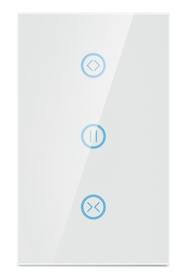 118 × 72 mm US Standard Function Switches — Curtain / Dimmer / ZigBee Push Button Price range: $8.00 through $12.72
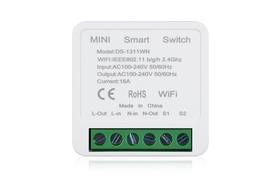 Mini Smart Breaker Module — WiFi / ZigBee / HomeKit Price range: $6.00 through $9.00
📌 This article is part of our Complete Smart Hub — more guides and buying tips inside.