Put water leak sensors in four places first: under every sink, behind and under the washing machine or dishwasher, next to the boiler or water heater, and under the bath or shower tray if there is an Access panel. Those four locations catch the overwhelming majority of household water damage, and two sensors cost less than a single insurance excess.
Sensor placement matters more than sensor count. A sensor in the middle of the floor detects a leak long after the cabinet it came from has rotted.
The priority list, room by room
Kitchen
- Under the sink, at the lowest point of the cabinet, pushed back against the wall so it sits where supply pipes and the waste trap are.
- Behind the dishwasher, on the floor at the back of the plinth — the inlet hose and its connection are the usual failure point.
- Behind the fridge if it has a water feed for ice or a dispenser.
Utility room
- Under and behind the washing machine: place the sensor under the machine, not in front of it, so it catches a leaking pump or inlet valve.
- Next to the boiler, and under any pressurised cylinder or expansion vessel.
- By the stopcock, so you also learn where the shut-off is before you need it.
Bathroom
- Under the basin, against the back wall.
- Under the bath or shower tray if you can reach the void from a panel — otherwise at the lowest visible edge.
- Behind the toilet, at floor level, where the flexible connector and the cistern supply meet.
Loft, garage and basement
- Under a loft water tank and beside any pipework that runs through an unheated space (freeze then burst is a winter classic).
- Next to a water softener, which is a surprisingly common leak source.
- At the lowest point of a basement or cellar floor.
How to place the sensor itself
- Flat on the floor, probes or contacts touching the surface. A sensor propped on a pipe will not see a puddle until it spreads.
- At the lowest point of the cabinet or tray, and away from the drain hole where water can escape before detection.
- Tilted or in a corner so water runs toward the contacts, not past them.
- Protected from splashes and cleaning — a mop, a shower spray or a cleaning spray can false-trigger a bare probe sensor.
- Away from metalwork that pools condensation (cold pipes, cisterns), which causes repeat false alarms.
Rope and probe sensors: which goes where
- Spot / probe sensors are cheap, small and ideal inside cabinets and under appliances. Buy them in packs of four or six.
- Rope or cable sensors detect water along their whole length — use them along a run of pipes, around a cylinder base, or across a basement floor.
- Motorised valve shut-off is the upgrade that turns detection into prevention: a valve on the main supply closes automatically when any sensor trips. If you travel often, this is worth more than another six sensors.
What to automate
- Siren and push alert: do not rely on a phone notification alone. A 90 dB local alarm means someone reacts even if the phone is on silent.
- Close the valve if you have one, then send the notification.
- Flash the lights or send to a hub display for a household with hearing-impaired occupants.
- Test quarterly: put a wet cloth across the contacts and confirm the alert arrives. Batteries fail quietly.
Frequently Asked Questions
How many water leak sensors does a house need?
Start with four: under the kitchen sink, behind the washing machine or dishwasher, next to the boiler, and under the bathroom basin. Add one per additional wet room or appliance with a water feed.
Where exactly should a leak sensor go under a sink?
Flat on the cabinet floor at the lowest point, pushed to the back wall where the supply pipes and waste trap are — not in front of the cabinet and not propped on a pipe. How to Install a Video Doorbell Without Existing Wiring
Do leak sensors work without WiFi?
Detection and the local alarm work Without internet. Remote notifications and automations that run in the cloud do not, so pair sensors with a hub that supports local automations and a mains-powered siren. White Label Smart Home Devices for Brand Owners
Will condensation set off a water leak sensor?
It can, if the contacts sit under a cold pipe or cistern that drips. Move the sensor a few centimetres away, or shield it so it only sees water that reaches the floor.
How long do the batteries last?
Typically one to two years for a coin-cell sensor in normal use. Set a low-battery automation and check the app once or twice a year; a dead sensor is worse than no sensor because it looks installed.
Should I get a sensor that shuts off the water?
If you are away often, yes. A motorised valve on the main supply turns any leak into a contained one, and it is the only measure that works when nobody is Home to hear the alarm.
Related guides
- Zigbee vs WiFi: which to use for each device
- Smart plugs and WiFi wall sockets
- Door and window sensors
Browse leak, rain and smoke sensors · Ask us for a sensor layout for your home
Related Articles
- Upgrade Home Security – X8 Wireless Visual Doorbell 4.3 Inch IPS Screen IP66 Waterproof
- Tuya WiFi Smart Boiler Switch: Energy‑Saving Control for Electric Water Heaters & Home Heating
- Solar Rainwater Sensor: Zigbee 3.0 Leak Detection with Tuya Smart Home Automation
- Smart Home Devices for Seniors: Easy Tech for Aging in Place
- Solar Step Light Installation: Best and Worst Placement Spots
You Might Also Like
 Tuya Solar WiFi PTZ Security Camera 4MP Outdoor Wireless Camera, Full Color Night Vision IP65 Waterproof Price range: $59.99 through $65.99
 X8 Wireless Intelligent Visual Doorbell 4.3 Inch IPS Screen IP66 Waterproof 2.4G Wireless Original price was: $39.93.$32.99Current price is: $32.99.
 X6F Smart Large Screen Doorbell – Outdoor Waterproof Wireless Video Doorbell with Display Two-Way Intercom HD Video Monitoring Original price was: $69.96.$59.99Current price is: $59.99.
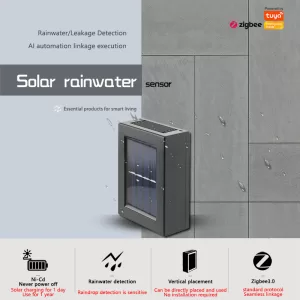 Tuya Zigbee Solar Rainwater Leak Sensor – Smart Home Water Detection Alarm with AI Automation Original price was: $35.96.$26.99Current price is: $26.99.