Two Smart switches can look identical on a shelf and behave completely differently once a client replaces the lamps. The difference is not the radio or the touch panel — it is how the output stage handles the load, and specifically how it handles LED loads, which draw badly non-sinusoidal current at a fraction of the wattage the switch was designed around.
The DS-121JL publishes its LED limit separately from its incandescent limit, and that is the number a buyer should actually plan against. This article explains the rating, why the two figures differ so much, and how to lay out circuits so a four-gang plate does not end up flickering in a finished building.
The rating, stated plainly
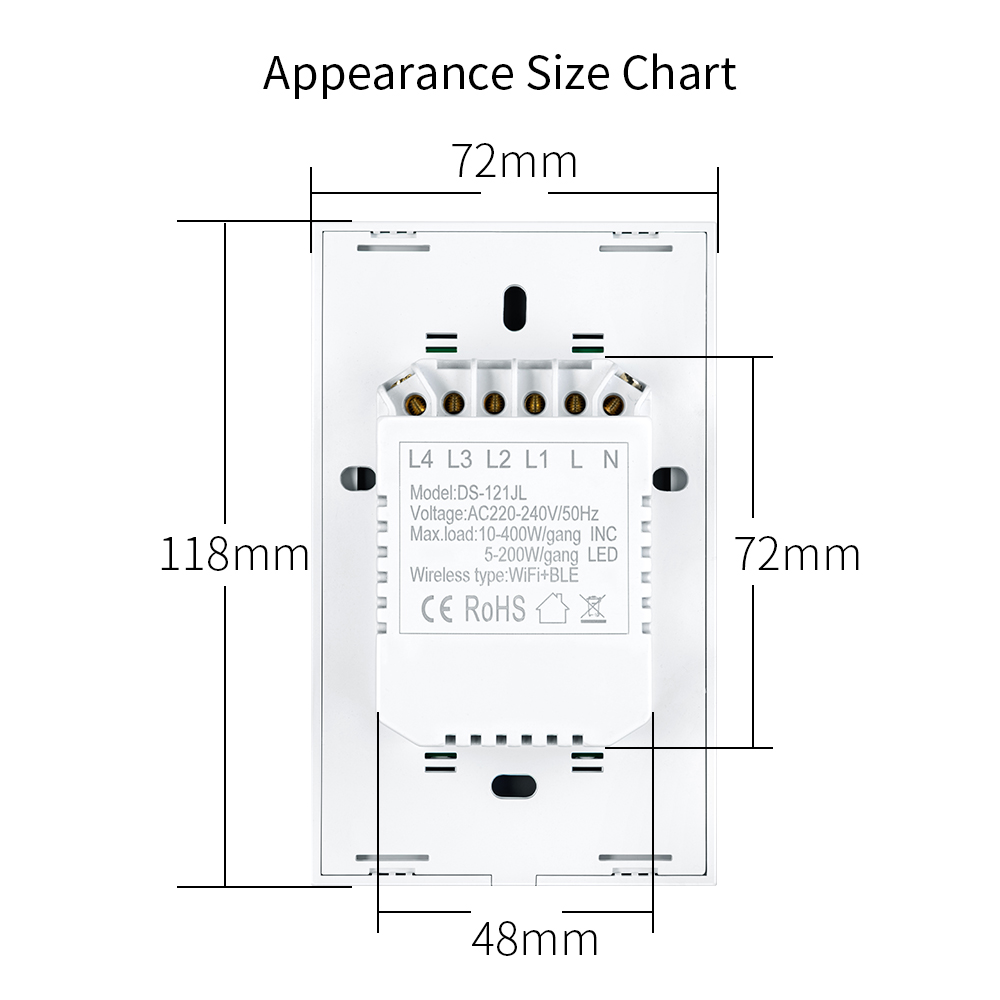
The detail page gives: Voltage AC 220-240 V / 50 Hz, max load 10-400 W per gang INC and 5-200 W per gang LED, with Wi-Fi + BLE wireless and CE / RoHS marking. The 118 × 72 × 39 mm vertical format and 1-4 gang options are shared with the rest of the 118-type platform.
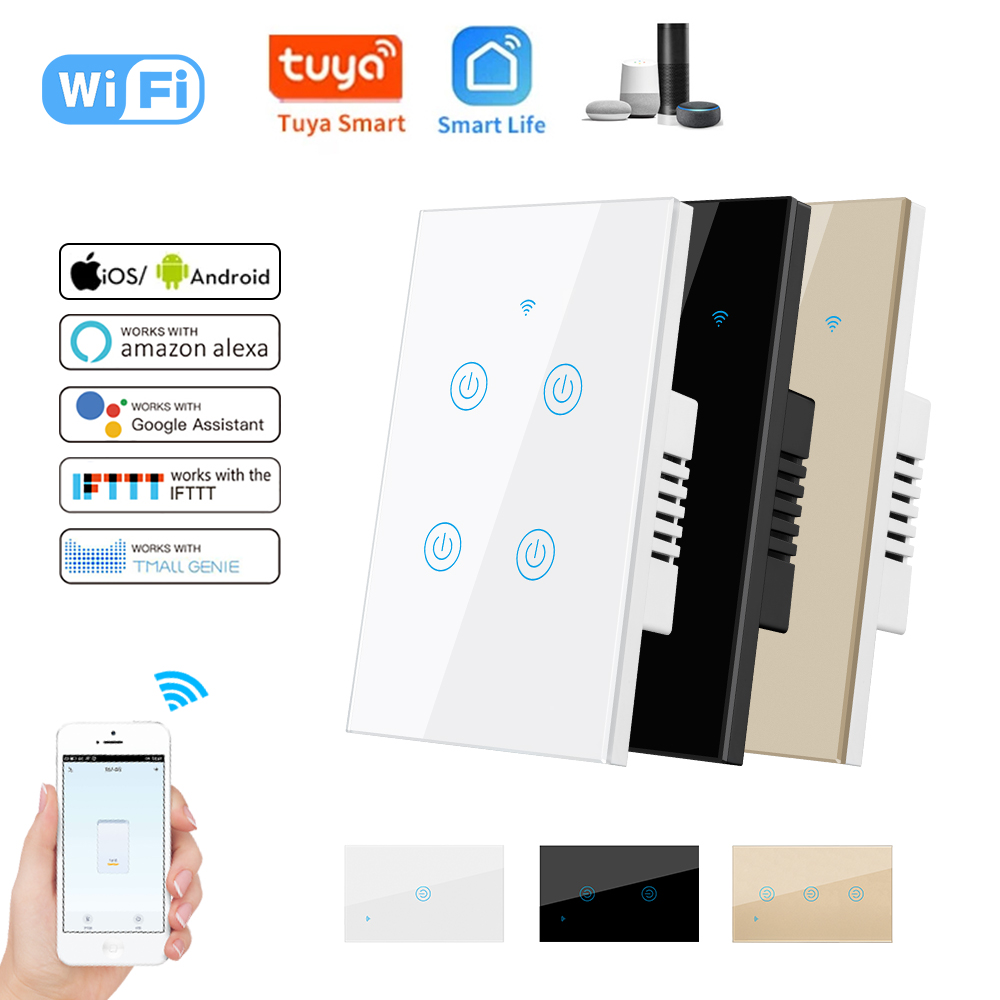
Specification table
| Item | Specification |
|---|---|
| Model | DS-121JL (1–4 gang) |
| Standard / format | 118-type vertical wall plate |
| Panel size | 118 × 72 mm, 39 mm body depth |
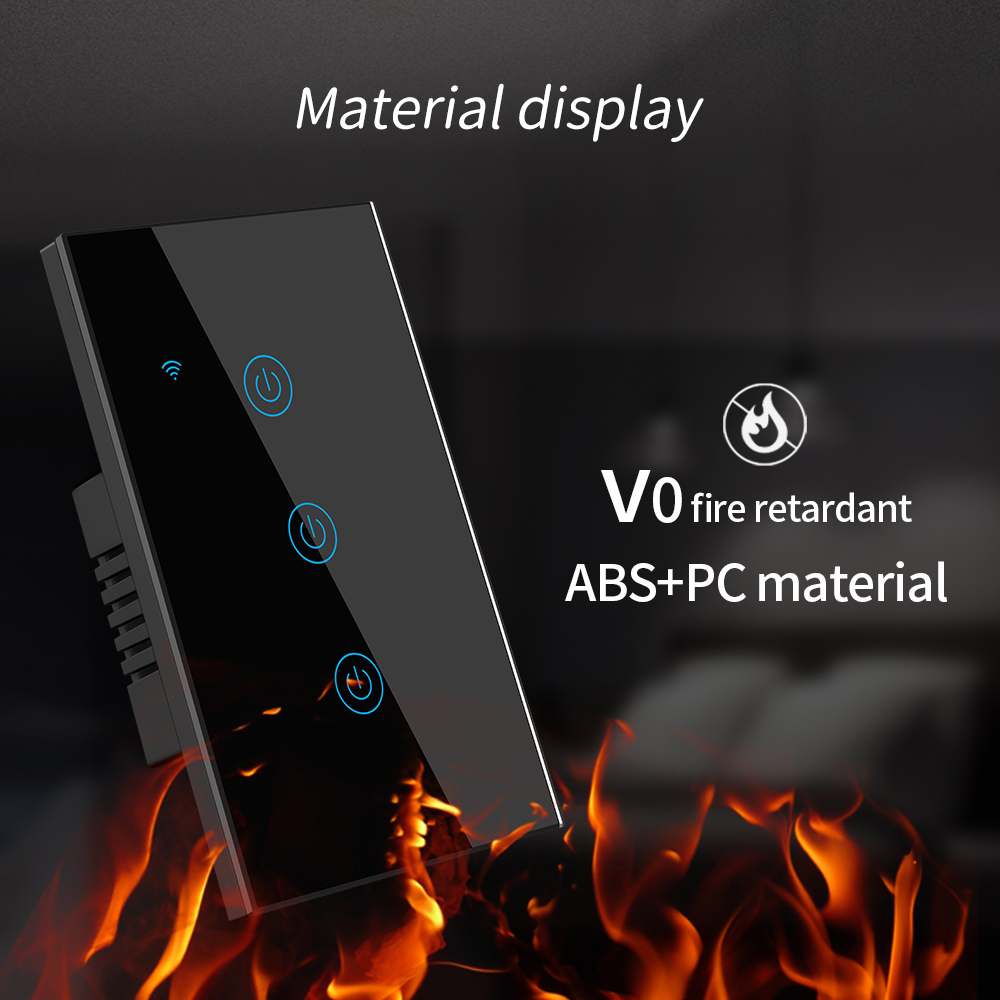
| Faceplate | Tempered Glass touch panel |
| Rated voltage | AC 220-240 V, 50 Hz |
| Max load — incandescent | 10–400 W per gang |
| Max load — LED | 5–200 W per gang |
| Wireless | Wi-Fi 2.4 GHz + BLE |
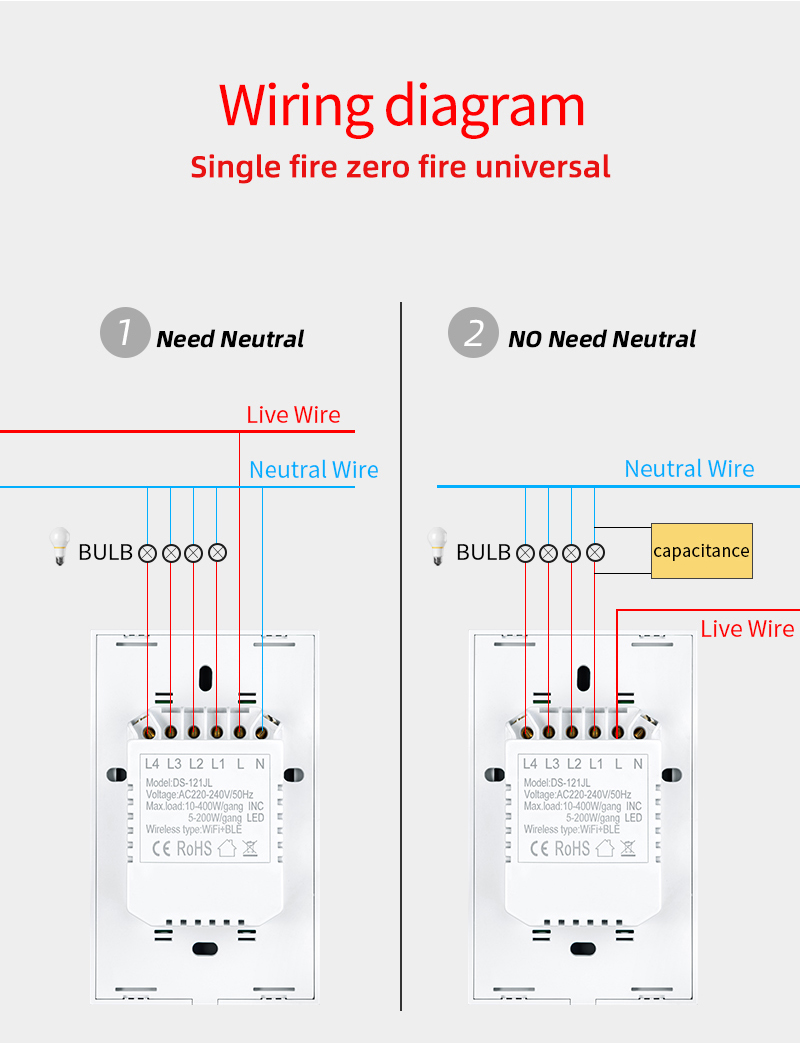
| Wiring modes | Neutral required / single live wire with bypass capacitor |
| Terminals | L1, L2, L3, L4, L, N |
| Colours | White / Black / Champagne gold |
| Certification | CE, RoHS |
Why the LED figure is roughly half the incandescent figure
Incandescent and halogen lamps are close to resistive: current follows voltage, and a 400 W lamp draws a predictable current at 230 V. LED lamps are not resistive. They rectify the mains, draw current in short pulses near the voltage peaks, and rely on a driver or an integrated capacitor to smooth the result. The consequences for a switching device are:
- Peak current is much higher than the average suggests. A 100 W LED group can present peak currents a 400 W resistive rating was never sized for.
- Harmonics and reactive current add heat in the output stage and the neutral, which is why the manufacturer publishes a lower ceiling rather than a conversion factor.
- Low loads are their own problem. Below the stated 5 W per gang, leakage in a Smart switch standby circuit can be enough to make lamps glow faintly when off.
So the LED number is not a conservative marketing reduction. It is the practical rating for the load type, and it should be used as the design limit whenever LED is involved.
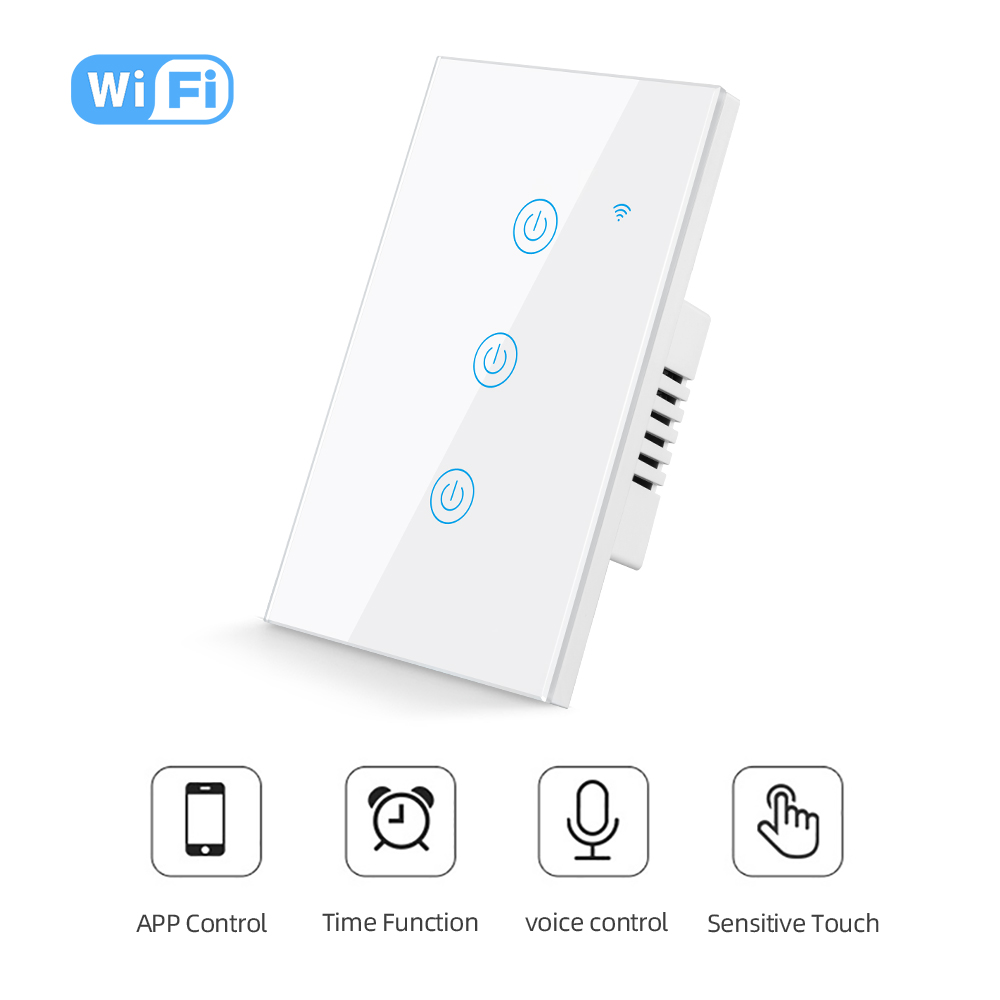
Circuit planning: five rules that hold up on site
1. Budget LED circuits at 200 W per gang, not 400 W
If a four-gang plate runs 200 W of LED per gang, the plate is at its LED limit. Mixed circuits — some LED, some halogen — must be rated by the LED rule, because the LED part of the load is what drives the peak current.
2. Split large lighting groups across gangs
A 480 W LED bank on one gang exceeds the limit; split across three gangs it does not. Because the four-gang unit has four independent outputs, the fix is usually a wiring decision at design stage rather than a different product.
3. Above 200 W per circuit, switch a contactor
Retail floors, warehouse bays and exterior lighting banks routinely exceed 200 W of LED per circuit. Use the smart switch to drive a contactor coil and let the contactor carry the load. The switch then handles a coil rather than a lamp bank and the rating question disappears.
4. Keep lamp types consistent within a group
Mixing an integrated LED downlight and a driver-based retrofit on the same switched circuit makes flicker diagnosis almost impossible. Standardise lamps per circuit and record the model in the handover file — the single most effective measure for reducing warranty claims.
5. Watch the low end as carefully as the high end
Below 5 W per gang, a lamp may not draw enough to keep the electronics stable, particularly in single-live-wire mode. One 5 W lamp on a gang is a specification to test, not to assume.
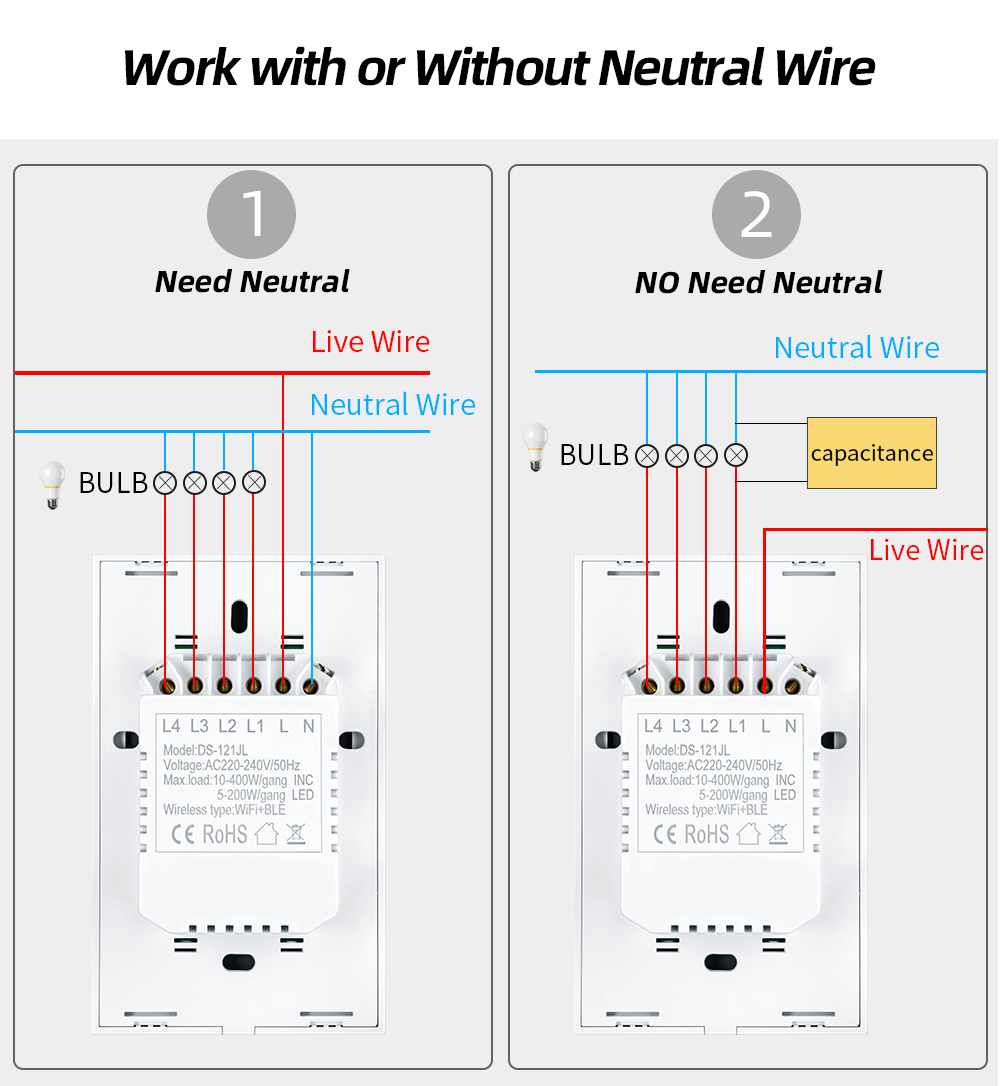
Single live wire or neutral, on a 220-240 V site
The JL platform is documented as single fire zero fire universal: it can be wired with a neutral, or without one using a bypass capacitor across the load. On 220-240 V markets the single-live-wire route is common in older housing where the neutral is looped at the ceiling.
Where LED lamps are involved, the single-live-wire mode deserves extra care. The standby current needed to keep the switch alive flows through the lamp, and a low-wattage LED driver may interpret that trickle as a signal rather than a nuisance — visible as a faint glow or a slow flash at night. If the site is LED throughout, neutral mode is the safer specification wherever a neutral exists.
Markets this SKU is built for
The 220-240 V input with a 118-type vertical plate is the combination used across much of the Middle East, South-East Asia, South America and parts of Africa, where the 118 opening is standard but the supply is European-style. Specifying a 120 V-rated product into those projects is a common and expensive mistake; the JL variant is the correct part number there.
Applications
Hospitality refurbishment in 220 V markets
Guest rooms typically have four lighting groups — entrance, bedside, desk and bathroom — and almost always on LED. Four gangs at 200 W LED each is comfortably above a typical room load, with margin for future lamp changes.
Residential LED retrofit
Replacing halogen downlights with LED drops the load by a wide margin, which is exactly when users discover that their old switch was fine and their new one flickers. Rating the circuit by the LED figure at design stage avoids that conversation.
Restaurants and retail frontage
Track lighting and display lighting are almost entirely LED and often exceed 200 W per circuit. Split the circuits, or drive a contactor from the switch and keep the smart control at the wall.
OEM / ODM and documentation
Private label runs on the standard 118-type glass housing: laser-etched logo, custom retail box, multilingual manual and neutral packaging for online sellers. Alongside the goods, ask for these documents — they are what an electrical contractor will want on site:
- CE and RoHS declarations for the 220-240 V variant
- The two wiring diagrams (neutral / single live wire) in the destination language
- Bypass capacitor specification and recommended quantity
- Lamp compatibility guidance for the LED range
Ask us before you commit the circuit
Send us the lamp schedule — wattage per circuit, lamp type, driver or integrated, and whether a neutral is present at each drop. We will tell you whether the DS-121JL stays within rating for each circuit or whether the load should be split or contactor-switched, and we will quote against the gang mix the project actually needs.
Request DS-121JL quotation, LED compatibility sheet and a sample → include your destination market and per-circuit lamp wattage, and we will confirm the suitable part number in the same reply.
Related Articles
- 118-Type Four-Gang Touch Switch: Zone Control for Commercial Fit-Outs (DS-121BW)
- Smart Switch Without a Neutral Wire: How the DS-101JL Single-Live-Wire Mode Works
- The 86 mm Glass-Front Smart Switch: Why DS-101BW Suits EU Renovation and Hotel Fit-Outs
- Tuya WiFi & Bluetooth Smart Door Lock
- US-Standard Smart Wall Switches: A B2B Selection Guide to the DS-121 / DS-122 / DS-123 Range
You Might Also Like
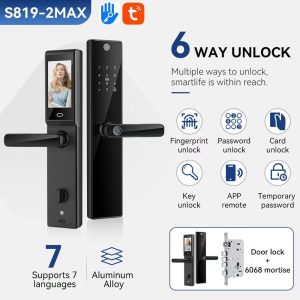 Tuya WiFi Bluetooth Fingerprint Smart Door Lock, 6 Ways Keyless Entry for Airbnb Apartment Home Price range: $35.00 through $98.00
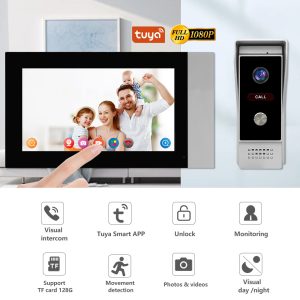 Tuya Smart 7 Inch Wired Video Door Phone Intercom System,1080P Waterproof Doorbell Camera with Monitor, Motion Detection Remote Unlock Night Vision Original price was: $129.96.$113.99Current price is: $113.99.
 WiFi Smart Socket 1-to-2, US Standard Outlet | XingLiao Price range: $7.50 through $8.00
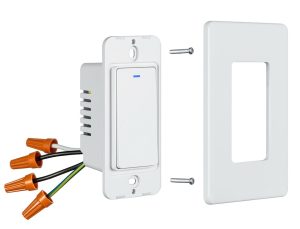 DS-122 Series US Standard WiFi Power Button Switch, 1200 W per Gang (1-4 Gang) Price range: $5.90 through $18.20
Frequently Asked Questions
Is Smart Switch Led Load Compatibility worth buying?
Based on the breakdown in this article, Smart Switch Led Load Compatibility offers a solid mix of features and value. If your main goal matches the key benefits described above, it is a practical choice for everyday use.
How do I choose the right smart switch led load compatibility for my needs?
Start with your core use case, then compare battery life, compatibility, and build quality as covered above. Choosing the right smart switch led load compatibility comes down to matching specs with how you actually use it.
Does smart switch led load compatibility require a companion app?
Most devices of this type pair with a free companion app for setup and firmware updates. A few advanced features may sit behind a paid plan, so check the official specs page before buying.
📌 This article is part of our Complete Smart Hub — more guides and buying tips inside.