However, Foldable Solar Power Bank: The Ultimate Off-Grid Charging Guide for OutDoor Enthusiasts
Therefore, Imagine being three days into a backcountry hike when your phone hits zero percent. No GPS, no camera, no emergency contact. A foldable Solar power bank eliminates this problem by turning sunlight into electricity, keeping your devices charged anywhere on the planet. Window Vacuum Cleaner: Say Goodbye To Streaky Glass At Home & In Your Car
What Is a Foldable Solar Power Bank?
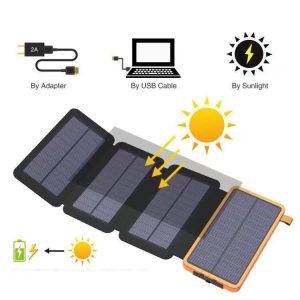
However, A foldable solar power bank is a portable charger that combines a high-capacity battery with foldable solar panels. Therefore, The panels collect sunlight and convert it into electricity. This is stored in the built-in battery. You can then use that stored energy to charge your phone, tablet, GPS, or any USB-powered device. Furthermore, the foldable design means the panels stay compact when stored but expand to a large collection surface when deployed.
Therefore, Unlike a standard power bank that dies after a few charges, a solar model keeps generating electricity as long as the sun is shining. For example, Additionally, most models include USB charging as a backup, so you can top up the battery at home before heading out.
Key Features to Look For
Not all solar power banks are created equal. Here are the specifications that actually matter when choosing one for outdoor use:
How Solar Charging Actually Works
The solar panels on a foldable power bank use photovoltaic cells to convert sunlight into direct current electricity. This electricity flows into the built-in battery for storage. In addition, When you plug in your phone, the battery delivers power through the USB ports at a controlled voltage.
However, solar charging is slower than wall charging. A typical foldable solar panel on a power bank produces about 100-200mAh per hour in direct sunlight. Therefore, a full solar recharge of a 20000mAh battery takes approximately 40-60 hours of direct sun exposure. Moreover, For this reason, solar should be treated as a supplementary charging method rather than the primary one.
The best approach is to charge the power bank fully via USB before your trip, then use solar to top up the battery during the day. Meanwhile, hiking or camping.
Real-World Charging Capacity
A 20000mAh foldable solar power bank delivers substantial power. Here is how many full charges you can expect for common devices:
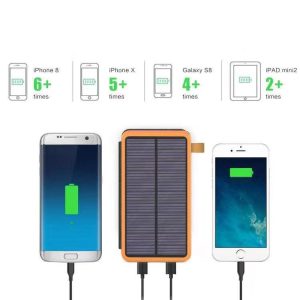
Note that these are approximate figures. Furthermore, Actual charging capacity depends on conversion efficiency, cable quality, and battery health. Moreover, charging two devices at once will drain the power bank faster than charging one at a time.
Dual USB Charging: Power Two Devices at Once
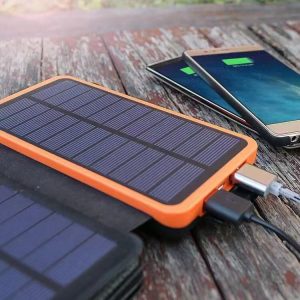
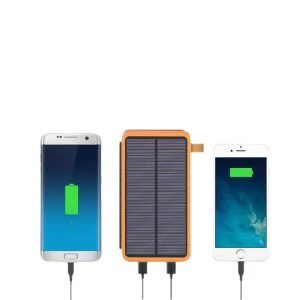
One of the most practical features of a quality foldable solar power bank is dual USB output. Two USB-A ports allow you to charge two Smartphones simultaneously at up to 5V/2.1A per port. As a result, This is particularly useful when traveling with a partner or when you need to charge your phone and GPS at the same time.
Additionally, smart IC technology inside the power bank detects the connected device and delivers the optimal charging current. This protects your devices from overcharging, overheating, and short circuits.
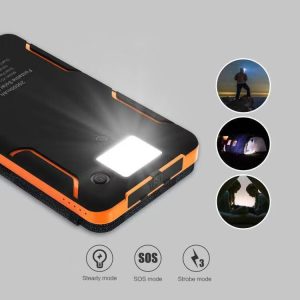
Built-in LED Flashlight: Three Modes for Every Situation
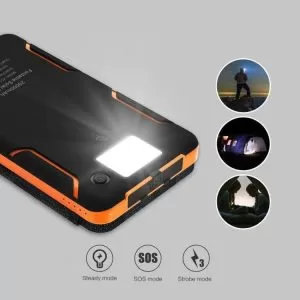
A foldable solar power bank with a built-in LED flashlight eliminates the need to carry a separate camping light. The best models offer three lighting modes:
How to Use a Foldable Solar Power Bank on the Trail
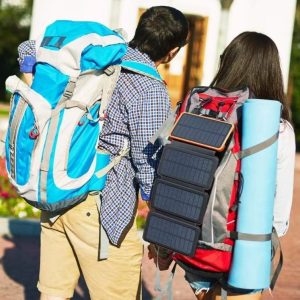
The foldable solar panel can be attached to the outside of your backpack using a carabiner clip or MOLLE straps. Importantly, As you hike during the day, the panel faces outward and collects sunlight, continuously trickle-charging the internal battery. By the time you reach camp in the evening, you have extra power stored and ready to use.
Here are some tips for maximizing solar collection. Meanwhile, hiking:
- Face the panel toward the sun and adjust as direction changes
- Avoid shadows from trees, buildings, or your own body
- Clean the panel surface regularly with a cloth to remove dust and dirt
- On cloudy days, expect 20-30% of normal charging efficiency
- Keep the panel unfolded during rest stops for maximum exposure
IP65 Waterproof Rating: Built for the Outdoors
An IP65 rating means the power bank is fully protected against dust ingress and water jets from any direction. Rain, splashes from a river crossing, and dusty trail conditions will not damage the device. Notably, The rugged outer shell with reinforced corners absorbs impact from drops and bumps.
However, IP65 does not mean the device can be submerged underwater. For boating or kayaking, store the power bank in a dry bag as an extra precaution.
Solar Power Bank vs. Standard Power Bank
Is a solar power bank worth it over a regular power bank? Here is a quick comparison:
FAQ: Foldable Solar Power Bank
Q: How long does it take to fully charge the power bank via USB? A: Approximately 4-5 hours using a standard 5V/2A USB charger.
Q: How long does solar charging take to fully charge the battery? A: In direct sunlight, expect 40-60 hours for a full 20000mAh charge. However, Solar is best used as a top-up method during the day. Meanwhile, hiking.
Q: Can I charge two devices at the same time? A: Yes. Dual USB-A ports support simultaneous charging at up to 5V/2.1A per port.
Q: Will the solar panel charge on cloudy days? A: Yes, but efficiency drops to approximately 20-30% of full sunlight output. Overcast days will produce minimal charging.
Q: Is the power bank truly waterproof? A: The IP65 rating protects against dust and water jets from any direction. Therefore, It survives rain and splashes but should not be submerged in water.
Q: What devices are compatible? A: Any device that charges via USB, including iPhones, Android phones, iPads, tablets, GPS units, Bluetooth headphones, cameras, and small LED lights.
Q: Can I take this on an airplane? A: Yes. Power banks under 100Wh (approximately 27000mAh) are allowed in carry-on baggage. A 20000mAh power bank is well within this limit. For example, However, always check your airline’s specific regulations before flying.
Q: How heavy is a foldable solar power bank? A: A typical 20000mAh model weighs approximately 500 grams, making it manageable for backpacking trips where power is essential.
Final Thoughts
A foldable solar power bank is not a gimmick. It is a practical tool for anyone who spends time off the grid. The combination of massive 20000mAh battery storage, renewable solar charging, dual USB output, and a built-in LED flashlight with emergency modes makes it one of the most versatile pieces of outdoor gear you can carry.
Whether you are a weekend camper, a long-distance hiker, or simply someone preparing for emergency situations, this device ensures you stay connected and illuminated no matter how far you are from the nearest wall outlet.
You Might Also Like
Frequently Asked Questions
Is Foldable Solar Power Bank worth buying?
Based on the breakdown in this article, Foldable Solar Power Bank offers a solid mix of features and value. If your main goal matches the key benefits described above, it is a practical choice for everyday use.
How do I choose the right foldable solar power bank for my needs?
Start with your core use case, then compare battery life, compatibility, and build quality as covered above. Choosing the right foldable solar power bank comes down to matching specs with how you actually use it.
Does foldable solar power bank require a companion app?
Most devices of this type pair with a free companion app for setup and firmware updates. A few advanced features may sit behind a paid plan, so check the official specs page before buying.
Does foldable solar power bank work with both iPhone and Android?
Yes, in most cases this type of device ships with iOS and Android apps, and standard Bluetooth protocols keep cross-platform pairing simple.
📌 This article is part of our Complete Solar Hub — more guides and buying tips inside.
