A physical key is a single point of failure that most households never think about. It can be copied in a minute at a hardware shop, lost permanently on a beach, and handed to a cleaner, a dog sitter or a contractor with no way to take it back. The lock keeps working exactly as it did on the day it was installed, no matter how many copies exist.
A keyless handle lock changes the shape of that problem. Access becomes something you grant and revoke rather than something you hand over, and a record of every entry exists whether or not anyone remembers to mention it.
This 5-in-1 model covers the practical middle ground: fingerprint, passcode, IC card, app control and a mechanical key as backup, with built-in WiFi so no separate gateway is needed. It is a retrofit handle rather than a whole-door system, which makes it affordable, and also means the door has to be checked before ordering. Here is what it does well, and what a buyer should confirm first.
Why the Key Is the Weak Point
Most home security conversations focus on the lock cylinder. The bigger exposure is usually the key itself.
Keys Get Copied and Never Returned
A spare key given to a cleaner, a neighbour or a former tenant is functionally a permanent credential. There is no audit trail, no expiry and no way to revoke it short of changing the cylinder, which almost nobody does.
Handover Is the Friction Point in Short Rentals
Meeting a guest at an inconvenient hour, hiding a key under a mat, or trusting a lockbox with a four-digit combination are all workarounds for the same limitation: a mechanical key cannot be issued remotely. Self check-in exists precisely to remove that dependency.
Nobody Knows Who Came In, or When
A traditional lock records nothing. When something is missing, the conversation becomes guesswork. An electronic lock records each unlock event, which turns a suspicion into a fact.
Lost Keys Force a Cylinder Change
The one moment a key problem becomes real money is the day a key goes missing. Replacing a cylinder and reissuing keys costs more than most people expect, and it usually happens at the worst possible time.
What This 5-in-1 Lock Does
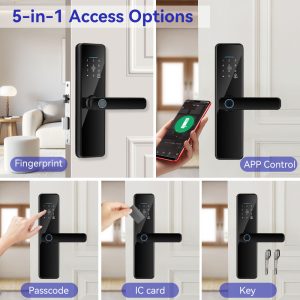
Five access methods share one handle, which is why the same device works for a household, a guest and a maintenance visit.
Fingerprint, the Everyday Method
A biometric reader on the handle recognises enrolled fingers in about the time it takes to press down. For family members this becomes the default: no key to carry, no code to remember, no phone to unlock first.
Passcode With Anti-Peeping Entry
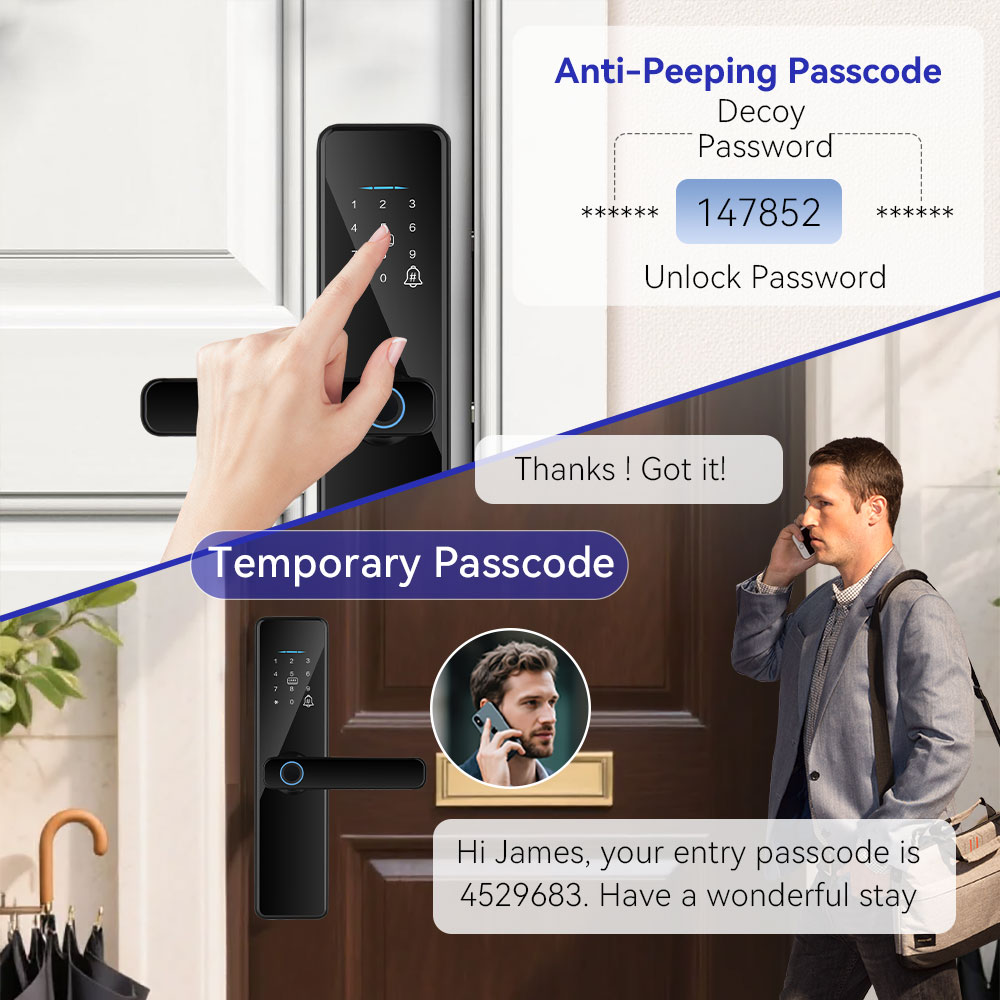
The keypad accepts a correct code with random digits typed before and after it, so an observer cannot tell which digits actually matter. That detail matters in a hallway, a stairwell or any doorway Where someone can stand behind you.
Temporary and One-Time Codes
Codes can be created for a defined Window and then expire. This is the feature that makes the lock genuinely useful for rentals, deliveries, cleaners and contractors, because access ends without anyone having to collect anything.
IC Card for Households That Prefer It
Cards Work well for children, elderly family members and anyone who finds a keypad awkward. A card in a wallet does the same job as a fob, without the fingerprint enrolment that some older users dislike.
App Control Over Built-In WiFi
The lock connects directly to the home network, so there is no gateway to buy or power. From the Tuya or TT Lock app you can unlock remotely, issue and revoke codes, set validity periods and read the access history.
Mechanical Key as the Last Resort
A physical key still opens the lock, which matters on the day the battery dies, the WiFi drops or a phone is lost. Electronic convenience with a mechanical fallback is the sensible arrangement.
Product Specifications
|
Attribute
|
Detail
|
|---|---|
|
Product type
|
Retrofit Smart handle door lock
|
|
Unlock methods
|
Fingerprint, passcode, IC card, app, mechanical key
|
|
Connectivity
|
Built-in WiFi, no gateway required
|
|
Compatible apps
|
Tuya Smart and TT Lock
|
|
Passcode features
|
Anti-peeping virtual digits, temporary and one-time codes
|
|
Access management
|
Add and remove users, set validity periods, view unlock records
|
|
Notifications
|
Real-time unlock alerts in the app
|
|
Lock body size
|
About 270 mm by 65 mm
|
|
Door thickness
|
38 mm to 55 mm, about 1.5 to 2.17 inches
|
|
Compatible lock cases
|
6085, 5572, 4585 and single latch
|
|
Backup access
|
Mechanical key included
|
|
Typical use
|
Front doors, bedroom doors, rentals, small offices
|
Fit First: The Check Before You Order
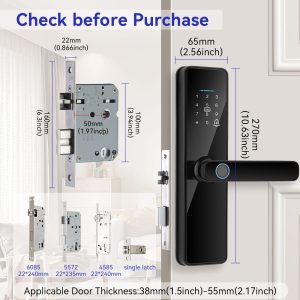
A retrofit lock is only as good as its compatibility, and this is the step buyers skip. It is worth five minutes with a tape measure.
Door Thickness, 38 to 55 mm
Measure the door leaf at the edge, not at the frame. Below 38 mm or above 55 mm the handle and spindle will not seat properly, and no amount of adjustment fixes a door that is simply outside the range.
Which Lock Case You Already Have
The lock replaces the handle and the electronics, not the mortise body inside the door. It is built around the 6085, 5572 and 4585 patterns and single latch doors, so the existing case determines whether it drops in or needs work.
Measure the Backset and the Face Plate
Backset is the distance from the door edge to the centre of the spindle, and the face plate dimensions decide whether the new body sits flush. Photograph the existing lock with a tape measure beside it; that is the fastest way to confirm fit before ordering.
Who Should Install It
Replacing a handle on a matching case is a straightforward job for a confident DIYer with a screwdriver. Replacing the mortise body, cutting a new face plate opening or working on a steel security door is a job for a locksmith, and it is worth saying so plainly.
Where It Fits in Real Life
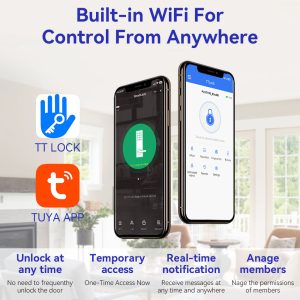
The same device serves quite different households, for different reasons.
Primary Home Front Door
Family members use fingerprints, guests get a temporary code, and nobody carries a key on a run. The mechanical key stays in a drawer for the day it is needed.
Airbnb and Short-Term Rentals
A code issued for the length of a stay, expiring at checkout, removes the key handover entirely. Self check-in becomes genuinely possible, and the access log answers questions about arrival times without contacting the guest.
Small Office or Studio
Staff get fingerprints or cards, a cleaner gets a code limited to a time window, and departing employees are removed from the app rather than asked to return a key.
Households With Children and Older Relatives
An IC card in a school bag or a purse works without a phone or a memorised code. That is often the deciding factor for multi-generational homes.
Shared Flats and Managed Properties
Where several people need access and the landlord is not nearby, remote code issuing avoids the round trip of collecting and delivering keys.
Living With It Week by Week
Once installed, the routine is mostly about managing people rather than operating a lock.
Issuing Access Takes Seconds
Enrolling a fingerprint at the door takes under a minute. A temporary code takes about the same, and it can be sent by message rather than explained over the phone.
Revoking Access Is the Real Benefit
Deleting a user or letting a code expire is the moment the lock earns its price. No key to reclaim, no cylinder to change, no awkward conversation.
Reading the Log Settles Arguments
The app shows which method opened the door and when. For a rental, that answers late-checkout questions; for a household, it answers who left the door unlocked.
What Happens When the Network Drops
Fingerprint, passcode, card and key all work locally, without WiFi. Remote unlocking and code issuing need connectivity, so the local methods remain the everyday ones and the app is the management layer.
What It Does Not Do
Honest limits are more useful than a longer feature list.
It Is a Handle Lock, Not a Full Door System
It replaces the handle and adds electronic access; the mortise body stays. Buyers expecting a complete lock replacement, or a door with no existing cutout, need a different product.
Fingerprints Need a Reasonable Finger
Very dry skin, worn prints from manual work, or a bandaged finger will read inconsistently. Those users are better served by a card or a code, which is why both are included.
Remote Features Need Power and WiFi
The lock still needs a working battery and a network for app functions. Treat the mechanical key as part of the system rather than an afterthought, and keep it somewhere you can reach from outside.
Who This Smart Lock Suits
-
Landlords and Airbnb hosts who want remote check-in and expiring guest codes.
-
Families who would rather not carry keys or hand spares to every visitor.
-
Households with older relatives or children who do better with a card than a keypad.
-
Small businesses that need to add and remove staff access cleanly.
-
Anyone replacing a handle whose door already matches 6085, 5572, 4585 or a single latch.
Care and Maintenance
Keep the fingerprint sensor clean and dry, and wipe it with a soft cloth rather than a wet one; a smeared reader is the most common cause of a “fingerprint stopped working” complaint. Clean the keypad lightly, avoid abrasive cleaners on the finish, and check the handle for looseness every few months, tightening the mounting screws if the body starts to shift.
Watch the battery indication in the app and replace cells before they run flat rather than after. Keep the mechanical key outside the home, not inside a drawer that the lock protects, and store the app account credentials somewhere the household can find them. If the door is exposed to heavy rain, confirm the installation is sealed properly at the face plate, since water ingress rather than electronics is what usually shortens the life of an outdoor lock.
Is It Right for Your Door?
If the reason you are looking at a smart lock is keys, guests and not knowing who came in, this covers all three in one handle. Five access methods mean nobody in the household has to adapt to a single way of entering.
The limits are worth repeating: it retrofits onto specific lock cases and a 38 to 55 mm door, it is not a complete door replacement, and the remote features depend on WiFi while local access does not. Measure first, and the rest is straightforward.
For a rental that needs self check-in, or a home that has been carrying too many spare keys, the change is mostly about removing a friction point that had become normal. Fit guidance, the compatible lock case list and the current variant are all on the product page.
Frequently Asked Questions
These are the questions that decide whether an order goes ahead.
Do I need a separate gateway for WiFi?
No. The lock has built-in WiFi and connects directly to the home network, so remote control works through Tuya or TT Lock without extra hardware.
Will it fit my existing door?
It fits doors 38 to 55 mm thick with a 6085, 5572, 4585 or single latch lock case. Measure the door edge thickness and photograph the existing face plate before ordering.
Can I give a guest a code that expires?
Yes. Temporary and one-time codes can be created with a validity window, so access ends at checkout or at the end of a scheduled visit without anyone collecting a key.
What if the battery dies or the WiFi is down?
Fingerprint, passcode, card and the mechanical key all work without a network. Keep the backup key somewhere reachable from outside the door.
How many fingerprints can I add?
Capacity varies with the app version and is shown during setup. For a normal household, one or two prints per person plus a card each is the practical arrangement.
If you are unsure which lock case your door uses, send a photo of the existing handle and face plate and we will confirm before you order.
Related Articles
- 220-240 V Smart Switches and LED Loads: Reading the 5-200 W per Gang Rating (DS-121JL)
- Tuya WiFi & Bluetooth Smart Door Lock
- Choosing a Smart Lock That Fits the Door You Already Have
- Smart Door Lock: How to Choose the Right One
- Smart Home Gateway Explained: Zigbee, Tuya and Bluetooth Compared
You Might Also Like
5-in-1 WiFi Smart Fingerprint Door Lock, Tuya TT Lock App Remote Unlock, Anti-Peeping & Temporary Passcode Keyless Entry Lock for Home Airbnb Rental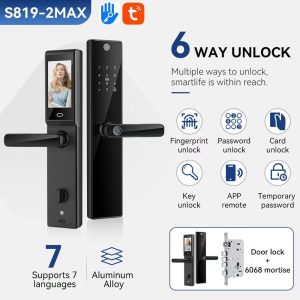 Tuya WiFi Bluetooth Fingerprint Smart Door Lock, 6 Ways Keyless Entry for Airbnb Apartment Home Price range: $35.00 through $98.00
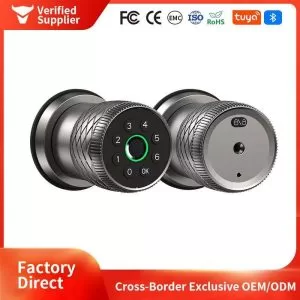 Tuya Bluetooth Smart Knob Lock | Fingerprint Password Keyless Entry Round Door Lock Original price was: $45.00.$37.00Current price is: $37.00.
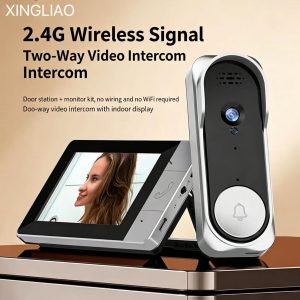 NT601A Wireless Video Doorbell with 4.3 Inch Indoor Monitor, 2.4G Wireless Intercom, No WiFi Needed, Night Vision, Support TF Card Recording Original price was: $45.00.$35.50Current price is: $35.50.