There is a very specific moment most of us know by heart. You are upstairs, or in the shower, or already in bed with the lights off, and the doorbell rings. Nobody in the house is near the Door. You spend the next ten minutes wondering whether it was a delivery, a neighbour, or someone you would rather not have opened the door to at all.
The traditional answer is the peephole, and the peephole is a disappointment. It gives you a fisheye circle the size of a coin, it fogs up in cold weather, and using it means pressing your face against the door in exactly the position a stranger would expect.
A wireless Smart video doorbell solves both halves of that problem at once. This one is built as a two-part system: a camera that sits outside the door where a peephole would go, and a colour screen that sits inside on your side of it. Between the two, you stop guessing who is at the door and start knowing.
What This Doorbell Actually Is
Most video doorbells are one device plus a phone app. This one adds a third element, and that element is why it makes sense for households that never got along with app-only doorbells.
The Outdoor Unit: A Camera in the Peephole
The outside piece is a compact camera head with a bell button, a small speaker grille and a set of lenses. It mounts through the door in the place a peephole occupies, so it sees the corridor or porch from the same height a peephole would. Because it sits in the door itself rather than beside it, there is no bracket to align, no wall to drill, and no gap where a cable would normally run.
Inside that head you get a 2MP sensor shooting 1080P, a wide lens that takes in more of the corridor than a standard peephole does, and four 850nm infrared lights for the dark. A PIR motion sensor watches the approach, and a microphone and speaker handle two-way conversation.
The Indoor Unit: A Screen on Your Side of the Door
The second part is the piece people tend to underestimate. It is a colour display that mounts on the interior side of the door, on the same assembly, and shows you the view from outside without an app, without a phone, and without walking to the door.
How the Two Halves Talk
The outdoor unit connects to your WiFi and pairs with the indoor screen and the mobile app. That gives you three ways to see the same view: the screen inside the door, the app on your phone, and the recordings the unit makes when it detects movement. Setup runs through the app, which is why it is described as a smart WiFi setup.
Six Things It Does That a Peephole Cannot
A doorbell is not for being looked at. It is for answering a question quickly and safely. Here is what that looks like in daily use.
Detect Someone Before They Press the Bell
The PIR sensor watches a zone of roughly three metres in front of the door. Someone walking up the corridor, a courier reading the house number, a person standing at the door deciding whether to knock: all of that triggers an alert before the bell is pressed. On a phone that means a notification arrives while the visitor is still outside, which is usually the difference between catching a delivery and finding a slip of paper on the mat.
Answer With Voice and Video, From Anywhere
When a visitor does press the button, the unit starts a video call. You can see them and speak to them through the app, and the listing describes both the audio and the video as clean enough for a normal conversation rather than a shouted exchange. That is what makes the “leave it with the neighbour” conversation possible when you are three cities away.
Show You a Wider, Sharper Picture
A 1080P image with a wider field of view than an ordinary peephole lens means you see the visitor and some of the surroundings, not just a face pressed into the centre of the frame. Snapshots taken inside three metres come out sharp enough to recognise a person and read a uniform or a badge.
See in Full Darkness
Four 850nm infrared lights plus an optimised night mode mean the view does not collapse after sunset. In a dark corridor at two in the morning you still get a usable image of who is standing there, which is precisely the hour when a peephole is least useful.
Record What Happened While You Were Out
Automatic recording means the unit captures the moments that triggered it rather than asking you to remember to press record. Combined with mobile monitoring, you can open the app during the day and look at the door, or review what the sensor caught while the house was empty.
Keep Working When the Power or the Network Drops
This is what separates a two-part system from an app-only one. If the power goes out, the WiFi drops, or the router needs a reboot, the link between the outdoor camera and the indoor screen is still there. You can still see who is outside, and the bell still rings. Remote app access needs power and a network; the local view does not.
Product Specifications
|
Attribute
|
Detail
|
|---|---|
|
Product type
|
Two-part wireless video doorbell: outdoor peephole camera plus indoor display screen
|
|
Image resolution
|
2MP sensor, 1080P output
|
|
Lens
|
Wide-angle HD lens, wider field of view than a conventional peephole
|
|
Clear identification range
|
Approximately 3 m / 9.8 ft
|
|
Night vision
|
4 x 850nm infrared lights with optimised low-noise night mode
|
|
Motion detection
|
Built-in PIR sensor, approximate 3 m detection zone, dual-sensing logic to reduce false alarms
|
|
Alerts
|
Front-door motion alerts and loitering alerts pushed to the mobile app
|
|
Audio
|
Two-way voice through the outdoor unit; remote video call from the app
|
|
Connectivity
|
WiFi connection with in-app smart setup; pairs with indoor screen and mobile app
|
|
Recording
|
Automatic recording triggered by detection and by bell presses
|
|
Power, outdoor unit
|
Built-in 5000mAh polymer battery, rechargeable
|
|
Standby time
|
4 to 6 months on a full charge under normal low-power use; frequent video calls shorten this
|
|
Indoor unit
|
Colour display screen mounted on the interior side of the door, works without app or network
|
|
Installation
|
Fits the door in place of an existing peephole; confirm door thickness and hole diameter before ordering
|
The Problem Every Video Doorbell Has: False Alarms
Anyone who has lived with a motion-triggered device knows the real failure mode is not missing events. It is being told about events that did not happen. Leaves, headlights, a cat on the step: after two weeks of that, people turn notifications off, and a doorbell with notifications off is an expensive peephole.
Dual Sensing and a Three-Metre Range
This unit answers that in two ways. First, dual-sensing protection confirms the trigger instead of accepting the first signal. Second, detection range is deliberately short at about three metres, aimed at the strip in front of the door rather than the whole street.
The result is fewer alerts about a car passing and more about a person standing at your door. That is a narrower promise than detecting everything, and for a front door it is the more useful one.
Where It Fits in a Real Home
The device earns its place in a fairly specific set of living situations. None of them are about luxury; all of them are about a door that other people come to when you are not standing next to it.
Apartments With a Shared Corridor
In a building, the door opens onto a semi-public corridor where anyone can walk past. A camera in the door plus a screen inside gives you a view of that space without a wall-mounted camera a landlord may not allow.
Houses That Receive a Lot of Parcels
Couriers press the bell at the worst possible time and leave with the parcel if nobody answers. With remote video call, you can tell them to leave it in the porch, hand it to a neighbour, or put it in a locker, and the recording keeps a record of the exchange.
Homes With Elderly Parents or Small Children
An indoor screen means the person at home needs no phone, app or login to see who is outside. That matters for an older parent who will not use a smartphone, and for a child told not to open the door to strangers.
Small Shops, Studios and Home Offices
A studio or small storefront has the same problem, only with customers instead of couriers. Two-way audio lets you tell a visitor you are coming, and automatic recording covers the gap when you are in the back room.
Who This Doorbell Suits
-
Households where the bell rings when nobody is near the door and guessing has become normal.
-
Renters who want a door-level camera without asking permission to mount hardware on a wall.
-
People who receive frequent deliveries and are tired of coming home to collection slips.
-
Anyone who lives alone and would rather speak to a stranger through a speaker than open the door.
-
Households with someone at home who will not use a phone app to check the door.
Care and Maintenance
The outdoor unit lives with weather, dust and hands. Wipe the lens and bell button with a soft dry or slightly damp cloth; do not use solvent cleaners on the camera Window or housing. Keep the speaker grille clear so audio does not go muffled, and avoid spraying water straight at the unit.
The battery is the part that needs a habit rather than attention. At four to six months of standby, a single charge covers most of a year’s worth of forgetting, but only if you recharge when the app reports a low level rather than when the unit stops answering. Frequent video calls, cold weather and a busy corridor all shorten the interval. Charge it before the level gets critical, and the doorbell never goes dark at an inconvenient moment.
The indoor screen needs almost nothing: dust it, keep it out of direct sun, and leave the pairing alone once it works. If the two halves stop talking after a router change, re-pair in the app.
Is It Right for Your Door?
The honest answer is that this is a replacement for a peephole, not a device that mounts anywhere. It fits into the hole a peephole already occupies, on a door with a conventional thickness. If your door already has a peephole, installation is a swap. If it does not, a hole has to be made, and that is a decision to take seriously on a fire-rated door or a door you do not own.
Renters should check with the landlord before drilling; in many buildings the peephole hole already exists and the question does not arise. For fire doors and doors with unusual construction, ask the building manager or a locksmith. Confirming door thickness and hole diameter before ordering takes two minutes and prevents a return.
The second caveat is about expectations. Remote viewing depends on power and a working network, the outdoor unit depends on its battery, and the camera sees the doorway rather than the house. It is a front-door device, not a whole-home security system.
Frequently Asked Questions
Do I need an existing peephole to install it?
It sits where a peephole sits. If your door already has one, the outdoor unit goes into that opening. If not, a hole of the matching diameter has to be drilled, so clear it with the landlord first.
Does it still work if the power or WiFi goes out?
Locally, yes. The indoor screen is paired directly with the outdoor camera, so you can still see who is at the door and still hear the bell. Remote access from the app needs power at home and an active network connection.
How long does the battery really last?
The listing gives four to six months of standby on one charge from a 5000mAh battery. Real life depends on how often the sensor triggers, how many calls you take, and how cold it gets. Treat that range as a normal-use figure.
Can it see in the dark?
Yes. Four 850nm infrared lights with an optimised night mode produce a usable image in complete darkness, which is the situation a peephole handles worst.
Will it alert me about everything that moves?
It is built to avoid that. Detection is limited to roughly three metres in front of the door and uses dual-sensing logic to confirm a trigger, so passing cars and distant movement produce fewer false alerts.
If your door already has a peephole, the decision is unusually simple: the hole is there, the camera goes in it, the screen goes on the inside, and the next time the bell rings you will know who is outside before you reach for the handle.
Related Articles
- Smart Video Doorbell: Simple Wireless Front Door Security For Your Home
- The X3 Smart Visual Doorbell: No WiFi Required Two-Way Video Doorbell Guide
- Video Doorbell Review 2026: What to Look For, Smart Features Compared, and Buyer’s Guide
- How to Choose the Right Video Doorbell for Your Market: A Distributor’s Guide
- Tuya 3MP WiFi Peephole Doorbell Camera: Buying Guide, Setup Tips, and FAQ
You Might Also Like
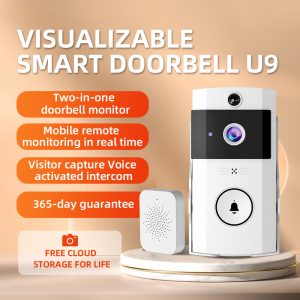 U9 Smart WiFi Video Doorbell with Indoor Chime Rechargeable Battery No-Drill 3M Installation 2-Way Audio Live Monitoring Original price was: $49.96.$30.96Current price is: $30.96.
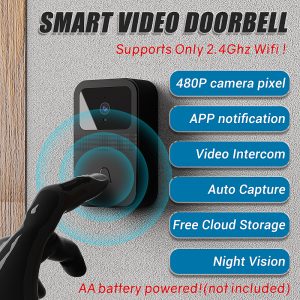 Smart WiFi Video Doorbell 480P Wireless Door Camera with Night Vision Voice Change Free Cloud Storage 2.4G WiFi AA Battery Powered Original price was: $29.96.$15.99Current price is: $15.99.
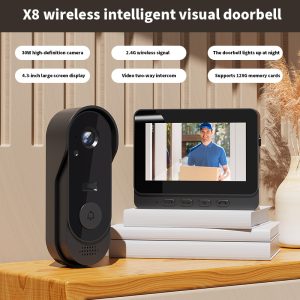 X8 Wireless Intelligent Visual Doorbell 4.3 Inch IPS Screen IP66 Waterproof 2.4G Wireless Original price was: $39.93.$32.99Current price is: $32.99.
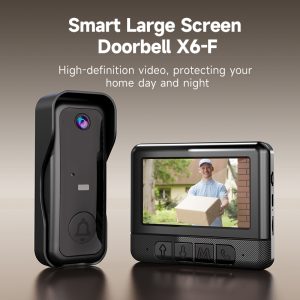 X6F Smart Large Screen Doorbell – Outdoor Waterproof Wireless Video Doorbell with Display Two-Way Intercom HD Video Monitoring Original price was: $69.96.$59.99Current price is: $59.99.