Window cleaning fails for a reason that has nothing to do with effort. You spray, you wipe, and then the water has to go somewhere. It runs down the pane, pools on the sill, drips onto the frame, and leaves a drying edge that turns into a streak within minutes. So you go back with a dry cloth, and the cloth leaves lint, and the whole thing starts again.
The missing step is removal. Not wiping harder, not using a better cloth, but taking the dirty water off the glass instead of pushing it around. That is what a window vacuum does, and it is the reason professional cleaners carry one.
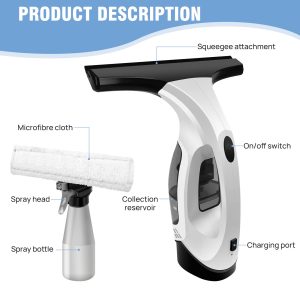
This cordless model combines the three stages in one tool: a spray bottle with a microfibre pad to loosen and wipe, a squeegee blade to collect, and suction to pull the water into a 150 ml tank. It runs on a 2200 mAh battery, so there is no cord trailing through a wet floor. Here is how it works, where it surprises people, and where a Small tank sets the practical limit.

Why Windows Are the Chore Nobody Finishes
Most people do not skip window cleaning because they are lazy. They skip it because the process has too many steps that can go wrong.
The Water Has to Go Somewhere
Spray and wipe leaves a film of water on the glass. Gravity takes it down to the frame, where it collects dust and forms a brown line, or onto the sill, where it needs a cloth. Neither of those is the part anyone signed up for.
Cloths Leave What They Cannot Absorb
A microfibre cloth holds a surprising amount, but once saturated it starts redistributing water rather than removing it. That is why the second pass often looks worse than the first, and why wiping in a circular motion produces the swirl patterns people blame on the cleaner.
Reach Is the Other Problem
Upper panes, balcony glass and car windows all Sit at awkward heights. Stretching with a cloth means less control at exactly the point where control matters, and a ladder adds a safety consideration that most households reasonably avoid.
The Car Is Its Own Case
Car glass is worse than house glass because it is raked at an angle, so every drop slides rather than sitting. Cleaning a windscreen with a cloth and a spray bottle is a twenty-minute job that usually ends with visible smears at eye level.
What This Cordless Window Cleaner Does
Three functions, one handle. Each one addresses a specific point where the manual method fails.
Spray, Then Wipe

The kit includes a spray bottle with a microfibre pad attached, so you wet the glass and wipe the loosened dirt in one motion without switching tools. The pad does the scrubbing that removes the film; the spray does the dissolving.
Squeegee Blade for Collection
A wide rubber blade pulls the remaining water into a single edge instead of spreading it. That is the difference between a surface that dries clear and one that dries with a dozen drying lines.
Suction That Removes Rather Than Relocates
The vacuum picks up the water the blade collects and stores it in the tank. Strong suction matters more than it sounds: without it, the blade just pushes a puddle to the bottom of the pane, and the last ten centimetres are always the messiest.
2200 mAh, No Cord

A cordless body means you can work on a balcony, around a car, or up a pane without unplugging and re-plugging. The 2200 mAh battery is sized for a normal cleaning session rather than a whole building, and charging is by a standard port on the body.
150 ml Dirty Water Tank
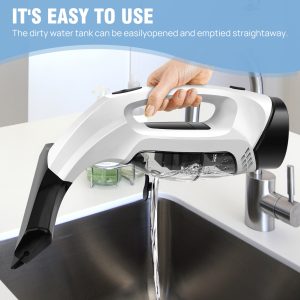
The collection reservoir is 150 ml, which is enough for a set of windows or a car’s worth of glass. It opens and empties in one motion over a sink, with no disassembly and no need to touch the contents.
Indoor and Outdoor Use
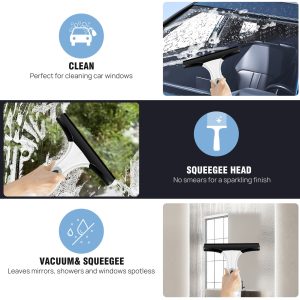
The same tool handles interior panes, exterior panes from inside a balcony, shower screens, mirrors, and flat glass surfaces like a ceramic hob. One device replaces a spray bottle, a cloth, a squeegee and a towel.
Product Specifications
|
Attribute
|
Detail
|
|---|---|
|
Product type
|
Cordless electric window vacuum cleaner with squeegee
|
|
Working method
|
Spray, wipe with microfibre pad, then vacuum and squeegee
|
|
Battery
|
2200 mAh, cordless operation
|
|
Charging
|
Built-in charging port on the body
|
|
Dirty water tank
|
150 ml collection reservoir
|
|
Tank emptying
|
Opens and drains directly, no tools required
|
|
Cleaning head
|
Rubber squeegee blade with vacuum intake
|
|
Included accessories
|
Spray bottle, spray head, microfibre cloth pad
|
|
Controls
|
Single on and off switch on the handle
|
|
Application
|
Indoor and outdoor glass, mirrors, shower screens, car windows, flat hob glass
|
|
Handling
|
Single-hand grip, no cord to manage
|
|
Water contact
|
Tank and blade handle dirty water; the motor body stays dry
|
Where It Works Beyond Windows
The window is the obvious case. These are the ones people discover afterwards.
Shower Screens and Mirrors
Shower glass collects the same mineral film as windows, and bathroom mirrors collect toothpaste spray. Both are flat, both are vertical, and both dry with visible marks when left to Air. A vacuum pass leaves them clear without a towel.
Car Windows and Windscreens
The rake of a windscreen makes cloth cleaning awkward. A squeegee with suction lets you pull water down and away in overlapping passes, including the corners that a cloth never quite reaches. It also handles the inside of the glass, where condensation film builds up.
Ceramic and Induction Hob Glass
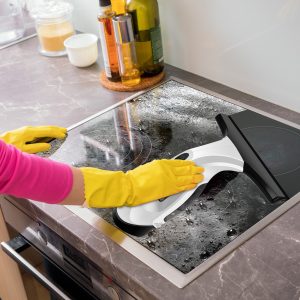
Flat black glass shows every smear. After cleaning, a squeegee pass removes the residue and the water together, which is faster than buffing with a cloth and leaves no lint behind.
Balcony and Partition Glass
Balcony doors, glass partitions and sliding panels are tall, awkward and often cleaned from an angle. Cordless operation matters here because there is rarely an outlet nearby and a cable across a wet floor is the last thing anyone needs.
How to Get a Streak-Free Finish
The tool does the work, but the sequence determines the result. Four habits make the difference.
Spray Less Than You Think
A Light, even mist is enough. Overspraying creates more water than the tank can take in one pass and forces you to go back over the pane, which is exactly the inefficiency the tool is meant to remove.
Wipe With the Pad Before Vacuuming
The microfibre pad loosens and lifts the dirt; the vacuum removes the water. Skipping the wipe means the blade drags dirt along the glass and leaves a fine line of it at the end of the stroke.
Overlap Each Pass, Blade Slightly Angled
Work top to bottom in overlapping strips, keeping the blade edge contacting the glass and the nozzle behind it. A slight angle lets the water collect at the edge rather than escaping around the sides.
Empty the Tank Before It Fills
Once the reservoir approaches full, suction drops and water starts to trail. Emptying it between windows takes a few seconds and prevents the one failure that looks like a product fault but is really just a full tank.
Three Mistakes That Cause the Streaks

Most complaints about glass cleaning come down to technique rather than product. Three habits account for the majority of it.
Cleaning in Direct Sunlight
Sun heats the glass and dries the cleaning solution before the blade reaches it, which leaves the dissolved dirt sitting on the surface as a haze. Work on shaded glass, or on an overcast day, or clean early before the sun reaches the pane.
Circular Motion With a Cloth
Circular wiping redistributes water and creates the swirl pattern that shows up at a low angle. Straight, overlapping passes in one direction move the dirt toward the edge instead of around the pane, and the vacuum finishes the removal.
Using Too Much Solution
More liquid does not clean better; it just takes longer to remove and exceeds what the tank can hold in one pass. A light mist and a second wipe with the damp pad is usually enough for anything short of building dust.
Who This Window Cleaner Suits
-
Households with large or balcony windows that are cleaned rarely because the process is tedious.
-
Car owners who want clear glass without a spray-and-scrub routine.
-
Renters and flat dwellers with shower screens and mirrors that show every mark.
-
Anyone cleaning glass at height who would rather reach with one hand than climb.
-
People with grip or shoulder limits for whom a wet cloth and a towel is genuinely tiring.
Care and Maintenance
After each session, empty the tank, rinse it, and let it dry before replacing it. Wipe the squeegee blade with a damp cloth and check that no grit is trapped under the edge, since a single grain will scratch glass with every pass. The microfibre pad should be washed by hand or on a gentle cycle without fabric softener, which coats the fibres and reduces their ability to absorb.
Keep the motor body dry. The tank and blade are designed to handle dirty water; the handle and charging port are not, so do not rinse the whole unit under a tap or leave it standing in a puddle. Charge it with the port dry and the unit at room temperature, and store it upright so any residual water drains rather than sitting against the seals. If suction weakens, check the tank seal and the intake for lint before assuming the battery is at fault.
Is It the Right Tool for You?
If the reason your windows stay dirty is the drips, the towels and the second pass, this removes all three. Spray, wipe, vacuum, done, with the dirty water ending up in a tank instead of on your sill.
The honest limits: a 150 ml tank means larger jobs need emptying partway through, so a full house of windows is a session with a couple of breaks rather than one continuous sweep. It cleans glass and flat hard surfaces, not deep sills, frames or textured finishes. And it is a wet-use tool, so the motor body still needs to be kept out of the water it is collecting.
For a home with glass that gets noticed, or a car that never looks clean for long, the time saved per session is the whole argument. Battery details, tank capacity and the current accessory set are on the product page.
Frequently Asked Questions
These are the questions buyers ask before their first order.
Does it need to be plugged in while working?
No. It runs on an internal 2200 mAh battery and charges through a port on the body, so it works anywhere without a cord. Plan a charging session between larger cleaning days.
Will it work on car windows?
Yes, including windscreens and side glass. Work in overlapping passes from the top down, and empty the tank before it fills so suction stays consistent on the last strokes.
How much water does the tank hold?
150 ml. That covers a set of windows or a car, but a large job may require emptying it once or twice, which takes only a few seconds.
Can I use it on a hot hob?
Only once the surface has cooled. Cleaning a hot ceramic hob with water is both ineffective and unsafe, so let it cool first and then clean as you would any flat glass surface.
What happens if suction drops?
Check three things in order: whether the tank is full, whether the tank seal is seated properly, and whether lint or grit is blocking the intake. Those account for almost every case of weak suction.
If you are unsure whether it suits the glass surfaces in your home, send us a photo or a description and we will tell you before you order.
You Might Also Like
 Tuya WiFi Bluetooth Fingerprint Smart Door Lock, 6 Ways Keyless Entry for Airbnb Apartment Home Price range: $35.00 through $98.00
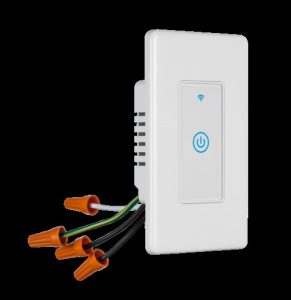 eWeLink US WiFi Touch Switch with Face Cover, 1–3 Way | XingLiao Price range: $11.82 through $13.61
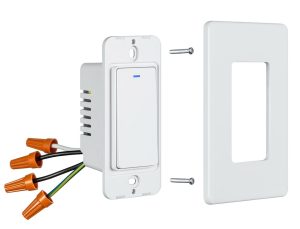 eWeLink US WiFi Button Switch 1200 W, FCC | XingLiao$11.07
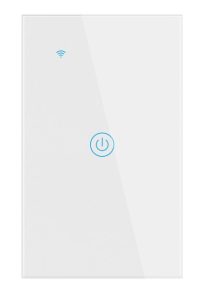 eWeLink US WiFi Touch Switch, Single Live Wire Universal, FCC | XingLiao Price range: $12.12 through $13.91